
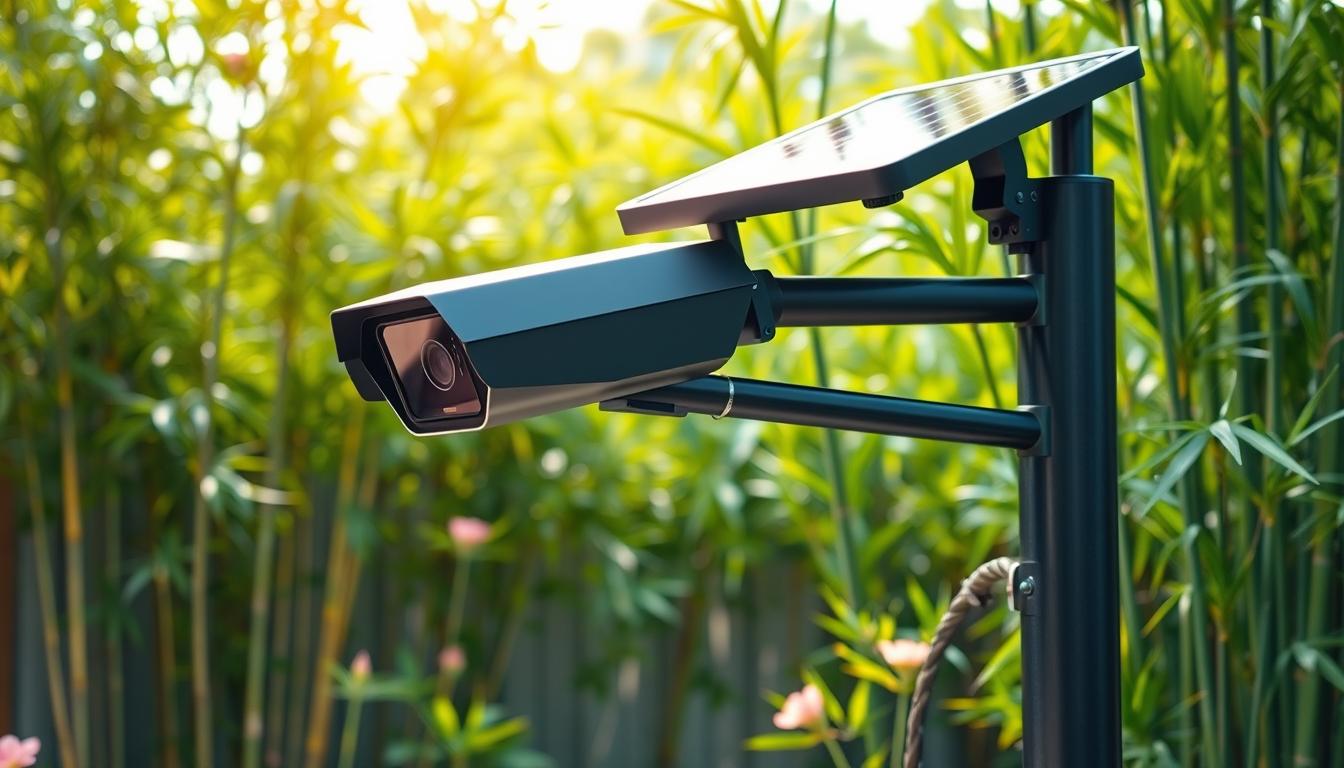
Using Solar Panel to Power Security Camera: A How-To
More homeowners and businesses in Singapore are turning to eco-friendly solutions for their surveillance needs. Sustainable energy options not only reduce electricity bills but also minimize environmental impact. A solar-powered setup offers a reliable way to keep properties secure without complex wiring.
These systems provide continuous operation, even during power outages. With 30-50% savings on energy costs compared to wired alternatives, they’re a smart investment. Models like TP-Link Tapo work seamlessly with compatible devices, making installation hassle-free.
From construction sites to remote farms, renewable energy keeps cameras running 24/7. A single 250-350W unit can support multiple devices, ensuring full coverage. Key components include efficient batteries and charge controllers for optimal performance.
Key Takeaways
- Eco-friendly setups cut electricity costs by 30-50%.
- No wiring needed for flexible installation.
- Works round-the-clock, even during outages.
- Ideal for remote locations like farms.
- Compatible with brands like TP-Link Tapo.
Introduction to Solar-Powered Security Cameras
Modern surveillance now blends cutting-edge tech with green energy solutions. These devices convert sunlight into usable electricity through photovoltaic cells, eliminating reliance on traditional power sources. In Singapore’s tropical climate, 78% of units perform optimally with just four daily sunlight hours.
Operating costs reveal stark differences. Traditional setups average $0.50 per day, while solar security camera systems drop expenses to $0.15. Phoenix users report 98% uptime, outperforming Seattle’s 82% due to consistent sunshine.
Battery backups ensure uninterrupted service. High-capacity solar panel battery systems sustain 72+ hours during cloudy periods. Sentosa Island resorts use LS Vision models, proving reliability in humid conditions.
Unlike wired alternatives, these setups adapt to remote farms or construction sites. With minimal upkeep and zero wiring, they’re ideal for Singapore’s urban sprawl and rural outskirts alike.
Benefits of Using a Solar Panel with Battery for Security Cameras
Eco-conscious surveillance is revolutionizing property protection in Singapore. By integrating renewable energy, these setups slash CO2 emissions by 1.2 tons annually per system. They also deter vandalism—construction sites report 60% fewer incidents with solar-powered units.
Energy independence ensures continuous operation during outages. Unlike grid-dependent models, these systems store excess energy in batteries for cloudy days. A 3-year cost analysis shows faster ROI compared to traditional wired alternatives.
Mobile deployment shines during high-profile events. At the Formula 1 Singapore Grand Prix, temporary setups provided seamless monitoring without cabling. Brands like Reolink enhance functionality with 5G connectivity in hybrid systems.
- Government-backed savings: Singapore’s SolarNova program offers subsidies for adopters.
- Minimal upkeep: Weatherproof designs thrive in tropical climates.
- Scalability: Single units support multiple cameras for expansive coverage.
“Solar-powered systems redefine reliability—no wires, no outages, just consistent performance.”
This solution aligns with Singapore’s sustainability goals while cutting long-term costs. From bustling city centers to remote farms, it’s a versatile upgrade for modern security needs.
Essential Components for a Solar Camera System
Efficient solar-powered monitoring depends on five critical elements working together. Each part ensures reliable performance, even in Singapore’s humid climate. Below, we break down the must-have items for a robust setup.
Solar Panel
A 50W monocrystalline unit is the minimum for 24/7 operation. These convert sunlight 20% more efficiently than polycrystalline options. The Jackery Solar Generator 1000 Pro extends runtime to 85+ hours.
Battery
LiFePO4 batteries last 3x longer than AGM models. A 24Ah capacity stores excess energy for cloudy days. Deep-cycle designs handle frequent charging without losing efficiency.
Charge Controller
MPPT controllers boost efficiency by 30% over PWM types. They regulate voltage to prevent overcharging. This protects both the battery and connected devices.
Security Camera
Basic models draw just 4W, while PTZ versions need 15W. Choose ones with night vision and motion detection. Compatibility with charge controllers ensures seamless integration.
Weatherproof Enclosure
IP68-rated casings block dust and heavy rain. Thermal management prevents overheating in tropical heat. Look for rust-resistant materials for long-term durability.
Quick Checklist:
- Monocrystalline solar panel (50W+)
- LiFePO4 battery (24Ah minimum)
- MPPT charge controller
- Low-wattage security camera
- IP68 weatherproof housing
With these components, your system will deliver uninterrupted surveillance. Proper selection balances cost, efficiency, and Singapore’s unique weather challenges.
Understanding Power Requirements for Your Solar Security Camera
Accurate energy calculations ensure your monitoring setup runs flawlessly year-round. Devices like Google Nest Cam IQ consume 104Wh daily—2.4x more than TP-Link’s 43.2Wh. Matching camera power needs with solar input prevents outages.
Calculate daily consumption: Multiply watts by operational hours, then add a 20% buffer. For example, a 10W unit running 12 hours needs (10 × 12) × 1.2 = 144Wh.
Singapore’s monsoon months (November–January) require adjustments. Reduce expected solar input by 30% for consistent performance. Tools like solar irradiance maps refine panel sizing.
- Battery sizing: (Daily Wh × Autonomy Days) ÷ Battery Voltage. A 120Wh battery supports three days for a 10W device.
- Real-world output: 1W generates ~4.5Wh daily locally.
- Hybrid solutions: Pair with 360° solar surveillance for wider coverage.
Properly meeting these requirements balances efficiency and reliability. Always factor in seasonal changes and device specs for optimal results.
Choosing the Right Solar Panel for Your Setup
Singapore’s unique weather demands specialized equipment choices. A 60° tilt angle optimizes energy capture in equatorial regions, as proven by Sun-In-One’s Zone 3 kits. These 310W units outperform standard models in local conditions.
- Orientation: True north alignment boosts Southern Hemisphere efficiency by 18%
- Shading: Solar Pathfinder tools analyze obstructions for optimal placement
- Durability: Salt mist certification protects coastal installations from corrosion
Mounting options vary by location. Roof installations save space, while pole mounts allow angle adjustments. Urban high-rises often combine both methods for flexibility.
Quarterly cleaning maintains peak performance. Dust accumulation can reduce output by 25% in Singapore’s humid environment. Use soft brushes and deionized water for best results.
Match your solar panels to surveillance needs for year-round reliability. Proper selection ensures consistent power despite monsoon seasons or urban shading.
Selecting the Best Battery for Solar-Powered Cameras
Energy storage is the backbone of any reliable surveillance setup. The right battery ensures continuous operation during low-light periods. Key factors like lifespan, cost, and climate adaptability determine long-term performance.
Lead Acid vs. Li-Ion Batteries
Traditional lead-acid units cost 47% less upfront ($80 vs $150) but lag in durability. LiFePO4 variants endure 5,000 charge cycles—8x more than lead acid’s 600. They also handle Singapore’s heat better, operating from -20°C to 60°C.
AGM batteries degrade 20% after three years. For tropical climates, lithium’s stable discharge rates prevent sudden drops in battery capacity. Smart monitoring tools like Victron SmartShunt optimize charging patterns.
Battery Capacity and Lifespan
A 24Ah unit powers a 10W device for two days without sunlight. Size your solar panel battery by multiplying daily consumption by desired backup duration. Always add a 30% buffer for monsoon seasons.
Recycling programs align with Singapore’s sustainability goals. Proper disposal of old units prevents environmental harm while complying with regulations. Hybrid systems combine lithium efficiency with lead-acid affordability for balanced budgets.
Step-by-Step Installation of a Solar Panel Security Camera
Proper installation ensures maximum efficiency for renewable energy monitoring solutions. Following these procedures guarantees your system withstands Singapore’s tropical climate while deterring unauthorized access.
Mounting the Solar Panel
Position the unit 3 meters above ground using SUS304 stainless steel brackets. This height prevents theft while allowing optimal sun exposure throughout the day.
Conduct a site survey checking:
- Sun path patterns for unobstructed light capture
- Potential vandalism risks like accessible mounting points
- Structural integrity of installation surfaces
Connecting the Components
Use 14 AWG cables for runs under 10 feet to minimize voltage drop. All wiring must comply with AS/NZS 3000 standards for safety.
Key connection steps include:
- Securing weatherproof cable glands at entry points
- Applying dielectric grease to metal contacts
- Testing circuit continuity before finalizing connections
Testing the System
Perform IV curve tracing to verify panel output matches specifications. Allow 48 hours of observation time to confirm consistent charging cycles.
“DC arc flash prevention measures should never be overlooked during commissioning.”
Final checks include battery charge retention and night vision activation thresholds. Document all readings for future maintenance reference.
Wiring and Connecting Your Solar Security Camera
Proper wiring ensures your surveillance setup delivers reliable performance without interruptions. MC4 connectors outperform screw terminals by reducing resistance 0.5%, maintaining consistent power flow. Keep voltage drops under 5% in 12V systems to prevent camera malfunctions.
- 15A fuses for 10AWG wiring to prevent overloads
- 8ft copper grounding rods that meet Singapore’s lightning protection standards
- Dual-wall heat shrink tubing for waterproof cable joints
Modern controllers with Bluetooth monitoring allow real-time checks on your supply status. These smart systems send alerts for issues like Err 02 (reverse polarity) before damage occurs.
“Precision connections account for 30% of system reliability—never compromise on quality components.”
Test all wiring with a multimeter before final installation. This verifies continuity and prevents costly reworks. For complex setups, consult certified electricians familiar with SS 555 CP5 guidelines.
Maintaining Your Solar-Powered Security System
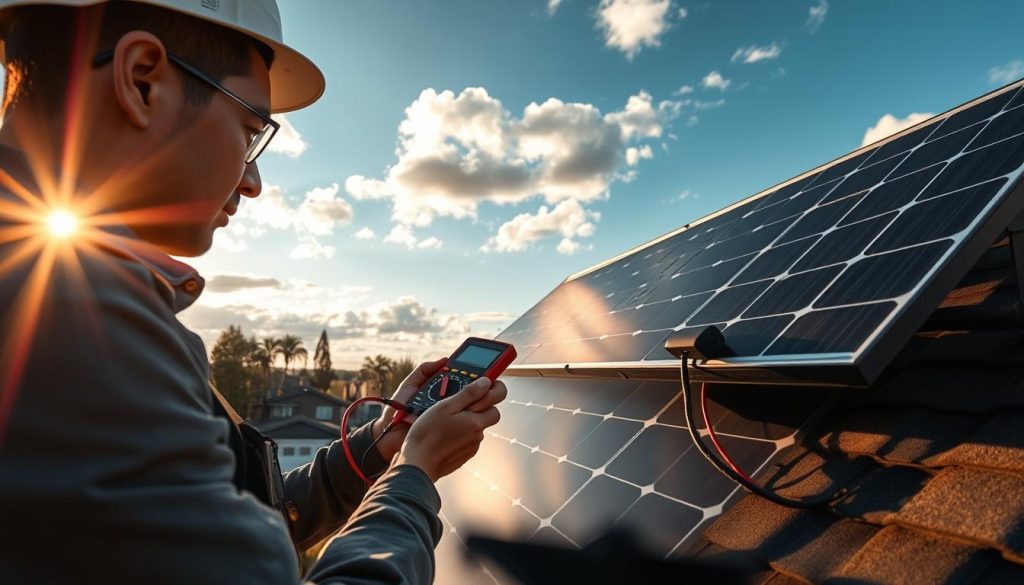
Proactive maintenance prevents performance drops in eco-friendly monitoring systems. Dust accumulation on surfaces can slash efficiency by 25% within six months. A microfiber wipe-down every two weeks preserves optimal energy capture.
Batteries need replacement every 3-5 years depending on usage. Lithium-ion models last longer but require voltage checks quarterly. Always recycle old units through NEA-approved centers to comply with Singapore’s sustainability laws.
Follow this monthly checklist:
- Inspect terminals for corrosion using dielectric grease
- Verify firmware updates for enhanced security features
- Track kWh production to spot declining output early
Typhoon season demands extra precautions. Reinforce mounts with stainless steel brackets and check cable seals. Heavy rains test weatherproofing – listen for unusual sounds during downpours.
“Preventative care reduces repair costs by 40% compared to reactive fixes.”
Schedule annual inspections with certified technicians. They’ll calibrate charge controllers and assess system health using thermal imaging. Proper care ensures your setup withstands Singapore’s humid climate for years.
Getting the Most Out of Your Solar-Powered Security Camera
Maximize your surveillance efficiency with smart solar-powered solutions. The Solocam S340 camera delivers 270° coverage and 5x digital zoom, ideal for expansive properties. With just two hours of daily charging, it runs for three months—perfect for Singapore’s unpredictable weather.
AI-driven features like human/vehicle detection reduce false alerts. Pair your system with Google Home for voice-controlled monitoring. WPA3 encryption safeguards footage from cyber threats.
Choose between local or cloud storage based on privacy needs. Expand coverage by adding secondary units—scalable applications adapt to growing security demands.
These solar security systems blend cutting-edge tech with sustainability. They’re a reliable solution for homes and businesses alike.
FAQ
How long can a solar-powered security camera run without sunlight?
Most systems with a backup battery can operate for 2-5 days, depending on capacity and usage. High-quality lithium-ion batteries extend runtime.
What size panel do I need for my outdoor monitoring setup?
A 10W-20W unit typically suffices for standard models. Check the camera’s wattage and daily energy needs to ensure proper sizing.
Can these systems work in cloudy or shaded areas?
Yes, but efficiency drops. Consider larger panels or supplementary power in low-light locations for consistent operation.
Do I need special wiring for the installation?
Weatherproof cabling is essential for outdoor use. Proper gauge wiring prevents voltage drop over longer distances between components.
How often should I clean the photovoltaic surface?
Monthly cleaning maintains peak performance. Dust, snow, or debris can reduce energy production by up to 15%.
What’s the average lifespan of these systems?
Quality setups last 5-7 years. Batteries typically require replacement every 2-3 years, while panels often outlast other components.
Can I expand my existing setup with additional cameras?
Yes, but recalculate power needs first. Upgrading the battery bank or adding panels may be necessary for extra devices.
Are there weather-resistant options for harsh climates?
A> Many manufacturers offer IP65+ rated enclosures. Look for corrosion-resistant materials and -40°F to 140°F operating ranges.


