
Understanding Jobsite Security Camera Rental Cost: Buyer’s Guide
Construction sites in Singapore face unique challenges that make effective surveillance essential. Large projects require robust monitoring solutions to maintain safety and protect valuable equipment.
For projects exceeding $5 million, the Singapore government mandates Video Surveillance Systems (VSS). This requirement ensures compliance while significantly reducing risks on site.
Globally, theft on construction locations causes massive financial losses. Annual losses range from $300 million to $1 billion across the industry.
In Singapore, a basic setup with four cameras typically costs between $600 and $1,600 monthly. Several factors influence pricing, including camera types, features, and rental duration.
This guide explores everything you need to know about surveillance systems. We’ll cover technical specifications, regulatory requirements, and cost-benefit analysis between renting and purchasing equipment.
Key Takeaways
- Singapore mandates surveillance systems for construction projects over $5 million
- Global construction theft results in $300 million to $1 billion in annual losses
- Basic four-camera setups cost $600-$1,600 monthly in Singapore
- Camera types and features significantly impact rental pricing
- Understanding both technical and regulatory requirements is crucial
- Surveillance systems provide both security enhancement and compliance benefits
- Renting versus purchasing requires careful cost-benefit analysis
Why Construction Site Security Is Non-Negotiable
Protecting valuable assets and ensuring worker well-being has become paramount in today’s construction industry. Comprehensive oversight measures address multiple risk factors simultaneously.
The Staggering Financial Impact of Jobsite Theft
Construction environments face significant financial threats from theft and vandalism. Industry data reveals staggering annual losses ranging from $300 million to $1 billion globally.
Twenty-one percent of building projects report weekly theft incidents. This vulnerability highlights the critical need for protective measures.
Implementing video monitoring can reduce theft by up to 70%. The deterrent effect alone makes surveillance systems invaluable for project protection.
Beyond Theft: Enhancing Worker Safety and Reducing Accidents
Modern surveillance extends far beyond theft prevention. These systems play a crucial role in enhancing overall site safety.
Continuous monitoring helps identify potential hazards before accidents occur. Documentation provides clear evidence for investigations and liability claims.
Comprehensive incident recording reduces risks through better accountability. Worker protection becomes significantly enhanced with proper oversight.
Meeting Singapore’s Mandatory Surveillance Mandates
Singapore’s Ministry of Manpower has established specific requirements for larger projects. The Video Surveillance System mandate applies to developments exceeding $5 million.
Implementation must be completed by June 2024 to avoid penalties. Non-compliance can result in fines reaching $50,000.
These regulatory requirements ensure both safety enhancement and compliance benefits. Proper system implementation protects projects from financial and legal repercussions.
The combination of theft reduction, safety improvement, and regulatory compliance makes comprehensive monitoring essential for modern construction projects.
Key Factors Influencing Jobsite Security Camera Rental Cost
Understanding pricing variables helps construction managers make informed decisions about surveillance solutions. Multiple elements contribute to the final monthly expense.
Camera Type: Fixed, Dome, PTZ, and Their Price Tiers
Different surveillance models serve unique purposes on construction sites. Fixed units provide consistent coverage at the most budget-friendly rate.
Dome options offer discreet monitoring with wider viewing angles. These typically cost 20% less than pan-tilt-zoom models.
PTZ cameras deliver maximum flexibility through remote control capabilities. Their premium pricing reflects broader coverage and advanced functionality.
The Price of Advanced Features: Night Vision, AI, and Connectivity
Enhanced capabilities significantly impact monthly rental fees. Night vision and infrared technology enable 24/7 monitoring.
Artificial intelligence features reduce false alarms through smart motion detection. LTE connectivity adds $50-$100 to monthly bills for remote access.
Solar-powered units command a 15% price premium. This cost provides operational independence from traditional power sources.
How Rental Duration and Site Scale Affect Your Monthly Bill
Project timeline plays a crucial role in overall expenditure. Longer rental terms often reduce per-month rates through volume discounts.
Basic four-camera setups range from $600 to $1,600 monthly in Singapore. Entry-level pricing starts at $150 per unit for fundamental surveillance.
Renting equipment can save up to 60% compared to purchasing for projects under 12 months. This makes temporary solutions particularly cost-effective.
An Overview of Security Camera Types for Construction Sites
Modern construction projects demand tailored surveillance solutions based on site layout and security needs. Each camera type serves specific purposes that enhance overall protection.
Selecting the right equipment ensures optimal coverage while maintaining cost efficiency. Understanding technical specifications helps managers make informed decisions.
Dome Cameras for Discreet Indoor Monitoring
Dome units provide excellent coverage for indoor areas and equipment yards. Their 150-foot range makes them ideal for medium-sized spaces.
These devices feature vandal-resistant designs that withstand high-risk environments. The durable construction ensures reliable performance throughout project durations.
Many professionals recommend brands like Hikvision for consistent quality. Their discreet appearance helps maintain unobtrusive monitoring.
Bullet Cameras for Long-Range Perimeter Coverage
Bullet models excel at perimeter surveillance with their 250-foot range. They provide clear visuals even in challenging lighting conditions.
These units typically offer 1080p or 4K resolution for accurate identification. High-quality footage supports evidence collection and incident documentation.
Their extended range makes them perfect for boundary protection. Construction managers often use them to monitor entry points and vulnerable areas.
PTZ Cameras for Maximum Flexibility on Large Sites
PTZ (Pan-Tilt-Zoom) units deliver unmatched adaptability for large-scale projects. Their 360-degree rotation and 30x optical zoom provide comprehensive coverage.
Operators can remotely control these devices to focus on specific areas. This flexibility makes them invaluable for dynamic construction environments.
Brands like Dahua offer reliable PTZ solutions with advanced features. These systems significantly enhance monitoring capabilities across extensive sites.
“The right camera placement transforms good security into great protection”
Each camera type addresses different construction security requirements. Proper selection directly impacts theft prevention and safety enhancement.
Resolution quality remains crucial for effective surveillance and compliance. Higher resolution ensures clearer footage for identification purposes.
Understanding these options helps construction professionals optimize their surveillance investment. The right combination creates a robust security framework.
Essential Features for Singapore’s Jobsite Environment
Singapore’s construction environments demand specialized surveillance equipment to handle unique local conditions. The tropical climate and regulatory requirements create specific needs for monitoring solutions.
Selecting the right features ensures optimal performance and compliance. Advanced capabilities address both environmental challenges and operational efficiency.
Night Vision and Infrared Capabilities for 24/7 Security
Complete darkness shouldn’t compromise your site protection. Infrared technology provides clear visibility up to 100 feet in total darkness.
High-lumen systems deliver sharper nighttime images for accurate identification. This ensures continuous monitoring regardless of lighting conditions.
Round-the-clock surveillance becomes possible with proper night vision equipment. Potential threats are visible even during overnight hours.
AI-Powered Motion Detection to Reduce False Alarms
Intelligent analytics transform how surveillance systems operate. AI-powered detection reduces unnecessary alerts by 40-73%.
Smart algorithms distinguish between actual threats and environmental movements. This means fewer false alarms and more relevant notifications.
Operational efficiency improves significantly with intelligent monitoring. Teams focus on genuine security concerns rather than constant false alerts.
Weatherproofing and Durability for a Tropical Climate
Singapore’s tropical environment demands robust equipment protection. IP67 ratings are essential for withstanding heavy rain and high humidity.
Proper weatherproofing ensures reliable performance in challenging conditions. Equipment must function seamlessly from -40°C to 70°C.
Durable construction reduces maintenance needs and extends equipment lifespan. This is crucial for long-term project requirements.
Key considerations for tropical climate operation:
- IP67 rating for complete protection against water and dust ingress
- Wide temperature tolerance for Singapore’s climate variations
- Corrosion-resistant materials for humid environments
- UV protection for constant sun exposure
- Enhanced cooling systems for optimal performance
These features work together to create reliable surveillance solutions. They address Singapore’s specific environmental challenges while maintaining operational effectiveness.
Understanding Singapore’s Regulatory Landscape for VSS
Singapore’s construction industry operates within a strict regulatory framework that demands careful attention to surveillance requirements. The Ministry of Manpower has established clear guidelines that every project manager must understand.
MOM’s Video Surveillance System Requirements for Projects Over $5M
Singapore mandates comprehensive monitoring for major construction projects. The Video Surveillance System requirement applies to all developments valued at $5 million or more.
Implementation must be completed by June 2024 to avoid significant penalties. Non-compliance can result in fines reaching $50,000 for violations.
This regulation represents a proactive approach to site safety and asset protection. Proper implementation ensures both regulatory adherence and operational benefits.
Technical Standards: Resolution, Frame Rate, and Data Retention
Singapore’s regulations specify precise technical requirements for surveillance equipment. Systems must record at minimum 1080p resolution with 12 frames per second.
Footage retention extends for 30 days to ensure availability for audits or investigations. This timeframe allows thorough review of incidents and compliance verification.
Approved vendors include industry leaders like Hikvision and Dahua. Their equipment meets Singapore’s stringent technical specifications.
Privacy Considerations and Worker Notification Protocols
Privacy protection remains crucial when implementing monitoring systems. Workers must receive clear notification about surveillance activities.
Transparency builds trust while maintaining regulatory compliance. Proper documentation includes installation records and maintenance logs.
Small and medium enterprises can access the Productivity Solutions Grant. This program covers up to 70% of surveillance system costs for qualifying businesses.
“Regulatory compliance isn’t just about avoiding penalties—it’s about creating safer work environments through proper oversight”
Implementation planning should begin well before the June 2024 deadline. Technical specifications directly impact system selection and overall project costs.
Compliance brings significant benefits beyond avoiding penalties. Reduced liability risks and enhanced safety make proper implementation valuable for every construction project.
Renting vs. Buying: A Cost-Benefit Analysis
Choosing between temporary monitoring solutions and permanent installations requires careful financial planning. The decision impacts both immediate budgets and long-term operational efficiency.
Upfront Savings and Flexibility of Rental Agreements
Monthly rates begin at $150 per unit for basic surveillance solutions. This approach eliminates large initial investments that strain project budgets.
Renting surveillance equipment saves up to 60% for projects under twelve months. The flexibility allows scaling protection as project needs evolve.
Changing site layouts become easier with adaptable monitoring arrangements. This adaptability proves invaluable for dynamic construction environments.
Total Cost of Ownership for Long-Term Projects
A five-year comparison reveals significant advantages for rental arrangements. Purchased systems require substantial upfront investment including installation expenses.
Equipment depreciation affects owned systems dramatically. They can lose 60% of their value within just two years of operation.
Maintenance and support services add hidden expenses to purchased setups. These ongoing costs impact the total financial commitment significantly.
Included Maintenance and Support: The Hidden Value of Renting
Professional maintenance comes standard with most rental agreements. This coverage reduces unexpected repair bills and operational disruptions.
Technical support ensures continuous system functionality throughout project timelines. Quick response times maintain uninterrupted monitoring capabilities.
Insurance premiums can decrease by 15% when using rented surveillance systems. This reduction adds another layer of financial benefit.
“Rental agreements transform capital expenses into predictable operational costs while maintaining full functionality”
Tax considerations further favor rental arrangements. Monitoring expenses become 100% deductible compared to 20% depreciation for purchased equipment.
This comprehensive financial analysis demonstrates the clear advantages of rental solutions. Both short-term and long-term projects benefit from this approach.
The Advantage of Mobile and Solar-Powered Rental Towers
Mobile surveillance towers bring unprecedented flexibility to construction site protection. These self-contained units offer complete monitoring solutions without permanent infrastructure requirements.
Modern construction projects benefit significantly from adaptable security approaches. Mobile towers provide comprehensive coverage where traditional systems cannot reach.
Rapid Deployment for Dynamic and Changing Site Layouts
Solar-powered units achieve operational status in just 45 minutes. This rapid deployment capability makes them ideal for remote locations without power access.
Wireless configurations eliminate complex wiring requirements entirely. Installation time reduces dramatically compared to traditional fixed systems.
Trailer-mounted systems with 4G connectivity cover areas up to 500 square meters. Their mobility allows perfect positioning as project needs evolve.
Rapid re-deployment procedures enable moving between locations with minimal downtime. This flexibility proves invaluable for projects with multiple phases.
Operational Independence from Mains Power and Fixed Internet
Solar-powered units command a 15% premium for complete operational independence. This investment eliminates reliance on traditional power infrastructure.
4G-enabled cameras maintain continuous connectivity without fixed internet lines. Remote monitoring remains uninterrupted across entire project durations.
Weather-optimized battery systems ensure reliability in all environmental conditions. Tropical climates demand robust power management capabilities.
Key operational advantages include:
- Complete independence from electrical grid limitations
- Continuous 4G connectivity for real-time remote access
- Weather-resistant battery systems for tropical conditions
- Reduced infrastructure costs and installation complexity
GPS Anti-Theft Tracking for the Security Units Themselves
Advanced GPS tracking adds protection for the monitoring equipment itself. This feature prevents unauthorized removal of valuable surveillance assets.
Real-time location monitoring ensures quick recovery if units are moved without authorization. Construction sites benefit from this additional security layer.
“Mobile surveillance towers represent the future of adaptable construction security—combining rapid deployment with complete operational independence”
The combination of solar power, wireless connectivity, and anti-theft protection creates comprehensive mobile security solutions. These systems address the unique challenges of dynamic construction environments effectively.
Cost-benefit analysis strongly favors mobile solutions for projects with changing layouts. The flexibility and reduced infrastructure requirements provide significant advantages over fixed installations.
What to Expect During Professional Installation and Setup
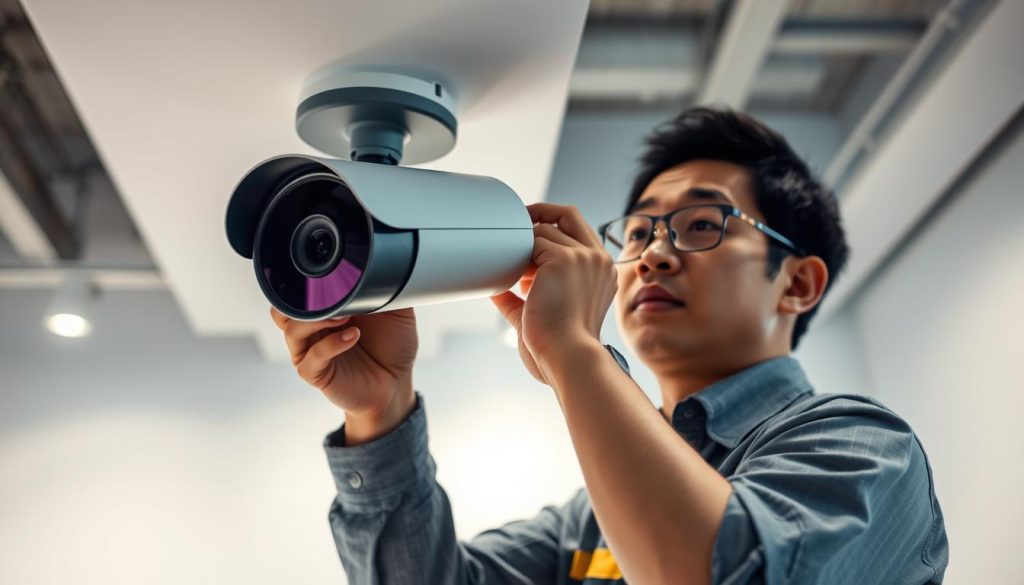
Professional installation transforms surveillance equipment into a complete protection solution. Certified technicians typically complete deployments in under four hours.
This efficient process ensures minimal disruption to ongoing construction activities. Proper setup maximizes system performance and regulatory compliance.
The Importance of a Pre-Installation Site Survey
Thorough site surveys identify optimal monitoring points before equipment placement. Technicians analyze entire construction sites for coverage gaps and blind spots.
This assessment determines the exact number of cameras needed. It also identifies the best positions for comprehensive visibility.
Surveillance systems require strategic placement for maximum effectiveness. Proper planning prevents costly repositioning after installation.
Adhering to MOM Guidelines for Camera Placement and Height
Mounting heights must follow Ministry of Manpower specifications for compliance. These regulations ensure clear views while maintaining proper oversight.
Installation teams verify all equipment meets technical requirements. This includes 1080p resolution and appropriate frame rates.
Proper placement supports both safety monitoring and theft prevention. Compliance documentation becomes part of permanent project records.
Ensuring Backup Power for Uninterrupted Monitoring
Backup power solutions maintain operation during electrical outages. Systems must continue functioning to meet regulatory requirements.
Professional installers typically recommend these options:
- Solar power systems for sustainable energy independence
- Diesel generators for extended outage protection
- Battery backups for short-term power interruptions
NEMA 4X-rated equipment provides monsoon season resilience. This protection ensures 98.5% system uptime in tropical conditions.
Installation documentation includes complete compliance records. These materials support audits and maintenance tracking.
Professional setup offers warranty protection and technical support access. These benefits ensure long-term system reliability.
“Proper installation isn’t just about mounting equipment—it’s about creating a seamless integration between technology, environment, and regulatory requirements”
Immediate action during setup prevents future operational issues. Comprehensive installation addresses both current and future project needs.
The right installation approach maximizes your investment in surveillance technology. It delivers peace of mind through reliable performance.
Evaluating a Security Camera Rental Provider in Singapore
Choosing the right monitoring partner makes all the difference for your construction project’s protection. The ideal provider delivers both technical excellence and responsive support services.
Thorough evaluation ensures your investment brings maximum value and compliance. Look for partners who understand Singapore’s unique regulatory environment.
Checking for Relevant Certifications and Local Experience
Industry experience matters when selecting your surveillance partner. Providers with 25+ years in the field offer proven reliability and deep market knowledge.
High customer retention rates indicate consistent service quality. A 98% retention rate demonstrates exceptional client satisfaction.
Verify certifications like SSIC and BizSafe for regulatory compliance. These credentials ensure adherence to Singapore’s specific requirements.
Localized technical teams provide faster response times. They understand regional conditions and compliance nuances.
Assessing the Scope of Support and Emergency Response Times
Service level agreements define your provider’s commitment to support. Compare SLAs to understand maintenance schedules and response guarantees.
Top providers offer 15-minute emergency response for critical issues. This rapid support minimizes downtime and maintains continuous monitoring.
Technical assistance should include both remote and on-site options. Comprehensive support covers everything from initial setup to ongoing maintenance.
Evaluate the provider’s project portfolio and customer references. Past performance indicates future service quality.
Understanding Data Ownership, Encryption, and Cybersecurity
Data protection remains crucial for modern surveillance systems. AES-256 encryption ensures your footage remains secure from unauthorized access.
Clear data ownership policies prevent future disputes. Your project should retain full rights to all recorded material.
Cybersecurity protocols protect against digital threats and breaches. Robust measures safeguard both live feeds and stored footage.
Access control management regulates who can view or download recordings. Proper protocols maintain privacy while ensuring necessary availability.
“The right provider doesn’t just supply equipment—they deliver peace of mind through comprehensive support and ironclad security”
Total solution assessment considers equipment quality, support services, and compliance capabilities. The best partners excel in all three areas.
Your construction sites deserve protection from experienced, certified professionals. Thorough evaluation ensures you select a partner who meets all your project’s unique needs.
Integrating New Cameras with Existing Site Systems
Modern construction projects require seamless integration between new equipment and existing infrastructure. Proper integration maximizes protection while minimizing operational disruptions.
Compatibility testing ensures all components work together effectively. This approach creates comprehensive oversight across entire construction sites.
ONVIF Compliance for Broader Platform Compatibility
ONVIF standards guarantee compatibility across diverse monitoring platforms. This protocol supports integration with over 30 different surveillance systems.
Equipment from various manufacturers can work together seamlessly. This flexibility allows construction managers to choose the best solutions.
Technical requirements include standardized communication protocols. These ensure reliable data exchange between different system components.
Connecting Surveillance with Alarm Systems for Faster Response
Integrated alarm systems dramatically improve response capabilities. Automated triggering reduces reaction times by up to 73%.
Motion detectors and heat sensors enhance overall functionality. These IoT devices provide additional layers of protection.
Dual authentication protocols add extra security for access control. This prevents unauthorized system changes or footage access.
Alarm-triggered recording ensures critical events are captured automatically. This feature provides valuable evidence for incident investigations.
Utilizing Centralized Dashboards for Multi-Site Management
Centralized control systems transform how construction companies manage multiple projects. Single dashboards provide complete visibility across all locations.
Live feed integration enables real-time oversight from control rooms. Operators can monitor situations as they develop.
This approach significantly improves operational efficiency for large companies. Management gains comprehensive insight into all active construction sites.
Cost reductions come through streamlined operations and reduced staffing needs. The system pays for itself through improved productivity.
“True integration isn’t about connecting devices—it’s about creating a unified protection ecosystem that operates as a single intelligent unit”
Compatibility testing remains essential before full implementation. Technical teams verify all components work together perfectly.
The result is a comprehensive monitoring solution that exceeds basic requirements. Both safety and theft prevention see significant improvements.
Large construction companies benefit most from these integrated approaches. Multiple projects become easier to manage through centralized oversight.
Proven Strategies to Maximize Your Security Investment
Smart planning and regular maintenance transform basic monitoring into comprehensive protection. These approaches ensure your surveillance delivers maximum value throughout the project lifecycle.
Effective strategies address both technical performance and operational efficiency. They create reliable systems that prevent issues before they occur.
Conducting Layered Site Surveys to Eliminate Blind Spots
Thorough site analysis prevents 89% of coverage gaps before installation begins. Multiple survey layers identify potential visibility issues from different angles.
Layered zoning strategies optimize equipment placement for complete oversight. This approach ensures every critical area receives proper monitoring attention.
Technical teams analyze site layouts from ground level and elevated positions. They identify the best mounting points for comprehensive visibility.
Regular survey updates accommodate changing construction phases. This maintains optimal coverage as projects progress and layouts evolve.
Implementing Clear Data Management and Access Protocols
AES-256 encryption protects all recorded footage from unauthorized access. This military-grade security ensures your data remains completely protected.
Automated purging systems maintain compliance with 30-day retention requirements. They automatically delete older footage while preserving recent recordings.
Access hierarchy controls determine who can review specific video content. Different permission levels prevent unnecessary footage exposure.
Essential data management components include:
- Multi-level user authentication for system access control
- Automated backup systems preventing data loss during outages
- Regular cybersecurity audits identifying potential vulnerability points
- Clear audit trails tracking all system access and configuration changes
These protocols ensure both security and regulatory compliance. They protect sensitive information while maintaining operational transparency.
Scheduling Proactive Maintenance to Ensure System Uptime
Bi-monthly inspections prevent 92% of potential system failures before they occur. Regular checks identify issues while they remain easily fixable.
Professional lens cleaning every 90 days maintains crystal-clear footage quality. Dust and debris removal ensures consistent monitoring performance.
Scheduled firmware updates keep all equipment current with latest features. These updates often include important security patches and performance improvements.
24/7 technical support provides immediate assistance for critical issues. Rapid response minimizes downtime and maintains continuous protection.
“Proactive maintenance isn’t an expense—it’s an investment in uninterrupted protection and long-term system reliability”
Comprehensive maintenance schedules include both remote and on-site components. This combination addresses all potential performance issues effectively.
The result is surveillance that operates at peak performance throughout your project. Both safety and theft prevention see significant improvements with proper upkeep.
The Tangible ROI of a Robust Surveillance System
Investing in monitoring systems for construction sites delivers impressive returns. These solutions reduce theft by up to 70% and cut insurance premiums by 15-80%. Projects like Keppel Bay saw significant savings.
Beyond theft prevention, these systems enhance safety. Night shift accidents dropped 67% with better oversight. They also ensure full compliance with regulations across multiple sites.
Operational efficiency improves dramatically. Managers track progress remotely. Police reports file 92% faster with video evidence.
Financial benefits include full tax deductibility for monitoring expenses. Maintenance savings reach $200-$400 monthly. The overall value spans protection, compliance, and cost efficiency.
FAQ
What are the main factors that determine the price of renting surveillance equipment for a project?
The main factors include the type of cameras selected, the presence of advanced monitoring features like night vision or AI detection, the overall scale of the area needing coverage, and the length of the rental agreement.
Is it mandatory to have surveillance systems on construction projects in Singapore?
Yes, for projects with a contract value exceeding million, the Ministry of Manpower (MOM) mandates the installation of a Video Surveillance System (VSS) to enhance site safety and security.
What are the benefits of renting surveillance equipment versus purchasing it outright?
Renting offers lower upfront costs, includes maintenance and support, provides flexibility to scale or change systems as the project evolves, and ensures you always have access to technology that meets the latest regulatory requirements.
How do mobile, solar-powered surveillance towers benefit a dynamic construction site?
These towers offer rapid deployment without reliance on fixed power or internet infrastructure. They are ideal for changing site layouts and often include GPS anti-theft tracking to protect the equipment itself.
What should I look for when choosing a provider for my surveillance needs?
Look for a provider with relevant local certifications, proven experience with construction sites, clear data ownership and cybersecurity policies, and a strong scope of support with defined emergency response times.
How can I ensure my new surveillance equipment integrates with my existing site systems?
Choose ONVIF-compliant equipment for broader compatibility. A professional installer can ensure seamless integration with existing alarm systems and centralized management dashboards for efficient multi-site oversight.


