
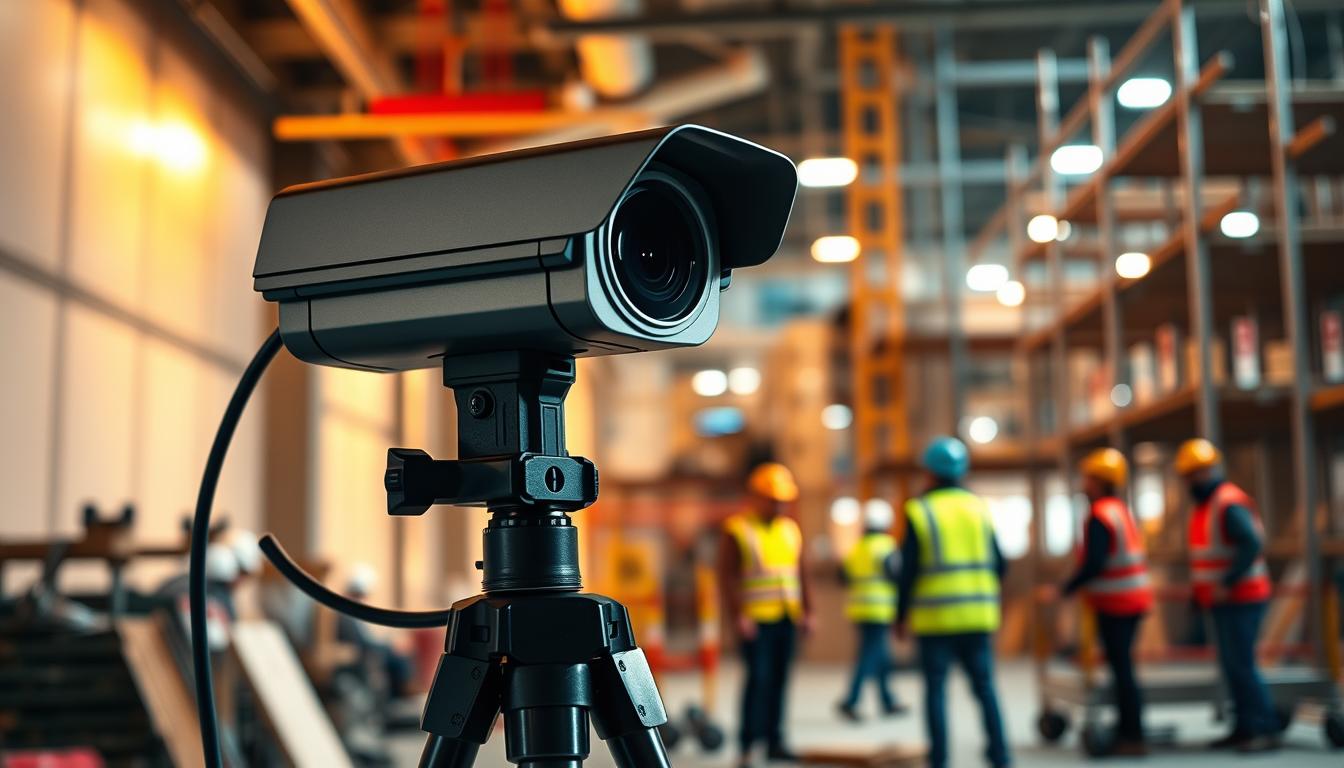
Understand Jobsite Security Camera Rental Cost
Construction sites in Singapore face unique challenges, making effective surveillance systems essential. For projects exceeding $5 million, the government mandates the use of Video Surveillance Systems (VSS). This requirement ensures safety and compliance while reducing risks.
Globally, theft on construction sites causes significant financial losses, ranging from $300 million to $1 billion annually. In Singapore, a basic setup with four cameras can cost between $600 and $1,600 monthly. Factors like camera types and rental duration influence the final price.
Investing in CCTV systems not only enhances security but also helps meet regulatory standards. Compliance reduces long-term liability risks, making it a smart choice for project managers.
Key Takeaways
- Singapore mandates VSS for projects over $5 million.
- Construction theft causes $300M-$1B in losses annually in the U.S.
- Basic 4-camera setups cost $600-$1,600 monthly in Singapore.
- Camera types and rental duration affect pricing.
- Compliance reduces long-term liability risks.
Why Jobsite Security Cameras Are Essential
Theft and safety concerns are driving the need for advanced monitoring solutions. Construction sites are particularly vulnerable, with 21% of U.S. sites reporting weekly theft incidents. In Singapore, the Ministry of Manpower (MOM) has mandated the implementation of Video Surveillance Systems (VSS) by June 2024, emphasizing the importance of compliance and safety.
The Rising Threat of Theft on Construction Sites
Theft on construction sites is a growing issue, causing significant financial losses globally. Implementing video surveillance can reduce theft by up to 70%, making it a cost-effective solution. Advanced systems, like WCCTV towers, store up to 4TB of footage with a 30-day retention period, ensuring evidence is available when needed.
Infrared capabilities in modern systems prevent night-time breaches, providing round-the-clock protection. This feature is especially crucial for sites operating late hours or in low-light conditions.
Benefits of Surveillance for Safety and Compliance
Beyond theft prevention, surveillance systems play a vital role in ensuring safety and compliance. They document accidents, providing clear evidence for investigations and liability claims. Remote monitoring allows for real-time intervention, reducing response times during emergencies.
Non-compliance with MOM regulations can result in fines of up to $50,000. Investing in VSS not only avoids penalties but also enhances overall site management and operational efficiency.
- 70% theft reduction with surveillance implementation.
- Infrared capabilities prevent night-time breaches.
- Accident documentation improves liability management.
- Remote monitoring enables real-time intervention.
- MOM fines up to $50,000 for non-compliance.
Key Factors Affecting Jobsite Security Camera Rental Cost
Understanding the factors that influence pricing helps in making informed decisions. The type of equipment and additional features play a significant role in determining the final expense. Let’s explore these elements in detail.
Camera Types and Their Impact on Pricing
Different camera models come with varying price tags. Dome cameras, for instance, cost 20% less than pan-tilt-zoom (PTZ) models. Fixed cameras are budget-friendly, while PTZ options offer flexibility at a higher price.
Choosing the right type depends on your site’s needs. Fixed cameras are ideal for consistent monitoring, while PTZ models provide broader coverage and adaptability.
Additional Features That Influence Costs
Advanced features like night vision and motion detection can enhance performance but also increase costs. Infrared capabilities, for example, provide better visibility in low-light conditions, making them worth the investment.
LTE connectivity adds $50-$100 monthly to rental fees, enabling remote monitoring. Solar-powered units, while eco-friendly, command a 15% price premium due to their self-sustaining design.
Cloud storage fees per camera and weatherproofing requirements for tropical climates also contribute to the overall expense. These factors ensure durability and functionality in challenging environments.
- Dome cameras are 20% cheaper than PTZ models.
- LTE connectivity adds $50-$100 monthly.
- Solar-powered units have a 15% price premium.
- Infrared night vision improves low-light monitoring.
- Weatherproofing is essential for tropical climates.
Types of Construction Site Security Cameras Available
Selecting the right monitoring equipment is crucial for construction site safety. Different types of cameras cater to specific needs, ensuring optimal coverage and performance. Let’s explore the options available for various site areas.
Dome Cameras for Discreet Monitoring
Dome cameras are ideal for discreet monitoring, blending seamlessly into the environment. They offer a 150ft range, making them suitable for indoor applications like equipment yards. Their vandal-resistant design ensures durability in high-risk areas.
Bullet Cameras for Long-Range Coverage
Bullet cameras excel in long-range monitoring, covering up to 250ft. They are perfect for perimeter surveillance, providing clear visuals even in low-light conditions. With 1080p or 4K resolution, they deliver sharp images for accurate identification.
PTZ Cameras for Flexible Surveillance
PTZ (Pan-Tilt-Zoom) cameras offer unmatched flexibility with 360° rotation and 30x optical zoom. These cameras are ideal for large-scale projects, allowing operators to focus on specific areas as needed. Their advanced features like motion tracking enhance real-time monitoring.
- Dome cameras: 150ft range, vandal-resistant, ideal for indoor use.
- Bullet cameras: 250ft range, excellent for perimeter monitoring.
- PTZ cameras: 360° rotation, 30x zoom, perfect for large sites.
- Recommended brands: Hikvision and Dahua for reliable performance.
Advanced Features to Look for in Security Cameras
Modern surveillance systems come packed with features that enhance monitoring efficiency. These advanced features ensure round-the-clock protection, reduce false alarms, and provide real-time access to footage. Let’s explore the key capabilities that make these systems indispensable.
Night Vision for 24/7 Monitoring
Infrared (IR) night vision is a game-changer for sites operating in low-light conditions. Effective up to 100 feet in complete darkness, this feature ensures clear footage even at night. Systems with high lumens deliver sharper images, making it easier to identify potential threats.
Motion Detection and Real-Time Alerts
AI-powered motion detection reduces false alarms by 40%, ensuring you only receive relevant notifications. When movement is detected, the system sends instant alerts via push notifications or email. This allows for quick responses to potential breaches.
Remote Access and Mobile App Integration
With remote monitoring, you can access live footage from anywhere using a mobile app. Reolink Go Plus, for example, offers 4G app control, enabling seamless management of your system. Geofencing capabilities further enhance security by triggering alerts when devices enter or leave designated areas.
“The integration of advanced features like AI analytics and mobile app control has revolutionized site surveillance.”
- IR night vision ensures clear footage up to 100 feet in darkness.
- AI analytics reduce false alarms by 40%.
- Mobile apps like Reolink Go Plus offer 4G control and geofencing.
- Push notifications provide faster responses than email alerts.
- Live view latency benchmarks ensure real-time monitoring.
Regulatory Requirements for Security Cameras in Singapore
Singapore’s construction industry must adhere to strict regulations for video surveillance systems. These rules ensure safety and compliance across all large-scale projects. From June 2024, projects valued at $5 million or more must implement Video Surveillance Systems (VSS) as mandated by the Ministry of Manpower (MOM).
Mandatory Video Surveillance Systems (VSS)
The MOM requires VSS to meet specific standards. Systems must record at a minimum of 1080p resolution and 12 frames per second. Footage must be retained for 30 days to ensure availability for audits or investigations. These requirements aim to enhance safety and accountability on construction sites.
Compliance with Ministry of Manpower Guidelines
Meeting MOM guidelines is crucial for avoiding penalties. Approved VSS vendors include Hikvision and Dahua, known for their reliable systems. Installation deadlines vary based on project timelines, so early planning is essential.
Privacy considerations are also critical. Workers must be informed about monitoring to maintain trust and transparency. Proper documentation, including installation records and maintenance logs, is required for audits.
Small and medium enterprises (SMEs) can benefit from the Productivity Solutions Grant (PSG), which covers up to 70% of VSS costs. This support makes compliance more accessible for smaller projects.
- VSS required for projects ≥$5M from June 2024.
- 1080p/12fps recording standards mandated.
- 30-day footage retention ensures audit readiness.
- Approved vendors include Hikvision and Dahua.
- PSG grants cover up to 70% of costs for SMEs.
Cost-Effective Solutions for Construction Site Surveillance
Effective monitoring solutions are vital for managing risks on construction sites in Singapore. Choosing the right approach can save time, money, and ensure compliance with regulations. Let’s explore how renting surveillance systems can be a smart financial decision.
Renting vs. Purchasing: A Cost Comparison
Renting surveillance equipment can save up to 60% compared to purchasing, especially for projects lasting less than 12 months. Monthly rates start at $150 per camera, making it an affordable option for short-term needs. A 5-year total cost of ownership (TCO) comparison reveals significant savings for renters.
Purchasing requires a higher upfront investment, including installation and maintenance costs. Renting, on the other hand, includes these services, reducing unexpected expenses. For businesses with fluctuating project timelines, renting offers flexibility and scalability.
Flexible Rental Plans for Short-Term Projects
Rental plans are designed to meet the needs of short-term projects. No-deposit options are available for contracts lasting six months or more, easing financial burdens. These plans also include maintenance, ensuring systems remain operational without additional costs.
Mobile trailer deployments are another cost-effective solution. They provide immediate coverage for dynamic sites and can be relocated as needed. This flexibility is ideal for phased projects where surveillance needs change over time.
“Renting surveillance systems not only reduces costs but also ensures compliance and scalability for construction projects.”
- Renting saves 60% compared to purchasing for short-term projects.
- Monthly rates start at $150 per camera with no-deposit options.
- Maintenance is included in rental agreements, reducing hidden costs.
- Mobile trailers offer flexible deployment for dynamic sites.
- Tax deductions are available for rental expenses, further reducing costs.
Installation and Maintenance of Rental Security Cameras
Proper setup and upkeep are critical for maximizing the effectiveness of surveillance systems. Certified technicians ensure seamless deployment, completing installations in less than four hours. This guarantees minimal downtime and immediate coverage for your sites.
Professional Setup for Optimal Coverage
Before installation, a thorough site survey is conducted to identify key monitoring points. This ensures optimal placement and coverage. Mounting heights adhere to MOM guidelines, providing clear views while maintaining compliance.
Backup power requirements are also addressed during setup. This ensures uninterrupted operation, even during power outages. Such measures are essential for maintaining 98.5% system uptime, a standard guaranteed by professional providers.
Ongoing Maintenance to Ensure Reliability
Regular upkeep is vital for sustained performance. Free lens cleaning every 90 days ensures clear footage, while scheduled firmware updates keep systems up-to-date with the latest features. These practices enhance reliability and extend the lifespan of the equipment.
Technical support is available 24/7, providing immediate assistance whenever needed. This ensures that any issues are resolved quickly, minimizing disruptions to your operations.
- Site surveys ensure optimal camera placement.
- MOM-approved mounting heights guarantee compliance.
- Backup power ensures uninterrupted operation.
- Firmware updates keep systems current.
- 24/7 technical support resolves issues in real-time.
Benefits of Mobile and Temporary Camera Rentals
Mobile and temporary surveillance solutions offer unmatched flexibility for dynamic construction environments. These systems are designed to adapt to changing needs, providing reliable coverage without the constraints of permanent installations.
Portability for Dynamic Job Sites
One of the standout features of these systems is their portability. Solar-powered units can be deployed in as little as 45 minutes, making them ideal for sites without access to traditional power sources. Trailers equipped with 4G-enabled devices can cover up to 500m², ensuring comprehensive monitoring across large areas.
Anti-theft GPS tracking adds an extra layer of protection, allowing you to monitor the location of your equipment in real-time. This feature is particularly useful for sites with high theft risks or those that require frequent relocation.
Quick Deployment for Immediate Security
When time is of the essence, these systems shine. Wireless setups eliminate the need for complex wiring, reducing deployment times significantly. For example, wired systems can take hours to install, while wireless alternatives are ready in minutes.
Battery life is another critical factor. Advanced units are designed to withstand harsh weather conditions, ensuring uninterrupted operation. Rapid re-deployment procedures further enhance their appeal, allowing you to move systems between sites with minimal downtime.
- Solar units deploy in 45 minutes, ideal for remote sites.
- 4G cameras function without fixed internet, ensuring connectivity.
- Trailers cover 500m², providing extensive surveillance areas.
- Anti-theft GPS tracking enhances equipment security.
- Battery life optimized for all weather conditions.
How to Choose the Right Security Camera Provider
Selecting the right provider for your surveillance needs is a critical decision for any construction project. A reliable partner ensures your systems are effective, compliant, and tailored to your site’s requirements.
Evaluating Experience and Customer Support
Experience matters when it comes to surveillance solutions. Providers like WCCTV bring over 25 years of industry expertise, ensuring they understand the unique challenges of construction sites. A 98% customer retention rate speaks volumes about their reliability.
Customer support is equally important. Look for providers offering a 15-minute emergency response guarantee. This ensures quick resolution of any issues, minimizing downtime and maintaining site safety.
Assessing the Range of Services Offered
A comprehensive range of services is essential. Start by verifying vendor certifications, such as SSIC and BizSafe, to ensure compliance with local regulations. Localized technical teams can provide faster on-site support, reducing delays.
Compare service level agreements (SLAs) to understand response times and maintenance schedules. Cybersecurity protocols are another critical factor, protecting your data from breaches. Add-on services like data analytics can further enhance your system’s effectiveness.
“Choosing a provider with a proven track record and robust support ensures your surveillance system meets both operational and regulatory needs.”
- Verify vendor certifications (SSIC, BizSafe).
- Prioritize providers with localized technical teams.
- Compare SLAs for response times and maintenance.
- Evaluate cybersecurity protocols for data protection.
- Consider add-on services like data analytics.
Integrating Security Cameras with Existing Systems
Integrating surveillance tools with existing infrastructure can significantly boost operational efficiency. By combining advanced monitoring solutions with current setups, you ensure comprehensive coverage and enhanced security. This approach reduces risks and improves response times, making it a vital strategy for modern construction sites.
Enhancing Site Security with Video Monitoring
Video monitoring systems are designed to work seamlessly with existing frameworks. ONVIF compliance ensures compatibility with over 30 platforms, allowing for easy integration. This standard guarantees that devices from different manufacturers can communicate effectively, creating a unified system.
Live feed integration with control rooms enables real-time oversight. Operators can monitor multiple sites from a single dashboard, improving efficiency. Alarm-triggered recording ensures critical events are captured, providing valuable evidence when needed.
Connecting Cameras to Alarm Systems for Quick Response
Linking surveillance devices to alarm systems reduces response times by up to 73%. When an alarm is triggered, the system automatically records footage and sends alerts to designated personnel. This feature ensures immediate action, minimizing potential risks.
Dual authentication protocols add an extra layer of protection, ensuring only authorized users can access the system. Compatible IoT sensors, such as motion and heat detectors, further enhance functionality by providing additional data points for analysis.
- ONVIF compliance ensures compatibility with 30+ platforms.
- Live feed integration enables real-time remote monitoring.
- Alarm-triggered recording captures critical events automatically.
- Multi-site dashboards improve operational efficiency.
- IoT sensors like motion and heat detectors enhance functionality.
Best Practices for Implementing Security Cameras
Implementing surveillance systems effectively requires careful planning and adherence to best practices. Proper setup ensures optimal coverage, compliance, and long-term reliability. Let’s explore key strategies to maximize the effectiveness of your monitoring solutions.
Conducting Site Surveys for Optimal Placement
Site surveys are essential for identifying blind spots and high-risk areas. These assessments prevent 89% of coverage gaps, ensuring comprehensive monitoring. A risk assessment matrix helps prioritize placement based on potential threats.
Layered zoning strategies further enhance coverage. High-traffic zones and entry points should receive priority, while secondary areas can be monitored with fewer devices. This approach balances safety and cost-efficiency.
Establishing Clear Data Management Protocols
Data management is critical for maintaining the integrity of your systems. AES-256 encryption ensures secure storage, protecting footage from unauthorized access. Automated purging after a 30-day retention period complies with regulatory standards.
Access hierarchy controls who can review footage, reducing the risk of misuse. Regular cybersecurity audits ensure your systems remain protected against evolving threats. Incident response workflows provide clear steps for addressing breaches or technical issues.
“Effective data management and strategic placement are the cornerstones of a reliable surveillance system.”
- Site surveys prevent 89% of blind spots.
- Layered zoning strategies optimize coverage.
- AES-256 encryption ensures data security.
- Automated purging maintains compliance.
- Cybersecurity audits protect against threats.
Maximizing ROI on Jobsite Security Camera Rentals
Investing in surveillance systems offers measurable returns for construction projects. By reducing theft and enhancing operational efficiency, these systems provide significant financial and operational benefits. Let’s explore how they deliver value and improve outcomes.

Reducing Theft and Vandalism Costs
Sites equipped with surveillance systems experience an 80% reduction in theft incidents. This directly lowers losses from stolen materials and equipment. For example, a case study showed a $50,000 recovery in stolen assets within six months of installation.
Insurance premiums also decrease by 15-30% for sites with advanced monitoring. This reduction offsets rental costs, making it a cost-effective solution. Theft prevention not only saves money but also minimizes project delays caused by missing resources.
Improving Operational Efficiency with Surveillance
Remote monitoring increases productivity by 22%, as managers can oversee multiple sites without being physically present. This saves time and reduces the need for frequent on-site visits. Automated audits further streamline work, allowing teams to focus on critical tasks.
Equipment utilization tracking ensures tools are used efficiently, reducing unnecessary purchases. Safety compliance bonus structures also incentivize adherence to regulations, lowering liability risks and enhancing overall site management.
“Surveillance systems are not just about security; they’re a strategic investment that drives efficiency and profitability.”
- 80% theft reduction with surveillance implementation.
- Insurance premiums decrease by 15-30%.
- Remote monitoring boosts productivity by 22%.
- Equipment tracking reduces unnecessary purchases.
- Safety compliance bonuses lower liability risks.
Take Action to Secure Your Construction Site Today
With MOM deadlines approaching, now is the time to ensure your construction sites meet compliance standards. Delaying could result in hefty fines and increased risks. Start by contacting Wen Hong Engineering at +65 6013 5960 for a free site assessment and a 24-hour quote turnaround.
Take advantage of limited-time installation discounts to enhance your site’s safety and protect valuable assets. Our comprehensive services are designed to give you peace of mind, knowing your project is secure and compliant.
Download our free security checklist to evaluate your current setup. Compare rental providers with our detailed chart to find the best solution for your needs. Don’t wait—act now to prevent theft and ensure your site’s success.
FAQ
Why are security cameras essential for construction sites?
They help prevent theft, ensure safety, and maintain compliance with regulations. Surveillance systems also provide evidence in case of incidents.
What factors influence the cost of renting security cameras?
The price depends on camera types, advanced features like night vision and motion detection, and the duration of the rental period.
What types of cameras are best for construction sites?
Dome cameras offer discreet monitoring, bullet cameras provide long-range coverage, and PTZ cameras allow flexible surveillance.
What advanced features should I look for in security cameras?
Night vision ensures 24/7 monitoring, motion detection sends real-time alerts, and remote access allows control via mobile apps.
Are there specific regulations for security cameras in Singapore?
Yes, compliance with Mandatory Video Surveillance Systems (VSS) and Ministry of Manpower guidelines is required.
Is renting cameras more cost-effective than purchasing them?
Renting is ideal for short-term projects, offering flexibility and lower upfront costs compared to purchasing.
How is the installation and maintenance of rental cameras handled?
Professional setup ensures optimal coverage, and ongoing maintenance guarantees reliability throughout the rental period.
What are the benefits of mobile and temporary camera rentals?
They are portable, easy to deploy, and provide immediate security for dynamic job sites.
How do I choose the right security camera provider?
Evaluate their experience, customer support, and the range of services they offer to meet your specific needs.
Can security cameras integrate with existing systems?
Yes, they can enhance site security by connecting to video monitoring and alarm systems for quick response.
What are the best practices for implementing security cameras?
Conduct site surveys for optimal placement and establish clear data management protocols for efficient operation.
How can I maximize ROI on security camera rentals?
Reduce theft and vandalism costs while improving operational efficiency through effective surveillance.


