
The Ultimate Off Grid Cellular Security Camera Buying Guide
Choosing the right standalone monitoring solution for your property can be a game-changer. Whether you’re safeguarding a remote cabin, a boat, or an urban home, understanding your options is crucial. This guide dives into the essentials of selecting the best systems tailored for Singapore’s unique environment.
From solar-powered setups to battery-operated designs, we’ll compare real-world performance to help you make an informed decision. Tropical weather resilience is a key factor here, ensuring your investment stands up to Singapore’s humid climate.
Did you know that studies show a 72% reduction in burglaries with effective monitoring systems? This statistic highlights the importance of reliable technology. We’ll also explore how these systems integrate with Singapore’s Smart Nation initiatives, offering seamless connectivity and cost savings.
With 4G LTE compatibility for local carriers, you’ll stay connected even in remote areas. Stay tuned as we preview top models available in Singapore, helping you find the perfect fit for your needs.
Key Takeaways
- Comprehensive guide for standalone monitoring solutions in Singapore.
- Compare solar and battery-powered systems for optimal performance.
- Ensure tropical weather resilience for long-lasting use.
- Integration with Singapore’s Smart Nation initiatives for seamless connectivity.
- Explore top models available in local markets for your property.
Why Off-Grid Cellular Security Cameras Are Essential in Singapore
In a fast-paced city like Singapore, reliable surveillance is more important than ever. With rising urban crime rates and expanding neighborhoods, traditional security systems often fall short. Independent monitoring solutions, like off-grid security cameras, offer a practical and effective way to protect your property.
Understanding the Need for Independent Security Solutions
Singapore’s infrastructure is constantly evolving, but some areas still face limitations. In remote locations or during power outages, traditional systems may fail. Off-grid security cameras provide uninterrupted monitoring, even in challenging conditions. For example, solar-powered models can operate for over seven days without sunlight, ensuring continuous surveillance during monsoon seasons.
Additionally, these systems protect against deliberate power sabotage by intruders. A case study from a rural property owner showed how Reolink cameras helped police catch thieves, thanks to real-time alerts. This highlights the importance of reliable, independent solutions.
Benefits of Off-Grid Cameras in Urban and Remote Areas
Off-grid security cameras are versatile, making them ideal for both urban and remote settings. In cities, they address rising crime rates and infrastructure gaps. In rural areas, they provide essential monitoring where traditional systems are unavailable.
- Solar Power Endurance: These cameras are perfect for Singapore’s humid climate, with solar panels ensuring long-lasting operation.
- Integration with Smart Nation Initiatives: They align with Singapore’s goal of achieving 2GW solar capacity by 2030, offering eco-friendly solutions.
- Marine and Industrial Applications: From Jurong Island to Sentosa Cove, off-grid cameras meet diverse security needs.
Whether you’re safeguarding a luxury property or an industrial site, off-grid security cameras provide peace of mind. Their ability to integrate with emergency response systems like SCDF further enhances their value.
Key Features to Look for in an Off-Grid Cellular Security Camera
When selecting a monitoring solution, key features ensure optimal performance. From energy efficiency to durability, these components make a significant difference in how well your system functions. Let’s explore the essential aspects to consider.
Solar Power and Battery Integration
Efficient energy management is critical for uninterrupted surveillance. Solar panels with high efficiency ratings are ideal for equatorial climates like Singapore’s. Models like the Reolink Argus 2E use advanced solar charging mechanics to keep the system running.
Battery performance is equally important. LiFePO4 batteries often outperform traditional lithium-ion options, offering longer lifespans and better stability. Automatic power switching between solar and battery sources ensures continuous operation, even during extended cloudy periods.
4G Connectivity for Reliable Monitoring
Reliable connectivity is a must for remote monitoring. Cameras work seamlessly with 4G networks, ensuring real-time alerts and live feeds. For example, the Reolink Go Plus consumes just 1GB of data per month, making it cost-effective.
Dual-network redundancy through SIM card slots enhances reliability. Coverage maps from providers like Singtel, StarHub, and M1 ensure robust connectivity even in rural areas. Fallback to 3G networks guarantees uninterrupted service.
Weatherproof and Durable Design
Singapore’s humid climate demands rugged designs. An IP67 rating ensures the system withstands 90% humidity and heavy rainfall. MIL-STD-810G military-grade durability standards add extra resilience.
Heat dissipation technologies prevent overheating in temperatures above 35°C. Rainwater drainage systems and NEMA 6P waterproofing make these devices suitable for coastal installations. These features ensure long-lasting performance in challenging environments.
How Off-Grid Security Cameras Work Without Traditional Power Sources
Modern technology allows surveillance systems to function independently of wired power sources. These systems rely on innovative energy solutions to ensure continuous operation, even in remote or challenging environments. Let’s explore the key components that make this possible.
Solar Panels and Energy Efficiency
Solar panels are the backbone of standalone monitoring systems. The latest models feature photovoltaic cells with up to 21% efficiency, ensuring maximum energy capture even in equatorial regions like Singapore. Advanced Maximum Power Point Tracking (MPPT) controllers optimize power output, making these systems highly reliable.
Solar-powered systems reduce energy costs by up to 75% compared to traditional wired setups. They are particularly effective in Singapore’s sunny climate, where consistent sunlight ensures uninterrupted operation. Proper tilt optimization for the 1.3521° N latitude further enhances performance.
Battery Life and Power Management
Batteries play a crucial role in ensuring these systems function during cloudy days or at night. Deep cycle batteries, such as LiFePO4, offer extended lifespans and stability. Smart scheduling and low-power hibernation modes help conserve energy, with some models lasting up to six months on a single charge.
Power consumption is minimized through features like motion-activated recording and night vision optimization. Battery temperature management systems ensure reliable performance in Singapore’s humid environment, even during monsoon periods.
- Photovoltaic cell advancements improve energy capture.
- MPPT controllers optimize solar power usage.
- Deep cycle batteries provide long-lasting energy storage.
- Smart scheduling reduces unnecessary power consumption.
- Temperature management ensures durability in tropical climates.
Top Benefits of Using Off-Grid Cellular Security Cameras
Investing in standalone monitoring systems offers unmatched advantages for property protection. These systems are designed to meet diverse needs, from urban homes to remote locations. Let’s explore the key benefits that make them a smart choice for property owners.
Reducing Break-Ins by Up to 72%
Studies show that effective monitoring can reduce burglaries by 72%. Standalone systems provide real-time alerts and live feeds, deterring intruders and ensuring quick responses. For example, NParks has successfully deployed these systems in nature reserves, enhancing safety and reducing illegal activities.
Eco-Friendly and Cost-Effective Solutions
Standalone systems are powered by solar energy, making them environmentally friendly. They reduce energy costs by up to $10 per month compared to traditional setups. These systems align with Singapore’s BCA Green Mark certification and SP PowerAssure program, promoting sustainability.
- Carbon footprint reduction through solar-powered designs.
- Compatibility with SCEM energy monitoring for efficient usage.
- Comparative analysis shows solar outperforms diesel generators.
Reliable Surveillance During Power Outages
Standalone systems ensure uninterrupted monitoring, even during blackouts. With a 7-day solar backup, they remain operational during grid maintenance or emergencies. For instance, Jurong Island chemical plants rely on these systems for continuous security, even in challenging conditions.
These systems also integrate with Sentosa Cove’s tsunami alert system, providing reliable detection and alerts. Their durability and efficiency make them a trusted solution for diverse applications.
Choosing the Right Off-Grid Security Camera for Your Needs
Selecting the ideal monitoring system for your property requires careful consideration of key features. From video quality to storage options, each aspect plays a vital role in ensuring effective surveillance. Let’s explore the factors that will help you make the best choice for your needs.
Factors to Consider: Video Quality, Night Vision, and Storage
Video quality is a top priority. Look for cameras with at least 2K resolution, like the Reolink Go Plus, which offers 4MP clarity. A 120° wide-angle lens ensures comprehensive coverage, reducing blind spots on your property.
Night vision is equally important, especially in tropical climates. Ensure the system has a low lux rating for clear images in low light. IR illumination distance should match your environment, particularly if foliage density is high.
Storage options vary between SD cards and cloud solutions. While SD cards are cost-effective, cloud storage offers remote access and compliance with Singapore’s PDPA laws. Always check local regulations for HDB corridor installations and public area CCTV licenses.
Comparing Solar-Powered vs. Battery-Powered Options
Solar-powered systems are ideal for Singapore’s sunny climate, offering eco-friendly and cost-effective solutions. They reduce energy costs and align with the country’s sustainability goals. However, battery-powered options provide flexibility in areas with limited sunlight.
Consider the following when choosing between the two:
- Solar Power: Best for consistent sunlight, with models like the Eufy 4G LTE Cam priced between S$250-450.
- Battery Life: Ideal for cloudy days or shaded areas, ensuring uninterrupted monitoring.
- Integration: Multi-location monitoring via a single app simplifies management.
Whether you opt for solar or battery-powered systems, ensure they meet your property’s specific needs. Cybersecurity certifications for 4G cameras add an extra layer of protection, making your investment worthwhile.
Installation Tips for Off-Grid Cellular Security Cameras
Proper installation of your monitoring system ensures maximum efficiency and reliability. Whether you’re setting up in an urban or remote area, following best practices can make a significant difference. Let’s explore how to optimize placement and connections for seamless operation.
Optimal Placement for Solar Panels
To maximize energy capture, position your solar panels at the correct azimuth angle. In Singapore, the NEA solar irradiation maps recommend a tilt of 10-15° for optimal performance. This ensures consistent power generation even during monsoon seasons.
Elevated installations require lightning protection and anti-theft mounting brackets. BCA-approved structures ensure durability, while corrosion-resistant hardware is essential for coastal areas. Bird deterrent solutions can also prevent damage to your panels.
Connecting Cameras and Components for Maximum Efficiency
Start by testing 4G signal strength using IMDA protocols. Signal boosters can enhance connectivity in areas with weak coverage. Cable-free installation saves time and reduces costs, making it ideal for remote setups.
For multi-camera configurations, create a mesh network to ensure seamless communication. Grounding your systems is crucial for protection during tropical storms. Regularly test network latency to maintain real-time monitoring.
- Use NEA maps for panel placement.
- Follow IMDA guidelines for signal testing.
- Install lightning protection for elevated setups.
- Choose BCA-approved mounting structures.
- Test network latency for optimal performance.
By following these tips, you can ensure your monitoring system operates efficiently and reliably, even in challenging environments.
Maintaining Your Off-Grid Security Camera System
Keeping your surveillance setup in top condition ensures long-term reliability and performance. Regular maintenance not only extends the life of your equipment but also enhances its efficiency. Here’s how you can keep your systems running smoothly.
Regular Cleaning and Battery Checks
Dust and debris can affect the performance of your security setup. Use NEA-approved cleaning solutions to wipe down solar panels and camera lenses. This is especially important during monsoon seasons when dirt buildup is common.
Check your batteries quarterly to ensure they’re functioning optimally. Follow CSA Singapore guidelines for safe disposal of old or damaged units. Keeping a spare parts inventory can save time during replacements.
Software Updates and System Upgrades
Regular firmware updates are crucial for addressing vulnerabilities and improving features. Set a schedule for cybersecurity updates to protect your systems from potential threats. Performance benchmarking protocols can help identify areas for improvement.
Disaster recovery planning ensures your setup remains operational during emergencies. Multi-user access management allows you to control who can view or modify your security settings. Conduct energy consumption audits to optimize power usage.
- Use a monsoon season maintenance checklist for thorough inspections.
- Follow warranty claim procedures for defective components.
- Upgrade to newer models as technology advances.
Top Off-Grid Cellular Security Camera Models in Singapore
Singapore’s diverse security needs call for versatile and reliable monitoring solutions. Whether you’re protecting a remote property or an urban home, choosing the right system is crucial. Here, we explore three top models available in Singapore, highlighting their unique features and performance.
Reolink Go Plus: Features and Performance
The Reolink Go Plus stands out with its 2K resolution, delivering crystal-clear images for effective surveillance. Its solar-powered design ensures continuous operation, even in Singapore’s humid climate. With IMDA certification and compatibility with local carriers like Singtel and StarHub, this model offers seamless connectivity.
Key features include motion detection sensitivity customization and anti-jamming technology. These make it a robust choice for both urban and remote areas. Additionally, its dark mode energy savings enhance efficiency during nighttime use.
Arlo Go 2: A Reliable Choice for Remote Monitoring
The Arlo Go 2 is designed for remote locations, offering 1080p performance and heat tolerance up to 40°C. Its voice assistant integration with Google and Alexa adds convenience, while community security group sharing enhances collaborative monitoring.
This model’s carrier-specific SIM card compatibility ensures reliable connectivity across Singapore. Its durable design and advanced motion detection make it a trusted option for challenging environments.
Eufy Security 4G LTE Cam: Affordable and Efficient
For those seeking affordability without compromising quality, the Eufy Security 4G LTE Cam is an excellent choice. Priced between S$250-450, it offers live streaming data cost comparisons and efficient solar-powered operation.
Its local distributor warranty and IMDA certification provide peace of mind. With features like motion detection customization and energy-saving modes, this model is ideal for budget-conscious users.
Each of these cameras offers unique advantages, catering to different needs and budgets. By understanding their features, you can make an informed decision for your property’s security.
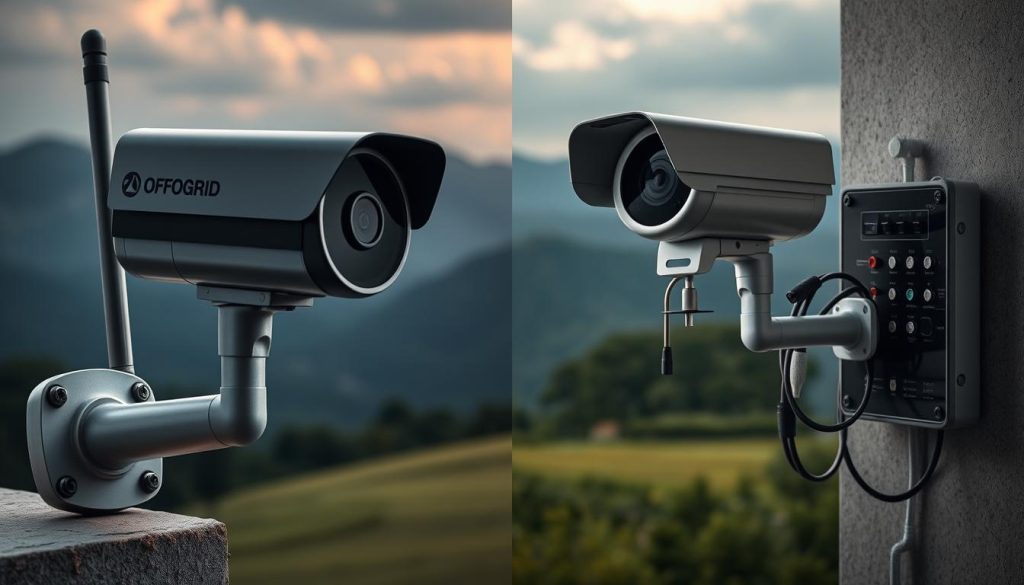
Comparing Off-Grid Security Cameras with Traditional Systems
Understanding the differences between standalone and traditional monitoring setups can help you make a smarter investment. Both options have their strengths, but knowing which one suits your needs is crucial for long-term success.
Energy Efficiency and Cost Savings
Standalone monitoring solutions excel in energy efficiency. Studies show they can reduce energy costs by up to 75% compared to traditional systems. This is especially beneficial in Singapore’s sunny climate, where solar panels can generate consistent power.
Traditional systems often rely on grid electricity, which can be costly and unreliable during outages. In contrast, standalone setups use renewable energy, making them eco-friendly and cost-effective. For example, a battery bank for traditional systems can cost over S$4,000, while standalone systems require minimal upfront investment.
- Total Cost of Ownership (TCO): Standalone systems are cheaper over a 5-year period.
- Carbon Credit Eligibility: They qualify for environmental incentives.
- Insurance Premium Reductions: Many insurers offer discounts for eco-friendly security systems.
Maintenance Needs and Long-Term Reliability
Standalone systems are designed for durability, often lasting up to 10 years compared to the 5-year lifespan of traditional setups. This makes them a more reliable long-term solution for property owners.
Maintenance is also simpler. Traditional systems require frequent checks for wiring and connectivity issues. Standalone systems, on the other hand, have modular designs that allow easy upgrades and replacements. They also integrate seamlessly with Singapore’s Smart Nation Sensor Platform, enhancing their functionality.
- BCA Maintenance Scores: Standalone systems score higher for ease of upkeep.
- Fire Safety Compliance: They meet stringent safety standards.
- Redundancy Systems: Built-in backups ensure uninterrupted monitoring.
By choosing standalone monitoring solutions, you not only save on costs but also contribute to a greener environment. For more details, explore our guide on standalone monitoring solutions.
Making the Smart Choice for Your Property’s Security
Ensuring your property’s safety requires a tailored approach that fits Singapore’s unique environment. From HDB flats to landed homes, each property type has specific needs. A detailed checklist can help you choose the right solutions for your space.
Consider integrating neighborhood watch programs and aligning with government initiatives for enhanced surveillance. Future-proof your setup by preparing for the 5G transition. Bundled solar packages and professional installation options can further optimize your system.
For cybersecurity, follow best practices like regular updates and multi-factor authentication. Whether you’re in a condo or a remote area, these steps ensure your property remains secure and efficient.
FAQ
What makes solar-powered cameras a good choice for remote areas?
Solar-powered cameras are ideal for remote locations because they don’t rely on traditional power sources. They use solar panels to harness energy, ensuring continuous operation even in areas without electricity.
How long do the batteries last in these systems?
Battery life varies by model, but most solar-powered systems can last several months on a single charge. Efficient power management ensures they stay operational even during cloudy days.
Can these cameras function during power outages?
Yes, they are designed to work independently of the grid. With solar panels and backup batteries, they provide reliable surveillance even during power disruptions.
What features should I prioritize when choosing a system?
Look for high video quality, night vision, and motion detection. Also, consider storage options like SD cards or cloud-based solutions for saving footage.
Are these systems eco-friendly?
Absolutely. By using solar energy, they reduce reliance on non-renewable power sources, making them an environmentally friendly choice for property safety.
How do I maintain my solar-powered surveillance system?
Regularly clean the solar panels to ensure maximum energy absorption. Check batteries periodically and update the system’s software for optimal performance.
What are the benefits of 4G connectivity in these cameras?
4G connectivity ensures reliable monitoring, even in areas without Wi-Fi. It allows for real-time alerts and remote access to live video feeds.
How do I choose between solar-powered and battery-powered options?
Solar-powered systems are more sustainable and cost-effective in the long run, while battery-powered ones may be simpler to install but require frequent replacements.
Can these cameras withstand harsh weather conditions?
Yes, most models are designed with weatherproof and durable materials, making them suitable for various environments, from urban settings to rural areas.
What are the top models available in Singapore?
Popular options include the Reolink Go Plus, Arlo Go 2, and Eufy Security 4G LTE Cam. Each offers unique features like high-resolution video, long battery life, and efficient solar integration.


