

Solar-Powered IP Camera Solutions for Singapore
Urban landscapes are changing fast, and we need better security solutions. Solar-powered IP cameras are leading the way in Singapore. They use the sun’s energy for top-notch surveillance. This makes them great for homes and businesses, saving money on energy.
These cameras also help our city meet its green goals. They offer clear video and are good for the planet. This is why they’re a top choice for many.
Solar-powered IP cameras work well in many places. They’re perfect for busy cities or quiet countryside. They’re easy to set up and don’t need much upkeep.
This makes them a smart choice for anyone wanting better security and caring for the environment.
Learn more about solar-powered IP solutions in.
Key Takeaways
- Solar-powered IP cameras are eco-friendly security solutions leveraging renewable energy.
- They significantly reduce electricity costs and promote sustainability.
- High-definition video quality and advanced features enhance surveillance capabilities.
- Easy installation and low maintenance requirements make them user-friendly.
- Versatile designs allow effective operation in various environments.
Introduction to Solar-Powered Security Solutions
Solar-powered security solutions are gaining popularity in Singapore. Over 70% of residents prefer eco-friendly options. The country’s sunny weather makes it perfect for using solar energy.
These systems work without needing the traditional electricity grid. This change shows people want surveillance that’s good for the planet.
Solar-powered IP cameras can last up to 300 days on one charge. They save up to 80% on energy costs. This also cuts carbon emissions by 50%.
This fits well with Singapore’s goal to be more sustainable. Solar energy is key in improving security solutions.
The global solar power market is expected to hit $314.79 billion by 2030. In Singapore, solar-powered IP cameras with 4G LTE add to remote monitoring. This makes them great for both cities and rural areas.
Solar panels can be up to 21% efficient. This means they work well and don’t rely too much on electricity from the grid.
Having solar-powered cameras can make homes 60% less likely to be burglarized. They’re also tough enough for Singapore’s weather. Solar security is efficient, durable, and eco-friendly.
What is an IP Camera with Solar Panel?
An IP camera with a solar panel is a blend of tech and green living in security. It turns sunlight into power, so it doesn’t need regular electricity. This is great for places far from power lines.
Functionality and Advantages
This camera is good for the planet and saves money. It cuts down on electricity use by up to 50%. It can run for up to seven days without sunlight, thanks to smart battery tech.
It also cuts energy costs by up to 80%. These cameras let you watch from afar and have smart AI features. They’re built tough, rated at IP67, and can handle Singapore’s weather.
Comparison with Traditional Security Cameras
IP cameras with solar panels differ from old security cameras. Old cameras need constant power, which is hard to get in remote spots. Solar cameras work well in these areas, no wiring needed.
They also have cool features like color night vision and customizable alarms. With 2K resolution, they capture more detail than 1080p cameras. This makes them a smart choice for today’s security needs.
Benefits of Using Solar-Powered Cameras in Singapore
In Singapore’s sunny climate, solar-powered cameras are a big win for homes and businesses. They save money and help the planet.
Cost Savings on Electricity
Solar cameras use the sun’s energy, cutting down on electricity bills. They can save about SGD $475 a year. This means no more monthly electricity costs.
The setup is easy and affordable, costing around SGD $75. It takes less than 30 minutes. This is a big difference from traditional systems, which can cost up to SGD $600 and take hours to install.
This makes solar cameras a smart choice for saving money in Singapore.
Environmental Impact and Carbon Footprint Reduction
Using solar cameras helps Singapore meet its green goals. They cut down on greenhouse gas emissions. This is because they use less diesel generators, saving up to SGD $16,300 a year.
These cameras work well in Singapore’s weather. They have systems to keep them running even when it’s dark. This helps the environment by using clean energy.
Key Features of Solar-Powered IP Cameras
Solar-powered IP cameras are a great choice for security. They use advanced tech and are good for the environment. These cameras have high definition video, which is important for clear images.
They also have smart motion detection. This makes them useful for many monitoring needs.
High Definition Video Quality
These cameras have high definition video, up to 4K. This quality is key for good surveillance. It helps capture detailed images, even in bad lighting.
They also have night vision, like starlight technology. This lets them work well in the dark. Plus, they’re weather-resistant, so they can handle outdoor conditions.
Smart Motion Detection
Solar-powered cameras have motion detection. This feature helps improve security. You can set how sensitive they are to avoid false alarms.
When they detect motion, they record short clips. This saves battery life. You can also store footage on microSD cards or in the cloud.
These cameras are energy-efficient. They have batteries that last up to 300 days. This means they work well even when it’s cloudy.
They also support remote viewing. You can watch your property on your phone or tablet. This is thanks to 4G or WiFi connectivity.
| Feature | Details |
|---|---|
| Video Resolution | Up to 4K |
| Night Vision | Starlight technology, infrared and white light LEDs |
| Motion Detection | Adjustable sensitivity, optimized for battery life |
| Battery Life | Up to 300 days on a single charge |
| Solar Panel Options | 6-8W for motion detection, 20-60W for continuous recording |
| Storage Options | Expandable microSD or cloud storage |
| Weather Resistance | IP66 rating or higher |
| Connectivity | 4G, WiFi, and Ethernet |
Advantages of 4G Connectivity for Remote Monitoring
4G connectivity changes how solar-powered IP cameras work, making remote monitoring better. It lets you watch live video anywhere, even without regular internet. This is thanks to SIM cards for data, keeping connections strong.
These cameras keep working for up to seven days without sunlight. They can even work on cloudy days. They have high video quality, up to 4K or 5K, making footage clear. Features like AI person detection and PIR sensors also improve accuracy and cut down on false alarms.
They are built to last, with an IP66 rating for outdoor use. They work well in temperatures from -10°C to 55°C and humidity levels from 10% to 90%. Plus, they’re easy to install without complex wiring, perfect for remote setups.
Models like the Dahua Imou Cruiser and Reolink Go offer night vision, motion detection, and mobile app access. These features make remote monitoring better with alerts and two-way audio. They offer a complete surveillance solution for today’s needs.
Installation Process for Solar-Powered IP Cameras
Setting up a solar-powered IP camera needs careful attention. This ensures it works well and efficiently. The right location and setup are key to its success.
Selecting the Right Location
Finding a spot with lots of sunlight is critical for a solar installation. The camera should get 6-8 hours of direct sunlight daily. This helps the solar panel charge the battery well.
Stay away from shaded areas that block sunlight. Also, make sure the camera has a clear view of what it’s monitoring. This helps avoid problems from things in the way.
Mounting and Setup Guidelines
The setup involves a few steps. First, place the solar panel at the best angle to catch sunlight. Use brackets and screws for stability and protect it with sealants.
After setting up the solar panel, connect the camera and other parts like the battery and charge controller. Make sure everything works right with a test.
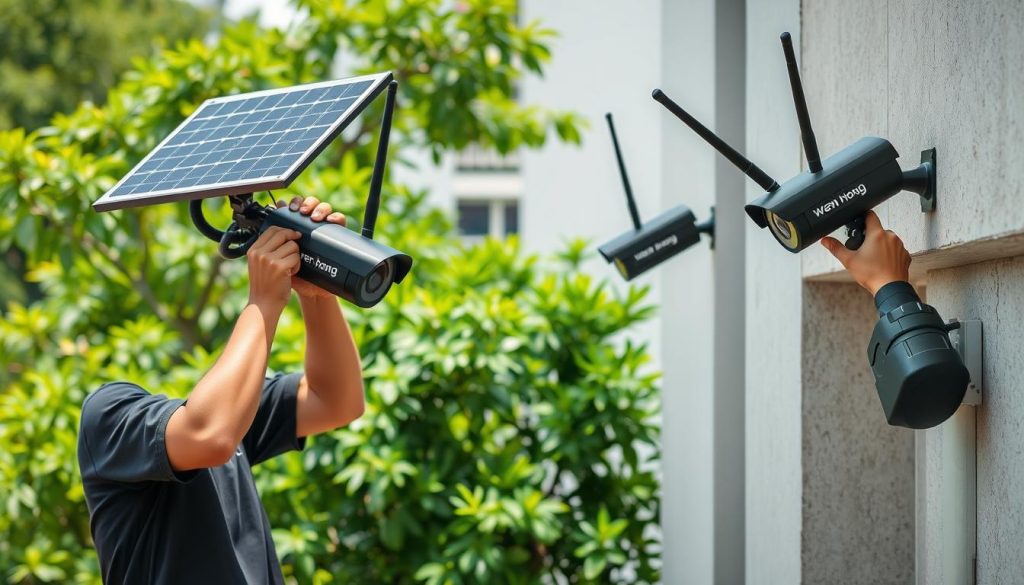
Don’t forget about regular upkeep. Check the battery health and clean the solar panels every three months. This keeps everything running smoothly.
If you want an easy setup, consider the Solocam S340. It’s pre-assembled and offers strong surveillance with little effort.
For more on solar-powered security, check out this resource.
Maintaining Your Solar Security Camera
Keeping your solar security camera in top shape is key. Regular upkeep ensures it works well and lasts longer. A good maintenance schedule helps spot issues early and keeps your camera running smoothly.
Routine Checks
Make routine checks a part of your upkeep plan. Sticking to a schedule lets you check how your camera is doing often. Here are some important steps:
- Check battery health monthly to ensure optimal performance.
- Test video quality, motion detection, and connectivity every three months.
- Inspect camera placement seasonally to prevent environmental damage.
- Monitor software and firmware updates monthly to maintain security and performance.
- Inspect solar panels for damage or dirt buildup and perform quick cleanings as needed.
Cleaning Solar Panels for Optimal Performance
Cleaning your solar panels regularly is vital. Dust, snow, or debris can cut down their efficiency. Here are some tips for cleaning them well:
- Clean solar panels every three months using a soft cloth and mild soap.
- Inspect for cracks or other damage that may inhibit energy capture.
- Adjust the solar panel tilt seasonally to maximize energy capture in changing sunlight conditions.
- Use weatherproof enclosures rated IP66 or better for outdoor installations to protect from moisture.
By following these maintenance steps, you’ll keep your solar security camera reliable. This ensures your property stays safe and secure.
Adapting Solar-Powered Security Systems to Singapore’s Climate
The Singapore climate is tough for solar-powered security systems. It’s hot and humid, with lots of rain. These systems need to be solar adapted to work well. They are made with weather-resistant materials and have high IP ratings, like IP67, to stay strong and work right.
Solar security cameras work well in temperatures from -10°C to +55°C. This fits Singapore’s warm weather. Their solar panels, with an efficiency of 21%, keep working even when it’s cloudy. They can run for up to 300 days without direct sunlight, keeping an eye on things even when it’s raining.
These systems also save a lot of energy, up to 75% less than wired systems. They don’t need the electrical grid, which makes them more eco-friendly. Singapore wants to use more solar power, aiming for 2 GWp by 2030. This supports solar technology’s growth.
Models like the S1-WIFI Solar Security Camera are designed for Singapore’s weather. Keeping the solar panels clean is important to keep them working well. These systems prove they can handle Singapore’s climate while keeping security high.
Comparing Top Solar Camera Brands Available in Singapore
In Singapore, many solar camera brands are known for their reliability and advanced features. Hikvision is at the top, with options for both homes and businesses. They offer high-definition video and smart detection, making them a top choice.
Hikvision Solar-Powered Cameras
Hikvision cameras are made for Singapore’s needs. They last up to 180 days on battery, keeping your place safe. They have:
- Solar energy for green use
- Batteries that work well in different weather
- Video up to 4K quality
- Two-way audio for better talking
- Strong against Singapore’s weather
Reolink Solar Camera Options
Reolink is also a big name in solar cameras in Singapore. The Argus 3 Pro gets a 4.4/5 rating. It offers:
- Up to 6 months of battery life
- Smart motion detection
- Works well in the dark
EufyCam 3 also gets high marks, with a 4.3/5 rating. It lasts up to 12 months on battery and has lots of storage. With more people choosing solar cameras, Hikvision and Reolink are leading the way in Singapore.
| Brand | Model | User Rating | Battery Life | Key Features |
|---|---|---|---|---|
| Hikvision | Various Models | N/A | Up to 180 days | 4K resolution, two-way audio, weather resistance |
| Reolink | Argus 3 Pro | 4.4/5 | Up to 6 months | Motion detection, night vision |
| Eufy | EufyCam 3 | 4.3/5 | Up to 12 months | 16 TB storage, high video quality |
Customer Experiences with Solar-Powered IP Cameras
Customers have shared their thoughts on solar-powered IP cameras. These devices have been used for over three years in different climates. People have talked about their good and bad experiences with these cameras.
Common Complaints
Some users have faced problems with connectivity, mainly in rural areas. The weak Wi-Fi signals can be a big issue. Many have also mentioned that getting help from customer support can be hard.
But, despite these problems, many cameras work well even in weak signal areas. This shows how reliable they can be.
User Satisfaction Ratings
Even with some complaints, many users are happy with their cameras. They like how well the cameras work with different wireless networks. The app is also easy to use on both iOS and Android.
Setting up the cameras is simple, and users enjoy the advanced features. These include good color images and night vision. Overall, the good points of these cameras are more than the bad.
Future of Solar-Powered IP Camera Technology
The future of solar-powered IP camera technology looks bright. New advancements are coming fast. These changes will make solar security better with clearer video and more features.
IoT and smart tech, like AI, are key. They help solar cameras recognize faces and detect motion better. This makes solar cameras work even better.
Miniaturization is also important. It makes solar cameras smaller and more flexible. They fit well in cities. New battery tech, like lithium-ion, keeps them running well in different conditions.
This setup lets solar cameras work with backup power. This is useful when sunlight is not always there. It makes solar security systems more reliable.
The solar camera market is growing fast. It’s expected to grow by 11.3% from 2024 to 2031. This is because more people want green security solutions.
4G networks will help with remote monitoring. This means we can watch live footage anywhere, even in tough spots.
HD technology makes surveillance better. It gives us sharper images and better night vision. Solar cameras can now do more than ever before.
Custom solutions will meet different needs. You can get cameras that cover all around or last longer on battery. With AI and 5G, solar security is getting a big upgrade. It will be more efficient and reliable soon.
Conclusion
Solar-powered IP cameras are changing the game for security in Singapore. They use clean solar energy, cutting down on carbon emissions. At the same time, they keep watch day and night without a hitch.
Homeowners love them because they save money. No more big electricity bills or extra costs for setup. It’s a smart way to spend on security.
These cameras last a long time, up to 10 years, and come with cool features. You get clear pictures, see in the dark, and get alerts when something moves. They’re easy to set up and work well in all kinds of weather.
As tech gets better, solar cameras will too. They’re already a top pick for those who want green and reliable security. If you want to learn more or get deals, reach out today. It’s a step towards a safer, greener tomorrow.
FAQ
What are solar-powered IP cameras?
Solar-powered IP cameras are surveillance systems that run on solar energy. They don’t need the traditional electricity grid. This makes them a green choice for watching over places in cities and countryside.
How do solar panels enhance surveillance capabilities?
Solar panels turn sunlight into power. This lets cameras work on their own. It also cuts down electricity bills by up to 80% and keeps them running even when it’s cloudy.
Are solar-powered cameras suitable for Singapore’s climate?
Yes! Singapore’s sunny weather is perfect for solar cameras. They can handle the humidity and rain too.
What types of features can I expect from these cameras?
Solar-powered IP cameras have high-definition video (up to 4K). They also have night vision and smart motion detection. This means you can watch over your place day or night.
How does 4G connectivity benefit solar-powered cameras?
4G lets these cameras send data fast without needing the internet. You can watch your place on your phone with live feeds and alerts.
What should I consider when installing a solar-powered camera?
Pick a spot that gets lots of sunlight. Avoid shaded areas and make sure you can see everything clearly. Also, think about any local obstacles.
How can I maintain my solar security camera?
Check the battery health and look for damage regularly. Also, test the camera’s features like motion detection and video quality every few months.
What are the top brands for solar-powered cameras in Singapore?
Hikvision and Reolink are top brands. They offer reliable and feature-rich solar cameras for different security needs.
What kind of customer feedback do solar-powered IP cameras receive?
People talk about connection issues, mainly in rural areas. They also mention customer service quality. This info helps others make better choices.
What does the future hold for solar-powered IP camera technology?
The future looks bright. We can expect better video quality and AI for smarter data handling. The market will grow as more people choose green options.


