

Solar Panel Battery for Security Cameras | SG Guide
Using solar panel batteries with security cameras is becoming more popular for better home security. These solar cameras boost outdoor watch and cut down on traditional energy use. This guide explores the benefits of solar panel batteries for security cameras, focusing on their role in green energy in Singapore’s sunny weather.
It covers key parts, how to install and maintain them, and how they save money and protect the environment. For more details, check out solar panel with battery for security.
Key Takeaways
- Solar panel batteries improve the reliability of security cameras.
- They significantly cut down electricity costs and promote cost efficiency.
- The eco-friendly nature provides a sustainable energy solution.
- Installation enhances independence from the power grid, ensuring continuous operation.
- Understanding power requirements is essential for optimal camera performance.
Introduction to Solar-Powered Security Cameras
The world of home security is changing fast with solar technology. This change is part of a bigger shift, making systems better and easier to use. Solar-powered security cameras are special because they don’t need traditional power sources.
This is great in places like Singapore, where the sun shines a lot. It lets people use solar power to watch over their homes.
The Evolution of Home Security
Home security has come a long way. It used to be just locks and alarms. Now, we have advanced outdoor security cameras and smart systems.
These new systems let you watch your home live and get alerts. They make homes safer and more secure.
The Role of Solar Power in Modern Surveillance
Solar power is changing how we watch over our homes. It makes outdoor cameras work better and is good for the planet. These systems don’t need constant power or upkeep.
This makes solar technology a great choice for those who want to be safe and green.
Benefits of Using a Solar Panel Battery for Security Cameras
Using solar panel batteries with security cameras offers many benefits. It saves money, uses free solar energy, and supports green technology. This is true even in hard-to-reach places.
Cost Efficiency and Savings on Energy Bills
Solar-powered security cameras are very cost-effective. They use free solar energy, which can save up to 75% on energy costs. They also need little setup, which saves money upfront.
Choosing solar tech cuts down monthly bills. It also makes home security more sustainable in the long run.
Environmental Impact and Sustainability
Solar cameras show the strength of green technology. They help cut down carbon emissions and reduce fossil fuel use. By using solar energy, people help make the planet cleaner.
This green choice is great for those who want to live sustainably. It shows that you can be secure and eco-friendly at the same time.
Independence from the Power Grid
Being tied to the power grid can be a problem, mainly in remote areas. Solar security cameras offer a solution by working off the grid. They keep running even when there’s no power.
This is a big deal for people in rural areas or places with unreliable power. It means they can count on their security systems, giving them more control.
Components Required for Setting Up a Solar Camera System
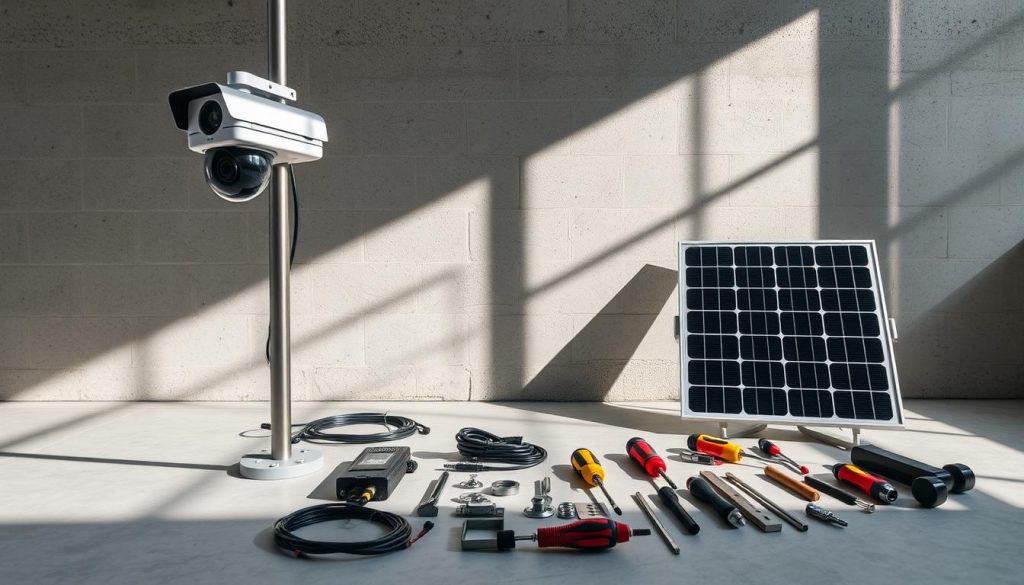
To set up a strong solar camera system, knowing the key solar gear is essential. Each part is vital for the system to work well and last long. You’ll need a solar panel, battery, charge controller, and a camera. Choosing good quality makes a big difference.
Essential Equipment Overview
The main solar camera system components are:
- Solar Panel, ideally rated around 75W
- Deep Cycle Battery, preferably 24Ah
- Solar Charge Controller with a 10A/12V rating
- Reliable Security Camera, such as the Reolink RLC-410W
These parts work together to use solar energy and keep watch all the time. Choosing the right ones means better performance and longer life. This ensures users get top-notch security.
Importance of Quality Solar Panels and Batteries
Choosing the right solar panel quality and battery is key for good energy use. Top-notch solar panels catch more energy, even on cloudy days. Good batteries keep the power steady, so cameras keep watching without pause.
The system’s life depends a lot on these important parts. This shows why it’s smart to invest in the best solar gear.
Understanding Power Requirements for Solar Security Cameras
It’s key to know the power needs for solar security cameras to pick the best one. Each camera model needs different amounts of power, usually between 4 to 15 Watts. Knowing this helps make sure the solar panel can power the camera well.
Calculating Energy Needs for Different Camera Models
Figuring out how much energy a camera uses is important. For example, a TP-Link camera needs 5.4 Watts, which is about 43.2 Watt-hours a day. Knowing how long the camera runs each day helps get a better energy estimate. This lets you plan for the total energy needed.
Battery Capacity Considerations
Choosing the right battery size is vital for reliable camera work, even when it’s not sunny. Knowing how much power the camera uses helps pick the right battery. The battery should cover the camera’s needs and have some extra power. This ensures the camera keeps working without breaks, keeping your area safe.
Choosing the Right Solar Panel Battery for Your Security Camera
Choosing the right solar battery is key for your solar-powered security cameras. Knowing the difference between Lead Acid and Lithium-Ion batteries is important. It affects how well your system works and lasts over time.
Comparing Battery Types: Lead Acid vs. Lithium-Ion
Lead Acid batteries are cheaper at first. They’re good for those watching their budget. But, they don’t last as long and aren’t as efficient.
Lithium-Ion batteries, on the other hand, are more efficient and last longer. They’re also lighter, making them easier to install and place.
Capacity and Lifespan of Batteries
When picking a solar panel battery, think about its capacity and lifespan. Choose batteries that can store at least ten times what your solar panel can. This prevents overcharging and keeps your system running well, even when it’s not sunny.
Going for a battery that lasts longer saves you money and hassle. It keeps your surveillance system working well for years.
Installation Process for Solar Panel with Battery for a Security Camera
Setting up a solar panel with battery for your security camera needs a clear plan. A detailed solar panel installation guide can make it easier. By following the steps, you can set up your camera right.
Step-by-Step Installation Guide
- Find a spot that gets direct sunlight for 6-8 hours a day. This is key for the solar panel to work well.
- Mount the solar panel securely, as the maker suggests.
- Place the security camera where it can see everything clearly.
- Connect the solar panel to the battery and camera. Make sure the wiring is right for the best energy flow.
Tips for Optimal Panel Placement
To get the most out of your solar panel, tilt it 30° to 45°. This helps catch sunlight all day. Also, keep the panel clear of things like trees or buildings. These tips help your solar panel work better and your security camera system too.
Wiring and Connecting Your Solar Security Camera System
Setting up a solar security camera system needs careful attention to wiring and connections. Good wiring is key for the system to work well. Any loss of energy can hurt the system’s performance.
This part talks about the importance of using the right methods and materials for installation.
Importance of Proper Wiring for Efficiency
Proper wiring makes sure energy moves smoothly from the solar panel to the camera. Using the right cable size, like 14 AWG for short distances, helps keep energy loss low. When done right, it boosts the system’s performance and reliability.
Connection Techniques for Different Camera Models
Each camera model has its own way of connecting. Knowing these methods is important for a good installation. For example, setting up a Tapo camera is different from a Reolink model.
It’s vital to learn the specific connection methods for each type. This ensures the system works its best. Users should also check the installation guidelines and optimize safety during setup.
Maintaining Your Solar-Powered Security System
Keeping your solar security cameras in top shape is key. Regular checks and care prevent problems and boost performance. Simple steps can help your system last longer.
Regular Maintenance Tasks for Longevity
For your solar cameras to work well, routine tasks are a must. These include:
- Cleaning solar panels to remove dust, leaves, and debris
- Monthly checks on battery health
- Quarterly tests of all camera systems
These steps are vital for your system’s long life. They keep it reliable and valuable for your security.
Cleaning and Inspecting During Seasonal Changes
Adjusting your maintenance with the seasons is smart. It’s critical to:
- Check solar panels and cameras for ice, snow, or dirt
- Make sure cameras and panels get enough sunlight
- Test connections and ensure everything works right
By doing these things, you keep your system running smoothly all year.
Real-Life Applications and Case Studies of Solar Security Cameras
Solar-powered security cameras are very versatile. They work well in many places, like rural areas in Singapore. Here, they are a great choice because there’s no power grid.
They are also used on construction sites and farms. These cameras help keep an eye on things and make sure the site is safe. At outdoor events, they help manage security. This shows how solar cameras can be used in many different places.
After natural disasters, solar cameras are very useful. They can quickly be set up to watch over areas and prevent theft. Their ability to work in tough conditions makes them a top choice for keeping areas safe.
FAQ
What are the main benefits of using solar panel batteries for security cameras?
Solar panel batteries save money, cut down on carbon emissions, and work well in places without power. They also make surveillance easy in remote spots.
How much sunlight do solar-powered security cameras need to operate effectively?
These cameras need direct sunlight for 6-8 hours a day. This ensures they work well and capture enough energy.
What are the essential components needed to set up a solar security camera system?
You’ll need a 75W solar panel, a 24Ah deep cycle battery, a 10A/12V solar charge controller, and a good security camera. Reolink or TP-Link cameras are great choices.
What types of batteries are best suited for solar security cameras?
Lithium-Ion batteries are best because they’re efficient, last long, and are light. Lead Acid batteries are cheaper but not as good.
How do I calculate the energy requirements for my solar-powered security camera?
First, find out how much power your camera uses (usually 4 to 15 Watts). Then, multiply that by how long it runs. For example, a 5.4 Watt camera needs about 43.2 Watt-hours daily.
What are some tips for installing a solar panel with a battery for security cameras?
Pick a spot with lots of sunlight. Mount the panel and camera securely. Make sure wiring is right. Adjust the panel’s angle to catch more sun, between 30° to 45°.
How do I maintain my solar-powered security system for long-term performance?
Clean the solar panels every few months. Check the battery’s health monthly. Test the cameras every quarter. Do seasonal checks to see if everything’s working right.
Where are solar-powered security cameras commonly used?
They’re used in remote areas, construction sites, farms, and at events. Places without power, like rural areas or after disasters, are perfect for them.


