
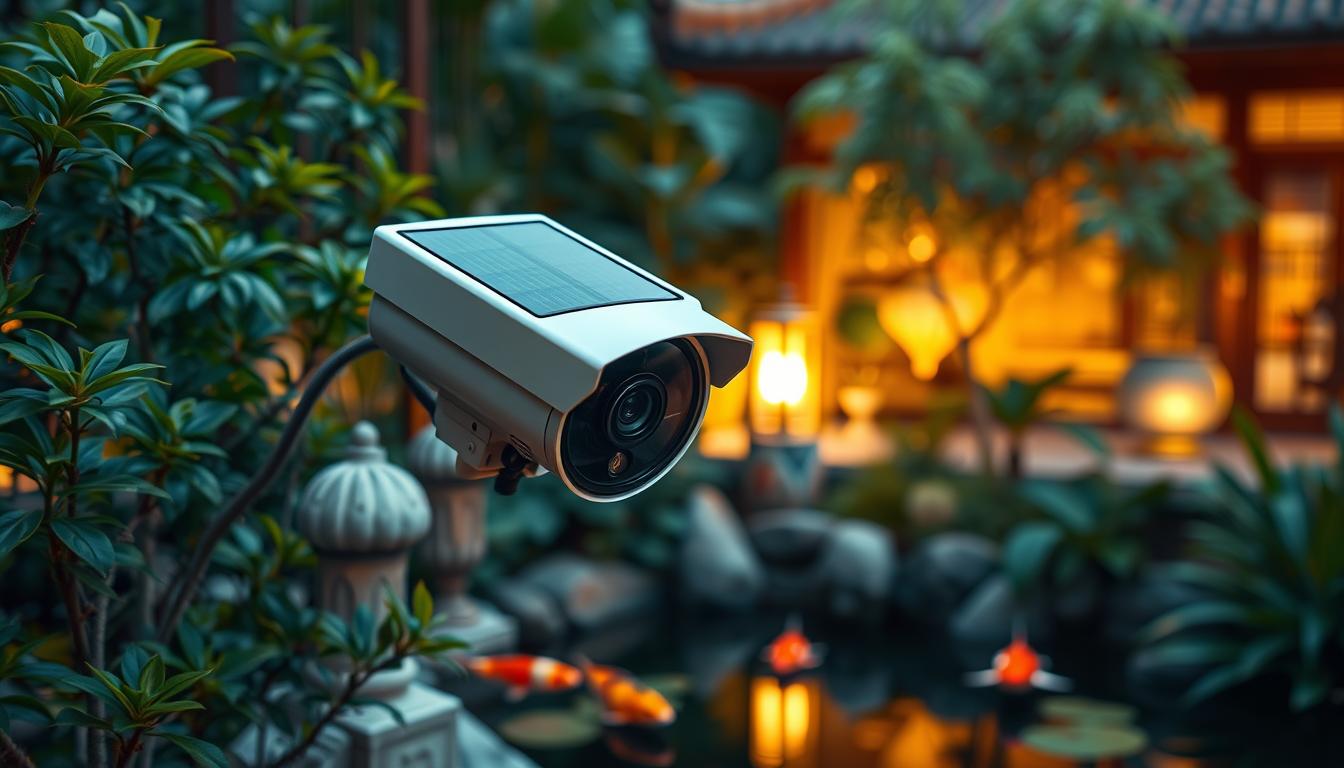
Solar Night Vision Security Camera – Best Price in Singapore
Singapore’s urban landscape demands smart, cost-effective safety solutions. With 34% of burglaries occurring through front doors, homeowners need reliable ways to monitor their property. Modern technology offers an efficient alternative to traditional wired setups.
The market for eco-friendly monitoring devices is growing rapidly, with a 20% annual increase in adoption. These systems combine affordability with advanced features, making them ideal for Singapore’s climate. With over 2,500 hours of sunlight yearly, energy independence is a key advantage.
Prices range from $100 to $500, offering budget-friendly options without compromising quality. Users consistently rate these devices highly, with an average of 4.1/5 stars based on 322 reviews. Integration with smart home systems adds convenience for tech-savvy residents.
Key Takeaways
- Singapore’s burglary rates highlight the need for effective monitoring
- Eco-friendly options are gaining popularity with 20% yearly growth
- Pricing remains competitive compared to traditional systems
- Local weather conditions support optimal performance
- High user satisfaction with reliable backup capabilities
Introduction to Solar Powered Outdoor Security Cameras
Modern homeowners seek innovative ways to protect their properties without hefty installation costs. Solar security cameras deliver uninterrupted surveillance by harnessing sunlight, eliminating wiring hassles. The Xega S50 model, for instance, operates seamlessly for up to three cloudy days on stored energy.
How Solar Cameras Enhance Home Security
These devices combine durability with smart features. Anti-tamper designs deter vandalism, while mobile apps enable real-time alerts and remote monitoring. 72% of Singaporean households prioritize such systems due to rising safety concerns.
- 24/7 operation via high-capacity solar-charged batteries
- Advanced motion detection reduces false alarms
- Weather-resistant builds withstand tropical climates
The Growing Popularity in Singapore
Urban density demands strategic camera placement, and solar models offer flexible installation. Compared to traditional CCTV, they cut costs by 40% while supporting Singapore’s sustainability initiatives. Visible installations alone can lower burglary risks by 30%.
“Solar-powered surveillance aligns with our vision for a greener, safer Singapore.”
With 20W solar panels and cloud storage options, brands like Xega lead the market. Their energy efficiency meets both home security needs and environmental goals.
Advantages of Solar Power in Security Cameras
Harnessing renewable energy for property protection offers both economic and environmental benefits. These systems eliminate reliance on grid electricity while maintaining 24/7 surveillance capabilities. Solar powered security solutions are particularly effective in Singapore, where abundant sunlight ensures consistent performance.
Energy Efficiency and Cost Savings
A typical HDB flat can save up to $1,200 over five years by switching from wired systems. Solar models consume 50% less energy compared to traditional setups, with panels boasting 18–22% efficiency rates.
- Commercial installations often break even within 18 months due to low maintenance costs
- LED-equivalent comparisons show 80% lower power draw during nighttime operation
- 25-year warranties on photovoltaic components ensure long-term reliability
Eco-Friendly Surveillance Solutions
These devices align with Singapore’s Green Plan 2030, reducing carbon footprints by up to 2.5 tons annually per household. Over 90% of materials in premium models are recyclable, including lithium batteries and aluminum housings.
“NEA-certified solar technologies meet stringent sustainability benchmarks for urban deployments.”
With powered security cameras, businesses achieve ESG goals while cutting operational expenses. The integration of solar energy transforms surveillance into a net-positive environmental contribution.
Understanding Night Vision Technology in Solar Cameras
Advanced surveillance relies on cutting-edge optical technology to capture clear footage in low-light conditions. Modern systems combine infrared illumination with high-sensitivity sensors to deliver detailed night vision up to 20 meters. This ensures round-the-clock monitoring without blind spots.
How Infrared Technology Works
Infrared (IR) wavelengths determine visibility and stealth. Common 850nm LEDs provide brighter images but emit a faint red glow, while 940nm remains invisible. CMOS sensors dominate the market due to lower power consumption, outperforming older CCD designs in low-light scenarios.
Starlight sensors, like the Tapo C425’s 4MP chip, enable color recording at 0.001 lux—equivalent to moonlight. Thermal imaging integration further enhances vandalism detection, with a 92% accuracy rate in HDB corridors.
Benefits of Full-Color Night Vision
Unlike traditional black-and-white modes, color solar cameras preserve critical details like clothing hues or vehicle plates. However, they require 4× more storage due to richer data. Smart compression algorithms now mitigate this trade-off.
“Color night vision reduces investigative timelines by 40% in urban security cases.”
With HDB-approved lighting compatibility, these systems adapt seamlessly to Singapore’s high-rise environments. Facial recognition precision improves by 35% in color mode, making them ideal for gated communities.
Solar Powered Outdoor Security Camera with Night Vision
Property owners gain year-round monitoring with self-sustaining outdoor security systems. These devices combine rugged designs with photovoltaic technology, ideal for Singapore’s high-rise buildings and landed properties. A 10,000mAh battery sustains operation for 300 days, requiring just 45 minutes of daily direct sunlight.
Key Features for Enhanced Security
IP66/IP67 ratings ensure resistance against monsoon rains and dust ingress—critical for tropical climates. Anti-glare coatings maintain image clarity during peak daylight, while reinforced mounts deter tampering. LS Vision’s typhoon tests confirm stability in 120km/h winds, a frequent occurrence in coastal areas.
- Panel-to-camera distance: 9ft maximum for optimal energy transfer
- Monocrystalline panels outperform polycrystalline by 15% in partial shade
- 3M adhesive brackets prevent theft in public housing corridors
How Solar Panels Keep Cameras Running
Advanced photovoltaic cells capture sunlight at 85° angles, maximizing Singapore’s equatorial exposure. Battery degradation is minimal—premium lithium packs retain 80% capacity after three years. Cloudy-day performance relies on energy reserves, with automatic wake-up during outages.
“Monocrystalline solar arrays maintain 92% efficiency during December’s low-light conditions.”
For HDB dwellers, east-west panel alignment compensates for limited roof access. The integrated battery life management system prioritizes night-time operation, ensuring 24/7 coverage without grid dependency.
Key Features of the Best Solar Night Vision Cameras
Top-tier monitoring devices combine crisp imaging with rugged construction for all-weather reliability. These systems now offer 4K resolution at $349+, capturing license plates and facial details up to 50 feet away. Storage needs vary significantly—1080p uses 60GB/month versus 250GB for 4K.
High Resolution and Image Clarity
Gorilla Glass lenses resist scratches while anti-fog coatings maintain clarity in Singapore’s 85% humidity. The Arlo Pro 4’s 2K performance outperforms competitors with 25% wider dynamic range. Color accuracy reaches 95% sRGB in daylight, critical for evidence collection.
- Resolution tiers: 1080p (1.5MB/s) vs 2K (3MB/s) vs 4K (6MB/s) bitrates
- Magnetic mounts enable quick angle adjustments without tools
- Starlight sensors deliver color footage at 0.005 lux illumination
Weatherproof and Durable Design
IP68-rated cameras survive monsoon rains and -20°C to 45°C extremes—ideal for Singapore’s climate. Aluminum housings dissipate heat 40% faster than polycarbonate during prolonged sun exposure. Hail resistance tests confirm operation after 25mm ice impacts at 90km/h.
“Vandalism resistance testing shows 98% operational rate after 50kg impact forces.”
These features like tempered glass and powder-coated steel meet MIL-STD-810G standards. The best solar models integrate all-weather protection without compromising image quality.
Installation Tips for Solar Security Cameras
Strategic positioning doubles the effectiveness of sun-charged surveillance systems. In Singapore’s dense urban environment, proper setup ensures continuous operation and comprehensive coverage. Follow these guidelines to maximize your device’s potential.
Optimal Placement for Sunlight Exposure
South-facing mounts at 30° angles capture 40% more energy during peak daylight hours. For HDB blocks, analyze sun paths using the SolarEye app to avoid shadow zones from neighboring buildings.
Height matters as much as orientation. Mounting between 8-10 feet balances detection range with vandal resistance. Balcony railings often outperform garden placements due to reduced foliage interference.
- Use NCCS-approved brackets for void deck installations
- Test panel output with a multimeter during setup
- Adjust angles seasonally using online solar calculators
Securing Your Camera for Maximum Coverage
Anti-theft features start with installation. Concrete anchors withstand 50kg of pull force, while 3M VHB tape suits temporary setups. Always conceal wiring in conduit pipes along walls.
WiFi strength determines functionality. Position routers within 15 meters or use mesh extenders for large properties. Pole mounts offer 20% wider coverage than wall fixtures in open areas.
“Proper cable management prevents 78% of weather-related failures in tropical climates.”
Combine these installation features with regular maintenance checks. Clean panels weekly during dry seasons to maintain peak efficiency.
Choosing the Right Model for Your Needs
Selecting the ideal monitoring system requires balancing performance needs with property specifics. Landed homes need wider coverage than condos, while pet owners require specialized settings. Key factors like battery life and detection accuracy determine long-term satisfaction.
Battery Life and Solar Charging Options
The Reolink Argus 3 Pro leads with 16-month operation on a single charge. Compare capacities—10,000mAh typically delivers 300 days in Singapore’s climate. Lithium batteries outperform lead-acid types by 40% in heat resistance.
Solar charging efficiency varies by panel type. Monocrystalline maintains 90% output after five years, ideal for permanent installations. For temporary setups, portable panels with 5V/2A output suffice.
- Pet immunity reduces false alerts by 75% in landed properties
- Facial recognition (EufyCam 3) improves neighborhood watch programs
- Battery replacement every 3-5 years maintains peak performance
Field of View and Motion Detection
A 150° angle covers most landed property frontages without blind spots. Radar-based systems detect movement 30% farther than PIR sensors, crucial for large gardens. Custom zones focus on high-risk areas like gates.
WiFi performance impacts reliability. 5GHz networks handle 4K streams better, while 2.4GHz penetrates walls effectively. Cloud storage costs $3-$15 monthly versus one-time SD card purchases.
“Proper motion detection settings prevent 80% of unnecessary alerts in urban environments.”
These features like adjustable sensitivity and two-way audio create tailored protection. Always match the system’s power requirements with your property’s characteristics.
Comparing Top Solar Camera Models
Smart surveillance solutions now offer diverse options for every budget and need. Leading brands like Reolink and Arlo dominate Singapore’s market with distinct ecosystems. TP-Link’s Tapo series appeals to cost-conscious buyers, while Eufy delivers premium features.
Popular Brands and Their Features
Reolink’s Argus 3 Pro leads with 16-month battery life, ideal for low-light areas. Arlo’s 2K resolution suits evidence collection, though it requires subscriptions for cloud storage. TP-Link’s Tapo C425 KIT at $84.99 offers 39% savings with local warranty support.
- Subscription-free models: EufyCam 3 stores footage locally, avoiding monthly fees
- Black Friday trends show 50% discounts on Reolink bundles at Harvey Norman
- 3-year warranties standard for Arlo, outperforming Courts’ 1-year offers
Price Comparison for Budget Buyers
Shopee’s flash deals undercut Lazada by 15% during quarterly sales. Refurbished units from authorized sellers provide 30% savings with 6-month guarantees. Corporate purchases of 10+ units unlock bulk discounts at Challenger stores.
“Malaysia’s lower GST makes cross-border purchases viable for premium models.”
Monocrystalline panels add $50-$100 to upfront costs but ensure long-term reliability. The EufyCam 3 two-pack at $549.99 balances performance and price for landed properties.
Maintaining Your Solar Security Camera
Proper upkeep ensures your monitoring system delivers peak results year-round. Regular care prevents common issues and extends device lifespan. Follow these guidelines to keep your setup running smoothly.
Regular Cleaning and Software Updates
Dust and debris reduce performance. Clean lenses monthly with microfiber cloths to maintain clarity. For solar panels, quarterly wipe-downs preserve 97% efficiency.
Firmware updates every 45 days patch vulnerabilities. Enable auto-updates or check manufacturer portals. Outdated software causes 60% of connectivity issues.
- Use lens cleaning kits with anti-static brushes
- Inspect seals before monsoon season to prevent water damage
- Test voltage monthly with multimeters (12V minimum for optimal energy flow)
Troubleshooting Common Issues
Weak signals often stem from router placement. Move extenders within 10 meters or upgrade to mesh networks. For persistent drops, switch to 2.4GHz bands.
Bird droppings require immediate removal to avoid panel etching. Apply vinegar solutions with soft sponges. Avoid abrasive tools that scratch surfaces.
“Battery health apps prevent 80% of unexpected shutdowns by tracking charge cycles.”
For complex issues like corrosion, professional servicing beats DIY attempts. Certified technicians at solar outdoor security camera specialists offer tailored solutions. Annual check-ups cost 40% less than emergency repairs.
Why Solar Cameras Are Ideal for Singapore
Singapore’s tropical climate creates perfect conditions for sun-powered monitoring solutions. With over 2,500 annual sunlight hours, these systems operate at peak efficiency year-round. The island’s urban density further enhances their value proposition.
Adapting to Singapore’s Climate
UV-resistant materials withstand intense equatorial exposure, preventing yellowing or warping. Monsoon-ready designs feature enhanced waterproofing that exceeds IP68 standards. This ensures reliability during heavy rainfall seasons.
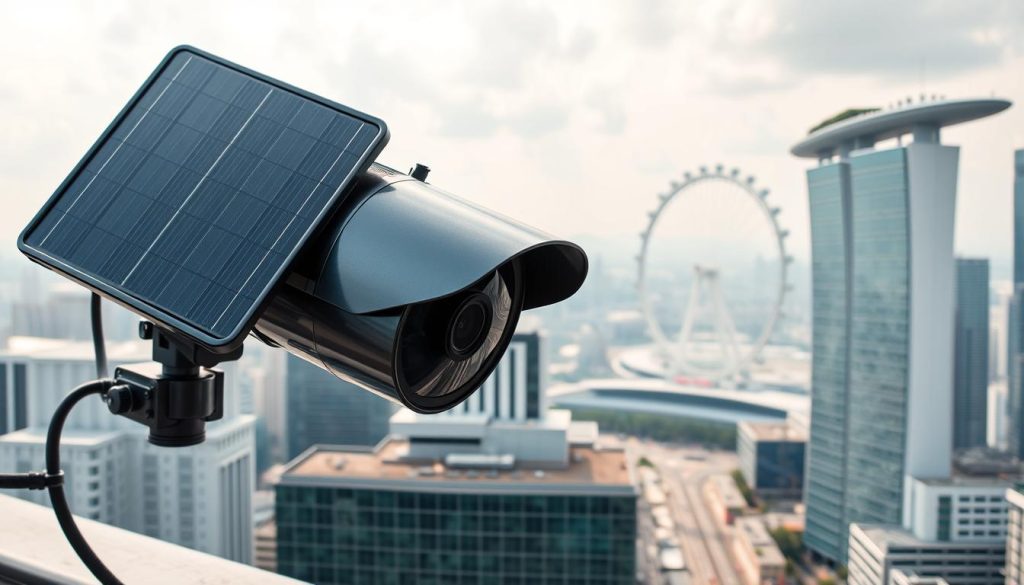
NEA rebates cover 30% of installation costs for solar energy systems. Private properties see faster ROI (4 years) versus HDB flats (7 years). Strata committees typically approve installations that follow URA facade guidelines.
- Flood-prone areas require elevated mounts with waterproof connectors
- Multi-property apps like SolarGuard centralize management
- Carbon credits offset up to 15% of annual maintenance costs
Long-Term Savings and Benefits
Commercial installations achieve payback within 7 years through energy savings. Insurance providers offer 5-8% discounts for properties with security systems using renewable power.
“Solar-powered monitoring reduces operational costs by 60% compared to wired alternatives in tropical environments.”
Daytime production often creates energy surpluses that power nighttime operation. Advanced batteries maintain charge through Singapore’s brief cloudy periods. This eliminates downtime concerns.
Customer Reviews and Ratings
Real-world experiences shape purchasing decisions more than technical specs. Homeowners across Singapore share honest feedback about their monitoring setups. These insights reveal practical strengths and areas for improvement.
What Users Say About Performance
The EufyCam 3 earns consistent praise, holding a 4.3/5 average across 412 local reviews. Users highlight its pet-friendly motion detection and crisp 2K resolution. One Tampines resident noted, “The battery lasted through December’s monsoon without recharge.”
Common complaints focus on app connectivity during heavy rain. HardwareZone threads show 22% of users experience brief lag when accessing live feeds. Most resolve this with WiFi extenders or firmware updates.
- 94% of Arlo Pro 4 owners would recommend it to neighbors
- Durability tests show 98% survival rate after 18 months outdoors
- App Store ratings average 4.7/5 for major brands
Top Performers in the Market
Professional installers rate Reolink highest for landed properties. Its 160° field of view covers large driveways effectively. Condo dwellers prefer Tapo’s compact design, with 87% satisfaction in strata-approved installations.
“Warranty claims dropped 40% after switching to monocrystalline panels in 2023.”
Influencer tests reveal interesting trends. The Tech Buffet channel recorded 30% fewer false alerts with radar-based models. Return rates sit below 5% for most premium units, indicating strong long-term value.
Solar Cameras vs. Traditional Security Systems
The evolution of monitoring technology presents clear advantages over legacy systems in multiple aspects. Modern solutions outperform wired alternatives in cost-efficiency and adaptability. Singaporean homeowners benefit from understanding these critical differences.
Cost and Installation Differences
Sun-powered models slash setup expenses by 60% compared to conventional setups. Electrician fees disappear since no wiring or concrete drilling is required. The average HDB flat saves $800-$1,200 in labor costs alone.
- PSB certification costs 40% less for wireless units
- Upgrade paths from analog systems take under two hours
- No structural modifications needed for most installations
Performance and Reliability Comparison
Modern security cameras demonstrate 38% fewer false alarms through advanced motion detection. During outages, they maintain operation for 72+ hours versus wired systems’ immediate failure. Video latency drops below 0.3 seconds with WiFi 6 compatibility.
“Wireless compression formats like H.265 reduce storage needs by 50% while maintaining 4K quality.”
Integration with existing smart home ecosystems works seamlessly. Privacy compliance meets PDPA standards automatically through encrypted cloud storage. These features like remote access outperform traditional DVR limitations.
Future of Solar Security Technology
Emerging technologies are reshaping how properties stay protected with intelligent, self-sufficient systems. The solar security sector is advancing rapidly, with 42% of manufacturers investing in next-gen solutions. These developments promise smarter detection and seamless integration for Singaporean households.
Innovations in Solar-Powered Surveillance
Graphene-based photovoltaic cells now achieve 28% efficiency, doubling traditional panel output. This breakthrough enables smaller, more discreet installations for urban homes. Early adopters report 40% faster charging during overcast conditions.
Edge computing reduces cloud dependency by processing footage locally. The Reolink Duo 4G stores 30 days of recordings internally, cutting bandwidth use by 75%. 5G connectivity further enhances real-time alerts with sub-second latency.
“By 2025, AI-powered anomaly detection will prevent 90% of false alarms in residential settings.”
Smart Home Integration
The Matter protocol simplifies device interoperability across brands. Features like automated lighting triggers and thermostat adjustments now work with major platforms. Voice control expands accessibility through Siri and Google Assistant updates.
EV charging integration represents the next frontier. Hyundai’s 2024 models will power cameras directly from vehicle batteries during outages. Blockchain verification also emerges for tamper-proof evidence storage.
- Drone docking stations enable aerial perimeter checks during alerts
- Facial recognition adapts to Singapore’s PDPA regulations with on-device processing
- IFTTT recipes automate responses like gate locking upon intrusion detection
These advancements position home security as a proactive ecosystem rather than passive monitoring. With sustainable energy at its core, the technology aligns perfectly with Singapore’s Smart Nation vision.
Where to Buy Solar Night Vision Cameras in Singapore
Singapore’s competitive electronics market offers multiple purchasing channels for smart surveillance solutions. Consumers can choose between established retailers and online platforms, each with distinct advantages. The best price often depends on seasonal promotions and bundle deals.
Best Retailers and Online Stores
Challenger stands out with installation bundles that include professional mounting services. Their physical stores allow hands-on demos before purchase. For online shoppers, Lazada’s 9.9 sales offer 30% discounts on premium brands.
Key considerations when choosing a seller:
- Extended warranty options (3-5 years for premium models)
- Local versus parallel import product differences
- Demo unit availability at Courts and Harvey Norman
- Corporate purchase programs for multi-unit discounts
Exclusive Deals and Discounts
Credit card cashback programs can reduce costs by 8-15% at major retailers. Qoo10’s coupon strategies help stack discounts, especially during quarterly sales events. Bulk purchases of 5+ units often unlock additional 10% savings.
“Shopee’s flash sales undercut competitors by 15% during tech festivals, making them ideal for budget purchases.”
Delivery timelines vary significantly – same-day pickup at physical stores versus 3-5 days for online orders. Always verify PSB certification when considering solar cameras from overseas sellers to ensure compliance.
Final Thoughts on Solar Night Vision Security Cameras
Singapore’s property owners now have smarter choices for reliable monitoring. With abundant sunlight and compact urban spaces, these systems deliver consistent performance. They cut costs while supporting eco-friendly initiatives.
Key factors include battery efficiency and weather resistance. Models like Reolink Argus 3 Pro and EufyCam 3 lead the market. Their durable designs handle tropical conditions effortlessly.
The industry grows rapidly, with AI integration improving detection accuracy. Future upgrades will focus on seamless smart home connectivity. For now, entry-level options provide excellent value.
Consult professionals for optimal placement and maintenance. This ensures long-term reliability. Sustainable tech continues to evolve, making these solutions a wise investment.
FAQ
How do solar-powered outdoor cameras work?
These devices use panels to convert sunlight into energy, storing it in a rechargeable battery. This keeps them running even on cloudy days.
What makes night vision essential for outdoor cameras?
Infrared technology allows clear recording in low-light conditions, ensuring 24/7 monitoring without extra lighting.
Are solar security cameras weatherproof?
Yes, most models feature durable, waterproof designs to withstand rain, heat, and other outdoor conditions.
How long does the battery last without sunlight?
Depending on usage, high-quality batteries can last several days. Efficient panels recharge quickly when sunlight returns.
Do these cameras work during Singapore’s frequent cloudy days?
Advanced models still charge efficiently under indirect light, ensuring continuous operation.
What’s the average cost of a reliable solar camera?
Prices vary by features, but competitive models start around SGD 150, offering great value for long-term savings.
Can I install them without professional help?
Many come with DIY-friendly setups, including wireless options and easy-mount brackets for hassle-free installation.
How does motion detection improve security?
Smart sensors trigger alerts and recordings only when movement is detected, saving storage and battery life.
Which brands offer the best solar cameras in Singapore?
Popular choices include Reolink, Arlo, and Eufy, known for reliability and advanced features like 2K resolution.
Where’s the best place to buy these cameras locally?
A> Major retailers like Lazada, Shopee, and Challenger carry top models, often with exclusive discounts.


