
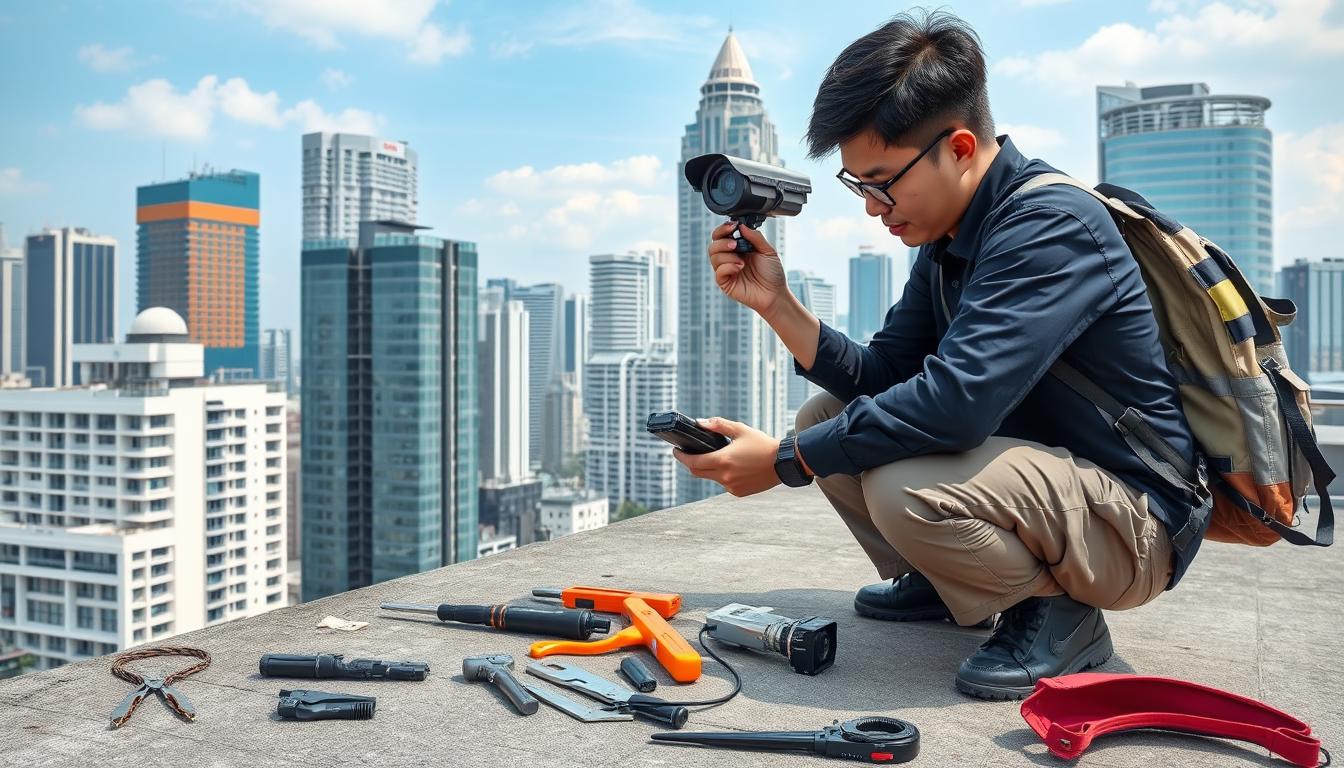
Security Camera Maintenance Guide for Singapore
Keeping your security cameras in top shape is key, more so in Singapore’s humid weather. Regular maintenance cuts down the chance of system failures by up to 87%. It also makes sure you follow local laws and keeps your surveillance systems working well.
Studies show that 83% of CCTV issues in the area come from not doing routine checks. A good maintenance plan can make your systems last longer and save you from big repair bills.
For specific maintenance advice, talk to experts in surveillance system care. They can offer more help and tips to keep your CCTV systems running smoothly. This way, you can always keep an eye on your surroundings without any hitches.
Key Takeaways
- Regular CCTV maintenance reduces equipment failures by up to 30%.
- 83% of CCTV failures are due to insufficient routine maintenance.
- Routine checks can prevent costly repairs and extend system lifespan.
- Consider professional services at least twice a year based on system needs.
- Cleaning camera lenses at least every three months ensures optimal image quality.
Importance of Regular CCTV Maintenance
For both homes and businesses, knowing why CCTV maintenance is key is vital. It boosts security and saves money. Keeping CCTV systems in top shape helps avoid expensive fixes and ensures they work well.
Enhancing Security
Good CCTV maintenance means better security. It catches problems like bad wiring or rusty parts early. This stops systems from failing.
Studies show about 30% of CCTV systems fail to work right because of poor upkeep. Regular checks help avoid security issues that happen when systems fail.
Cost Efficiency
Regular CCTV upkeep saves a lot of money. It’s cheaper than fixing things when they break down. Small fixes can stop big problems from happening.
Well-kept CCTV cameras last 5 to 7 years. Neglected ones might only last 2 to 3 years. This means big savings over time.
Increasing Longevity
Maintenance boosts security, saves money, and makes systems last longer. Regular checks and cleanings keep cameras working well. They also prevent image problems.
Checking power issues is also key. About 15% of failures are due to power problems. Fixing these early keeps systems running smoothly.
What are the Types of Maintenance of CCTV?
It’s key to know the types of CCTV maintenance to keep systems running well. Each type has its own role in making sure systems work as they should.
Preventive Maintenance
Preventive maintenance means regular checks and part replacements. It’s all about catching problems before they start. This can cut down on equipment failures by up to 30%.
It includes cleaning camera lenses, checking wires, and making sure sensors work right. Cleaning cameras every three months keeps footage clear. Also, checking recording settings weekly is important to capture key moments.
Corrective Maintenance
Corrective maintenance is for when problems show up during normal use. It fixes issues quickly to keep security systems strong. Quick action is key, like when there’s a power loss or network problem.
But, relying only on this can cost more and cause more downtime.
Routine Inspections
Routine inspections are key to checking CCTV systems’ health. They involve checking video quality and recording settings. This ensures systems are working well.
Regular checks spot small problems before they get big. Look for dirt on lenses, misalignment, and any blockages outside. Keeping logs of these checks helps track performance and meets standards.
Benefits of Regular CCTV Maintenance
Regular CCTV maintenance brings many benefits. It boosts security and helps manage costs. By keeping systems running well, businesses can improve their security and avoid unexpected repair costs. This approach keeps surveillance systems working well and saves money in the long run.
Enhanced Security
Regular checks mean better enhanced security for any place. These updates make CCTV systems more reliable. They can spot and stop problems quickly. This keeps important footage safe and meets legal standards.
Cost Management
Having a set maintenance plan helps with cost management. It stops unexpected repair costs. Regular maintenance is cheaper than fixing big problems. It also saves money on call-out fees and support costs by fixing small issues early.
System Longevity
Maintenance does more than just save money and improve security. It also makes CCTV systems last longer. Regular checks and updates can add over 30% to a system’s life. This means fewer replacements and more value from your investment.
| Benefits | Description |
|---|---|
| Enhanced Security | Improved reliability and functionality of CCTV systems to reduce crime and increase monitoring accuracy. |
| Cost Management | Lower unexpected repair costs and better budgeting through proactive maintenance strategies. |
| System Longevity | Increased lifespan of CCTV equipment, leading to fewer replacements and extended service life. |
Creating a CCTV Maintenance Schedule
Creating a CCTV maintenance schedule is key to a good surveillance system. Regular maintenance stops equipment failure and boosts security. It also makes your system work better. This part talks about the main parts of a good schedule, like daily checks, monthly inspections, and quarterly reviews.
Daily Checks
Daily checks are vital. Make sure all cameras work and are in the right spot. Also, check the system’s storage to avoid running out of space. And, keep camera housings clear of fog or water to avoid damage.
Monthly Inspections
Monthly, clean camera lenses and check cables for damage. Also, test the power supply to avoid electrical problems. Make sure all software is updated to keep up with new tech.
Quarterly Reviews
Every quarter, do a deep check of your CCTV system. Check camera housings and power supply units. This helps find and fix problems early, saving money in the long run.
CCTV Maintenance Best Practices
Keeping your CCTV system in top shape is key. Regular cleaning and thorough inspections boost your security. This ensures your system works well.
Cleaning Cameras Regularly
Camera cleanliness is vital for clear images. Dust, dirt, and fingerprints can ruin your view. Clean camera lenses every three months with soft cloths and gentle cleaners.
This keeps your video sharp and clear. It helps you monitor accurately.
Inspecting Connections and Cables
Checking connections and cables is also important. Faulty connections can cause image distortion. Regular checks help catch problems early.
Also, Singapore’s humid weather can damage your system. Make sure to protect it from corrosion. For more tips, check out this guide.
CCTV Maintenance Checklist: Essential Components
Using a detailed CCTV maintenance checklist is key to keeping your surveillance system running smoothly. Regular checks help lower the chance of system failures and security issues.
Camera Functionality Checks
It’s important to check camera functions often. This ensures each camera captures clear footage. A dirty lens can make images blurry, making it hard to recognize people.
Cleaning cameras regularly can improve image quality by up to 20%. This is vital for good surveillance.
Wiring and Connections Assessment
Checking wiring and connections is vital to avoid system failures. Look for signs of wear or damage every few months. About 70% of CCTV system failures are due to poor maintenance.
Storage and Data Integrity Review
Checking storage regularly is key to keeping video footage safe. For homes, 1 TB of storage is a good start. Businesses might need 4 TB.
Not enough storage can cause up to 15% of footage to be lost. So, it’s important to check storage often for data integrity.
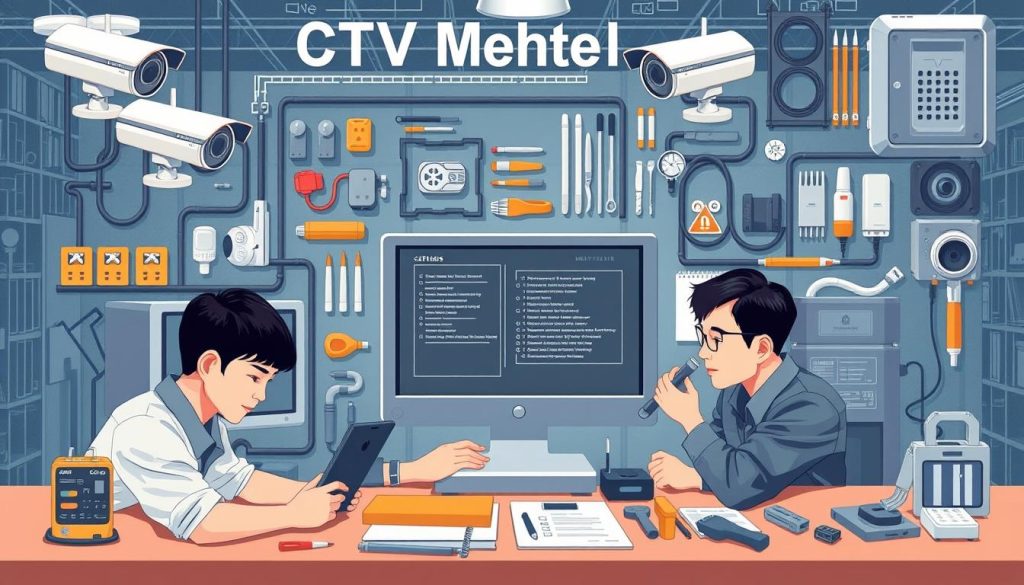
CCTV Troubleshooting Techniques
Effective CCTV troubleshooting techniques are key to keeping surveillance systems running smoothly. A systematic approach helps quickly find and fix problems. This way, security coverage is not disrupted.
Inspect Camera Lenses
Checking camera lenses is a first step in fixing CCTV issues. Dust and dirt can block clear images and lower video quality. Cleaning lenses regularly keeps footage sharp and useful.
Check Power Supply
Power issues cause about 30% of CCTV problems. Look for steady green LED lights, which mean everything’s working right. Blinking or red lights suggest power problems. The right voltage is vital for clear images and system stability.
Examine Cables and Connections
Inspect cables and connections often, as 20% of camera failures come from bad cabling. Regular checks can spot wear or damage. In systems with many cameras, unique IP addresses prevent network conflicts, which happen in 25% of systems. Keeping these parts in good shape avoids common problems and keeps systems running.
For more tips on fixing camera issues, check out this resource. Using these troubleshooting methods can greatly improve your CCTV systems’ performance. This protects your property well.
Understanding Different Types of CCTV Systems
There are many types of CCTV systems to meet various security needs. Choosing the right one means knowing the differences between wired and wireless systems. Each has its own benefits, so it’s important to think about what you need.
Wired and Wireless CCTV Systems
Wired CCTV systems give a stable connection and clear video, perfect for reliable surveillance. It’s key to check cables often to keep them working well. On the other hand, wireless systems are flexible and easy to install where cables are hard to use. They work well in small areas but need regular checks to keep them running smoothly.
IP-based vs. Analog CCTV Systems
IP-based systems use digital tech and send data over the internet. They need less cable, sometimes just one for power and data. Keeping software up to date is important for their performance and security. Analog systems are simpler but need more care to keep video clear. They’re reliable but might not match the quality of IP systems. Knowing about these systems helps in choosing the right one for your needs.
| Type of CCTV System | Advantages | Considerations |
|---|---|---|
| Wired CCTV | Stable connections, High video quality | Complex installation, Higher cost |
| Wireless CCTV | Flexible installation, Easier to relocate | Signal interference, Battery life checks |
| IP-based | Minimal cabling, High-resolution video | Regular updates needed |
| Analog | Simpler technology, Reliable | Lower video quality, More cabling |
Common Issues Faced During CCTV Maintenance
During CCTV maintenance, many common issues can pop up. These problems can affect how well the system works and how reliable it is. Knowing about these challenges helps keep surveillance systems running smoothly and makes fixing problems easier.
Camera Lens Issues
Camera lens problems often come from dirt or being off-center. This makes the video blurry, which can lose important details. Keeping the lens clean and adjusting it right is essential to avoid these issues.
Also, if the camera is not installed correctly, it can show colors wrong or not see well at night. This is even worse when there’s not enough light around. It’s very important to fix camera lens problems because they greatly affect the video quality.
Wiring Problems
Wiring issues are a big problem, making up about 25% of video signal problems. Bad connections or damaged cables can mess up the signal, causing video to look bad or not work at all. This can really hurt surveillance efforts, which are very important.
Using good cable management can help avoid these problems. Regular checks keep the wiring in good shape. This ensures the system works well for homes and businesses alike.
Network Connectivity Issues
Network problems are common in IP-based CCTV systems, causing downtime. Weak signals or interference can stop video from streaming or recording. This is a big deal for surveillance.
Keeping network parts in good shape and updating firmware helps fix these issues. Making the network stronger means fewer problems with connectivity. This makes CCTV systems more efficient.
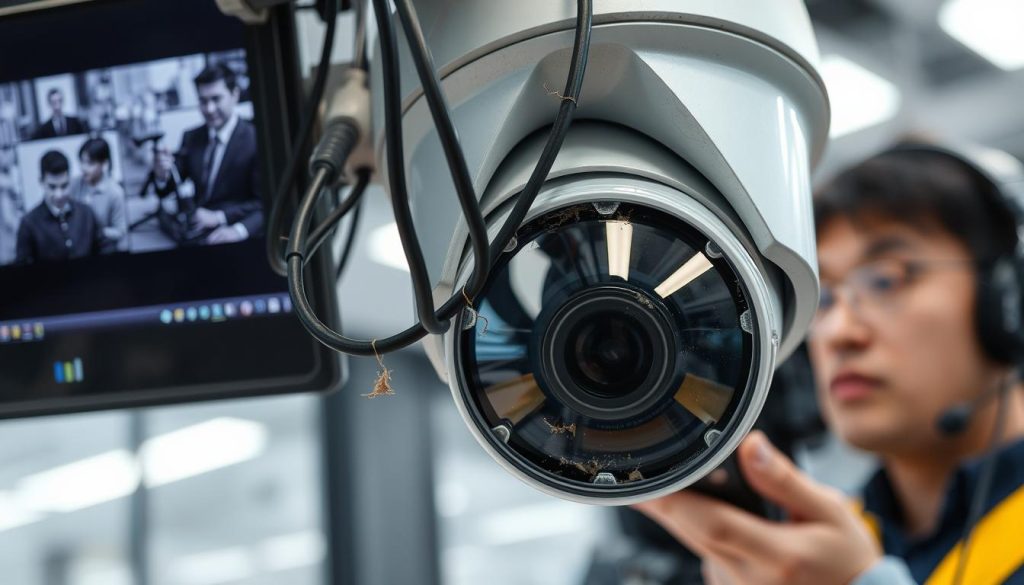
Creating a Detailed CCTV Maintenance Plan
Creating a detailed CCTV maintenance plan is key to keeping systems running smoothly. It ensures that these surveillance systems work well. By setting service intervals, organizations can keep their equipment in top shape.
Regular checks on parts like camera lenses and power supplies stop small problems from becoming big ones. This helps avoid major system failures.
Setting Service Intervals
The need for regular service depends on several factors. For places where surveillance is very important, maintenance is a must. Here are some guidelines for setting up a good maintenance schedule:
| Environment | Service Interval |
|---|---|
| Standard Installations | Annual servicing |
| High-risk Sites | Every six months |
| High-traffic Areas | Quarterly checks |
| Critical Systems | Monthly service checks |
| Outdoor Cameras | Every three months |
| Full System Check-ups | Monthly |
Cleaning camera lenses every three months is key for clear images. Regular checks and software updates also keep the system strong.
Involving Professional Services
Using professional services makes maintenance more reliable. Certified technicians can handle complex problems and follow best practices. This boosts the effectiveness of maintenance.
Professional help ensures quick action on any issues. It also supports long-term investment in surveillance systems. Working with experienced providers in Singapore helps businesses create a solid CCTV maintenance plan. This plan focuses on safety and follows all rules.
Cost Implications of CCTV Maintenance
Understanding the cost of CCTV maintenance is key for good financial planning. Regular maintenance keeps systems running well and avoids big repair costs. It’s about setting aside money for routine checks, software updates, and repairs.
Budgeting for Regular Maintenance
When planning your maintenance budget, consider several factors. Basic maintenance costs about $550 a year. Intermediate systems cost around $1,250, and advanced systems with warranties can be $2,500 annually.
Regular servicing costs $100 to $300 per camera. Minor repairs start at $150, and big repairs can be over $500. Software updates and storage expansions add to the cost, ranging from $200 to $1,000 and $100 to $500, respectively. Compliance review costs, from $250 to $600 a year, ensure you follow Singapore’s data protection rules.
Long-term Value of Proper Care
Regular maintenance of CCTV systems offers long-term benefits. It extends the life of equipment, saving on replacement costs. It also protects against security breaches.
With good maintenance budgeting, businesses can avoid common operational issues. A well-maintained system works better and can even lower insurance costs. Proper care and maintenance make spaces safer for everyone.
| Maintenance Category | Estimated Cost (Annual) |
|---|---|
| Basic Maintenance | $550 |
| Intermediate Systems Maintenance | $1,250 |
| Advanced Systems Maintenance | $2,500 |
| Routine Servicing (per camera) | $100 – $300 |
| Minor Repairs | $150+ |
| Significant Repairs | $500+ |
| Software Upgrades | $200 – $1,000 |
| Storage Expansion | $100 – $500 |
| Remote Access Setup | $150 – $300 |
| Annual Compliance Review | $250 – $600 |
Security Camera Maintenance Tips for Singapore’s Climate
Singapore’s climate is humid and tropical, posing challenges for security camera upkeep. Regular maintenance is key to avoid moisture buildup. This can cause corrosion and fungus on camera lenses.
Cleaning outdoor cameras 2 to 3 times a year is a good practice. It ensures they work well, despite the climate’s effects on CCTV systems.
Using weatherproof enclosures for outdoor cameras protects them from rain and humidity. Also, monthly checks are vital to spot wear and tear from the environment. This keeps your CCTV in good shape for 4 to 10 years, depending on the model.
By following these tips, your security systems will stay effective over time. For specific advice, consider professional services that understand your environmental needs.
FAQ
Why is regular security camera maintenance important?
Keeping your security cameras in top shape is key, even more so in places like Singapore. It makes sure your system works well, reducing the chance of failures and security risks. Regular checks also help avoid blind spots.
How often should I perform CCTV maintenance?
You should check your CCTV system at least once a year. But, if you live in a tough climate, you might need to do it more often. This helps avoid big problems and keeps your system running smoothly.
What are the different types of CCTV maintenance?
There are a few types of maintenance. Preventive maintenance is about checking and replacing parts before they break. Corrective maintenance fixes problems after they happen. Routine inspections make sure everything is working right.
What benefits does regular CCTV maintenance offer?
Regular maintenance boosts your security by keeping your system running without a hitch. It also saves money by avoiding sudden repairs. Plus, it makes your equipment last longer by catching small problems early.
What should be included in a CCTV maintenance schedule?
Your maintenance schedule should cover daily checks for working cameras. Do monthly cleanings and wear checks. And, do a full system check every three months to ensure everything is working well.
How can I ensure the effectiveness of my CCTV system maintenance?
To keep your system in top shape, clean camera lenses often. Check connections and cables for damage. Also, make sure your system is protected from Singapore’s humidity.
What are the essential components of a CCTV maintenance checklist?
Your checklist should include camera checks for clear images. Look at wiring and connections for damage. And, make sure your storage and data are secure.
What troubleshooting techniques should I employ for my CCTV system?
For troubleshooting, start by cleaning camera lenses. Check the power supply for the right voltage. And, inspect cables and connections for wear or damage.
What types of CCTV systems are available?
You can choose from wired systems for stable connections, wireless systems for easy setup, or IP-based systems that need software updates. Each has its own benefits and needs.
What common issues might I face during CCTV maintenance?
You might run into camera lens problems, wiring issues, or network problems with IP systems. These can cause downtime if not fixed regularly.
How can I create a detailed CCTV maintenance plan?
To make a good maintenance plan, set specific times for checks. Consider getting help from certified technicians. They can handle complex issues and follow best practices.
What are the cost implications of CCTV maintenance?
Maintenance costs include regular checks and repairs. But, proper care can save you money in the long run. It prevents unexpected costs and can even lower your insurance bills.
How should CCTV maintenance be adjusted for Singapore’s climate?
In Singapore’s humid weather, cleaning cameras often is key to avoid moisture damage. Use weatherproof enclosures for outdoor cameras. And, do monthly checks for wear and tear.
Source Links
- https://cctvmaintenance.com.sg/types-of-maintenance-of-cctv-in-singapore-explained/
- https://wenhong.com.sg/what-are-the-types-of-maintenance-of-cctv/
- https://www.spottersecurity.com/blog/regular-maintenance-cctv-systems/
- https://www.nmcabling.co.uk/2023/03/the-importance-of-regular-cctv-maintenance-and-repairs/
- https://wenhong.com.sg/do-cctv-cameras-need-maintenance/
- https://www.edviston.com/what-are-the-types-of-maintenance-of-cctv/
- https://brillianttechnology.com.au/practical-tips-for-maintaining-your-cctv-security-system/?srsltid=AfmBOor9v_0cD1WC7WCCwyzZp-ln3Ms2KukcqJCZsEZN2T9F26ePuQ8V
- https://clearview-communications.com/insights/how-businesses-benefit-from-cctv-maintenance/
- https://www.tecservuk.com/blog/the-benefits-of-cctv-maintenance-checklist/
- https://amaxfireandsecurity.co.uk/blogs/why-regular-maintenance-of-commercial-security-systems-is-crucial/
- https://www.cctv-camera.com.sg/articles/cctv-maintenance-checklist.html
- https://bas-ip.com/articles/cctv-maintenance/
- https://www.firstsolution.com.sg/blog/how-to-conduct-cctv-camera-maintenance/
- https://www.surveillancezone.com.sg/cctv-maintenance-and-best-practices-for-security-systems/?srsltid=AfmBOopZBw38_Bae3-uVZ_qDcRnYoc8w67AYu8rIgdEectr3Paj8b-lj
- https://netscaling.com/cctv-surveillance-systems-cost-effectiveness/
- https://brillianttechnology.com.au/practical-tips-for-maintaining-your-cctv-security-system/?srsltid=AfmBOoqLuORJmUa_DW97cJA3A4VH4KnDRYUTfvXFVohF2vvpaccfQJaX
- https://www.faultfixers.com/blog/comprehensive-cctv-system-preventive-maintenance-checklist
- https://www.fieldex.com/checklist/cctv-cameras-maintenance-checklist
- https://upcomingsecurity.co.uk/security-guides/cctv-camera-guides/cctv-maintenance/
- https://www.caughtoncamera.net/news/common-cctv-problems-fix/
- https://cctvmaintenance.com.sg/common-cctv-camera-issues-in-singapore-explained/
- https://info.verkada.com/surveillance-features/security-camera-maintenance/
- https://www.pelco.com/blog/types-of-cctv-cameras
- https://www.caughtoncamera.net/news/different-types-of-cctv/
- https://network-data-cabling.co.uk/blog/12-cctv-problems-and-fixes/
- https://www.edviston.com/what-is-the-common-problem-of-cctv-camera/
- https://cctvmaintenance.com.sg/optimal-cctv-service-frequency-for-security/
- https://brillianttechnology.com.au/practical-tips-for-maintaining-your-cctv-security-system/?srsltid=AfmBOorrJv0nvXSgnBY8eUhU9ufKDnx3tPb7l_55GKEUl1v8vL4sfSix
- https://www.edviston.com/how-to-write-cctv-maintenance-report/
- https://www.edviston.com/how-much-is-cctv-maintenance/
- https://www.firstsolution.com.sg/cctv-camera-installation-in-singapore-cost-benefits-and-considerations/
- https://cctvmaintenance.com.sg/lifespan-of-a-cctv-camera-explained-singapore-guide/
- https://www.isecure.com.sg/article/how-to-choose-the-right-cctv-camera-for-your-needs


