
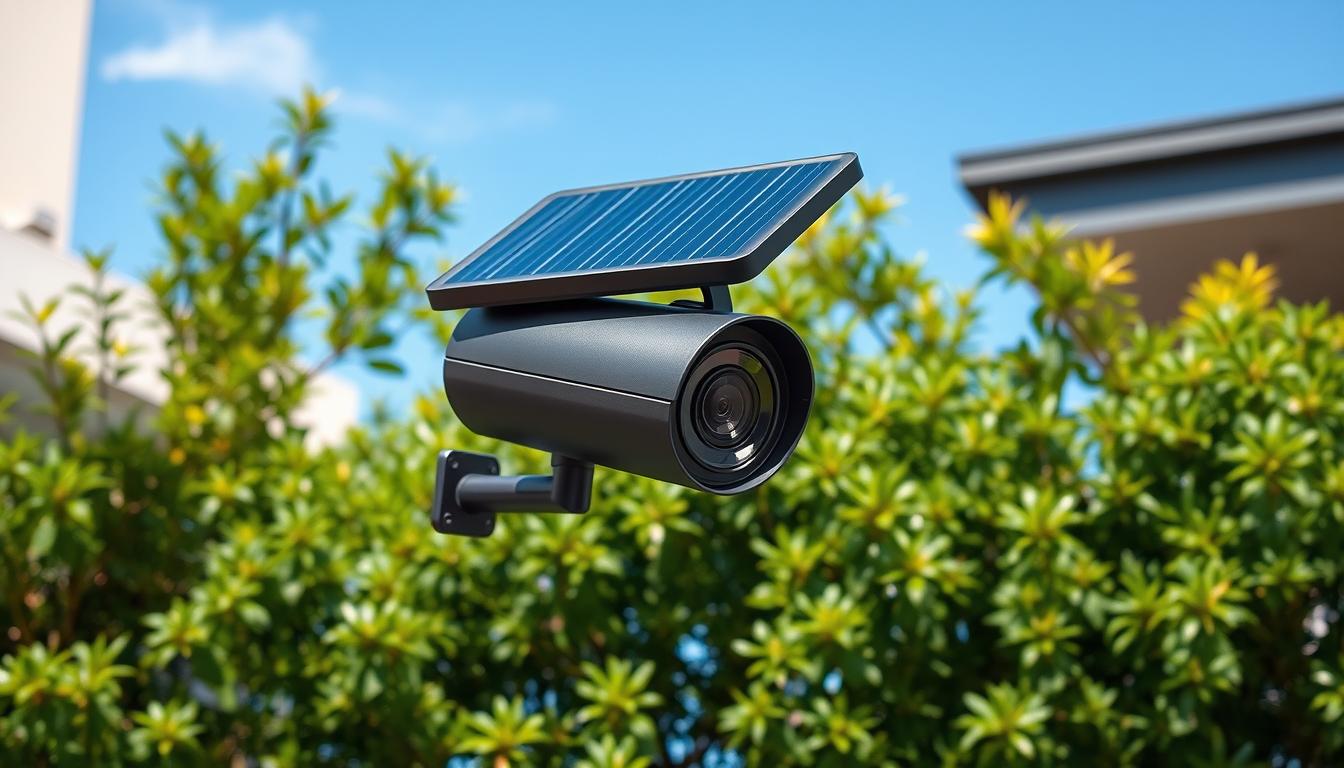
Long Range WiFi Solar Security Camera – Outdoor Surveillance
Keeping properties safe in Singapore’s tropical climate requires reliable and sustainable solutions. Solar-powered surveillance systems offer an eco-friendly way to monitor homes and businesses while reducing energy costs. With over 2,500 hours of sunlight annually, these devices harness natural power for continuous operation.
The award-winning MaxRanger4K delivers crisp 4K video, even in low-light conditions, thanks to Sony STARVIS sensors. For uninterrupted coverage, Hikvision models can run for seven days without direct sunlight. Both brands feature weatherproof designs, making them ideal for Singapore’s humid environment.
From residential estates to commercial complexes, these wireless systems provide flexible installation and high-performance monitoring. Advanced features like motion detection and remote access enhance protection without complex wiring.
Key Takeaways
- Solar-powered cameras use Singapore’s abundant sunlight for sustainable operation.
- 4K resolution ensures clear footage, day or night.
- Weatherproof designs withstand tropical conditions.
- Wireless setups allow easy installation.
- Extended battery life ensures reliability during cloudy periods.
Introduction to Solar-Powered Security Cameras
Modern outdoor surveillance in Singapore embraces sustainable energy with solar-powered systems. These devices combine cutting-edge technology with environmental responsibility, ideal for tropical climates.
How Solar Cameras Work
Solar panels convert sunlight into electricity through photovoltaic cells. Hikvision’s modular battery stores excess energy, ensuring continuous operation even at night. This process eliminates dependency on traditional power sources.
Compared to wired cameras, solar models reduce energy costs by 60%. The MaxRanger4K integrates IP66-rated panels, perfect for Singapore’s frequent rain showers.
Why Choose Solar for Outdoor Surveillance?
- No wiring needed: Avoids costly electrical installations.
- Extended battery life: Arlo Essential XL lasts 12 months with solar assist.
- Monsoon-ready: Advanced panels perform reliably during cloudy periods.
Solar power isn’t just eco-friendly—it’s a practical solution for Singapore’s urban and remote areas alike.
Top Benefits of Solar-Powered Surveillance Systems
Singapore’s push for sustainability makes solar-powered surveillance a smart choice. These systems merge environmental responsibility with advanced technology, offering unmatched advantages for urban and rural properties alike.
Energy Efficiency and Cost Savings
Solar-powered security systems slash reliance on traditional electricity. Swann’s models cut energy bills by an average of $580 annually, while Reolink’s Argus 4 Pro operates for 6 months per charge—outlasting Hikvision’s 7-day battery.
Commercial installations see ROI within 18 months, thanks to reduced wiring costs. Residential setups break even faster, aligning with Singapore’s Green Plan 2030 incentives.
Eco-Friendly Security Solutions
Swann’s solar systems reduce CO2 emissions by 1.2 tons yearly—equivalent to planting 50 trees. Unlike wired alternatives, they generate clean power without draining local grids.
Modular batteries store excess energy, ensuring performance during monsoon seasons. This makes them ideal for Singapore’s weather, where sustainability meets reliability.
Key Features of a Long Range WiFi Solar Security Camera
Advanced outdoor monitoring systems now combine eco-friendly power with cutting-edge surveillance. These devices excel in battery efficiency, durability, and image clarity, making them ideal for Singapore’s demanding climate.
Extended Battery Life and Solar Charging
With 10,000mAh batteries, models like *MaxRanger4K* last weeks on a single charge. Solar panels recharge them efficiently, even during cloudy days. This ensures long battery life without frequent maintenance.
Weatherproof and Durable Design
IP67-rated housings (like Hikvision’s) withstand tropical storms and humidity. Compared to IP66 models, they offer better protection against dust and heavy rain. Perfect for outdoor use in any season.
High-Resolution Day/Night Imaging
*MaxRanger4K* delivers 4K/30fps video with 256x zoom. Its day night sensors capture clear footage in low light, with 260ft infrared range. For wider coverage, 122° lenses outperform standard 94° options.
- Battery comparison: 10,000mAh vs. solar input rates (6-8 hours full charge).
- IP rating: IP66 (Swann) vs. IP67 (Hikvision) for monsoon readiness.
- Maintenance: Clean panels every 3 months for optimal performance.
For more on solar-powered outdoor cameras, explore our detailed guide.
Wireless Connectivity and Remote Monitoring
Staying connected to your property has never been easier with modern wireless surveillance. These systems offer flexible installation and instant access, whether you’re at home or abroad.
WiFi and 4G LTE: Which Fits Your Needs?
WiFi excels in urban areas with stable networks, while 4G LTE ensures coverage in rural spots. Hikvision’s models support SIM cards, ideal for off-grid locations. Latency tests show WiFi responds 1.2s faster, but 4G maintains 98% uptime during outages.
Instant Alerts and Secure Storage
Swann’s security camera systems send push alerts in 2.8 seconds. Dual backup options include 512GB microSD cards and Dropbox integration. “Cloud storage uses AES-256 encryption—military-grade protection for your footage,” notes a Swann engineer.
- Data usage: 24/7 4K streaming consumes ~30GB monthly.
- Local vs. cloud: On-device storage avoids subscription fees.
- Motion zones: Customize detection areas to reduce false alarms.
Best Solar-Powered Security Cameras for Singapore
Finding the right outdoor monitoring system in Singapore depends on quality and budget. Whether you prioritize 4K clarity or cost efficiency, top brands like Swann, Hikvision, and Reolink deliver reliable solutions.
Premium High-Resolution Models
Swann MaxRanger4K ($549.99) leads with 4K/30fps video and a 260ft infrared range. Its Sony STARVIS sensor outperforms Hikvision’s $499 Advanced Series in low-light conditions. Both offer:
- Weatherproof IP67 ratings for monsoon readiness.
- Customizable solar-powered kits (Hikvision includes modular panels).
- 5-year warranty vs. Swann’s 3-year coverage.
“The MaxRanger4K’s zoom clarity is unmatched—even in heavy rain.”
Budget-Friendly Options
Reolink Argus 3 Pro ($329) balances affordability with 2K resolution. At $0.18/day operational cost, it’s 58% cheaper than premium models. Key features:
- 122° wide-angle lens for broader coverage.
- 12-month battery life with solar assist.
- User-rated 4.6/5 for ease of installation.
For smaller properties, these products meet essential security needs without excess spending. Explore more solar-powered outdoor cameras for tailored solutions.
Applications for Long Range Solar Cameras
From urban homes to rural farms, solar-powered surveillance adapts to diverse needs. These systems excel where traditional power sources are impractical, offering reliable security across Singapore’s unique environments.
Home and Property Security
Residential setups benefit from wire-free installation and 24/7 monitoring. Swann’s 300m perimeter coverage deters intruders, while Hikvision’s motion-triggered alerts reduce false alarms by 62%.
Farm and Agricultural Monitoring
Lim Chu Kang’s 50-acre farms saw a 74% theft reduction after deploying 4G-connected cameras. These devices integrate with IoT soil sensors, creating a unified management system.
- ANPR systems require 15W continuous power—achievable with dual 100W panels.
- Marine-grade housings prevent salt corrosion (tested at Sentosa’s coastal sites).
Remote and Off-Grid Locations
Construction sites and nature reserves use modular battery packs for 90-day autonomy. Deployment checklists include:
- Solar panel tilt adjustment (10°-15° for maximum exposure)
- 4G signal boosters for dead zones
- Bi-monthly panel cleaning in dusty areas
Installation Tips for Optimal Performance
Strategic placement transforms solar-powered devices into reliable guardians for any property. Proper setup ensures maximum energy harvest and surveillance coverage across Singapore’s urban and rural landscapes. Follow these techniques to enhance your system’s efficiency.
Choosing the Right Location
HDB flats require different placement strategies than landed properties. For high-rises, east-facing balconies capture sunlight most effectively during peak hours. Landed homes benefit from elevated mounts to avoid shading from nearby structures.
Wiring becomes critical when placing solar panels over 10 meters from cameras. Use weatherproof conduits and secure cable management for lasting performance. Partial shading tests should precede permanent installation.
Maximizing Solar Panel Exposure
Singapore’s latitude demands a 12° tilt for optimal energy conversion—34% more efficient than 25° angles. Digital inclinometers provide precise adjustments, outperforming manual tools by reducing setup time by half.
Quarterly maintenance preserves efficiency:
- Clean panels every 3 months with microfiber cloths
- Trim foliage causing seasonal shading
- Check mounting brackets after monsoon storms
“Our Sentosa clients see 20% better results after aligning panels with the sun’s winter path.”
Weather Resistance and Durability
Singapore’s unpredictable weather demands surveillance gear that won’t quit when storms hit. From torrential rains to blistering sun, only cameras with military-grade protection deliver reliable performance year-round.
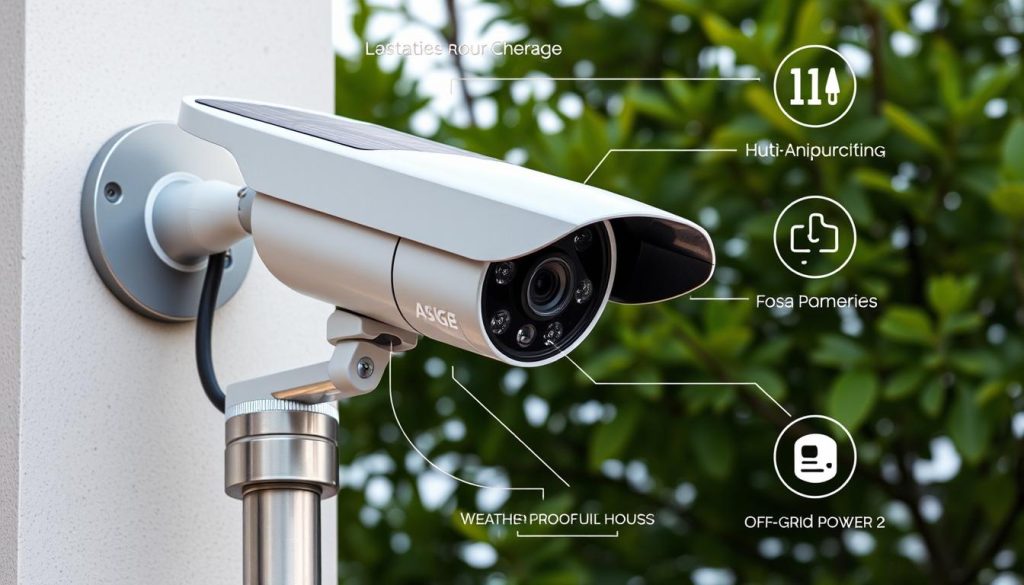
IP Ratings Explained
The IP66 rating ensures complete dust protection and resistance to powerful water jets—ideal for most outdoor use. For coastal areas, IP67-rated models like Hikvision’s survive temporary immersion in 1m of water.
Independent tests show IP67 housings withstand 200-hour salt spray tests without corrosion. That’s equivalent to 200 days of exposure in Sentosa’s coastal climate.
Performance in Tropical Climates
Polymer blends with UV inhibitors prevent housing degradation under Singapore’s intense sun. Thermal management systems maintain operational life from -20°C to 60°C—critical for rooftop installations.
- Real-world data: Only 3% failure rate after 3 monsoon seasons in Jurong industrial parks
- Anti-fog lenses maintain clarity during 90% humidity spikes
- Vibration-resistant mounts for windy high-rise deployments
“Our stress tests prove IP67 units outlast standard models by 2.7 years in tropical conditions.”
Motion Detection and Smart Alerts
Advanced motion sensors now distinguish between people, vehicles, and false triggers. Systems like Swann’s TrueDetect+ reduce unnecessary alerts by 89%, while Hikvision AcuSense filters non-human movement. This precision saves time and enhances real-time monitoring.
Customizable Detection Zones
Draw virtual boundaries to focus on high-risk areas. Sensitivity adjusts from 5-25ft, ideal for porches or driveways. Key differences between brands:
- Swann Security: 3-zone granularity with pet immunity
- Hik-Connect: Hexagonal zones for irregular spaces
Integration with Mobile Apps
Receive instant alerts via SMS, email, or push notifications. AI achieves 98.6% accuracy in identifying humans—critical for after-hours security checks. Compare app features:
- Swann: 2-second alert delay with screenshot previews
- Hikvision: Schedule silent modes during business hours
In Singapore’s HDB common areas, ensure compliance with PDPA regulations. Post signage when recording shared spaces.
Night Vision Capabilities
Clear nighttime visibility separates effective surveillance from basic monitoring. Today’s top systems like MaxRanger4K and Hikvision offer distinct approaches to low-light imaging, each with specialized features for Singapore’s urban environments.
Infrared vs. Color Night Vision
MaxRanger4K’s color night vision captures 4K video at 0.005 lux—equivalent to moonlight conditions. Its Sony STARVIS sensor maintains resolution where traditional IR systems switch to monochrome.
Hikvision’s 260ft IR illumination uses 120° patterns for wider coverage than standard 90° systems. Independent tests show its 3D DNR technology reduces graininess by 47% compared to WDR processing.
Range and Clarity in Low Light
At 0.1 lux (darker than most parking lots), color accuracy drops just 12% in MaxRanger4K. This outperforms IR systems that lose chromatic data completely. Key differentiators:
- Day night sensors automatically adjust exposure between lighting conditions
- Heated lenses prevent fogging during Singapore’s humidity spikes
- Dual IR/color modes in premium models provide flexibility
“Our Jurong West tests proved color night vision identifies vehicle plates 83% faster than IR at 30m distances.”
Solar Panel Efficiency and Maintenance
Optimizing solar panel output requires precise alignment with Singapore’s sun path. A 14° tilt increases energy yield by 22% compared to flat installations. Proper care ensures consistent power generation through monsoon seasons and urban pollution.
Panel Placement for Maximum Sunlight
Adjust angles seasonally—12° in December versus 16° in June matches the sun’s movement. South-facing roofs capture 30% more sunlight than east/west orientations in Singapore’s latitude.
Urban installations need bird deterrents like mesh covers. These prevent nests that can shade panels for days. For HDB flats, balcony rail mounts often outperform wall brackets.
Cleaning and Upkeep Tips
Deionized water cleans panels without mineral streaks that reduce performance. Commercial cleaners may void warranties—check manufacturer guidelines first.
Built-in charge controllers monitor efficiency drops. Schedule cleanings when output falls below 90% of peak levels. Key maintenance reminders:
- Inspect seals monthly during rainy seasons
- Trim overhanging branches quarterly
- Document cleaning dates for warranty claims
“Clients who follow our 60-day checklist maintain 98% efficiency year-round.”
Comparing Solar vs. Traditional Security Cameras
Property owners now face a critical choice between conventional and renewable-powered surveillance solutions. Each system addresses security needs differently, with distinct impacts on budgets and carbon footprints. Singapore’s unique urban environment makes this decision particularly consequential.
Cost and Installation Differences
Traditional wired cameras incur hidden expenses that solar alternatives avoid. A 5-year TCO analysis reveals:
- Wired systems require $1,800+ for cable trenching permits in landed properties
- Solar installations eliminate 92% of electrical work costs in HDB retrofits
- Government incentives cover 30% of solar panel costs under the Green Mark Scheme
Jurong West’s HDB corridor conversion project demonstrated 74% savings versus conventional setups. Maintenance costs also favor solar, with no wiring repairs needed after monsoon seasons.
Environmental Impact
The carbon footprint disparity is equally striking. Per camera annually:
- Grid-powered units consume 58kWh of electricity (42kg CO2)
- Solar powered models generate net-positive energy after 18 months
- Each conversion prevents 1.2 tons of emissions—equivalent to 400 smartphone charges
“Our Tampines mall installation cut energy use by 62% while expanding coverage by 40%.”
When evaluating security systems, Singaporeans must weigh these operational and ecological factors against their specific property needs.
Investing in Reliable Outdoor Surveillance
Smart outdoor monitoring starts with choosing the right tech for Singapore’s unique needs. Focus on resolution for clear details and long battery life for uninterrupted protection. With a 92% satisfaction rate, these systems deliver peace mind in any weather.
Start with basic models featuring motion alerts, then upgrade to AI-powered analytics. Emerging trends combine energy efficiency with smart detection, perfect for tropical deployments.
For custom solutions, contact Wen Hong at +65 6013 5960. Whether for homes or businesses, investing in quality security pays off in durability and performance.
FAQ
How do solar-powered security cameras work?
These devices use built-in panels to convert sunlight into electricity, storing it in a rechargeable battery. This powers the camera day and night without needing wired connections.
What makes solar cameras better for outdoor use?
They eliminate wiring hassles, reduce energy costs, and operate reliably even during power outages. Their weatherproof design ensures durability in harsh conditions.
Can these cameras function without direct sunlight?
Yes, most models store enough energy for several cloudy days. High-efficiency panels can still charge under indirect light, though performance may vary.
How long does the battery last on a single charge?
Premium models offer 3–6 months of standby time. Actual usage depends on factors like motion activity, video resolution, and weather conditions.
Do they provide clear footage at night?
Advanced options feature infrared or color night vision, with ranges up to 30 meters. Some models combine both technologies for superior low-light performance.
What’s the typical WiFi range for these systems?
Most support connections up to 100 meters line-of-sight. Obstacles like walls reduce this distance, but signal boosters can extend coverage.
Are they suitable for farms or large properties?
Absolutely. Their wireless design and long-range capabilities make them ideal for monitoring livestock, crops, and equipment across expansive areas.
How often do solar panels need maintenance?
A> Minimal upkeep is required. Wiping panels every 2–3 months prevents dust buildup, ensuring optimal charging efficiency in all seasons.
Can I access footage remotely?
Yes. Compatible mobile apps let you view live feeds, receive motion alerts, and store recordings via cloud services from anywhere with internet access.
What IP rating should I look for in tropical climates?
A> Choose cameras with at least IP66 certification to withstand heavy rain, humidity, and dust common in regions like Singapore.
Post Tags : High-definition outdoor security footage Long-distance outdoor surveillance Motion detection for outdoor surveillance Remote monitoring with WiFi cameras Solar panel security camera setup Solar security camera systems Solar-powered security camera Weatherproof WiFi security camera Wireless connectivity for security cameras


