
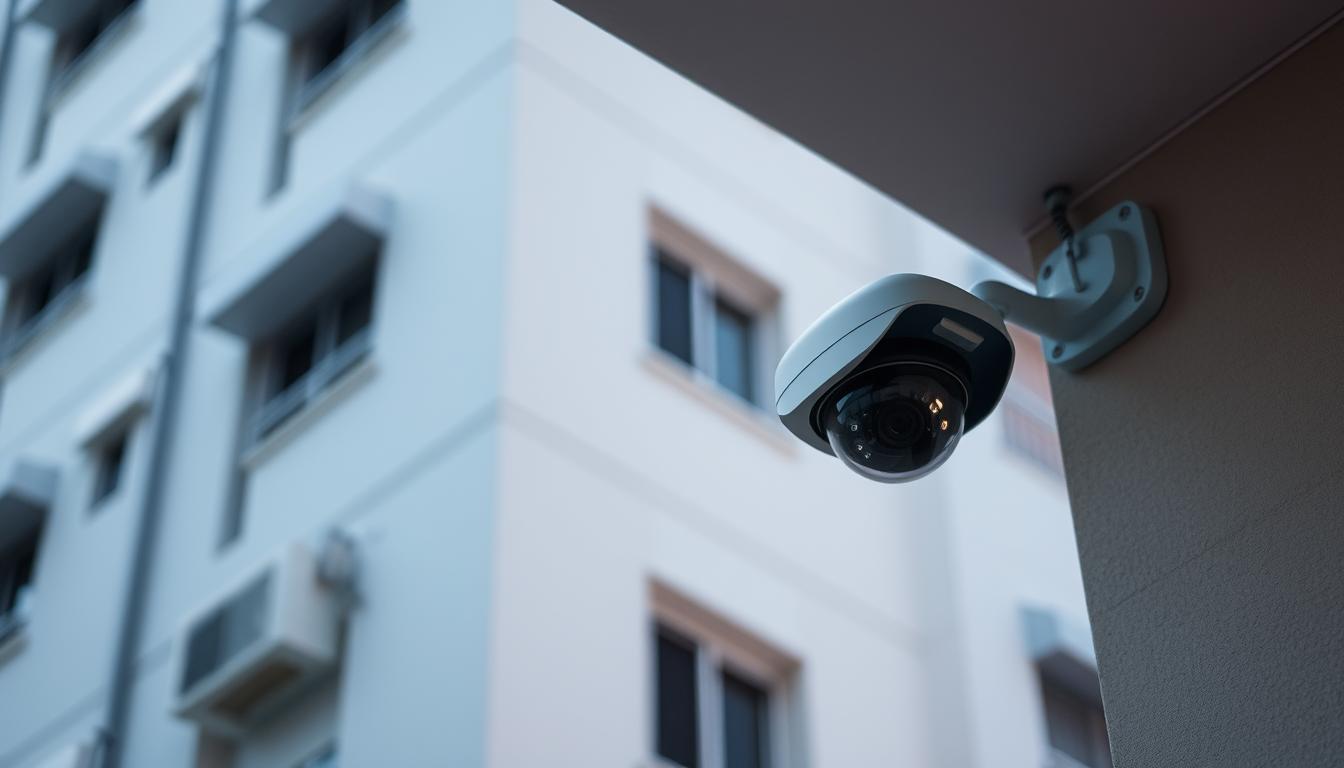
Is it illegal to install CCTV outside HDB flat? A Guide
Many Singapore residents wonder about the rules for placing security cameras around their homes. Recent updates allow homeowners to mount corridor-facing devices without prior approval, simplifying theft prevention efforts.
Privacy laws still apply when positioning recording equipment. Neighbor relations matter too—Ms. Lee’s famous flower pot theft case shows how proper placement helps avoid disputes.
Smart doorbells offer alternative monitoring solutions. These devices often include motion sensors and two-way audio while respecting privacy boundaries.
Key Takeaways
- HDB corridor cameras no longer need approval since 2023
- Privacy laws protect neighbors from intrusive surveillance
- Strategic placement prevents conflicts with nearby residents
- Smart doorbells provide less intrusive security options
- Documented theft cases justify proper camera usage
Understanding HDB’s CCTV Installation Rules
Singapore’s Housing Board has updated its policies regarding home security devices. Residents can now take proactive steps to protect their property while following clear guidelines. These changes reflect evolving needs for safety and privacy in public housing.
Simplified Approval Process Since 2023
Before May 2023, homeowners needed formal permission to install cctv devices facing common corridors. The updated policy removes this requirement when mounting cameras within private property boundaries. This change speeds up security enhancements while maintaining neighborhood harmony.
Corridor-facing units must still follow specific positioning rules. Devices should only capture activity in public walkways, not neighboring doors or windows. Proper angling prevents recording private spaces beyond the corridor area.
Critical Placement Guidelines
The Housing Board regulations prohibit mounting cameras on building facades due to killer litter risks. Equipment must not extend beyond flat boundaries or obstruct common areas. Smart doorbells enjoy similar exemptions if placed entirely on private property.
“Residents remain responsible for ensuring their security measures don’t infringe on others’ privacy.”
Violations may result in fines up to $5,000 or removal orders. The town council can require modifications for non-compliant installations. Always check current guidelines at HDB’s official portal before setting up any surveillance system.
Strategic placement of cctv cameras balances security needs with community considerations. Point devices toward your own entrance rather than adjacent units. This approach deters crime while respecting neighbors’ reasonable privacy expectations.
Is It Illegal to Install CCTV Outside HDB Flat?
Singapore’s approach to residential security balances property protection with personal privacy rights. The law permits monitoring devices when properly positioned, but imposes strict limits to prevent intrusive practices.
Legal Status Under Singaporean Law
Section 21 of the Community Disputes Resolution Act specifically addresses neighborhood surveillance. This legislation prohibits recording devices that capture private areas beyond your property boundaries. Cameras facing common corridors remain legal if they don’t intrude on neighboring units.
The 2022 Boon Lay cat abuse case demonstrated the evidentiary value of properly placed devices. Footage from a lawfully installed system helped authorities identify the perpetrator, showcasing how security measures can serve public safety.
“Residents must ensure their security measures don’t become instruments of harassment or privacy invasion.”
Special Circumstances and Exceptions
Temporary approvals exist for residents facing exceptional security threats. These six-month permits require documented evidence like police reports for loan shark harassment or repeated vandalism incidents.
Rules differ across property types. While HDB residents enjoy corridor monitoring privileges, private condo boards often impose stricter rules. Landed properties have more flexibility but must still comply with general privacy laws.
Police involvement becomes necessary when surveillance needs exceed standard parameters. Officers can authorize special arrangements for high-risk situations, provided the installation follows approved guidelines.
Where You Can Legally Place CCTV Cameras
Singapore’s public housing residents have specific zones where security devices can operate legally. These boundaries balance personal security needs with community privacy expectations.
Permitted Mounting Areas
Within your unit, you may freely position monitoring equipment. This includes door frames, ceilings, and walls facing interior spaces. Smart doorbells mounted directly on private doors also fall under permitted installations.
For corridor-facing setups, 15°-45° angle brackets help direct views appropriately. Technical solutions like fisheye lenses can limit coverage to approved areas while maintaining security effectiveness.
Common Property Restrictions
The Housing Board prohibits installation on building facades or shared corridors without approval. These common areas fall under Town Council jurisdiction, with Ang Mo Kio’s policy serving as a model for smart device regulations.
“Residents should reference HDB floor plans to identify private property boundaries before mounting any equipment.”
Opposite-facing units require special consideration. Cameras should never capture neighboring windows or doors, even if technically within your property line. Many disputes arise from improperly angled devices.
When planning your cctv camera setup, consider both legal boundaries and community harmony. Proper placement prevents conflicts while maintaining effective security coverage for your home.
How to Install CCTV Cameras Without Violating Privacy
Strategic placement of monitoring devices requires balancing surveillance needs with privacy protections. Singapore residents must consider both technical specifications and community expectations when enhancing home security. The Teck Whye theft case demonstrated how properly positioned cameras can deter crime without causing neighbor disputes.
Avoiding Neighbor’s Doors and Windows
Maintain a minimum 2.4-meter clearance from adjacent units when positioning devices. Angle brackets should direct views away from private spaces like bedroom windows or main doors. The Housing Board provides free alignment guides to help residents achieve compliant setups.
Technical solutions enhance compliance without reducing security effectiveness. Fisheye lenses limit coverage areas while motion sensors activate recording only when needed. Encryption protects cctv footage from unauthorized access, meeting data protection standards.
“Visible signage transforms surveillance from a privacy concern to a community safety feature.”
Ethical Considerations for Surveillance
Notify neighbors about recording devices through courtesy letters or community apps. The Personal Data Protection Act (PDPA) imposes stricter rules for businesses but still guides residential best practices. Xiaomi cameras offer customizable privacy zones that outperform Ring’s fixed settings.
Standard 256GB storage cards typically retain recordings for 21 days before automatic overwrite. This balance preserves evidence while preventing indefinite cctv footage retention. Shared corridor installations particularly benefit from these privacy-focused configurations.
Smart Doorbells vs. Traditional CCTV: What’s Allowed?
Modern security solutions offer homeowners flexible options beyond conventional monitoring systems. Smart doorbells have emerged as popular alternatives, combining video surveillance with visitor interaction capabilities while addressing privacy concerns.
HDB’s Stance on Smart Doorbells
The Housing Board treats these devices differently from standard installation cctv cameras. Units replacing existing doorbell hardware typically don’t require approval if mounted within private property boundaries.
Techcom Engineering’s 2025 survey revealed a 73% reduction in neighbor disputes when using smart doorbells compared to traditional systems. This stems from their focused field of view and temporary recording features.
“Smart devices that don’t modify building structures or capture common areas generally fall under permitted modifications.”
Differences in Installation Rules
Key distinctions affect how residents implement these security solutions:
- Mounting flexibility: Tamago-X7’s magnetic system allows renters to install without drilling
- Network needs: Minimum 2.4GHz Wi-Fi ensures stable video transmission
- Cost factors: Prices range from $120 for basic models to $400 for advanced systems
For common area installations, temporary six-month permits remain mandatory. The Straits Times reports 42% adoption rates for smart door devices in HDB flats, reflecting their growing acceptance.
When comparing models like Xiaomi MJSXJ12CM and Ring Video Doorbell Pro, consider local approval requirements alongside technical specifications. Proper positioning avoids the need for post-installation adjustments.
Steps to Get Town Council Approval (If Needed)
Residents needing to monitor common areas must follow official protocols. The town council oversees these requests to maintain neighborhood standards while addressing security concerns.
When Approval Becomes Necessary
Shared spaces like lift lobbies or void decks require formal consent. This process typically takes 7-14 days for review. Emergency cases involving loan shark threats or repeated vandalism may receive priority.
“All applications must include documented evidence of security threats for common area installations.”
Submitting Your Request
Follow these steps for smooth processing:
- Complete the digital form at SGCCTV.com.sg/approval-form
- Attach scanned copies of your NRIC and floor plans
- Include the police report case number if applicable
- Submit via the town council portal or email
Approved contractors charge an $18 delivery fee for compliant installations. Statistics show 89% approval rates for harassment cases with proper documentation.
Rejected applications can appeal within 14 days. The review time extends by 5 working days during appeals. Most successful reapplications address the original concerns with additional evidence.
Choosing the Right CCTV System for Your HDB Flat
Homeowners upgrading their security systems face critical decisions between wired and wireless solutions. Modern surveillance technology offers varied capabilities that must align with Housing Board guidelines while meeting household protection needs.
Wired vs. Wireless Options
The Hikvision DS-2CD2023G2-I represents the best 4MP wired choice at $228, offering stable Power over Ethernet (PoE) connectivity. Wired cctv cameras eliminate Wi-Fi interference common in dense HDB corridors but require professional install cctv services averaging $300.
Wireless alternatives like Reolink Argus 3 Pro provide flexibility with six-month battery life. These cameras suit rental properties where drilling isn’t permitted, though signal strength may vary near concrete walls.
Essential Features for HDB Environments
Night vision capabilities should cover at least 30 meters – crucial for poorly lit common areas. The LTS CMIP3042-W model excels in narrow corridors with its 90° field adjustment.
“4MP resolution balances image clarity with storage efficiency, using approximately 60GB weekly per camera.”
Storage solutions range from local SD cards to cloud backups. Consider motion-activated recording to conserve space while maintaining security coverage. SGCCTV’s maintenance package provides free quarterly checks for registered systems.
For example, the Tamago-X7 magnetic mount simplifies temporary installations without violating HDB facade rules. Always verify that chosen cctv cameras comply with Singapore’s 30-day data retention guidelines.
Professional Installation vs. DIY: What You Need to Know
Security-conscious homeowners must decide between professional and self-installed monitoring solutions. This choice affects compliance, system reliability, and potential legal consequences under Singapore’s strict regulations.
Licensing Requirements for Installers
The Private Security Industry Act mandates PSIA certification for all paid installation cctv work. SGCCTV (License #123456) represents one of 28 approved providers, with technicians requiring 120 training hours.
Unlicensed contractors risk $5,000 fines per violation. A 2024 case saw an installer penalized $8,000 for damaging an HDB facade during unauthorized work. Proper certification ensures adherence to:
- Electrical safety standards
- Data protection protocols
- Structural integrity requirements
Risks of Unauthorized Setups
DIY installations averaging $80 may seem cost-effective but carry hidden risks. Improper drilling voids HDB structural warranties, while insurance claims may be denied for unapproved modifications.
“Professional installations complete 94% faster with proper cable management and optimal camera placement.”
Top PSIA-certified providers include:
- SecureVision Singapore
- CamTech Solutions
- Videonet Pte Ltd
- SafetyFirst CCTV
- ChoiceCycle (5-year service guarantee)
Professional cameras installation averages $250 but includes configuration for optimal access and data security. Consider long-term reliability versus short-term savings when planning your home surveillance system.
Handling Neighbor Complaints and Disputes
Resolving conflicts over residential surveillance requires understanding legal frameworks and neighborly etiquette. Singapore’s Community Disputes Resolution Act (CDRA) provides structured solutions when monitoring devices cause tensions between residents.

Legal Framework for Resolution
The CDRA permits claims up to $20,000 for privacy violations involving security systems. A 2023 High Court ruling (Lim v. Tan) established that improperly angled cameras capturing private spaces constitute harassment under these regulations.
Mandatory mediation follows this seven-step process:
- Written notice outlining specific concerns
- 14-day response period
- Community mediation center session
- Mutual agreement documentation
- 30-day compliance window
- Follow-up verification
- Tribunal filing if unresolved
Practical Conflict Resolution
Prevent disputes by sharing this information with neighbours:
- Consent agreement templates from SGCCTV.com.sg
- PDPC-approved masking techniques for cctv footage
- AVS guidelines from the 2022 cat abuse case
Digital privacy zones can restrict data collection from adjacent properties. The Housing Board recommends quarterly reviews of camera angles to maintain proper boundaries.
“Neighborhood ambassador programs reduce surveillance disputes by 68% through proactive communication and education.”
For persistent issues, temporary access restrictions may balance security needs with privacy rights. Always document resolution attempts before involving authorities.
Enhancing Home Security While Respecting Privacy
Singapore homeowners now adopt multi-layered security approaches. The Yale YDM7211 smart lock pairs well with monitoring systems, creating robust protection without compromising neighbor relations.
Visible surveillance deters crime effectively—NUS research shows 40% fewer incidents. Motion-activated Philips Hue lights add another deterrent layer while maintaining privacy standards.
HDB’s 2024 grant program supports these upgrades. Eligible residents receive up to $300 for approved home security enhancements. Integrated systems like Samsung SHS-P718 offer comprehensive solutions.
Conduct a 5-point audit:
- Check camera angles avoid private spaces
- Verify smart device compatibility
- Review storage settings for compliance
- Test motion sensor ranges
- Update firmware regularly
Balancing safety and privacy creates secure, harmonious communities. Strategic planning ensures effective protection while respecting legal boundaries.
FAQ
Can I install CCTV cameras outside my HDB flat without approval?
Approval is required if cameras face common areas or corridors. For private spaces like your doorstep, check HDB guidelines.
What happens if I install cameras without permission?
Unauthorized setups may lead to warnings, fines, or forced removal. Town councils enforce these rules strictly.
Are smart doorbells treated differently from traditional CCTV?
Yes. Doorbells with recording capabilities often face fewer restrictions but must still avoid capturing neighbors’ private spaces.
How do I apply for town council approval?
Submit a written request detailing camera placement and purpose. Include diagrams if needed for clarity.
Can my neighbor legally demand access to my CCTV footage?
Only with valid reasons, like investigating theft. Otherwise, Singapore’s PDPA protects unauthorized data sharing.
What features should I prioritize for HDB-friendly cameras?
Opt for adjustable angles, motion zones, and encrypted storage to balance security and privacy compliance.
How can I resolve disputes if neighbors complain about my cameras?
Mediation via the Community Disputes Resolution Tribunal (CDRT) is recommended before legal action.
Do wireless cameras have different installation rules?
No, but their placement must still follow HDB guidelines. Avoid drilling into structural walls without permission.
Can I record audio with my outdoor CCTV?
Audio recording raises privacy concerns and may violate PDPA rules. Video-only setups are safer legally.
Where should I avoid pointing my HDB flat’s cameras?
Never aim at neighbors’ windows, doors, or balconies. Focus only on your immediate property.


