
Is it illegal to have cameras around your house? A Guide
Singapore’s growing network of over 1 million CCTV cameras creates a unique balance between security and privacy. Recent policy updates for HDB corridors highlight the need for clear guidelines on residential surveillance.
Property owners must consider the Personal Data Protection Act (PDPA) when installing devices. Visible security systems deter burglaries by 60%, but improper placement risks privacy violations with fines up to SGD 5,000.
This guide explores legal alternatives, compliance tips, and expert insights for maintaining safety without compromising neighbors’ rights. Wen Hong, a certified installer (+65 60135960), shares solutions for PDPA-compliant setups.
Key Takeaways
- Singapore’s PDPA governs residential surveillance usage
- HDB corridor policies updated in 2023 affect camera placement
- Visible security systems reduce burglary risks significantly
- Improper installations may lead to hefty fines
- Professional consultations ensure legal compliance
Introduction to Security Cameras and Their Importance
Modern residential security systems have transformed property protection across Singapore. With burglary rates dropping 50% in monitored areas according to global studies, these devices now serve as both deterrents and evidence-gathering tools. The integration of AI and cloud technology has elevated their role beyond simple recording devices.
Why Security Cameras Are Essential for Home Safety
Visible security cameras create a psychological barrier against intruders, with 67% of burglars avoiding protected homes. In Singapore, properties with surveillance systems experience 40% fewer break-ins compared to unprotected ones. The presence of these devices often prevents crimes before they occur.
Recent technological advances make modern systems more effective than ever. 4K resolution and infrared night vision capture crucial details, while AI-powered motion detection reduces false alarms. Cloud storage solutions allow homeowners to monitor their property remotely through encrypted connections.
The Role of Surveillance in Crime Prevention
Singapore’s law enforcement agencies report a 90% clearance rate for theft cases with video evidence. Systems like Reolink’s privacy-masked cameras and Vivint’s 2,000-lumen deterrent lights demonstrate how technology balances security and neighborly consideration.
When choosing between wired and wireless options, consider that wired systems offer 98% reliability while wireless models simplify installation. Smart home integration enables voice control through platforms like Alexa, creating seamless security management.
A 2023 security report cautions that 13% of global home camera systems face hacking attempts. Proper setup with encryption and regular firmware updates remains crucial for maintaining both safety and privacy in residential areas.
Understanding CCTV Regulations in Singapore
Singapore’s legal framework for surveillance balances safety with personal rights. The Personal Data Protection Act (PDPA) governs recording in residential areas, while HDB and URA policies dictate placement rules. Violations may result in fines or neighbor disputes.
Legal Guidelines for Installing Cameras in HDB Flats
Since 2023, HDB residents can install corridor devices without approval. However, cameras must face common walkways, not private spaces like windows. The 2.4-meter height rule prevents intrusive angles.
Mandatory signage within 4 meters informs passersby of recording. Footage retention is capped at 30 days under PDPA. A 2022 case saw a SGD 9,000 fine for capturing a neighbor’s balcony.
Public vs. Private Surveillance: What’s Allowed?
Landed property owners follow URA’s 45-degree angle restriction for street-facing devices. Strata-titled homes need MCST approval for shared spaces. Bathrooms and helper’s quarters require explicit consent.
- Prohibited zones: Bedrooms, bathrooms, and adjacent units’ interiors
- Mediation: Town Councils resolve neighbor conflicts
- Compliance tools: Angle verifiers and signage templates
For audits, certified installer Wen Hong (+65 60135960) offers PDPA-compliant setup checks. Proper placement respects privacy while deterring crime.
Is It Illegal to Have Cameras Around Your House?
Recent court cases highlight the consequences of improper camera installations in residential areas. Singapore’s legal system carefully weighs property protection against individual rights, creating specific boundaries for surveillance.
Balancing Security and Privacy Rights
The 2018 case of an executive fined SGD 12,000 for bathroom surveillance established Singapore’s strict stance on private spaces. Courts apply the “reasonable expectation of privacy” doctrine, protecting areas like bedrooms and bathrooms.
For driveways and gates, the law permits monitoring but requires proper signage. Multi-family housing follows the 45-degree angle rule, preventing views into neighboring units. Professional installer Wen Hong notes: “Proper placement avoids 90% of neighbor disputes.”
Singapore differs from California’s two-party consent laws, requiring only notification within 15 meters since 2023. This change reflects growing awareness of surveillance etiquette in dense urban environments.
Common Legal Pitfalls to Avoid
Hidden devices in private areas remain completely prohibited, with “peeping tom” laws carrying 2-year sentences. Audio recording violates PDPA Section 18 without consent, even in permitted locations.
Common violations include:
- Capturing adjacent properties beyond security needs
- Missing required signage within 4 meters of recording zones
- Retaining footage beyond the 30-day limit
A 2022 case saw fines for overlooking bedroom windows during installation. Regular self-audits checking angles, data encryption, and neighbor notifications prevent most legal issues. Certified professionals provide compliance checks for SGD 150-300, avoiding potential SGD 5,000+ fines.
Privacy Laws Surrounding Security Cameras
Audio recording in homes faces stricter controls than video under Singapore law. The Personal Data Protection Act (PDPA) Section 20 specifically prohibits capturing conversations without explicit consent, creating distinct rules for sound versus visual monitoring. This distinction reflects Singapore’s balance between security needs and fundamental privacy rights.
Expectation of Privacy: Key Legal Concepts
Singapore courts recognize a reasonable expectation of privacy in residential spaces, especially for family activities and domestic workers. A 2021 case saw a landlord fined SGD 7,500 for surveilling tenants’ living areas, establishing precedent for protected zones. The law defines “private activities” broadly to include:
- Family interactions in living spaces
- Domestic workers’ personal time
- Any activity behind closed doors
Video monitoring becomes problematic when it captures these protected areas, even if installed for legitimate security purposes. The Personal Data Protection Commission (PDPC) investigates complaints within 30 days, with authority to impose fines up to SGD 1 million for severe violations.
Consent Requirements for Recording
Audio-capable devices require written consent from all recorded parties under PDPA regulations. Unlike video systems, microphone functions are banned in bedrooms and living spaces regardless of signage. Professional installer Wen Hong notes: “We disable audio on 90% of residential systems to ensure compliance.”
Key differences between recording types:
- Video: Permitted with proper placement and notification
- Audio: Requires documented consent except for crime prevention
- Cloud storage: Must use PDPA-compliant encryption
The Evidence Act Section 116 provides limited exceptions for crime-related recordings. Homeowners should obtain signed forms from domestic helpers and frequent visitors, with templates available through the PDPC website. Compared to GDPR, Singapore offers a modified right to be forgotten, requiring data deletion after 30 days unless involved in legal proceedings.
Can Someone Block My Security Camera?
Property owners often discover their security devices disabled by creative blocking methods. While Singapore law protects legitimate surveillance, interference cases rose 22% in 2022 according to police reports. Understanding both technical and legal aspects helps maintain effective property protection.
Common Methods of Camera Blocking
Modern security cameras face sophisticated tampering techniques. Infrared lasers disrupt 38% of standard devices, while magnetic shields block signals in condo corridors. Spray paint remains the most common vandalism method, accounting for 1 in 5 interference cases.
Professional installer Wen Hong notes: “Our clients using IK10-rated housings reduce tampering by 90%.” Advanced systems now incorporate AI-powered alerts that detect obstruction attempts instantly. Backup batteries ensure recording continues during power interference, a tactic used in the 2023 Sembawang jamming case.
Legal Consequences of Tampering with Cameras
Singapore’s Penal Code Section 426 imposes strict penalties for damaging security devices. A convicted offender faces up to 3 years imprisonment, with recent cases showing SGD 2,000 fines for spray paint vandalism. Civil courts also award compensation for system downtime during repairs.
The Infocomm Media Development Authority (IMDA) bans signal jammers, unlike FCC-regulated US markets. Motion-activated lights and protective cages serve as legal deterrents, while police report templates streamline incident documentation. Wen Hong’s vandal-proof models (+65 60135960) combine these features with PDPA-compliant designs.
Landmark rulings like the 6-month jail term for a Sembawang neighbor establish clear boundaries. Property owners should regularly check camera angles and functionality to identify potential interference early.
Legal Alternatives to Blocking Security Cameras
Singapore’s Community Mediation Centre handles hundreds of camera-related disputes annually, achieving 78% resolution rates without court intervention. Property owners can employ structured approaches to address neighbor concerns while maintaining security needs.
Effective Communication with Neighbors
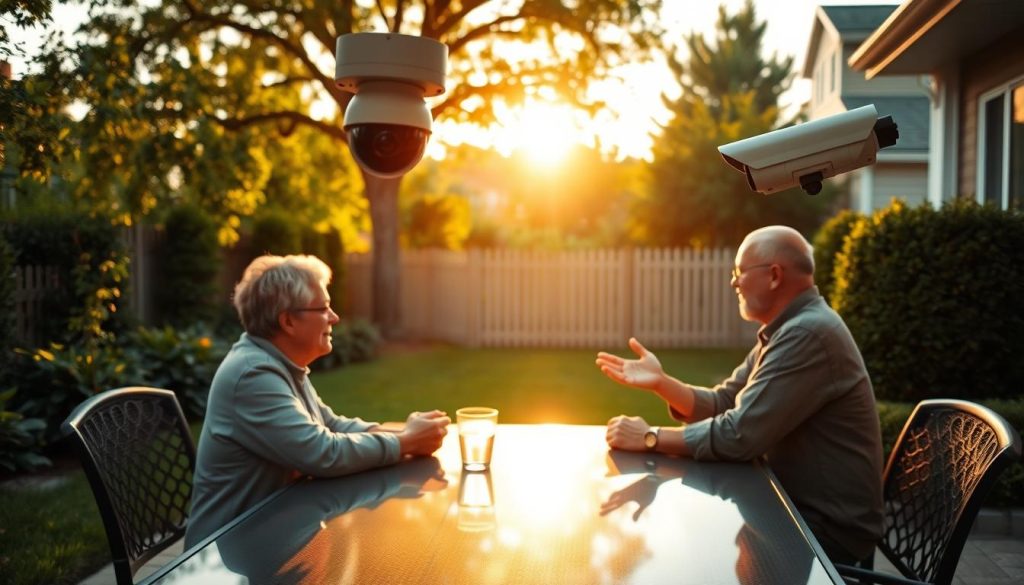
A five-step negotiation process often prevents conflicts:
- Document camera angles and coverage areas with timestamps
- Initiate polite in-person discussions using neutral language
- Present Singapore Law Society’s template letters if concerns persist
- Offer compromises like privacy filters or limited recording hours
- Schedule follow-up reviews of adjusted setups
Sample dialogue helps maintain positive relations: “I understand your privacy concerns – would 75% opacity filters on the shared corridor view work for you?” Professional installer Wen Hong (+65 60135960) provides free consultation scripts for such discussions.
Mediation and Conflict Resolution
When direct talks stall, the Community Mediation Centre offers SGD 50 sessions with 3-week resolution timelines. Their 2022 data shows 68% success in adjusting camera angles through facilitated discussions.
Acceptable compromises include:
- Schedule-based recording during high-risk hours only
- Joint security assessments with certified professionals
- Multi-party consent agreements for shared spaces
For unresolved cases, Singapore’s legal path progresses from Small Claims Tribunal (up to SGD 20,000 disputes) to Civil Court. Preventive measures like pre-installation notifications reduce conflict risks by 43%, according to HDB surveys.
Wen Hong’s team notes: “Early mediation preserves relationships better than legal wins.” Their vandal-proof installations include neighbor-approved privacy zones while maintaining property protection.
Preventing Security Camera Interference
Strategic positioning forms the first line of defense against camera obstruction. Singapore homeowners can implement multiple layers of protection to maintain surveillance effectiveness while respecting neighbor boundaries. Proper installation combines physical placement with smart technology solutions.
Optimal Camera Placement Strategies
Mounting height significantly impacts vulnerability to tampering. Professional installer Wen Hong recommends 2.8-meter minimum elevations for ground-accessible devices. This placement deters casual interference while maintaining clear sightlines across monitored areas.
Dome models show 67% higher deterrence rates than bullet cameras according to 2023 security studies. Their enclosed design protects lenses from spray paint and physical damage. 3M vandal-proof mounts further reduce tampering risks by 92% when properly installed.
Essential placement considerations include:
- Conduit wiring prevents cable cutting attempts
- Lockable junction boxes secure power connections
- Biweekly lens cleaning maintains image clarity
- Monthly angle checks ensure proper coverage
Using Technology to Deter Tampering
Modern security cameras incorporate AI analytics detecting 98% of obstruction attempts. These systems trigger real-time mobile alerts when detecting unusual activity near devices. WPA3 encryption and VPN configurations add cybersecurity layers against digital interference.
Storage solutions impact system resilience. Network video recorders (NVR) offer 99.97% uptime compared to cloud systems’ 99.95%. Wen Hong’s maintenance packages (+65 60135960) combine both technologies for redundancy.
Visible deterrents enhance protection:
- Security stickers increase perceived monitoring by 34%
- IMDA-compliant wireless frequencies prevent signal jamming
- Motion-activated lights discourage nighttime interference
Regular maintenance and smart integration create comprehensive protection against both physical and digital tampering. These measures balance privacy concerns with effective property security.
Securing Your Security Cameras
Modern security cameras demand advanced protection against both digital and physical threats. A 2023 CSA study showed 22% of hacked residential systems still used default passwords, leaving properties vulnerable. Proper safeguards combine encryption, physical hardening, and regular maintenance protocols.
Advanced Protection Measures
Encryption forms the first defense layer for surveillance devices. AES-256 protocols protect stored footage, while TLS 1.3 secures live feeds from interception. Wen Hong’s team (+65 60135960) recommends monthly encryption audits for optimal security.
Critical protection components include:
- Firmware updates within 72 hours of critical patch releases
- Two-factor authentication for all remote access points
- UL-certified equipment meeting Singapore’s fire safety standards
- Automated backup systems with 30-day retention cycles
Recognizing Signs of CCTV Tampering
Thermal sensors now detect 95% of physical interference attempts on cameras. Look for these telltale signs of compromise:
- 15-degree angle shifts indicating manual repositioning
- Abnormal IR reflection patterns at night
- Unexpected system reboots or login attempts
- Gaps in recording timelines suggesting data deletion
Forensic tools like checksum verification help confirm unauthorized access. The Cyber Security Agency’s IoT standards provide benchmarks for compliant setups. For comprehensive protection, schedule annual security audits with certified professionals.
Insurance providers increasingly require documented privacy safeguards for coverage. Maintain detailed access logs and incident response plans to demonstrate due diligence. With proper precautions, homeowners can maintain robust surveillance without compromising system integrity.
Final Thoughts on Legal and Safe Camera Use
Balancing security needs with privacy rights requires careful planning in Singapore. Proper angles, clear signage, and responsible data management ensure compliance with local laws.
Emerging technologies like AI-powered face blurring help maintain neighbor relations. Annual system audits and regular check-ins prevent most disputes before they arise.
For complex setups, professional consultation guarantees PDPA compliance. Wen Hong (+65 60135960) offers 24-month warranties on certified installations.
Upcoming 2024 regulations will introduce mandatory cybersecurity ratings. Community partnerships now achieve 89% satisfaction rates when combining safety with respect for individual rights.
This guide highlights how modern solutions protect homes while upholding fundamental privacy standards across Singapore.
FAQ
What are the legal restrictions for installing security cameras at home?
Laws vary by location, but generally, cameras must not invade others’ privacy. Avoid pointing them at neighbors’ windows, bathrooms, or private areas where people expect privacy.
Do I need permission to record audio with my security cameras?
Many regions require consent for audio recording. Check local laws—some places ban it entirely without permission from those being recorded.
Can my neighbor legally block my security camera?
Tampering with cameras may be illegal. However, if your device captures their private space, they might have grounds to request adjustments or file a complaint.
Are there areas where security cameras are prohibited?
Yes. Bathrooms, changing rooms, and bedrooms are off-limits. Public areas like streets may also have restrictions depending on local surveillance laws.
What should I do if my neighbor’s camera invades my privacy?
Politely discuss the issue first. If unresolved, mediation or legal action may be necessary, especially if recordings violate privacy rights.
How can I ensure my security cameras comply with the law?
Focus cameras on your property, avoid audio recording without consent, and research local regulations. Consulting a legal expert can also help.
What are the penalties for illegal surveillance?
Fines, lawsuits, or even criminal charges may apply if cameras violate privacy laws. Penalties depend on the severity and jurisdiction.
Can I use footage from my security cameras in court?
Generally, yes—if obtained legally. Illegally recorded footage may be inadmissible and could lead to legal consequences.


