

Is Dahua made in China? Uncovering the Facts
When evaluating security solutions, understanding a company’s manufacturing origins becomes crucial. Many consumers wonder about the production background of their surveillance equipment.
Dahua Technology stands as a global leader in the security industry. This prominent company maintains its headquarters in Hangzhou, China. Since its establishment in 2001, the organization has grown significantly.
The corporation now employs over 23,000 people worldwide. Their impressive revenue reached $4.98 billion in 2021. This growth reflects their strong market presence and technological advancements.
This investigation explores the manufacturing footprint of this security giant. We examine both domestic and international production facilities. Quality standards and production processes will receive detailed attention.
Understanding these factors helps consumers make informed decisions. The relationship between manufacturing location and product quality deserves careful consideration. Regulatory challenges and market restrictions also play important roles.
Key Takeaways
- Dahua Technology maintains its headquarters and significant manufacturing operations in China
- The company has experienced substantial growth since its 2001 founding
- Manufacturing location impacts both product quality and pricing structures
- Global regulatory challenges affect market availability in various regions
- Understanding production origins helps consumers evaluate security solutions effectively
- The corporation employs advanced technology across its product portfolio
- Future manufacturing strategies will influence the global security market
Introduction: The Core Question of Dahua’s Origin
The manufacturing location of security systems has emerged as a critical consideration in global procurement decisions. Consumers and businesses worldwide now scrutinize production origins more carefully than ever before.
This heightened awareness stems from several important factors. Product quality often correlates with manufacturing standards and practices. Reliability concerns directly impact security effectiveness. Geopolitical considerations influence market availability and regulatory compliance.
Transparency in security equipment manufacturing has become non-negotiable for informed decision-making. Singaporean consumers particularly benefit from understanding production origins when selecting surveillance solutions. The city-state’s strategic position and security needs demand thorough vendor evaluation.
The corporation based Hangzhou since its establishment has transformed the surveillance industry through continuous innovation. Their journey from being founded 2001 to becoming a global leader demonstrates remarkable growth. This expansion included developing advanced manufacturing facilities across the world.
Modern security challenges require sophisticated security solutions that address diverse needs. This investigation provides comprehensive analysis of manufacturing operations and their implications. Readers will gain valuable insights into production standards and quality assurance processes.
Understanding these elements helps consumers make informed choices about their security infrastructure. The following sections will explore these aspects in greater detail, providing a complete picture of manufacturing operations and their global impact.
Is Dahua Made in China? The Definitive Answer
Modern security infrastructure decisions require clear knowledge about equipment production locations. This corporation maintains its primary manufacturing operations within Chinese territory.
Most surveillance equipment originates from facilities in Hangzhou. This city serves as the central hub for research and production activities. Advanced manufacturing processes ensure consistent quality across all product lines.
Additional production centers operate in other Chinese urban areas. These facilities support the massive global distribution network. Each location follows identical quality assurance protocols.
Some misconceptions suggest alternative manufacturing origins. These claims lack factual evidence and documentation. The corporation openly acknowledges its production footprint.
Manufacturing scale remains impressive with thousands of units produced daily. This output capacity supports worldwide market demands. Strategic partnerships enhance distribution efficiency across regions.
Quality control systems maintain international standards throughout production. Regular audits ensure consistency across all manufacturing facilities. These processes address potential challenges in mass production.
Understanding these manufacturing realities helps consumers evaluate options effectively. Production location influences both technical specifications and pricing structures. These factors become particularly relevant for Singaporean security projects.
The foundation of global manufacturing strategy begins with these operations. Future expansion plans build upon this established production framework. Technological innovation continues driving manufacturing excellence.
The Founding and Rise of Dahua Technology
Every global enterprise has an origin story that shapes its trajectory. The journey from startup to industry leader reveals much about corporate values and capabilities.
Visionary leadership often transforms small operations into major corporations. This pattern holds true for many successful technology companies worldwide.
From Humble Beginnings in Hangzhou
Fu Liquan established this security enterprise in 2001 with former colleagues. Their background from a state-owned company provided valuable experience.
The founders focused initially on digital video recording equipment. This specialization allowed them to develop deep expertise quickly.
Early operations demonstrated remarkable innovation and determination. The team worked tirelessly to perfect their video surveillance systems.
Hangzhou’s environment fostered technological development and growth. The city’s infrastructure supported their expanding manufacturing needs.
Going Public on the Shenzhen Stock Exchange
The 2008 initial public offering marked a significant milestone. Listing on the Shenzhen Stock Exchange provided crucial capital for expansion.
This move demonstrated confidence in the company’s future prospects. Public trading increased visibility within the investment community.
The stock exchange listing facilitated accelerated growth plans. Resources became available for research and development initiatives.
Strategic acquisitions followed, including the purchase of Lorex. These moves strengthened their position in the global security network.
Government partnerships further accelerated technological advancement. Collaborative projects enhanced their capabilities across multiple domains.
By 2019, the organization ranked as the world’s second-largest video surveillance manufacturer. This achievement reflected decades of strategic planning and execution.
The corporate culture remains rooted in its Hangzhou origins. This foundation continues influencing their approach to innovation and quality.
Understanding this historical context helps explain current market positioning. The journey from startup to industry key player illustrates remarkable business evolution.
Dahua’s Extensive Manufacturing Footprint in China
Global security equipment production requires massive infrastructure and precision engineering. The corporation maintains an impressive network of advanced production centers across multiple locations.
These facilities represent the backbone of their worldwide distribution system. Each location specializes in different aspects of security technology development.
The Flagship Hangzhou Smart IoT Industrial Park
This massive 512-acre complex serves as the primary manufacturing hub. Automated production lines feature AI-driven robotics for maximum efficiency.
The facility assembles approximately 25 million units annually. Local component sourcing covers 78% of manufacturing needs.
Advanced quality control systems ensure consistent product excellence. The park operates under LEAN manufacturing principles for optimal resource use.
Supporting Production Hubs in Chengdu and Wuxi
Chengdu’s facility focuses on vertical integration strategies. This location produces critical hardware components like lenses and sensors.
Wuxi specializes in IoT technology development. Smart city devices and connected solutions emerge from this innovative center.
Both facilities maintain ISO/IEC 17025-certified testing laboratories. Energy-efficient processes demonstrate commitment to sustainable manufacturing practices.
These production centers reinforce the corporation’s leadership in security technology. They enable a comprehensive range products that address diverse security needs.
The scale and sophistication of these operations ensure reliable cameras and surveillance solutions for global markets.
Dahua’s Global Manufacturing Expansion Strategy
Strategic international production facilities represent a crucial evolution for technology corporations. This expansion beyond domestic operations demonstrates sophisticated market adaptation.
Global manufacturing networks enable better regional market penetration. They address specific environmental and regulatory requirements effectively.
The Vietnam Facility: Serving ASEAN Markets
A $150 million production center launched in Haiphong during 2019. This strategic location serves the entire ASEAN region with specialized equipment.
The facility manufactures surveillance cameras and IoT devices. Products receive special modifications for tropical climate performance.
- Enhanced weather resistance for high humidity environments
- Advanced cooling systems for temperature stability
- Corrosion-resistant materials for coastal installations
Vietnam operations provide access to CPTPP trade agreement benefits. This facilitates smoother market entry across member nations.
The India Plant and the “Make in India” Initiative
Indian manufacturing operations align perfectly with national development goals. The facility emphasizes local employment and supply chain integration.
Production focuses on South Asia’s growing security demands. Equipment receives adaptations for regional environmental challenges.
“Local manufacturing enables faster response to market needs while supporting community development through job creation and technology transfer.”
Products feature special considerations for high temperature operations. Humidity protection systems ensure reliable performance year-round.
These international facilities help navigate complex trade policies. They represent a strategic approach to global market challenges.
Manufacturing diversification reduces geopolitical risks significantly. It ensures consistent product availability across different regions.
This global expansion strategy demonstrates forward-thinking leadership. It positions the corporation for sustained international growth.
Dahua’s Comprehensive Product Portfolio and Innovations
Advanced security technology requires diverse solutions for modern challenges. The corporation offers an impressive array of cutting-edge equipment and platforms.
Their comprehensive approach addresses various security needs across different environments. From residential protection to urban infrastructure, the portfolio demonstrates remarkable versatility.
Security Cameras and Surveillance Systems
The 4K HDR camera series represents the pinnacle of visual monitoring technology. These devices feature real-time AI analytics that automatically detect unusual activities.
Thermal PTZ cameras provide exceptional night vision capabilities. They maintain clear visibility even in complete darkness or adverse weather conditions.
HDCVI 8.0 systems support long-distance transmission without signal degradation. This technology ensures reliable performance across extensive properties and facilities.
Mobile body-worn cameras offer flexible monitoring solutions for security personnel. These compact devices capture high-quality footage during patrols and responses.
Smart City and IoT Solutions
Smart city platforms generate 38% of total corporate revenue. These integrated systems optimize urban management through advanced data analysis.
Traffic management solutions reduce congestion and improve flow efficiency. Energy monitoring systems help cities conserve resources and lower operational costs.
Public safety enhancements include real-time threat detection and response coordination. These platforms create safer urban environments for residents and visitors.
Crowd analytics software predicts congestion patterns before they become problematic. Retail heat mapping technology boosts customer engagement by analyzing shopping behaviors.
This diverse range products demonstrates significant technological innovation. The solutions address both current security needs and future urban challenges.
Singaporean consumers benefit from these advanced surveillance systems and smart city technologies. The island nation’s specific security requirements find appropriate answers in this comprehensive portfolio.
Quality Control and International Manufacturing Standards
Global manufacturing excellence requires rigorous quality systems that meet international standards. The corporation maintains exceptional quality control throughout its production processes.
These systems ensure reliable performance across all security products. Singaporean consumers benefit from this commitment to manufacturing excellence.
Stringent In-House Testing Protocols
The organization achieves a remarkable 92% first-pass yield rate through comprehensive quality systems. Every product undergoes a detailed 12-stage testing protocol before release.
Environmental stress chambers simulate extreme weather conditions. Anti-corrosion trials ensure durability in challenging environments.
Mean Time Between Failures exceeds 100,000 hours across the product lineup. This exceptional reliability meets the demanding needs of professional security installations.
Continuous Kaizen programs drive incremental quality improvements. These methods maintain consistently high manufacturing standards.
Key International Certifications and Compliance
The manufacturing facilities hold ISO 9001, 14001, and 45001 certifications. These validate adherence to global quality, environmental, and safety standards.
Products meet RoHS directives for hazardous substance restrictions. GDPR compliance ensures proper data handling for European markets.
Third-party audits by TÜV SÜD reinforce transparency and accountability. Independent verification strengthens consumer confidence in the products.
This comprehensive approach to quality control demonstrates commitment to manufacturing excellence. It addresses diverse market needs through reliable, well-tested security solutions.
Corporate Structure and State Ownership Influence
Corporate ownership structures reveal much about a company’s strategic direction and operational priorities. The balance between private control and state involvement creates unique dynamics within technology organizations.
This company demonstrates a fascinating blend of entrepreneurial vision and national interests. Founder Fu Liquan maintains significant influence through his 34.18% ownership stake.
Major Shareholders and Their Impact
State-owned entities hold substantial positions within the corporation’s ownership framework. Central Huijin Investment maintains an 11.67% stake in the organization.
China Mobile’s massive $740 million investment demonstrates confidence in the technology platform. These financial partnerships provide crucial resources for research and development.
The founder’s controlling interest ensures consistent vision across product development. Major shareholders influence both strategic decisions and market positioning.
Integration with National Initiatives
The corporation actively supports China’s Sharp Eyes surveillance program through specialized products. This national initiative focuses on comprehensive public security monitoring.
Communist Party committees integrate directly into corporate governance structures. This alignment ensures coordination with national security priorities and technological development goals.
Research partnerships with Beijing University of Posts and Telecommunications drive innovation. These collaborations enhance the solutions available to security professionals worldwide.
Government linkages provide substantial funding and infrastructure support. These partnerships enable rapid scaling of advanced surveillance technologies.
“Strategic alignment with national initiatives creates synergistic benefits for both corporate growth and public security objectives.”
The interplay between private entrepreneurship and state interests shapes operational strategies. This unique corporate structure influences global expansion and technology development approaches.
Regulatory Challenges and International Scrutiny
Global technology companies often face complex regulatory landscapes across different regions. These challenges can significantly impact business operations and market strategies.
International relations and security concerns have created unique obstacles for surveillance equipment manufacturers. The global nature of security technology requires navigating diverse legal frameworks.
U.S. Entity Listing and FCC Restrictions
Since 2019, the U.S. Department of Commerce has maintained this corporation on its Entity List. This designation restricts access to American components and technology.
The 2022 FCC freeze further complicated market access by barring new equipment approvals. These regulatory actions reflect broader security concerns within Western governments.
Revenue in Western markets declined approximately 14% between 2020 and 2023. This reduction demonstrates the substantial impact of these regulatory measures.
Procurement Bans in Western Countries
Australia and the United Kingdom have implemented public sector procurement prohibitions. These bans stem from NDAA Section 889 compliance requirements.
Allegations regarding dual-use technology exports have prompted additional scrutiny. Some reports have raised human rights concerns related to certain regional applications.
The corporation responded to these sanctions by divesting its Lorex brand for $72 million. This strategic move helped mitigate financial losses in affected markets.
Geopolitical factors continue demanding agile supply chain adaptations. These adjustments ensure continued operations despite regulatory obstacles.
International scrutiny has substantially affected global business strategies. The corporation continues developing alternative approaches to maintain its worldwide presence.
These regulatory developments highlight the complex relationship between technology and international policy. Security products remain subject to evolving global standards and restrictions.
Dahua’s Position in the Global Surveillance Market
Market leadership in security technology requires constant innovation and strategic positioning. This corporation maintains a strong presence across international markets with advanced surveillance solutions.
Market Share and Competitive Landscape
The organization captured 18.7% of the global surveillance market in 2023. This achievement represents second-place ranking behind only Hikvision.
European and Middle Eastern markets showed impressive 6.3% annual growth. This expansion demonstrates increasing acceptance of their security products worldwide.
Emerging markets contributed significantly to new business development. Approximately 42% of recent contracts originated from developing regions.
Public safety initiatives in Southeast Asia and Africa drove substantial growth. These regions present expanding opportunities for advanced security solutions.
Key Differentiators: AI and Cost-Efficiency
Substantial research investment sets this company apart from competitors. They allocate 34% of revenue toward developing new technology.
Video-as-a-Service offerings provide flexible security options for various clients. This innovative approach meets evolving market demands effectively.
The patent portfolio exceeds 1,200 protected innovations. These intellectual assets support continuous improvement in surveillance capabilities.
Retail analytics features include advanced heat mapping technology. Footfall tracking systems help businesses optimize customer experiences.
Cost-efficient manufacturing processes enable competitive pricing strategies. This advantage helps the organization maintain its strong market position.
“Our commitment to technological advancement ensures we deliver superior security solutions that address real-world challenges across diverse markets.”
Despite regulatory challenges in some regions, the company demonstrates remarkable resilience. Their strategic focus on innovation and market adaptation continues driving success.
Recent Strategic Developments and Joint Ventures
Forward-thinking corporations continuously evolve through strategic alliances and technological advancement. These collaborations drive innovation while expanding global market presence.
Modern security demands require sophisticated approaches to manufacturing and distribution. Partnerships with international entities create new opportunities for growth.
The $200 Million Partnership with Saudi Arabia’s Alat
A landmark $200 million collaboration emerged in 2024 with Saudi Arabia’s Alat. This venture focuses on developing advanced AIoT production capabilities.
The partnership supports smart city infrastructure development across the region. NEOM stands as the flagship implementation for these cutting-edge solutions.
This strategic alliance represents significant investment in Middle Eastern markets. It demonstrates commitment to addressing regional security needs through localized production.
Technological Innovations in Production
Manufacturing facilities now integrate collaborative robot systems extensively. These cobot-assisted assembly lines have increased output by 28% while maintaining quality standards.
Digital twin technology revolutionizes maintenance procedures through predictive analytics. This innovation anticipates equipment needs before failures occur.
Smart manufacturing techniques have substantially reduced energy consumption. Five-G enabled connectivity provides real-time quality monitoring throughout production processes.
Additive manufacturing accelerates prototyping capabilities for new products. These advancements demonstrate continuous improvement in production methodologies.
“Strategic partnerships enable us to deliver superior security solutions that meet evolving market demands while driving technological innovation forward.”
These developments reflect the corporation’s commitment to advancing security technology. They ensure that products remain at the forefront of industry standards.
Singaporean consumers benefit from these innovations through enhanced reliability and performance. The solutions address specific regional requirements effectively.
The Impact of Manufacturing Location on Consumers
Where security equipment gets produced directly influences buyer experience and satisfaction. Manufacturing origins affect multiple aspects of consumer interaction with technology brands.
Singaporean buyers particularly benefit from understanding these production dynamics. Their specific security requirements demand reliable performance and value.
Considerations for Product Quality and Reliability
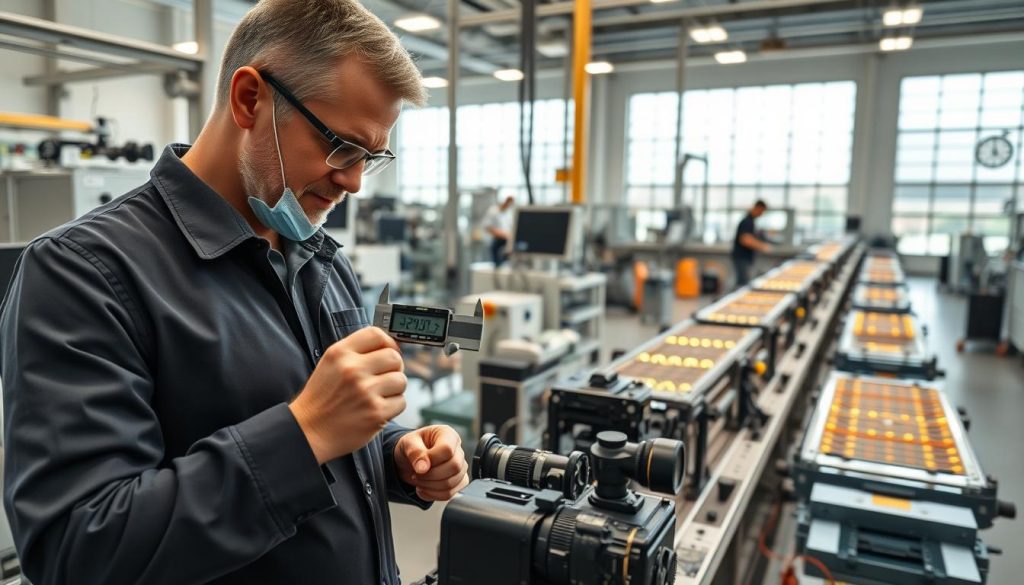
Standardized production processes ensure identical performance worldwide. Every facility follows the same rigorous manufacturing protocols.
Comprehensive staff training programs maintain exceptional workmanship standards. Technicians receive continuous education on latest assembly techniques.
Regular quality audits verify consistency across all production lines. These checks prevent deviations from established excellence benchmarks.
Advanced testing procedures simulate real-world operating conditions. Equipment undergoes stress tests before reaching consumers.
Pricing and Value Proposition Analysis
Efficient manufacturing enables competitive pricing without compromising quality. Cost savings from scale benefit end-users directly.
The value proposition combines affordability with dependable performance. Buyers receive advanced technology at accessible price points.
Global supply chain optimization reduces delivery times significantly. Regional distribution centers stock products for quick availability.
Consumer perceptions increasingly recognize manufacturing excellence. Modern production facilities demonstrate technological sophistication.
“Our manufacturing strategy ensures customers receive the best possible combination of performance, reliability, and value regardless of their location.”
This analysis helps buyers evaluate security equipment based on factual production capabilities. Understanding manufacturing origins leads to informed purchasing decisions.
The Future Trajectory of Dahua Technology
Strategic planning shapes the evolution of security corporations worldwide. Forward-looking organizations continuously adapt to emerging challenges and opportunities.
The security landscape demands constant technological advancement and market adaptation. Companies must balance innovation with responsible growth practices.
Navigating Geopolitical and Market Headwinds
Global operations require sophisticated approaches to international relations. The corporation develops strategies to address complex regulatory environments.
Three automated factories will transform Southeast Asian distribution by 2026. These facilities will enhance regional availability and service capabilities.
Localized research centers in India and Brazil support specific regional requirements. These facilities develop customized solutions for diverse environmental conditions.
Strategic partnerships help navigate changing trade policies and restrictions. The organization maintains flexibility in its global operations approach.
Investment in AI and Sustainable Manufacturing
A massive $500 million commitment drives artificial intelligence platform development. This investment enhances production efficiency and product capabilities.
The roadmap includes achieving carbon-neutral operations by 2030. Environmental responsibility becomes integrated into manufacturing processes.
Smart factory certifications demonstrate commitment to advanced production standards. Ethical sourcing initiatives ensure responsible supply chain management.
Advanced automation reduces energy consumption while increasing output quality. These improvements benefit both the company and its customers.
“Our future strategy combines technological excellence with sustainable practices, ensuring we meet evolving market demands while maintaining environmental responsibility.”
These developments showcase the organization’s dedication to innovation and growth. The approach addresses both current and future security needs effectively.
Singaporean consumers will benefit from these advancements through improved product availability and performance. The region’s specific security requirements receive appropriate attention.
Understanding the Global Implications of Dahua’s Manufacturing
Global security markets depend heavily on manufacturing networks that span continents. This corporation’s production strategy influences pricing and availability worldwide.
Over 40% of surveillance cameras originate from their facilities. This massive output supports diverse security needs across different regions.
The combination of scale and innovation drives competitive advantages. These factors affect global supply chains and product development cycles.
Manufacturing location decisions impact geopolitical relationships and trade policies. Transparency in production origins helps consumers evaluate security solutions effectively.
Understanding these dynamics proves crucial for informed purchasing decisions. The global security landscape continues evolving through technological advancement and strategic expansion.
FAQ
Where is Dahua Technology headquartered?
The company is based in Hangzhou, China. This city serves as its global headquarters and primary research and development center.
Does Dahua manufacture products outside of China?
Yes. While its main production facilities are in China, the firm has expanded its manufacturing footprint globally. It operates plants in Vietnam and India to better serve regional markets and navigate international trade dynamics.
What are the company’s flagship products?
Dahua Technology offers a comprehensive range of security and surveillance solutions. Its portfolio includes advanced cameras, video recorders, access control systems, and innovative smart city and IoT applications.
How does the company ensure product quality?
It adheres to strict international manufacturing standards. The firm implements rigorous in-house testing protocols and holds numerous global certifications to guarantee the reliability and performance of its security solutions.
Has the firm faced any international regulatory challenges?
Yes. Dahua Technology has been subject to scrutiny and restrictions in some Western markets, including entity listing by the U.S. government and procurement bans, primarily due to geopolitical concerns.
What differentiates Dahua in the global surveillance market?
The company is a key player known for integrating artificial intelligence into its security solutions. It competes effectively through technological innovation, a broad product range, and a strong value proposition.
Is the company publicly traded?
Yes. Dahua Technology is a publicly listed entity on the Shenzhen Stock Exchange, providing transparency into its corporate structure and financial performance.


