

How often should you clean CCTV cameras? A Guide
Regular maintenance keeps your cctv systems working at peak performance. Dirt and grime buildup can seriously affect video quality. This makes your security footage less reliable when you need it most.
Understanding proper cleaning frequency extends equipment lifespan. It also ensures your surveillance system remains effective over time. This is especially important in Singapore’s humid climate.
This guide covers maintenance schedules and best practices. We’ll discuss factors affecting cleaning needs and professional services. Proactive care prevents costly repairs and keeps your system running smoothly.
Key Takeaways
- Regular cleaning maintains clear video quality and system reliability
- Dirt accumulation leads to blurry footage and reduced security effectiveness
- Proper maintenance extends the lifespan of surveillance equipment
- Singapore’s climate requires more frequent attention to camera upkeep
- Preventive care avoids expensive repairs and system downtime
- This guide provides practical cleaning schedules and expert recommendations
Why Cleaning Your CCTV Cameras is Non-Negotiable
Security systems require consistent attention to perform effectively. Dirt accumulation creates blurry footage that compromises surveillance quality. This makes identification of individuals nearly impossible when it matters most.
Clear images serve as crucial evidence for law enforcement. They help document events accurately for insurance claims and legal proceedings. Without proper maintenance, your investment in protection becomes unreliable.
“A clean lens captures truth; a dirty one obscures it. Maintenance isn’t optional—it’s fundamental to security.”
Industry data reveals startling statistics about neglect. 83% of surveillance failures stem from insufficient upkeep. Regular cleaning reduces equipment failure risk by up to 87%.
Singapore’s humid climate accelerates grime buildup on lenses. Moisture combines with dust, creating stubborn residues. Without intervention, this leads to permanent lens damage.
Proactive care helps avoid costly emergency repairs. It extends equipment lifespan significantly. This approach saves money over time while maintaining reliability.
Many manufacturers void warranties for neglected maintenance. Compliance with security standards requires documented upkeep records. Regular cleaning ensures your system meets these requirements.
Investing time in proper maintenance delivers peace of mind. Your security systems will work better and last longer. This proactive approach keeps your entire system running smoothly.
Key Factors That Determine Your Camera Cleaning Schedule
Determining optimal maintenance intervals involves assessing various environmental and operational factors. Different locations and usage patterns create unique cleaning requirements for surveillance equipment.
Environmental Conditions and Location
Outdoor installations face greater challenges than indoor units. Dust, pollution, and coastal salt air accelerate grime buildup on lenses. This demands more frequent attention to keep surveillance systems working well.
Singapore’s tropical climate presents specific maintenance challenges. High humidity combines with seasonal rainfall, creating stubborn residues. Locations near construction sites or busy roads accumulate dirt faster than protected areas.
Coastal properties face additional salt corrosion risks. Industrial environments encounter chemical residues and particulate matter. Each setting requires customized cleaning approaches for optimal performance.
Camera Usage and Traffic Levels
High-traffic areas demand more frequent maintenance attention. Entry points, retail spaces, and public corridors see constant activity. These locations might need monthly cleaning to maintain clear footage.
Continuously recording units experience faster lens degradation. Critical security zones require impeccable video quality at all times. Regular maintenance ensures these cameras capture crucial details when needed.
Low-traffic offices or storage areas have different requirements. These locations could schedule cleaning every six months. Understanding usage patterns helps create efficient maintenance plans.
Vandalism risks and weather exposure influence schedule adjustments. Proper assessment prevents both over-cleaning and neglect. This balanced approach extends equipment lifespan while maintaining reliability.
How often should you clean CCTV cameras?
Finding the sweet spot for maintenance frequency ensures your surveillance investment pays dividends. Most environments benefit from a baseline schedule of every three to six months. This balanced approach prevents neglect without creating excessive upkeep burdens.
High-traffic locations demand more attention than standard settings. Retail stores, airports, and busy public spaces typically require monthly or bi-monthly attention. These environments accumulate debris faster, potentially compromising video clarity when it matters most.
Seasonal changes significantly impact maintenance needs. Spring pollen, autumn leaves, and weather patterns create additional cleaning requirements. Extra attention during these periods maintains optimal performance throughout the year.
Singapore’s tropical climate justifies leaning toward more frequent intervals. The combination of humidity and rainfall accelerates grime buildup on equipment. Regular checks become particularly important in these conditions.
Consistent scheduling maintains video quality and system reliability. Documenting cleaning dates helps track adherence and identify patterns. This practice allows for adjustments based on actual performance observations.
Setting calendar reminders prevents overlooked maintenance tasks. This simple strategy keeps system performance consistent and reliable. Proper timing work well for most surveillance setups.
Remember these frequency guidelines serve as starting points. Actual needs vary based on specific environmental factors and usage patterns. The goal remains clear footage and uninterrupted security coverage.
Regular attention to your equipment prevents degraded performance. This proactive approach avoids security gaps and maintains investment value. Proper care ensures your protection system delivers when needed.
A Practical Cleaning Schedule for Different Scenarios
Different surveillance scenarios demand customized cleaning approaches to maintain optimal performance. The right schedule depends on your specific environment and security needs.
Creating a structured plan ensures consistent upkeep without overwhelming resources. This tailored approach keeps system running at peak efficiency while preventing neglect.
The Standard Baseline: Every 3-6 Months
Most residential and low-traffic commercial settings follow this pattern. A suburban home surveillance setup typically adheres to the six-month guideline. This frequency maintains clear footage without excessive effort.
Office buildings with minimal outdoor exposure often use quarterly intervals. The three-month mark works well for balanced maintenance and performance. This approach catches problems early before they affect video quality.
Proper documentation helps track adherence to this baseline schedule. Recording each session reveals patterns that might require adjustments. Consistent regular maintenance extends equipment lifespan significantly.
High-Traffic and Critical Security Areas: Monthly to Bi-Monthly
Busy environments accumulate debris much faster than standard locations. Shopping malls, hospitals, and transportation hubs require monthly attention. These settings might need even more frequent checks during peak seasons.
Critical security zones demand exceptional vigilance for optimal function. Banks, government facilities, and high-value storage areas often benefit from weekly inspections. This ensures unobstructed views during crucial moments.
Downtown Singapore hotels exemplify locations requiring monthly cleaning. The combination of urban pollution and high humidity accelerates grime buildup. Frequent attention maintains reliability in challenging conditions.
Implementing this schedule involves clear responsibility assignments. Maintenance checklists integrated with other tasks improve efficiency. Digital tools send reminders for upcoming sessions, ensuring consistency.
Seasonal adjustments prove particularly valuable in Singapore’s climate. Post-monsoon cleaning removes water spots and accumulated debris. This proactive approach helps your equipment work better throughout the year.
A structured schedule prevents camera neglect and maintains security coverage. Documented cleaning sessions help identify units requiring extra attention. This practical method enhances overall surveillance effectiveness.
Adapting Your Schedule for Singapore’s Climate
Singapore’s unique weather patterns demand special attention for surveillance equipment. The tropical environment creates specific challenges that affect camera performance. Proper climate adaptation ensures reliable security coverage throughout the year.
Managing Humidity and Seasonal Rainfall
High humidity levels promote mold growth and condensation on lenses. This moisture buildup creates blurry footage and potential damage. Fungus can develop in damp conditions, affecting image quality.
Seasonal rainfall brings additional maintenance challenges. Heavy rains leave water spots and dirt splatter on housings. Post-rain inspections become essential for clear surveillance footage.
Outdoor units in Singapore require attention every few months. A schedule of 2-3 annual cleanings maintains optimal performance. Additional checks during wet seasons prevent weather-related issues.
The Importance of Weatherproofing
Proper enclosures protect against moisture and corrosion damage. IP66-rated or higher housings provide essential rain protection. These specifications prevent internal damage from humidity.
- Check seals and gaskets during each maintenance session
- Replace worn components to maintain weather resistance
- Inspect wiring and connections for corrosion signs
- Use anti-fog solutions in extremely humid locations
- Consider enclosure heaters for condensation prevention
Climate-appropriate measures extend equipment lifespan significantly. Professional installations typically include these protective features. DIY setups might overlook these crucial elements.
Adapting your approach to local conditions ensures reliability. This proactive strategy maintains image clarity year-round. Your security investment remains protected against environmental challenges.
Tell-Tale Signs Your CCTV Camera Needs Cleaning Now
Recognizing warning signals helps maintain surveillance effectiveness. Your security system provides clear indicators when attention becomes necessary. These signs demand immediate action to restore optimal performance.
Blurry or Poor Quality Video Footage
Image degradation represents the most obvious warning signal. Grainy or distorted footage indicates lens obstruction. Dirt or smudges typically cause this common problem.
Night vision effectiveness often diminishes first. Colors might appear washed out or unnatural. These changes signal urgent cleaning requirements.
Regular video monitoring catches these issues early. Remote access tools help check hard-to-reach units. Quality alerts automate this monitoring process.
Visible Dirt, Dust, or Moisture on the Housing
Physical debris accumulation provides clear visual evidence. Spider webs, dust layers, or water droplets indicate neglect. These contaminants directly affect image clarity.
Singapore’s humidity causes particular moisture challenges. Fogging inside lenses requires prompt attention. This condition severely impacts surveillance reliability.
Ignoring visible debris risks permanent damage. Abrasive particles can scratch delicate lens surfaces. Immediate action helps avoid costly replacements.
Signal dropouts sometimes stem from dirt-related problems. These interruptions indicate comprehensive maintenance needs. A thorough inspection determines appropriate actions.
Recognizing these signs ensures continuous security coverage. Prompt response keeps your system working right. This approach makes sure your investment delivers maximum protection.
Your surveillance equipment will work well with proper attention. Regular checks maintain optimal performance. This practice extends equipment lifespan significantly.
Step-by-Step Guide to Safely Cleaning Your Cameras
Proper technique preserves your surveillance investment and maintains crystal-clear footage. Following correct procedures prevents damage while ensuring optimal performance. This approach keeps your security system reliable when it matters most.
Gathering the Right Tools: Soft Cloths and Proper Cleaners
Quality materials make all the difference in effective cctv maintenance. Using improper tools can cause permanent scratches on delicate lenses. Always choose equipment designed specifically for optical surfaces.
Essential items for safe cleaning include:
- Microfiber cloths for streak-free wiping
- Lens cleaning solution or isopropyl alcohol
- Compressed air for dust removal
- Distilled water for stubborn grime
Avoid paper towels and harsh chemicals at all costs. These abrasive materials damage protective coatings. Proper tool selection helps avoid costly lens replacements.
The Cleaning Process: Avoiding Lens and Housing Damage
Begin by powering down units when possible. This safety precaution prevents electrical issues. Use compressed air to remove loose dust before wiping.
Apply cleaner to your cloth, never directly on lenses. Gently wipe in circular motions using light pressure. This technique prevents scratches and maintains optical clarity.
Wipe exterior surfaces with a damp cloth to remove dirt. Avoid moisture around seams and ports. Complete drying before reactivation prevents internal damage.
Hard-to-reach units might require extension poles. Professional assistance ensures safety for elevated installations. These best practices keep your cameras working well.
Store cleaning tools properly between sessions. Clean storage prevents introducing new contaminants. This attention to detail catches problems early.
Following these steps makes sure your equipment last longer. Proper care maintains investment value and security effectiveness. Your surveillance system will last longer with consistent maintenance.
Integrating Cleaning into a Broader Maintenance Routine
A comprehensive approach to surveillance upkeep combines physical cleaning with technical oversight. This holistic method ensures every component of your security infrastructure receives proper attention. Regular maintenance becomes more efficient when tasks are grouped logically.
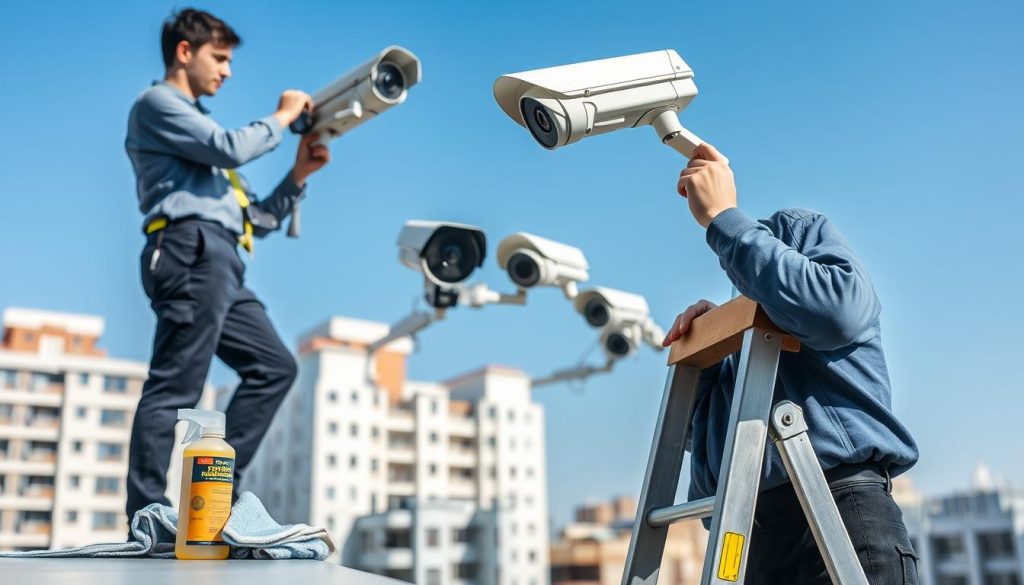
Combining cleaning with other checks creates a streamlined process. This integrated approach helps avoid overlooking critical system components. Your equipment will work better when all elements receive coordinated care.
Monthly Visual Inspections and Connection Checks
Monthly sessions should include both cleaning and physical assessments. Examine housings for cracks, moisture intrusion, or insect nests. Check cable connections for corrosion or looseness that might affect performance.
Verify power supplies during these regular checks. Ensure all units receive consistent voltage for reliable operation. This proactive maintenance plan catches problems early before they escalate.
Test camera angles and focus after cleaning sessions. Confirm that views remain optimal for security coverage. This practice keeps system alignment precise over time.
Document findings in a maintenance log for reference. Tracking issues helps identify patterns or recurring concerns. This documentation supports a more effective maintenance strategy.
Quarterly System Reviews and Software Updates
Quarterly maintenance involves deeper system evaluation. Perform comprehensive checks of all surveillance components. Review storage capacity and recording quality during these sessions.
Software updates play a crucial role in system security. Install firmware patches to address vulnerabilities and enhance features. These updates often improve motion detection and night vision capabilities.
Examine overall system performance metrics during quarterly reviews. Check for latency issues or connectivity problems. This thorough approach ensures all elements work together seamlessly.
Singapore’s climate demands particular attention during these reviews. High humidity can affect electronic components over time. More frequent checks might be necessary during rainy seasons.
Creating a maintenance calendar organizes these various tasks efficiently. Schedule cleaning alongside inspections and updates for maximum productivity. This integrated approach extends equipment lifespan significantly.
A broad maintenance routine delivers superior security effectiveness. Your investment remains protected through comprehensive care. This methodology provides peace of mind through reliable surveillance performance.
Understanding Professional CCTV Maintenance Services
Professional maintenance services provide expert care for your surveillance equipment. These specialists handle complex tasks that go beyond basic cleaning. Their expertise ensures your protection system operates at peak performance.
When to Call a Professional Technician
Certain situations demand expert intervention for your surveillance setup. Large installations with multiple units benefit from professional attention. Complex systems require specialized knowledge for proper upkeep.
Hard-to-reach cameras present safety challenges for DIY attempts. High-mounted or dangerous locations need trained technicians. Professionals have the right equipment for safe access.
Persistent technical issues often indicate deeper problems. When basic cleaning doesn’t resolve image quality concerns, experts can diagnose underlying causes. They identify issues that untrained eyes might miss.
Singapore’s climate creates unique maintenance challenges. Local professionals understand humidity-related problems specific to the region. They apply climate-appropriate solutions for optimal performance.
Benefits of a Scheduled Service Contract
Regular maintenance agreements provide consistent professional care. Scheduled visits ensure your equipment receives timely attention. This proactive approach prevents small issues from becoming major problems.
Service contracts typically include comprehensive system checks. Technicians perform calibration, weatherproofing assessments, and compliance verification. These detailed inspections maintain security effectiveness.
Professional servicing extends equipment lifespan significantly. Industry data shows up to 30% longer operational life with expert care. This investment pays dividends through reduced replacement costs.
Priority support comes with most maintenance agreements. Quick response times minimize system downtime during emergencies. This ensures continuous security coverage for your property.
Cost savings accumulate over time with scheduled contracts. Preventive maintenance avoids expensive emergency repairs. The approach saves money while keeping your system running smoothly.
Reputable Singapore companies offer tailored service packages. These providers understand local environmental factors and security requirements. They implement best practices for tropical climate conditions.
Choosing the right provider requires careful evaluation. Look for proper accreditation and proven experience. Customer reviews help identify reliable service professionals.
Professional maintenance delivers peace of mind through expert care. Your security investment remains protected with qualified technicians handling complex tasks. This approach ensures your surveillance system work well for years to come.
Comparing Maintenance Needs: Indoor vs. Outdoor Cameras
Surveillance setups differ significantly based on placement location. Outdoor units face constant exposure to environmental elements. Indoor installations enjoy protected conditions with minimal weather impact.
Understanding these differences helps create effective maintenance strategies. Each environment presents unique challenges for equipment longevity. Proper care ensures all components work well throughout their lifespan.
Outdoor cameras demand more frequent attention than indoor units. Weather exposure accelerates wear and contamination. These systems typically need servicing every one to three months.
Singapore’s tropical climate intensifies outdoor maintenance requirements. High humidity promotes mold growth on external surfaces. Salt air near coastal areas accelerates corrosion on metal components.
Industrial zones present additional challenges for exterior units. Pollution and dust accumulation happen faster in these locations. Quarterly cleaning becomes essential for clear footage.
Indoor surveillance equipment operates in gentler environments. These units might only need bi-annual cleaning sessions. Office settings typically follow this six-month schedule.
High-activity indoor areas still accumulate dust and fingerprints. Retail spaces and corridors require more frequent attention. Regular checks maintain optimal performance in these locations.
Outdoor installations need comprehensive weather protection measures. Protective housings require inspection during each maintenance session. Corrosion prevention becomes critical for long-term reliability.
Vandalism resistance adds another layer to exterior unit care. Sturdy mounts and protective covers need regular verification. These precautions make sure your security remains uninterrupted.
Indoor units benefit from easier access for DIY maintenance. Most locations don’t require professional assistance for basic cleaning. This accessibility reduces overall upkeep costs.
Both installation types benefit from scheduled maintenance. Outdoor units demand priority in resource allocation. Indoor cameras can follow more relaxed timelines.
A differentiated approach optimizes performance across all locations. This strategy ensures appropriate care for each surveillance component. Your equipment will last longer with tailored maintenance plans.
Regular inspections remain valuable for both environment types. Outdoor units need vigilant monitoring for weather damage. Indoor systems still require periodic checks for dust accumulation.
Understanding these distinctions helps allocate resources effectively. Your surveillance investment receives the right level of attention. This approach maintains security effectiveness throughout your property.
Common CCTV Problems Caused by Lack of Maintenance
Neglecting proper care leads to various equipment failures that compromise security effectiveness. These problems often start small but escalate into major system failures. Regular attention helps avoid these common surveillance issues.
Video Degradation and Signal Loss
Dirty lenses create the most visible problems in surveillance systems. Accumulated grime causes blurry, pixelated footage that loses evidentiary value. Colors appear washed out and details become unrecognizable.
Signal interruptions represent another critical failure point. Loose connections and corrosion disrupt video transmission. These issues create security gaps during crucial moments.
Singapore’s humidity accelerates connection corrosion significantly. Moisture damage affects both wired and wireless systems. Regular checks make sure your surveillance remains reliable.
Power Supply and Connection Failures
Power units accumulate dust and moisture without proper maintenance. This leads to unexpected outages and system downtime. Camera functionality depends on consistent power delivery.
Connection problems extend beyond signal transmission. Network interfaces and data storage suffer from neglect. These components require equal attention during maintenance sessions.
Additional system issues develop from overlooked care:
- Software glitches from outdated firmware
- Storage failures from unchecked capacity limits
- Physical damage from unchecked environmental wear
- Lens scratching from abrasive dirt accumulation
Industry data reveals sobering statistics about neglect. Approximately 30% of all cctv failures stem from poor upkeep. This highlights the importance of consistent care.
Small problems often escalate without intervention. A slightly dirty lens might seem insignificant initially. However, abrasive particles can cause permanent scratching over time.
Proactive maintenance keeps your cctv system working right. Regular cleaning prevents most common equipment failures. This approach ensures your security investment continues to work well.
Documented maintenance records provide valuable troubleshooting assistance. They help identify patterns in recurring issues. This documentation supports more effective problem resolution.
Neglecting proper care increases long-term expenses significantly. Emergency repairs cost substantially more than preventive maintenance. Your surveillance equipment will last longer with consistent attention.
Proper upkeep maintains system integrity and security effectiveness. It helps avoid costly downtime and replacement expenses. This approach ensures your protection system delivers reliable performance.
Creating Your Customized CCTV Maintenance Plan
A personalized approach to surveillance upkeep ensures optimal performance and longevity. Your maintenance plan should reflect your specific environment and security requirements. This tailored strategy maximizes efficiency while minimizing unnecessary effort.
Begin by creating a comprehensive equipment inventory. Document each unit’s location, type, and exposure level. This foundation helps determine appropriate care intervals for different components.
Singapore’s climate demands particular attention to outdoor installations. These units typically need attention every three months. Indoor equipment can follow a six-month schedule in most cases.
Incorporate monthly visual inspections into your routine. These quick checks catch early signs of trouble. Combine them with quarterly comprehensive system reviews for thorough coverage.
Documentation proves crucial for effective maintenance tracking. Use a logbook or digital tool to record all activities. This practice helps identify patterns and adjust schedules as needed.
“A well-documented maintenance plan transforms reactive fixes into proactive care. It’s the difference between constant repairs and reliable performance.”
Professional assistance complements DIY efforts beautifully. Schedule annual expert servicing for complex systems. This combination ensures comprehensive coverage of all maintenance needs.
Create a color-coded calendar for visual organization. Assign priorities based on location and importance. High-traffic areas might require red-level attention.
Flexibility remains essential for any effective plan. Adjust schedules after severe weather events or unusual circumstances. Seasonal changes in Singapore often demand additional attention.
Share your maintenance strategy with security staff and relevant personnel. This promotes consistency and accountability across all stakeholders. Everyone understands their role in keeping the system operational.
A customized approach focuses resources where they’re needed most. This efficiency improves overall security effectiveness. Your surveillance investment delivers better value through targeted care.
This structured methodology forms the foundation of reliable protection. It adapts to unique environmental conditions and operational demands. Your equipment will work better and last longer with proper planning.
Implementing these best practices ensures your system running smoothly year-round. Regular attention keeps system running at peak performance. This proactive approach prevents most common issues before they develop.
For additional guidance on maintaining your surveillance equipment, visit our comprehensive maintenance resource. This valuable reference supports your ongoing efforts to maintain optimal security coverage.
The Long-Term Value of a Proactive Maintenance Strategy
A forward-thinking approach to surveillance upkeep delivers exceptional returns on your security investment. This methodology transforms routine care into strategic asset protection. It ensures your protection infrastructure remains reliable through years of service.
Industry data reveals compelling evidence for this approach. Systems with scheduled upkeep experience up to 87% fewer failures. This reliability translates directly into enhanced security effectiveness.
Extending Equipment Lifespan and Avoiding Costly Repairs
Proper care significantly increases operational longevity for surveillance components. Well-maintained units typically serve for 5-7 years without major issues. Neglected equipment often fails within just 2-3 years of installation.
Regular attention prevents small problems from becoming expensive emergencies. A simple cleaning session costs minimal time and resources. Emergency repairs can easily exceed $500 per incident in Singapore.
Documented maintenance records support warranty claims and insurance requirements. Many manufacturers require proof of regular upkeep for coverage validity. This documentation demonstrates responsible security management.
Ensuring Uninterrupted Security and Peace of Mind
Consistent upkeep guarantees your cameras remain operational when needed most. There’s no worse time for system failure than during a security incident. Proactive care eliminates these worrying scenarios.
Singapore’s challenging environment makes this approach particularly valuable. High humidity and rainfall accelerate equipment wear without proper attention. Scheduled maintenance counters these environmental effects effectively.
“An ounce of prevention is worth a pound of cure. This timeless wisdom applies perfectly to surveillance system care.”
Additional benefits emerge from this strategic approach:
- Reduced stress knowing your security remains reliable
- Potential insurance premium reductions for documented upkeep
- Enhanced property value through demonstrated responsible management
- Compliance with regulatory requirements for maintained systems
View maintenance not as an expense but as an investment in sustained performance. The long-term value becomes clear through improved reliability and cost efficiency. Your security systems will work well for years with proper care.
This proactive strategy keeps your system running smoothly through all conditions. It saves money over time while delivering peace of mind. Your equipment will last longer and perform better with consistent attention.
Implementing Best Practices for Optimal Surveillance
Adopting a structured approach to cctv maintenance ensures your systems operate at peak efficiency. Regular checks and proper techniques keep cameras working well for years. This proactive strategy make sure your security investment delivers maximum protection.
Follow best practices like scheduled cleaning and software updates. Use remote monitoring tools to track performance. Keep detailed records of all maintenance activities.
In Singapore, prioritize weatherproofing and humidity control. Share knowledge with your team for consistent care. This approach leads to clearer footage and fewer failures.
Your surveillance setup will work well with proper attention. These guidelines provide lasting value and reliable security coverage.
FAQ
What is the recommended cleaning frequency for most CCTV cameras?
For standard environments, a good maintenance plan suggests cleaning every three to six months. This keeps your surveillance system running well and ensures clear images.
Why is regular CCTV maintenance so important?
Regular checks and cleaning prevent problems early, like poor image quality or signal loss. This proactive approach helps avoid costly repairs and keeps your security systems working right.
How does Singapore’s climate affect camera maintenance?
High humidity and frequent rain can cause moisture buildup and dirt accumulation faster. This might need more frequent checks and proper weatherproofing to protect your equipment.
What are clear signs that a camera needs immediate cleaning?
Look for blurry footage or visible dirt on the lens or housing. These issues mean your camera isn’t working well and likely needs attention to restore clear surveillance.
Should indoor and outdoor cameras have different maintenance schedules?
Yes, outdoor units face harsher conditions like dust, rain, and pollution. They often require more frequent cleaning and checks than indoor cameras to maintain performance.
When should I consider professional CCTV maintenance services?
If you notice persistent problems like video degradation or connection failures, or if your system is complex, a professional technician can provide thorough service and software updates.
What are the long-term benefits of a good maintenance strategy?
Consistent care extends equipment lifespan, prevents major issues, and ensures reliable security. This saves money and provides peace of mind with uninterrupted surveillance.


