
How often should CCTV be serviced? A Comprehensive Guide
Your security system is your first line of defense. Keeping it in top shape is crucial for reliable protection. This guide explores the best practices for maintaining your surveillance equipment.
Regular upkeep prevents unexpected failures and extends your equipment’s life. It ensures continuous monitoring and peace of mind. Different factors affect how frequently you need professional attention.
Environmental conditions like humidity play a big role, especially in Singapore’s climate. System usage and camera types also influence maintenance schedules. We will cover both preventive and corrective strategies.
Understanding these elements helps you make smart decisions about your security investment. This guide provides clear advice tailored to your needs.
Key Takeaways
- Regular maintenance keeps your security system running smoothly
- Proper servicing prevents failures and extends equipment lifespan
- Environmental factors significantly impact maintenance frequency
- System usage and camera types determine service intervals
- Professional servicing ensures optimal performance and reliability
- Singapore’s climate requires specific maintenance considerations
- Both preventive and corrective strategies are essential for complete coverage
Why Regular CCTV Maintenance is Non-Negotiable
Your surveillance setup demands consistent attention to function properly. Skipping routine checks creates vulnerabilities in your security posture. The humid Singapore climate accelerates wear on electronic components.
Studies reveal 83% of surveillance system failures stem from poor maintenance habits. Proper care prevents up to 87% of climate-related malfunctions. This makes scheduled attention absolutely essential for reliable protection.
Ensuring Uninterrupted Security and Surveillance
Continuous monitoring requires fully operational cameras. Regular maintenance prevents unexpected downtime. System outages create dangerous blind spots in your coverage.
Professional service ensures your cameras capture clear footage. High-quality video evidence becomes crucial during security incidents. Properly functioning equipment provides peace of mind.
Avoiding Costly System Failures and Repairs
Emergency repairs often cost three times more than preventive service. Small issues can escalate into major system damage when ignored. Humidity causes corrosion that demands immediate attention.
Routine checks identify potential problems early. This proactive approach saves significant money over time. Maintenance reduces equipment failures by nearly one-third.
Maximizing Your System’s Lifespan and ROI
Well-maintained surveillance systems last 5-7 years on average. Neglected setups typically fail within 2-3 years. This difference represents substantial financial savings.
Regular upkeep extends your equipment’s functional life. It also maintains compliance with security regulations. Your investment deserves this level of protection.
Proper maintenance delivers maximum return on your security budget. It ensures optimal performance throughout your system’s lifespan.
Key Signs Your CCTV System Needs Servicing Now
Security cameras display distinct symptoms when professional attention becomes necessary. Recognizing these warning signals early prevents complete system breakdowns. Immediate action protects your investment and maintains continuous security coverage.
Visual indicators often reveal underlying technical problems before they escalate. Regular monitoring helps catch issues while they’re still manageable. This proactive approach saves significant repair cost over time.
Identifying Video Quality Degradation
Blurry or distorted footage signals immediate maintenance needs. Lens contamination or sensor issues often cause these image quality problems. About 25% of video signal issues stem from wiring complications.
Flickering images indicate potential connection or hardware failures. These visual disturbances compromise evidence quality during security incidents. Professional diagnosis identifies the root cause quickly.
Responding to Camera Outages and Blind Spots
Complete camera failures create dangerous security gaps that demand urgent response. Power supply problems account for approximately 15% of system malfunctions. These outages leave businesses vulnerable to security breaches.
Network interruptions between cameras and monitoring systems require immediate technical services. Unresponsive cameras often indicate deeper technical issues needing expert attention. Regular visual inspections help identify these warning signs early.
Addressing Critical Recording Gaps
Missing footage suggests storage device malfunctions or software complications. These gaps in recorded evidence can undermine security investigations. Urgent repair ensures continuous documentation of all activities.
Recording interruptions often stem from equipment malfunctions that need professional diagnosis. Consistent monitoring helps detect these patterns before they become critical. Regular maintenance schedules prevent these dangerous recording gaps.
System errors indicating deeper technical issues demand comprehensive evaluation. Professional technicians can identify and resolve these complex problems efficiently. This ensures your security system remains fully operational at all times.
How often should CCTV be serviced?
Establishing a consistent maintenance rhythm protects your surveillance investment. Different environments and usage patterns demand varying attention levels. Professional security experts recommend specific timelines based on real-world experience.
Most surveillance setups benefit from structured inspection cycles. These regular maintenance routines prevent unexpected downtime. They also extend equipment lifespan significantly.
General Recommended Service Intervals
Security professionals suggest professional attention every six to twelve months. This schedule works well for standard indoor installations. Annual servicing maintains optimal performance for most setups.
Outdoor cameras face harsher environmental conditions. They require more frequent attention every three months. Singapore’s humid climate accelerates wear on external components.
Older systems may need additional care compared to newer models. Technological advancements affect maintenance requirements too. Always consider your equipment’s specific needs.
Monthly Checks vs. Quarterly Inspections
Monthly visual checks help identify early warning signs. These quick inspections catch problems before they escalate. They’re essential for all cctv systems regardless of location.
Quarterly professional inspections suit high-traffic areas perfectly. Shopping malls and public spaces benefit from this frequency. Increased usage creates additional wear that demands more attention.
Critical security environments might require monthly professional service. Banks and high-risk facilities need this enhanced protection. Their surveillance systems cannot afford any downtime.
A balanced approach combines monthly visual reviews with professional servicing. This strategy provides comprehensive coverage without excessive cost. It ensures continuous protection while maximizing your investment.
Critical Factors That Influence Your Maintenance Schedule
Multiple variables determine the optimal maintenance frequency for your surveillance equipment. Each installation has unique characteristics that affect service requirements. Understanding these elements helps create an effective maintenance plan.
Your security setup’s needs depend on several key considerations. Technology type, environmental exposure, and usage patterns all play crucial roles. These factors work together to define the ideal service intervals.
Assessing Your System’s Type and Technology
Digital IP-based setups demand different attention than analog systems. Modern digital cameras require regular software updates for optimal performance. These technological advancements affect maintenance schedules significantly.
Older equipment typically needs more frequent professional service. Newer models may have longer intervals between inspections. The technology vintage directly impacts maintenance requirements.
Integration with other security components adds complexity. Connected systems may need coordinated service visits. This ensures all elements work together seamlessly.
Accounting for Environmental Conditions and Climate
Singapore’s tropical climate presents specific challenges for outdoor equipment. High humidity accelerates wear on electronic components. Extreme temperatures can affect camera performance and longevity.
Dust and moisture buildup create additional maintenance issues. Outdoor installations face harsher environmental conditions than indoor setups. These factors dramatically increase service requirements.
Regular inspections help combat climate-related problems. Professional attention prevents corrosion and environmental damage. This is especially important in Singapore’s unique weather patterns.
Understanding the Impact of Usage Patterns
Continuous recording systems experience more wear than motion-activated setups. Cameras operating 24/7 need more frequent service attention. Usage intensity directly influences maintenance frequency.
High-traffic areas demand additional inspections. Shopping malls and public spaces require more regular checks. Increased activity creates additional strain on surveillance equipment.
The placement of your cameras affects service needs. Indoor and outdoor installations have different maintenance requirements. A customized approach ensures optimal system quality and reliability.
The Different Types of CCTV Maintenance
Effective security requires multiple maintenance strategies working together. Each approach serves a distinct purpose in keeping your surveillance systems operational. Understanding these methods helps create a comprehensive protection plan.
Implementing a Preventive Maintenance Strategy
Preventive maintenance focuses on avoiding problems before they occur. This proactive approach involves scheduled checks and part replacements. It reduces system failures by an impressive 30%.
Regular cleaning and component testing form the core of this strategy. Technicians inspect connections and verify recording functionality. This prevents minor issues from becoming major damage.
Executing Corrective Maintenance When Needed
Corrective maintenance addresses existing problems identified during operation. This reactive approach involves repairs and component replacements. It restores full functionality to your surveillance systems.
This method fixes issues like camera outages or recording gaps. Professional technicians diagnose and resolve these problems efficiently. Quick response time minimizes security vulnerabilities.
The Role of Routine Visual Inspections
Routine visual inspections form the foundation of any maintenance plan. These regular checks identify early warning signs like dust accumulation. They help catch minor connection issues before they escalate.
Inspections should include lens cleaning and cable verification. This simple practice extends equipment lifespan significantly. It’s the first line of defense against system failures.
A combination of all three maintenance types provides complete protection. This comprehensive approach ensures optimal performance year-round. Your security investment deserves this level of attention.
Creating a Proactive CCTV Maintenance Schedule
A structured maintenance plan transforms security management from reactive to proactive. This approach ensures continuous protection while maximizing your investment’s lifespan. Consistency in upkeep prevents unexpected failures and maintains optimal performance.
Establishing a Cadence for Daily and Weekly Checks
Daily visual inspections form the foundation of reliable surveillance. Verify all cameras show live feeds and maintain proper positioning. This quick check ensures continuous coverage without blind spots.
Weekly assessments should focus on storage capacity and recording functionality. Confirm systems capture and store footage properly. These regular checks prevent evidence loss during critical moments.
Planning Your Monthly and Quarterly Reviews
Monthly inspections require more detailed attention to physical components. Thorough lens cleaning maintains clear image quality for identification purposes. Cable connection assessments prevent signal degradation and interruptions.
Quarterly reviews involve comprehensive system testing and verification. All components undergo functionality checks during these sessions. This frequency suits most standard security installations perfectly.
- Daily visual confirmation of camera operation and positioning
- Weekly verification of storage capacity and recording continuity
- Monthly lens cleaning and cable connection assessments
- Quarterly complete system functionality testing
- Documentation of all checks for consistency and tracking
Scheduling Annual Professional Servicing
Annual professional services provide deep system diagnostics beyond routine checks. Technicians perform component testing and identify potential issues. This comprehensive examination addresses your system’s specific needs.
Professional maintenance includes software updates and hardware assessments. These annual visits complement your regular inspection schedule. They ensure long-term reliability for all security equipment.
Consider professional CCTV maintenance services for complex system evaluations. Experts bring specialized knowledge for optimal performance tuning. Their skills prevent costly repair needs through early detection.
Essential CCTV Maintenance Best Practices
Implementing proper care techniques ensures your surveillance system operates at peak performance. These practical methods protect your investment and maintain clear monitoring capabilities. Consistent application prevents common issues that compromise security effectiveness.
Proper Techniques for Cleaning Camera Lenses
Clear vision depends on spotless lenses free from obstructions. Gentle cleaning every three months maintains optimal image quality. Use specialized lens solutions and microfiber cloths to avoid scratches.
Dust accumulation gradually reduces footage clarity over time. Proper techniques prevent damage to delicate optical surfaces. This regular maintenance preserves identification capability during security incidents.
Inspecting and Securing Connections and Cables
Monthly cable checks prevent signal loss and system failures. Examine connections for corrosion, wear, or physical damage. Both physical and network connectivity require verification.
Secure connections ensure uninterrupted video transmission. Loose cables create intermittent problems that affect recording quality. Thorough inspections maintain system reliability and performance.
Prioritizing Software and Firmware Updates
Timely updates address security vulnerabilities and improve functionality. New software versions often enhance system compatibility and features. Regular updates protect against emerging cyber threats.
Current firmware ensures optimal performance with newer technologies. Delayed updates can create compatibility issues and security gaps. This maintenance aspect is crucial for modern digital systems.
- Clean camera lenses quarterly using appropriate solutions and soft materials
- Inspect all cable connections monthly for wear or damage
- Apply software updates promptly to maintain security and functionality
- Document all maintenance activities to track performance patterns
- Test network connectivity during routine inspections
- Use proper cleaning techniques to avoid lens surface damage
- Ensure updates maintain compatibility with existing equipment
Adapting Maintenance for Singapore’s Unique Climate
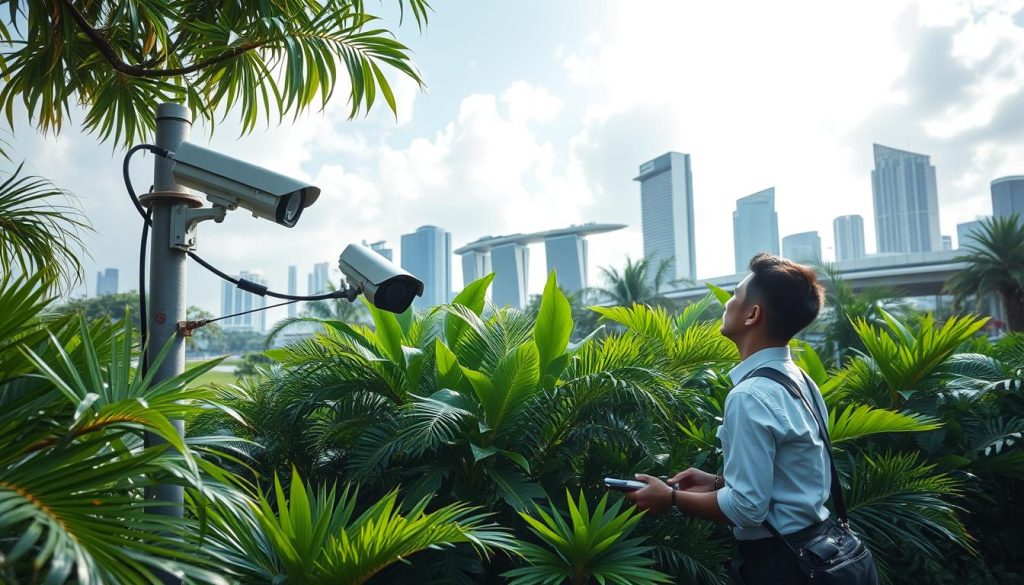
Singapore’s tropical environment presents special challenges for surveillance equipment. The constant humidity and frequent rainfall demand customized care approaches. Your protection strategy must account for these environmental factors.
Proper climate adaptation prevents premature system failures. It maintains clear visibility during all weather conditions. This attention ensures reliable performance year-round.
Combating Humidity and Moisture Buildup
High humidity levels accelerate moisture accumulation on camera lenses. This condensation creates blurry footage and identification problems. Regular cleaning becomes essential for clear monitoring.
Outdoor units need attention every three to four months. Special anti-fog solutions prevent vision obstruction. Proper ventilation systems reduce internal moisture buildup.
Weatherproof enclosures provide crucial protection against tropical rains. These housings shield sensitive components from water damage. They maintain optimal operating conditions despite weather changes.
Preventing Corrosion and Environmental Damage
Monthly inspections identify early corrosion signs on metal components. Humidity accelerates oxidation that can cause permanent damage. Prompt treatment prevents costly replacements.
Anti-corrosion coatings protect vulnerable connections and mounts. These treatments extend equipment lifespan significantly. They’re particularly important for coastal installations.
Tropical dust and pollution require frequent lens cleaning. Environmental particles gradually reduce image quality over time. Regular maintenance preserves evidence clarity.
- Singapore’s humidity demands quarterly cleaning to prevent lens moisture
- Weatherproof housings are mandatory for outdoor camera protection
- Monthly corrosion checks identify problems before they escalate
- Special anti-fungus treatments protect equipment in damp locations
- Enhanced ventilation reduces internal condensation in camera units
- Regular cleaning maintains image quality despite tropical pollution
- Climate-adapted schedules account for seasonal weather variations
These climate-specific strategies protect your investment from environmental damage. They ensure continuous security coverage despite Singapore’s challenging weather patterns. Your maintenance plan should incorporate these essential practices.
Common CCTV Maintenance Mistakes to Avoid
Many security system owners unknowingly undermine their own protection through simple maintenance oversights. These errors can transform reliable surveillance into vulnerable points of failure. Understanding these common pitfalls helps prevent costly security compromises.
Research shows neglect causes 83% of all surveillance system failures. Simple oversights create major security gaps over time. Recognizing these patterns early prevents extensive damage.
The High Cost of Neglecting Regular Inspections
Skipping visual checks allows minor problems to develop into major system failures. Dust accumulation gradually reduces image quality until identification becomes impossible. These issues affect video evidence quality during security incidents.
Many businesses discover connection issues only after complete system failure occurs. Emergency repair cost typically triples compared to preventive maintenance. Delayed attention often damages multiple components simultaneously.
Proper documentation tracks performance trends and identifies recurring issues. Maintenance records help technicians diagnose patterns more efficiently. This approach reduces overall service requirements over time.
The Risks of Ignoring Software Updates
Outdated software creates security vulnerabilities that hackers can exploit. Modern surveillance systems require current protection against cyber threats. Compatibility issues emerge when systems run obsolete versions.
Newer equipment often fails to integrate properly with outdated systems. Regular updates maintain optimal performance across all components. These services prevent gradual system degradation.
Security patches address newly discovered vulnerabilities in surveillance technology. Delayed updates leave systems exposed to potential breaches. Current software ensures maximum protection for your investment.
Environmental factors specific to Singapore accelerate equipment wear when ignored. Tropical conditions demand specialized maintenance attention. Climate-adapted schedules prevent weather-related damage.
The Undeniable Value of Professional CCTV Services
Professional expertise transforms security maintenance from basic upkeep to comprehensive protection. Specialized technicians bring advanced diagnostic capabilities that untrained personnel simply cannot match. This technical advantage prevents minor issues from escalating into major system failures.
Certified professionals reduce failure risk by an impressive 30%. Their trained eyes spot potential problems during routine checks. This proactive approach saves significant repair costs over time.
Benefits of Expert Diagnosis and Repair
Technical specialists possess specialized training for complex system analysis. They identify subtle signs of component wear that others might overlook. This precision prevents unexpected downtime and maintains continuous security coverage.
Expert services include comprehensive performance testing and optimization. Technicians verify every aspect of your surveillance setup. They ensure optimal functionality across all connected components.
- Advanced diagnostic tools detect hidden system vulnerabilities
- Specialized training enables accurate problem identification
- Professional repair techniques restore full functionality
- Compliance with industry standards and manufacturer specifications
- Performance optimization for maximum security effectiveness
Recommended Frequency for Professional Check-ups
Most standard installations benefit from annual professional attention. This schedule maintains optimal performance for typical security needs. Regular checks prevent gradual system degradation.
High-risk locations demand more frequent professional services. These sites may require attention every six months. Critical environments cannot afford any security compromises.
Your specific equipment and usage patterns determine the ideal frequency. Professional assessment identifies your system’s unique requirements. This customized approach ensures reliable protection year-round.
Technical expertise provides peace of mind that surveillance systems receive proper care. Certified professionals maintain cctv systems to the highest standards. Their skills ensure your investment delivers maximum security value.
Building a Customized and Cost-Effective Maintenance Plan
A tailored maintenance strategy maximizes your security investment while controlling expenses. Smart planning balances protection needs with budget realities. This approach ensures reliable surveillance without financial surprises.
Customized plans account for your specific equipment and environment. They align service frequency with actual risk factors. This prevents both overspending and inadequate protection.
Budgeting for Regular Servicing and Upkeep
Understanding maintenance costs helps create realistic financial plans. Basic residential systems average $550 annually for comprehensive coverage. This includes routine inspections and minor adjustments.
Commercial installations typically require $1,250 yearly for proper maintenance. Advanced systems with complex integrations may reach $2,500 annually. These figures represent full protection packages.
Professional service per camera ranges from $100 to $300 depending on complexity. This cost covers thorough cleaning, testing, and minor repairs. Proper budgeting prevents unexpected expenses that disrupt security operations.
- Residential systems average $550 yearly for complete maintenance
- Commercial installations typically cost $1,250 annually
- Advanced systems may require $2,500 for full protection
- Per-camera service ranges from $100 to $300
- Customized plans match costs to specific system requirements
- Budgeting prevents financial surprises and system downtime
- Long-term investment reduces total ownership costs
Securing Long-Term System Health and Performance
Regular maintenance extends equipment lifespan significantly. Well-maintained systems operate effectively for 5-7 years. This represents substantial value from your security investment.
Consistent cleaning prevents dust accumulation that degrades image quality. Clear footage remains available for identification purposes. This maintains evidential value during security incidents.
Professional inspections catch minor issues before they become major problems. This proactive approach saves time and money over the system’s life. It ensures continuous protection without interruptions.
“A dollar spent on prevention saves three in emergency repairs.”
Your maintenance schedule should evolve with system age and technology changes. Older equipment often requires more frequent attention. Newer systems may have different service intervals.
Climate considerations remain crucial in Singapore’s environment. Humidity and temperature fluctuations affect maintenance needs. Your plan should address these local conditions specifically.
Taking the Next Step for Impeccable Security
Your journey toward reliable protection begins with decisive action. A comprehensive maintenance plan ensures continuous security coverage for your property. Professional attention prevents unexpected system failures.
Regular inspections maintain clear footage quality for identification purposes. They prevent weather-related damage in Singapore’s climate. Proper cleaning and timely updates keep systems operational.
Professional service ensures compliance with local regulations like PDPA. It provides peace of mind knowing your surveillance remains effective. This proactive approach prevents costly emergency repairs.
Investing in regular maintenance protects both assets and safety. Your security system deserves this level of care. Take action now for long-term surveillance reliability.
FAQ
What are the recommended service intervals for a CCTV system?
Most surveillance systems benefit from professional servicing every 6 to 12 months. Monthly visual checks and quarterly inspections help maintain performance between professional visits.
How does environmental exposure affect maintenance needs?
Cameras exposed to harsh weather, dust, or high humidity require more frequent attention. These conditions can accelerate wear, degrade image quality, and lead to corrosion or moisture damage.
What does preventive maintenance include for CCTV cameras?
Preventive care involves cleaning lenses, checking cables and connections, updating software and firmware, and verifying storage and recording integrity to avoid unexpected failures.
Why is firmware and software upkeep important for security systems?
Regular updates protect against cybersecurity threats, improve functionality, and fix bugs. Outdated software can lead to vulnerabilities, reduced performance, or total system outages.
Can I perform basic CCTV maintenance myself?
Yes, tasks like lens cleaning, checking for physical damage, and ensuring cameras are aimed correctly can be done in-house. However, complex diagnostics, repairs, and firmware updates often require a professional.
How does regular servicing extend the life of a surveillance system?
Consistent maintenance prevents small issues from becoming major problems, reduces wear on components, and ensures optimal operation—ultimately prolonging the system’s lifespan and protecting your investment.


