
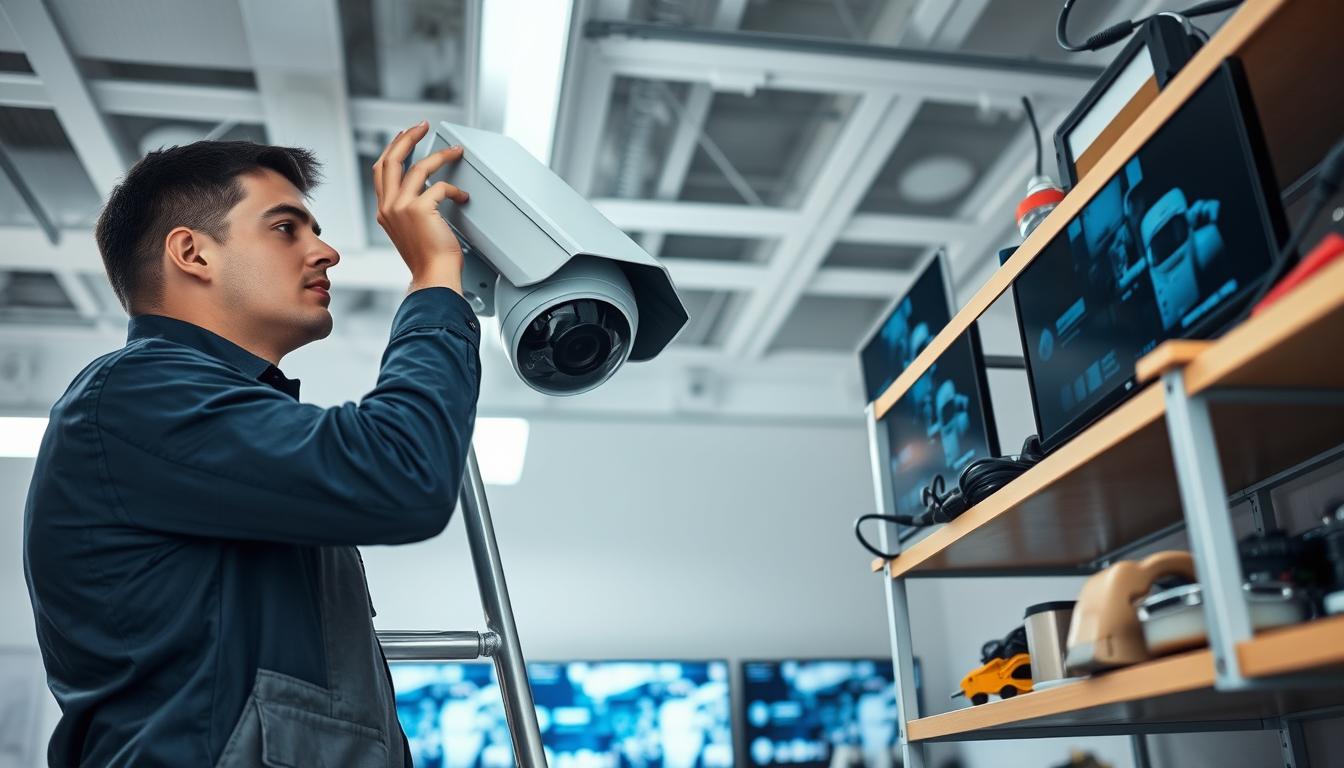
How much is CCTV maintenance? Costs & Best Practices
Getting a clear answer about surveillance system upkeep is crucial for property owners. In Singapore, a new surveillance setup can cost between SGD 500 and SGD 1,500. This initial investment needs proper care to remain effective.
Regular professional care is not just another bill. It is a smart investment in your property’s safety. A well-maintained monitoring system operates reliably for years.
Your final bill for these services depends on several factors. The type of equipment, how often it gets checked, and added features all matter. Understanding your specific setup helps choose the right plan.
Various service packages exist for different security needs. This guide will explore costs and best practices in detail. You will learn to make informed decisions about your surveillance.
Key Takeaways
- Surveillance system upkeep is a vital investment, not just an expense.
- In Singapore, new monitoring equipment ranges from SGD 500 to SGD 1,500.
- Your final service bill varies based on equipment type and check-up frequency.
- Knowing your specific setup is key to selecting the proper care plan.
- Different service packages cater to various security needs and budgets.
- Regular professional attention prevents costly failures and ensures continuous coverage.
- This article serves as a complete guide for your surveillance decisions.
Why CCTV Maintenance Is a Non-Negotiable for Security
The integrity of your entire security operation hinges on a single, often overlooked factor: consistent system care. Treating this upkeep as optional leaves your property exposed. Proactive attention is the bedrock of reliable protection.
Regular maintenance is the key to peak performance and long life for surveillance equipment. Without it, minor issues silently grow into major failures.
The High Cost of System Failure and Downtime
Ignoring routine checks invites specific and costly problems. Faulty wiring, damaged cables, broken lenses, and DVR malfunctions are common results. Each failure creates a blind spot criminals can exploit.
The financial hit from a neglected security system is severe. Emergency repairs cost far more than planned service visits. Operational downtime means your assets are unprotected, risking theft or vandalism.
Reactive fixes after a failure often cost five times more than the preventive service that could have stopped it.
This vulnerability isn’t just about money. It’s about the core function of your surveillance setup failing when you need it most. A single lapse can have lasting consequences.
From Blurry Footage to Legal Compliance: The Broad Impact
The impact of poor upkeep extends beyond hardware failures. Blurry or corrupted video loses all value as evidence. It cannot deter crime or aid investigations, rendering the entire setup useless.
Good maintenance directly improves video quality and system reliability. Clear footage acts as a stronger crime deterrent. It also provides authorities with usable evidence if an incident occurs.
In Singapore, adhering to local regulations is a critical business concern. Well-maintained systems ensure compliance with standards for surveillance. This avoids potential legal issues and demonstrates responsible operation.
Regular checks allow owners to spot small issues early. This prevents them from escalating into complete system breakdowns. The process is a form of risk management, saving significant money long-term.
Ultimately, proactive care is more cost-effective than reactive repairs or full replacements. It secures your investment and provides genuine peace of mind. The benefits extend far beyond mere functionality.
Understanding Your CCTV System: Core Components
Every effective security setup begins with understanding its fundamental building blocks. Your surveillance arrangement consists of several key elements working together. Knowing each part helps you communicate better with service providers.
Different technologies have distinct care requirements. A basic analog setup needs different attention than a modern IP-based one. This knowledge directly impacts your long-term upkeep strategy.
Cameras: Dome, Bullet, PTZ, and IP Varieties
Surveillance cameras come in several main types, each with specific advantages. Dome cameras feature a discreet, compact design ideal for indoor spaces like retail stores. Their unobtrusive appearance doesn’t alert people to constant monitoring.
Bullet cameras offer a visible deterrent with their cylindrical shape. They excel at covering outdoor perimeters and long-distance viewing. Many models include weatherproof housing for harsh conditions.
Pan-Tilt-Zoom (PTZ) units provide active monitoring capabilities. Security operators can remotely control their direction, tilt, and zoom functions. This makes them perfect for tracking movement across large areas.
IP cameras represent the current standard for digital surveillance. They capture high-definition footage and transmit it over network cables. Their clarity and compatibility with modern storage solutions make them popular choices.
The Brains of the Operation: DVRs, NVRs, and Storage
The recording device is the central hub of any surveillance system. Digital Video Recorders (DVRs) work with traditional analog camera feeds. They convert analog signals into digital recordings for playback.
Network Video Recorders (NVRs) are designed for IP camera systems. They receive digital video streams directly over your network. This setup typically offers superior image quality and easier expansion.
Storage capacity determines how much footage your system retains. Local hard drives provide immediate access to recorded video. Cloud-based options offer off-site backup and remote retrieval capabilities.
Regular checks on storage health prevent catastrophic data loss, ensuring critical footage remains available when needed most.
Your choice between DVR and NVR technology affects future upgrade paths. It also influences the complexity and frequency of required professional attention.
Software, Power, and Connectivity: The Unsung Heroes
Video Management Software (VMS) controls how you view and manage footage. This interface allows live monitoring, playback, and exporting of recordings. A stable VMS platform is crucial for daily operation.
Uninterruptible Power Supplies (UPS) protect equipment during outages. They provide temporary battery power to prevent sudden shutdowns. This safeguards both hardware and recorded data from corruption.
Network connectivity forms the backbone of modern IP-based surveillance. Stable internet and local network links enable remote viewing features. They also support automatic alerts and cloud storage integration.
Software requires periodic updates for security and functionality. Manufacturers release patches to address vulnerabilities and add features. Keeping this software current is a fundamental aspect of proper system care.
These supporting elements often receive less attention than cameras and recorders. Yet their reliable operation is essential for continuous, effective property protection.
Key Factors That Determine Your CCTV Maintenance Bill
Your surveillance upkeep expenses aren’t random; they’re shaped by specific, measurable factors. Understanding these variables helps property owners budget accurately and choose suitable care plans. Three primary categories typically drive the final pricing for professional attention.
Service providers evaluate your setup against these criteria to generate quotes. This analysis empowers you to ask informed questions during the selection process.
Scale and Complexity: Number of Cameras & Installation Sites
The sheer size of your security network is the most obvious cost driver. A setup with fifty units demands more labor and time than one with just four. Each device requires individual inspection, cleaning, and testing during routine visits.
Installation complexity further influences ongoing care requirements. Systems mounted in challenging locations need specialized attention. High ceilings, outdoor environments, and industrial settings increase service time and difficulty.
Initial setup investment often correlates with long-term upkeep expenses. In Singapore, installation can range from SGD 1,000 for small businesses to over SGD 50,000 for extensive commercial operations. Many providers base their annual fees on a percentage of this initial outlay.
Technology Tier: Basic Analog vs. Advanced IP & HD Systems
Older analog equipment generally has simpler upkeep needs. These systems involve checking physical connections and ensuring clear signal transmission. Their technology is mature and widely understood by technicians.
Modern IP and high-definition cameras represent a different category. They require knowledge of network configurations and digital storage solutions. Advanced features like night vision, motion detection, and analytics add layers of complexity.
Smart cameras with built-in analytics software need regular updates and calibration to function correctly, contributing to higher service costs.
Hybrid systems that mix analog and digital components present unique challenges. Technicians must be proficient in both technologies to maintain them effectively. This dual expertise often commands a premium in the marketplace.
Service Level: From Basic Checks to 24/7 Emergency Support
The scope of your chosen agreement directly affects your annual bill. Basic packages might include quarterly visual inspections and cleaning. These plans are cost-effective for systems with low criticality.
Comprehensive service contracts offer much broader coverage. They often feature monthly visits, detailed performance reports, and software updates. Some include a set number of emergency response hours per year.
Premium support with 24/7 availability represents the top tier. Providers guarantee rapid response times for critical failures, day or night. This peace of mind comes with significantly higher recurring fees.
Consider your operation’s tolerance for downtime when selecting a plan. A retail store might manage with next-day service, while a financial institution likely needs immediate support. Matching the service level to your actual risk is crucial for value.
Auditing your surveillance setup against these three factors provides clarity. You can anticipate potential expenses and compare provider quotes effectively. This knowledge turns a confusing estimate into a transparent, logical proposal.
How Much Is CCTV Maintenance in Singapore? (The Numbers)
1. Content planning
– Identify key sentences of each heading,
What’s Included in a Standard Maintenance Service?
A standard maintenance service transforms your security investment from a static installation into a dynamic, reliable asset. Professional technicians follow a detailed checklist during each scheduled visit. This process ensures every component of your surveillance setup receives proper attention.
These visits are designed to prevent failures before they occur. They address both the physical hardware you can see and the digital components you cannot. Understanding this scope helps property owners recognize the value they receive.
Routine Physical Inspection and Camera Cleaning
Hands-on examination forms the foundation of any quality maintenance visit. Technicians check each camera housing for cracks, water damage, or tampering signs. They verify mounting brackets remain secure and properly aligned.
Lens cleaning is a critical task that dramatically affects performance. Dust, spider webs, and weather residue can obscure video footage. Proper cleaning can improve image clarity by up to 40%, restoring your system’s effectiveness.
Inspectors examine all cables and connections for wear or corrosion. They look for loose terminations that could interrupt signal transmission. Outdoor installations receive special attention for weatherproofing integrity.
This physical care extends to recording equipment and power supplies. Technicians ensure proper ventilation around DVRs and NVRs to prevent overheating. They check that uninterruptible power supplies function correctly during simulated outages.
Software, Firmware, and Security Updates
Digital upkeep is equally important for modern surveillance systems. Network-connected IP cameras require regular firmware updates from manufacturers. These patches often fix bugs, improve performance, and add new features.
Video Management Software (VMS) platforms also need periodic updates. New versions enhance user interfaces and recording capabilities. More importantly, they close security vulnerabilities that hackers could exploit.
Failing to update connected surveillance equipment leaves networks exposed to cyber threats, potentially compromising entire security operations.
Technicians apply these updates during maintenance visits to ensure compatibility. They test the system thoroughly after each software change. This proactive approach prevents conflicts between different system components.
Security patches are particularly crucial for internet-accessible systems. They protect against unauthorized access to live feeds and recorded footage. Regular updates represent a fundamental aspect of responsible system ownership.
Performance Diagnostics and Storage Health Checks
Comprehensive testing verifies your entire surveillance operation functions correctly. Technicians confirm each camera records and transmits footage properly. They adjust image focus and settings for optimal clarity in different lighting conditions.
Motion detection zones require calibration to minimize false alarms. Sensitivity settings are tested and adjusted based on the environment. Recording schedules are verified to ensure coverage during all required hours.
Storage device health receives careful evaluation during these diagnostics. Hard drive lifespan is monitored to predict potential failures. Technicians check recording duration matches configured retention policies.
Backup systems undergo testing to confirm they activate during primary storage failures. Network connectivity and remote access capabilities are verified. These diagnostics provide a complete performance snapshot of your security infrastructure.
This three-part approach—physical, digital, and diagnostic—creates a robust maintenance framework. It addresses immediate issues while preventing future problems. Property owners gain confidence knowing their surveillance investment receives comprehensive professional care.
Types of CCTV Maintenance Services Explained
Modern security management involves choosing between proactive, reactive, and remote maintenance strategies. Each approach serves different operational needs and risk profiles. Understanding these options helps property owners build a resilient surveillance framework.
Professional providers like ClearView offer various service models. Selecting the right one depends on your tolerance for downtime and budget constraints. A strategic blend often delivers the best protection.
Planned Preventive Maintenance (PPM): The Proactive Approach
Planned Preventive Maintenance represents scheduled, routine care for surveillance equipment. Technicians perform inspections and cleaning at regular intervals. This model aims to prevent failures before they disrupt security.
PPM extends the lifespan of cameras and recording devices significantly. It reduces unexpected downtime by addressing small issues early. Studies suggest proactive care can cut camera breakdowns by 30%.
ClearView and similar providers structure these visits quarterly or monthly. Each session includes physical cleaning, connection checks, and performance diagnostics. This systematic approach proves more cost-effective over time than emergency repairs.
Investing in preventive care typically costs 40-60% less than reactive fixes over a five-year period, according to security industry analyses.
Property owners gain predictable budgeting with fixed service fees. They also enjoy consistent system performance. This peace of mind makes PPM popular for critical installations.
Reactive or Corrective Maintenance: Fixing Issues as They Arise
Reactive maintenance follows a break-fix model for immediate problems. Technicians respond after a failure occurs or is reported. This approach suits non-critical systems with flexible security requirements.
Certain situations demand this service model regardless of planning. Vandalism, sudden hardware failure, or storm damage require urgent attention. Providers like ClearView offer 24/7 emergency response for these cases.
Reactive solutions often cost more per incident than preventive visits. They also create security gaps during diagnosis and repair. Disruption to daily operations can add hidden expenses.
Some organizations use reactive care for secondary or backup systems. They combine it with PPM for primary surveillance networks. This hybrid strategy balances cost with comprehensive coverage.
The Rise of Remote Diagnostics and Monitoring
Remote diagnostics represent the latest advancement in surveillance upkeep. Technicians access systems online to identify and sometimes resolve issues. This capability transforms traditional service delivery.
Network-connected IP cameras enable this virtual troubleshooting. Experts can check software, review logs, and update firmware remotely. Many problems get solved without physical site visits.
Remote services offer faster response times for software-related issues. They reduce travel costs and minimize operational disruption. Continuous system health monitoring becomes feasible with this technology.
Providers can perform frequent checks that would be impractical in person. They receive automatic alerts for potential failures. This proactive monitoring complements scheduled physical maintenance perfectly.
Each service type addresses different aspects of surveillance reliability. Property owners should evaluate their specific needs when selecting a model. A tailored combination often provides optimal security and value.
Comparing Maintenance Contracts: Long-Term vs. Short-Term
Selecting the right contractual framework for your surveillance upkeep is a strategic business decision. The length of your service agreement shapes both financial planning and operational reliability. Property owners must weigh the trade-off between cost efficiency and future flexibility.
Two primary models dominate the market: multi-year commitments and shorter-term arrangements. Each offers distinct advantages for different business scenarios. Understanding these options ensures your security strategy aligns with your organizational goals.
Cost Savings and Predictability of Multi-Year Agreements
Long-term contracts, typically spanning three to five years, provide significant financial advantages. Providers offer substantial discounts for extended commitments. This model transforms unpredictable expenses into fixed, manageable annual costs.
These agreements often reduce yearly upkeep expenses to just 8-15% of the original installation price. For example, an initial SGD 100,000 surveillance investment might incur SGD 8,000 to SGD 15,000 annually under a multi-year plan. This predictability simplifies budget allocation for property managers.
Beyond direct savings, long-term contracts guarantee service continuity and priority support. Providers often include value-added services like firmware updates or emergency response hours. This comprehensive coverage eliminates surprise bills for routine care.
Industry analysis shows multi-year agreements can lower total ownership costs by up to 75% compared to pay-per-service models over the contract period.
Businesses with stable operations and fixed locations benefit most from this approach. The locked-in rate protects against market price inflation. It also builds a stronger partnership with your service provider.
Flexibility and Adaptability of Annual or Pay-Per-Service Plans
Short-term agreements offer maximum adaptability for evolving security requirements. Annual contracts or pay-per-visit models suit organizations with uncertain futures. They allow regular re-evaluation of both needs and provider performance.
This flexibility is ideal for temporary sites, businesses undergoing changes, or those testing a new provider. You can adjust service scope or switch companies without lengthy exit penalties. This model empowers owners to respond quickly to new circumstances.
The trade-off involves higher per-service costs and less budget certainty. Without volume discounts, individual visits cost more. Annual renewals may bring price adjustments based on current market rates.
There is also a potential risk of service gaps between contract periods. Coverage might lapse during negotiation or provider transition. For non-critical systems, this risk may be acceptable for the gained flexibility.
Choosing this path requires active management of your surveillance care schedule. You must track service dates and initiate renewals proactively. This hands-on approach suits owners who prefer direct control.
| Contract Type | Duration | Cost Structure | Flexibility | Risk of Service Gaps |
|---|---|---|---|---|
| Long-Term | 3-5 Years | Fixed Annual Fee (8-15% of install cost) | Low | Very Low |
| Short-Term | 1 Year or Per-Visit | Variable, Higher Per-Service Cost | High | Moderate |
Your choice should reflect your business stability, budget cycle, and security criticality. Operations requiring uninterrupted surveillance coverage often justify long-term commitments. Businesses valuing agility may prefer the short-term model.
Evaluate your provider’s offerings carefully, ensuring they match your operational reality. A reliable partner for professional maintenance services will help you navigate this decision. The right contract turns your surveillance system into a consistently protected asset.
A Look at Common CCTV Maintenance Packages
No output 9-
Breaking Down Specific Maintenance Costs and Fees
Beyond package prices, individual components and services contribute to your total surveillance bill. A granular view of potential expenses helps property owners budget accurately. This transparency prevents surprises when invoices arrive.
Understanding these line items empowers better financial planning. You can anticipate where funds will be allocated throughout the year. This knowledge supports informed decisions about service agreements.
Replacement Parts: Cameras, DVRs/NVRs, and Cabling
Hardware components eventually wear out or fail completely. Individual cameras represent common replacement items in security systems. Basic models start around SGD 100, while advanced units reach SGD 500.
Recording devices like DVRs and NVRs also require occasional replacement. Their cost depends on channel capacity and storage features. Expect to pay between SGD 150 and SGD 500 for these critical components.
Supporting infrastructure often needs attention during routine checks. Power adapters, damaged coaxial cables, and network cables fall into this category. Smaller parts typically cost less but ensure overall system functionality.
Hard drives inside recorders have limited lifespans. Their replacement maintains adequate storage for video footage. This preventive measure avoids catastrophic data loss during incidents.
High-end or specialized security equipment commands premium pricing. Thermal cameras or vandal-proof units sit at the upper end of cost ranges. Always verify compatibility when sourcing replacement parts.
Labor Charges for Routine and Emergency Visits
Professional technician time represents a significant portion of upkeep expenses. Standard hourly rates apply during scheduled business hours. These cover inspections, power verification, and storage capacity checks.
Routine surveillance check labor typically ranges from SGD 80 to SGD 200 per visit. The exact figure depends on system complexity and technician expertise. Multiple cameras or challenging installations increase service time.
Emergency response rates often reach 200-300% above standard pricing for after-hours, weekend, or urgent call-outs.
Premium pricing reflects the immediate availability required for critical situations. Providers must dispatch teams outside normal operating schedules. This guarantees rapid resolution when security coverage falters.
Clarify what your service package includes regarding labor allowances. Some agreements cover a set number of hours annually. Others bill separately for each technician visit beyond basic inspections.
For complex camera repair services, labor costs may increase accordingly. Specialized diagnostics or component-level fixes require advanced skills. These services justify higher professional fees.
Additional Costs for System Upgrades and Expansions
Surveillance technology evolves rapidly, prompting periodic enhancements. Adding new cameras expands coverage to previously unmonitored areas. Each additional unit requires installation labor and configuration time.
Upgrading recorder storage capacity accommodates longer retention periods. Larger hard drives or cloud storage subscriptions represent separate project expenses. These improvements typically fall outside standard maintenance agreements.
Implementing new software features enhances system capabilities. Advanced analytics, facial recognition, or license plate reading modules carry license fees. Their integration demands specialized technical work.
These enhancement projects operate on separate billing structures from routine upkeep. Providers usually quote them as one-time investments rather than recurring charges. They address evolving security requirements beyond basic functionality.
Property owners should budget for these potential upgrades during initial planning. Technology refresh cycles typically span three to five years. Allocating funds ensures your surveillance remains current and effective.
Understanding all potential charges creates realistic financial expectations. It transforms upkeep from a vague expense into a manageable operational cost. This clarity supports long-term security investment planning.
Emergency CCTV Maintenance: What It Is and When You Need It
How to Choose the Right CCTV Maintenance Plan: A Step-by-Step Guide
Picking the right support package for your video surveillance demands systematic evaluation. This decision impacts your property’s protection and operational budget. Follow this practical framework to match a service agreement with your specific situation.
Begin by gathering details about your current setup and security requirements. Consider your financial limits and how critical continuous monitoring is for you. These factors will shape your final selection from available options.
Step 1: Assess Your System’s Scale and Criticality
Start with a complete inventory of your surveillance equipment. Count all cameras and note their types—dome, bullet, PTZ, or IP. Record the model of your DVR or NVR and its storage capacity.
Document where each device is installed throughout your property. Identify challenging locations that may need special attention. This information helps providers understand the work scope.
Determine how vital uninterrupted operation is for your safety or business. Ask yourself key questions about your surveillance needs. Is this for basic home monitoring or a high-risk retail store environment?
Consider the potential impact of surveillance downtime. What would be the financial consequence of 24 hours without video coverage? This assessment clarifies your required service level.
Step 2: Define Your Budget and Risk Tolerance
Establish a realistic annual amount for upkeep expenses. Look at your overall security spending to find an appropriate allocation. This budget should reflect the value you place on reliable protection.
Decide between predictable costs and flexible spending. Long-term contracts offer fixed fees but less adaptability. Pay-as-you-go models provide freedom but with variable pricing.
Balance the expense of a premium plan against the potential cost of a security breach or complete system failure.
Consider what level of risk you can comfortably accept. Some organizations need guaranteed rapid response times. Others can manage with next-day service for most issues.
Your risk tolerance directly influences the type of agreement you should pursue. Higher criticality typically justifies higher investment in comprehensive coverage.
Step 3: Evaluate and Compare Provider Proposals
Collect multiple quotes from reputable service companies in Singapore. Use a consistent checklist to compare each offer fairly. This ensures you’re evaluating equivalent service scopes.
Examine the specific services included in each proposal. Check response time guarantees for both routine and emergency situations. Verify what replacement parts are covered under the agreement.
Review warranty terms and any exclusions carefully. Look for providers with relevant industry certifications and positive customer testimonials. Feedback from similar businesses offers valuable insight into real-world performance.
Common plan tiers like Silver, Gold, and Platinum provide a starting point for comparison. Each level typically offers different visit frequencies and support features. Match these offerings to your previously identified needs.
Pay special attention to the Service Level Agreement (SLA) details. Understand all guarantees, limitations, and cancellation policies before signing. A clear SLA prevents misunderstandings about service expectations.
This three-step process transforms a complex decision into manageable stages. You’ll move from understanding your requirements to selecting the optimal service partner. The result is a maintenance plan that delivers both security and value.
Selecting a Reliable CCTV Maintenance Provider in Singapore
Your surveillance system’s reliability depends heavily on the partner you choose for its ongoing care. This decision affects both your property’s protection and your operational budget. Proper due diligence helps you identify companies that deliver genuine value.

Begin by researching the reputation of different security firms in Singapore. Look beyond basic advertisements to understand their real-world performance. A quality provider demonstrates comprehensive capabilities across installation, repair, and regular upkeep.
Checking Credentials, Reviews, and Industry Experience
Established companies should hold relevant industry certifications and affiliations. Look for membership in security associations or partnerships with major equipment brands. These credentials indicate professional standards and ongoing training.
Examine their portfolio of completed projects for organizations similar to yours. A provider like ClearView, with extensive local experience, represents an established player. They understand the unique challenges of Singapore’s diverse environments.
Customer testimonials and online reviews offer valuable insights into service quality. Pay attention to feedback about response times, technician expertise, and billing transparency. Consistent positive reviews across multiple platforms signal reliable performance.
A proven track record in emergency response is particularly important. Your provider should handle urgent repairs efficiently when your security coverage falters. This capability separates comprehensive partners from basic service vendors.
Verifying Knowledge of Local Regulations and Standards
Singapore has specific regulations governing surveillance, data protection, and installation standards. Your chosen company must demonstrate thorough understanding of these requirements. This knowledge ensures your setup remains legally compliant.
Proper adherence to local rules makes recorded footage admissible for legal purposes. It also protects against potential privacy violations or regulatory penalties. A knowledgeable provider guides you through these complexities.
Working with a provider well-versed in Singapore’s Personal Data Protection Act (PDPA) and surveillance guidelines prevents costly compliance issues down the line.
Ask potential providers about their experience with local authority submissions. They should understand certification processes for different property types. This expertise becomes invaluable during system upgrades or expansions.
Ensuring Clear Service Level Agreements (SLAs)
A robust Service Level Agreement forms the foundation of any professional maintenance relationship. This document should clearly define response times for different priority issues. It should specify uptime guarantees and scope of work coverage.
Examine what parts and labor are included in the agreement. Look for transparent pricing without hidden fees or unexpected charges. Termination clauses and renewal terms should be equally clear.
Avoid providers who are vague about their terms or reluctant to provide detailed written agreements. Comprehensive SLAs prevent misunderstandings about service expectations and responsibilities.
Compare multiple quotes to evaluate both price and value. Consider what each proposal includes regarding visit frequency, emergency support, and software updates. The most expensive option isn’t always the best fit for your specific needs.
Your surveillance upkeep provider should act as a long-term security partner. They become an extension of your protection strategy rather than just a vendor. This partnership approach delivers lasting peace of mind for property owners.
Investing in Maintenance for Long-Term Security and Peace of Mind
The true value of a monitoring system emerges not from its purchase price but from its sustained reliability over time. Consistent professional attention is the cornerstone of effective property protection. It transforms your security setup from a static installation into a dynamic, resilient asset.
Regular upkeep extends equipment lifespan significantly while preventing costly emergency repairs. Clear video quality remains available for deterrence and evidence collection. Compliance with Singapore’s regulations is assured through systematic care.
This approach delivers genuine peace of mind, knowing your surveillance operates without hidden vulnerabilities. The predictable maintenance cost protects your larger initial investment in the system itself.
Begin by assessing your current setup and defining specific security needs. Then engage with reputable providers to secure a suitable care plan. A well-maintained surveillance system becomes an indispensable component of comprehensive risk management for any Singapore property.
FAQ
What is the typical annual cost for CCTV upkeep in Singapore?
Annual costs for surveillance system upkeep typically range from SGD 300 to SGD 2,500. The final price depends on your setup’s size, technology, and the service plan you choose. A basic residential security camera system will be on the lower end, while a complex commercial network with many cameras demands a higher investment.
What does a standard maintenance service include?
A standard service includes several key tasks. Technicians perform a physical inspection and cleaning of all cameras and housings. They run performance diagnostics, check storage device health, and apply critical software or firmware updates. This proactive approach helps prevent common issues and keeps your security system running smoothly.
What’s the difference between preventive and reactive maintenance?
Preventive maintenance is a scheduled, proactive service. It aims to find and fix small problems before they cause a system failure. Reactive maintenance is an emergency repair call after something has already broken. Investing in regular preventive checks is almost always more cost-effective than dealing with unexpected downtime and urgent repairs.
Are maintenance contracts worth the investment?
A> Yes, a service contract is highly recommended for most businesses. It provides predictable budgeting, often at a lower annual cost than pay-per-visit fees. Contracts also typically include priority response for emergencies. This ensures your surveillance equipment receives consistent, professional upkeep, maximizing its lifespan and reliability.
What are common extra fees I should budget for?
Beyond the base service fee, budget for potential replacement parts like cameras, lenses, or power supplies. Labor charges for emergency visits outside of business hours usually carry a premium. If you plan to expand your system or upgrade software, those will be additional costs not covered in a standard maintenance plan.
How do I choose a reliable service provider?
Look for a provider with strong credentials and proven experience with your type of security camera system. Check online reviews and ask for references. Ensure they understand local regulations, such as PDPA compliance in Singapore. Finally, always get a detailed Service Level Agreement (SLA) that clearly outlines response times and what is covered.
Post Tags : Best practices for CCTV upkeep CCTV maintenance best practices CCTV maintenance costs CCTV system servicing Security camera maintenance tips Security camera repair expenses Security camera upkeep Surveillance camera upkeep costs Surveillance system maintenance Video surveillance maintenance


