
How long can CCTV record without electricity? Expert Guide
Power outages pose significant challenges for security systems in Singapore’s urban environment. When the lights go out, your surveillance protection shouldn’t disappear. Modern security systems have evolved to address this critical vulnerability.
Today’s advanced technology includes robust battery backup options that maintain continuous monitoring. Many IP cameras can sustain operation for extended periods during electrical disruptions. This capability ensures your property remains protected even during unexpected power outages.
The duration of uninterrupted surveillance depends on several factors. Battery capacity, camera type, and recording settings all influence performance. Understanding these elements helps homeowners and businesses choose the right security solutions for their needs.
Key Takeaways
- Modern CCTV systems feature battery backups that maintain surveillance during power outages
- IP cameras with battery support typically operate 24-48 hours without electricity
- 82% of professional security systems now use AI-enabled network cameras
- 65% of IP CCTV installations utilize Power over Ethernet technology
- Recording duration depends on battery capacity and camera specifications
- Proper system selection ensures continuous security monitoring
- Technological advancements make backup solutions more reliable and accessible
Understanding CCTV Security Needs in Singapore
Singapore’s security landscape demands robust protection measures. A 25% surge in theft incidents during 2023 highlights growing concerns. This trend makes advanced surveillance solutions essential for property safety.
Urban density creates unique security challenges across the island. High property values increase potential loss from security breaches. Modern monitoring systems address these vulnerabilities effectively.
Visible security cameras serve as powerful psychological deterrents. Their presence significantly reduces crime rates in both residential and commercial areas. Property owners gain peace of mind through continuous surveillance coverage.
Insurance providers recognize the value of comprehensive security systems. Properties with proper monitoring often qualify for premium discounts. This financial benefit complements the primary security advantages.
CCTV footage provides critical evidence for criminal investigations. Singapore’s legal system relies on clear video documentation. High-quality recordings support successful prosecution outcomes.
Modern technology integrates surveillance with smart devices seamlessly. Remote monitoring capabilities allow real-time access from mobile devices. This connectivity enhances response capabilities during security events.
Power disruption preparedness remains particularly important locally. Electrical outages create temporary security vulnerabilities that criminals might exploit. Backup power solutions ensure uninterrupted protection during these periods.
Cultural acceptance and regulatory frameworks support widespread adoption. Community safety initiatives frequently incorporate surveillance technology. These systems form foundational components of comprehensive security strategies.
Businesses benefit from enhanced loss prevention and operational oversight. Retail establishments use surveillance for both security and customer behavior analysis. The dual functionality maximizes investment returns.
Residential complexes implement monitoring for communal safety. Shared spaces require vigilant oversight to maintain security standards. Modern systems provide this protection efficiently.
Technological advancements continue improving system capabilities. Higher resolution cameras deliver clearer evidentiary footage. Intelligent analytics enable proactive security management.
Singapore’s unique environment demands tailored security approaches. The combination of urban density and high-value properties requires robust solutions. Comprehensive surveillance systems meet these specialized needs effectively.
The Critical Role of CCTV in Modern Security Systems
Contemporary protection strategies increasingly rely on advanced visual monitoring solutions. These technologies provide comprehensive coverage that addresses multiple security concerns simultaneously.
Modern surveillance systems operate continuously without interruption. They capture crucial evidence during critical incidents. This constant monitoring creates a powerful deterrent effect against criminal activity.
Visible security installations significantly reduce theft and vandalism rates. Potential offenders often reconsider their actions when noticing monitoring equipment. The psychological impact extends beyond simple crime prevention.
Video documentation serves as invaluable evidence in legal proceedings. Courts frequently rely on clear footage for investigation purposes. This evidence supports successful prosecution outcomes in criminal cases.
Business environments benefit tremendously from proper monitoring implementation. Employee accountability improves with visible surveillance systems in place. Workplace integrity maintains higher standards through consistent oversight.
“Professional surveillance systems create environments where everyone follows established protocols and procedures.”
Insurance providers recognize the value of comprehensive protection measures. Properties with professional monitoring often qualify for premium reductions. This financial benefit complements the primary security advantages.
Modern technology integrates surveillance with other protection measures seamlessly. Layered security approaches provide enhanced coverage for various risk scenarios. This integration creates more robust overall protection systems.
Community safety initiatives increasingly incorporate monitoring technology. Public spaces benefit from visible security presence through these programs. Neighborhood watch programs often integrate with formal surveillance systems.
Emergency response protocols now include surveillance footage analysis. First responders use real-time monitoring during crisis situations. This integration improves situational awareness during critical events.
Technological advancements expand applications beyond traditional security functions. Operational monitoring and process optimization benefit from modern systems. Proper system maintenance ensures continuous performance across all applications.
The evolution of surveillance technology continues enhancing protection capabilities. Higher resolution cameras deliver clearer evidentiary documentation. Intelligent analytics enable proactive security management approaches.
Exploring the Types of CCTV Systems Available
Modern security solutions offer diverse surveillance options to meet different protection needs. Each camera type serves specific purposes with unique features and capabilities. Understanding these differences helps property owners select optimal monitoring systems.
Security professionals categorize surveillance equipment by design and functionality. The right choice depends on environmental factors and monitoring objectives. Singapore’s varied property types benefit from tailored security approaches.
Dome Cameras: Discreet Indoor Monitoring
Dome-shaped security cameras provide subtle indoor protection. Their compact design blends seamlessly with interior decor. These units offer wide-angle coverage for comprehensive room monitoring.
High-resolution imaging captures clear video evidence. Tamper-resistant housing protects against intentional damage. Many models feature infrared capability for low-light conditions.
Bullet Cameras: Focused Outdoor Surveillance
Weatherproof construction makes bullet cameras ideal for external use. Their cylindrical shape allows precise directional positioning. These units typically feature longer range than dome variants.
Robust housing withstands Singapore’s tropical climate conditions. Many include varifocal lenses for adjustable zoom capability. Visible placement serves as an effective crime deterrent.
IP Cameras: Networked and Remote Access
Internet Protocol cameras represent modern surveillance technology. They connect directly to computer networks for flexible installation. Remote access enables monitoring from smartphones or tablets.
Digital transmission provides superior video quality compared to analog systems. These cameras often include advanced analytics features. Cloud storage options enhance data security and accessibility.
PTZ (Pan-Tilt-Zoom) models offer exceptional coverage flexibility. Operators can control camera movement remotely. Zoom functionality captures detailed images from considerable distances.
Night vision capability uses infrared technology for darkness monitoring. Thermal imaging cameras detect heat signatures rather than visible light. License plate recognition systems specialize in vehicle identification.
Resolution options range from standard definition to 4K ultra-high definition. Higher resolution provides clearer identification capabilities. Storage requirements increase with enhanced video quality.
Modern systems incorporate intelligent features like motion detection. Audio capabilities enable two-way communication functionality. Advanced analytics can identify specific behaviors or objects.
Proper installation ensures optimal camera performance and coverage. Mounting height and angle affect monitoring effectiveness. Professional assessment determines ideal placement strategies.
How Long Can CCTV Record Without Electricity? The Direct Answer
Modern surveillance systems maintain operation during electrical disruptions through advanced battery technology. Most professional IP cameras with proper backup systems continue monitoring for 24-48 hours during main power loss.
Battery capacity directly determines surveillance duration. Larger batteries enable extended operation periods. The Reolink Altas PT Ultra demonstrates this capability with its impressive 20,000 mAh battery.
This powerful unit can sustain recording for up to eight days on a single charge. Solar-powered options offer additional flexibility for continuous protection.
The Reolink Argus 3 Pro operates for 24 hours after just ten minutes of solar charging. This makes it ideal for Singapore’s sunny climate and frequent rainfall.
Recording settings significantly impact battery performance. Higher resolution video consumes more energy than standard definition footage.
Continuous recording demands more power than motion-activated monitoring. Smart detection settings can extend backup duration substantially.
- Professional systems typically feature larger batteries than consumer-grade equipment
- Multiple cameras on one system reduce individual recording time during outages
- Extreme temperatures affect battery performance and overall duration
- Real-world scenarios show systems maintaining operation through extended disruptions
Environmental factors play a crucial role in backup performance. Singapore’s tropical climate affects battery efficiency differently than temperate regions.
Proper system selection ensures reliable performance during critical periods. Advanced technology continues improving backup capabilities for security applications.
“The right backup solution transforms temporary power loss from a vulnerability into a manageable situation.”
Modern security systems handle electrical interruptions effectively. They provide peace of mind during unexpected service disruptions.
Key Factors Determining CCTV Recording Duration on Backup Power
Multiple technical specifications influence how long surveillance systems maintain operation during electrical disruptions. These elements work together to determine overall performance when main power fails. Smart system design considers all these variables for optimal protection.
The Impact of Battery Capacity and Quality
Battery capacity measured in mAh directly determines operational duration. Higher capacity units store more energy for extended use. This measurement indicates total available power for surveillance needs.
Lithium-ion technology typically outperforms traditional lead-acid batteries. These modern power cells offer better energy density and longer lifespan. Quality brands provide more reliable performance during critical situations.
Environmental conditions affect battery efficiency significantly. Singapore’s tropical climate can reduce overall capacity by 10-15%. Proper ventilation helps maintain optimal operating temperatures.
How Camera Type and Technology Influence Power Draw
Different surveillance models consume energy at varying rates. Dome cameras generally use less power than PTZ units. Fixed-position devices typically operate more efficiently than moving components.
Modern IP cameras incorporate energy-saving features intelligently. Advanced processors manage power distribution effectively. Newer models often consume 30% less energy than previous generations.
Additional features increase overall power requirements significantly. Infrared night vision can double energy consumption during darkness. Audio recording and analytics functions add to the total load.
Recording Resolution and Its Effect on Battery Life
Video quality settings dramatically impact energy usage. 4K resolution requires approximately four times more power than 720p recording. Higher resolution means more data processing and storage activity.
Frame rate settings also influence power consumption directly. Thirty frames per second uses more energy than fifteen frames. Motion-activated recording can extend operation time by 40-60%.
Compression algorithms help reduce file sizes and processing needs. H.265 technology uses less power than older H.264 compression. Smart encoding balances quality with efficiency effectively.
Multiple cameras connected to one backup system share available power. A four-camera setup typically operates half as long as a single-camera system. Professional installations use smart power management for optimal distribution.
“Understanding these technical factors enables property owners to make informed security decisions that match their specific protection needs.”
Calculating expected duration requires reviewing camera specifications and battery ratings. Most manufacturers provide detailed power consumption information. Professional security consultants can perform precise calculations for complex systems.
Regular maintenance ensures batteries perform at their rated capacity. Testing backup systems monthly prevents unexpected failures. Proper care extends both operational duration and overall lifespan.
Battery Backup and Power Solutions for Uninterrupted Surveillance
Robust power backup solutions form the foundation of reliable security monitoring during electrical disruptions. These systems ensure continuous protection when main power fails unexpectedly. Property owners can choose from various technology options based on their specific needs.
Modern backup systems range from immediate response units to extended duration solutions. Each type serves different outage scenarios effectively. Understanding these options helps create comprehensive protection strategies.
Uninterruptible Power Supply (UPS) Systems
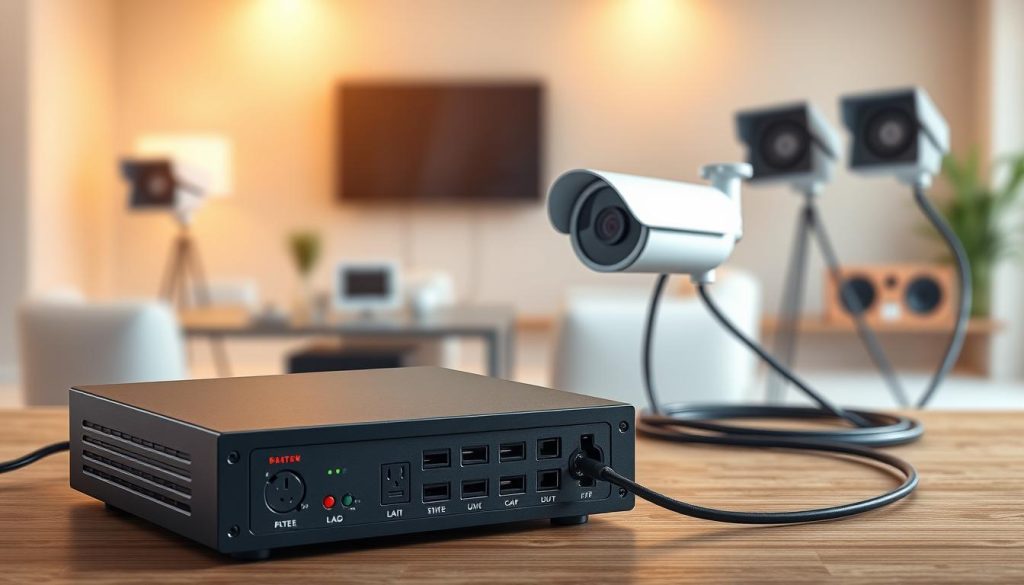
UPS units provide instant power switching during short outages. These systems activate within milliseconds of main power loss. They typically support surveillance equipment for several hours.
Modern UPS technology includes advanced battery management features. Smart monitoring ensures optimal performance during critical periods. These systems represent the first layer of backup power protection.
Stand-by Generators for Extended Outages
Generators offer long-term power solutions for prolonged disruptions. They automatically activate when main power fails completely. Fuel availability determines their operational duration.
Automatic transfer switches seamlessly transition power sources. Different fuel options include diesel, natural gas, or propane. Proper sizing ensures adequate power for all connected devices.
“Layered backup strategies combine immediate response with extended duration capabilities for complete protection.”
Battery-Powered and Solar CCTV Cameras
Dedicated battery-powered units operate independently from main grids. These self-contained systems provide flexibility in installation locations. They’re particularly useful for temporary or remote monitoring needs.
Solar-powered solutions harness renewable energy for continuous operation. Singapore’s climate supports effective solar energy collection. These systems often include battery storage for nighttime operation.
Power over Ethernet (PoE) systems deliver both data and power through single cables. This technology simplifies installation while providing centralized power management. PoE switches can include backup power capabilities.
Hybrid solutions combine multiple backup methods for maximum reliability. These systems might include UPS units with generator support. Solar panels can supplement traditional battery backup systems.
Professional-grade systems differ significantly from residential options. Commercial installations typically feature larger capacity batteries and generators. Institutional settings often require redundant systems for critical areas.
Cost considerations include initial investment and ongoing maintenance. Proper system sizing ensures cost-effective protection. Regular testing maintains system readiness for actual emergencies.
Power requirement calculations consider camera quantity and specifications. Energy consumption varies based on resolution and features. Professional assessment determines optimal backup power capacity.
Implementation strategies should address both short and long-term outage scenarios. Layered approaches provide comprehensive coverage for all situations. This ensures continuous surveillance through any power disruption.
Ensuring Surveillance Camera Performance During a Power Outage
When the lights go out, advanced surveillance technology seamlessly maintains protection through intelligent backup protocols. Modern security systems automatically detect electrical disruptions and activate alternative power sources within milliseconds.
This immediate transition ensures continuous monitoring without interruption. Sophisticated sensors constantly check main power status. They trigger backup systems the instant voltage drops below operational levels.
Cellular backup systems provide crucial data transmission during complete service failures. These modules use mobile networks when internet connections fail. They maintain remote access capabilities through 4G or 5G connections.
Onboard storage solutions preserve recorded footage even during total power loss. Solid-state drives protect video evidence through battery-backed memory. This technology safeguards critical documentation through extended outages.
Alarm verification services enhance response effectiveness during disruptions. Intelligent analytics assess potential threats before alerting security personnel. This reduces false alarms while ensuring genuine emergencies receive prompt attention.
“Layered backup strategies combine immediate response with extended duration capabilities for complete protection.”
System redundancy designs incorporate multiple backup methods for maximum reliability. Professional installations often feature UPS units combined with generator support. Solar panels can supplement traditional battery systems in Singapore’s climate.
Remote monitoring remains functional through cellular or satellite backups during outages. Property owners maintain real-time access to surveillance feeds. Mobile applications continue receiving alerts and live video streams.
Professional installation practices optimize camera placement for outage performance. Experts position units considering backup power requirements and signal strength. This ensures optimal coverage during both normal and backup operation.
Regular testing protocols verify backup system functionality monthly. Scheduled drills confirm automatic switching mechanisms work correctly. Battery capacity tests ensure adequate power reserves.
Maintenance schedules keep batteries charged and systems operational. Quarterly inspections check connections and component health. Preventive care extends backup system lifespan significantly.
Comprehensive outage response plans coordinate surveillance with other security measures. These strategies integrate monitoring with access control and alarm systems. They ensure unified protection during electrical disruptions.
Advanced power solutions provide peace of mind during unexpected service interruptions. They transform temporary vulnerabilities into manageable situations. Property remains protected through any power scenario.
Best Practices for Homeowners and Businesses in Singapore
Implementing effective security measures requires careful planning and ongoing attention. Property owners must consider both initial selection and long-term maintenance strategies. Proper implementation ensures reliable protection through Singapore’s unique climate conditions.
Selecting the Right System for Your Needs
Choosing appropriate security equipment begins with understanding local environmental factors. Singapore’s tropical climate demands weather-resistant cameras for outdoor installation. Humidity and rainfall require IP66 or higher ratings for reliable performance.
Different property layouts benefit from specific camera types. Dome units work well for indoor monitoring with discreet placement. Bullet cameras provide focused coverage for exterior areas and perimeter security.
Storage capacity calculations depend on recording quality and retention needs. Higher resolution footage requires more storage space. Motion-activated recording can extend storage duration significantly.
Professional consultation optimizes camera placement and system configuration. Experts assess blind spots and coverage gaps effectively. They integrate surveillance with other security measures seamlessly.
- Weatherproof cameras withstand Singapore’s high humidity and frequent rainfall
- IP cameras offer remote access and advanced analytics capabilities
- Storage requirements vary based on resolution and recording duration
- Professional assessment ensures optimal camera placement and coverage
- Integrated systems provide comprehensive protection for all property areas
Implementing a Routine Maintenance Schedule
Regular maintenance preserves system reliability and extends equipment lifespan. Quarterly inspections verify camera alignment and cleaning needs. Semi-annual checks test battery performance and backup functionality.
Battery testing ensures backup power availability during outages. Professional services verify capacity and charging efficiency. Replacement schedules prevent unexpected power failures.
Software updates maintain security features and performance optimization. Firmware upgrades address vulnerabilities and enhance functionality. Automated update systems simplify this maintenance task.
Weatherproofing verification protects outdoor equipment from environmental damage. Seal inspections prevent moisture intrusion in humid conditions. Housing integrity checks maintain equipment protection.
“Consistent maintenance transforms security investments from temporary purchases into long-term protection assets.”
Redundancy planning incorporates multiple backup methods for maximum reliability. Layered approaches combine UPS units with generator support. Solar options provide additional power sources in sunny conditions.
Cost-benefit analysis helps select appropriate features based on specific requirements. Professional security providers offer installation and ongoing support services. Local expertise understands Singapore’s unique security challenges.
Businesses benefit from comprehensive maintenance contracts with professional providers. These agreements ensure regular system verification and prompt repair services. They maintain protection standards for commercial operations.
Future-Proofing Your Security with Advanced Power Solutions
Tomorrow’s protection systems are evolving beyond traditional grid dependence. Forward-thinking property owners now embrace innovative energy approaches. These methods ensure continuous surveillance through any disruption scenario.
Solar-powered surveillance represents the sustainable security frontier. Modern panels capture Singapore’s abundant sunlight efficiently. They convert solar energy into reliable electrical power for monitoring systems.
Emerging solar technology achieves remarkable efficiency gains. New photovoltaic cells generate more electricity from limited surface areas. This progress makes solar options viable for urban properties.
Battery advancements are transforming backup capabilities. Lithium-ion improvements deliver longer lifespan and faster charging. Solid-state batteries promise even greater energy density and safety.
Rapid charging technology minimizes downtime during brief sunny periods. Some systems reach full capacity within hours rather than days. This ensures maximum readiness for Singapore’s changeable weather.
Smart grid integration enables sophisticated energy management. Future systems will communicate with home energy networks automatically. They can shift power usage to optimal times seamlessly.
Wireless power transmission offers intriguing possibilities. Emerging technology could eliminate physical connections entirely. This would simplify installation while maintaining reliability.
Artificial intelligence optimizes energy consumption intelligently. Machine learning algorithms predict power needs based on patterns. They adjust system settings to extend battery backup duration automatically.
Energy harvesting captures ambient power from the environment. Motion, vibration, and temperature differences generate electricity. These innovative solutions provide supplemental power sources.
“Modular power systems allow customized scaling as security needs evolve. Property owners can add capacity incrementally without complete system replacement.”
Remote monitoring capabilities provide complete control through mobile applications. Users can check backup power status from anywhere instantly. Alerts notify about low battery levels or system issues immediately.
Sustainability considerations are becoming standard in security design. Green energy solutions reduce environmental impact while maintaining protection. They align with Singapore’s smart nation initiatives perfectly.
Hybrid systems combine multiple power sources for maximum reliability. Solar panels, UPS units, and generators work together seamlessly. This layered approach ensures uninterrupted operation through extended outages.
Practical implementation requires professional assessment of specific needs. Energy audits determine optimal system sizing and configuration. Future expansion capabilities should be considered during initial installation.
Regular technology updates maintain system effectiveness over time. New innovations emerge constantly in the energy sector. Staying current ensures ongoing protection and efficiency.
Investment in advanced power solutions pays long-term dividends. Reduced electricity costs complement enhanced security benefits. Property value increases through modern, sustainable systems.
Singapore’s infrastructure supports these technological advancements well. Government incentives often encourage renewable energy adoption. Professional installers understand local regulations and conditions thoroughly.
Choosing future-proof systems requires balancing current needs with tomorrow’s possibilities. Flexible designs accommodate emerging technologies as they become available. This approach protects both property and investment effectively.
Taking the Next Step Towards Uninterrupted Security
Reliable protection requires careful planning and professional guidance. Modern security systems with proper backup power ensure continuous surveillance during unexpected power outages.
Quality cameras from trusted brands offer better performance. They maintain operation through extended disruptions. Regular testing confirms your battery systems work when needed most.
Professional consultation tailors solutions to specific needs. Experts design comprehensive protection plans. They integrate surveillance with other security measures effectively.
Investing in reliable technology brings peace of mind. Your property stays protected through any situation. Take action today for uninterrupted security tomorrow.
FAQ
What is the average recording time for security cameras during a power outage?
Most modern surveillance systems with a standard UPS can record for 1-4 hours. High-capacity backup batteries or generators extend this significantly.
Do all CCTV systems stop working when the power goes out?
No. Systems with a battery backup or an Uninterruptible Power Supply (UPS) will continue operating. Only cameras without any backup power solutions will fail.
What is the best backup power option for a business security system?
For critical business operations, a combination of a UPS for immediate switchover and a standby generator for extended outages provides the most reliable protection.
How does camera resolution affect battery life during an outage?
Higher resolution, like 4K, consumes more power and storage, draining the backup battery faster than a 1080p camera. Lowering resolution can extend recording time.
Can solar power be used for CCTV cameras?
Yes. Solar-powered security cameras are an excellent sustainable solution for remote areas or to supplement other backup power systems, ensuring continuous operation.
Is routine maintenance important for backup power systems?
Absolutely. Regularly testing UPS units and generators ensures they will function correctly during an emergency, preventing unexpected system failures.


