
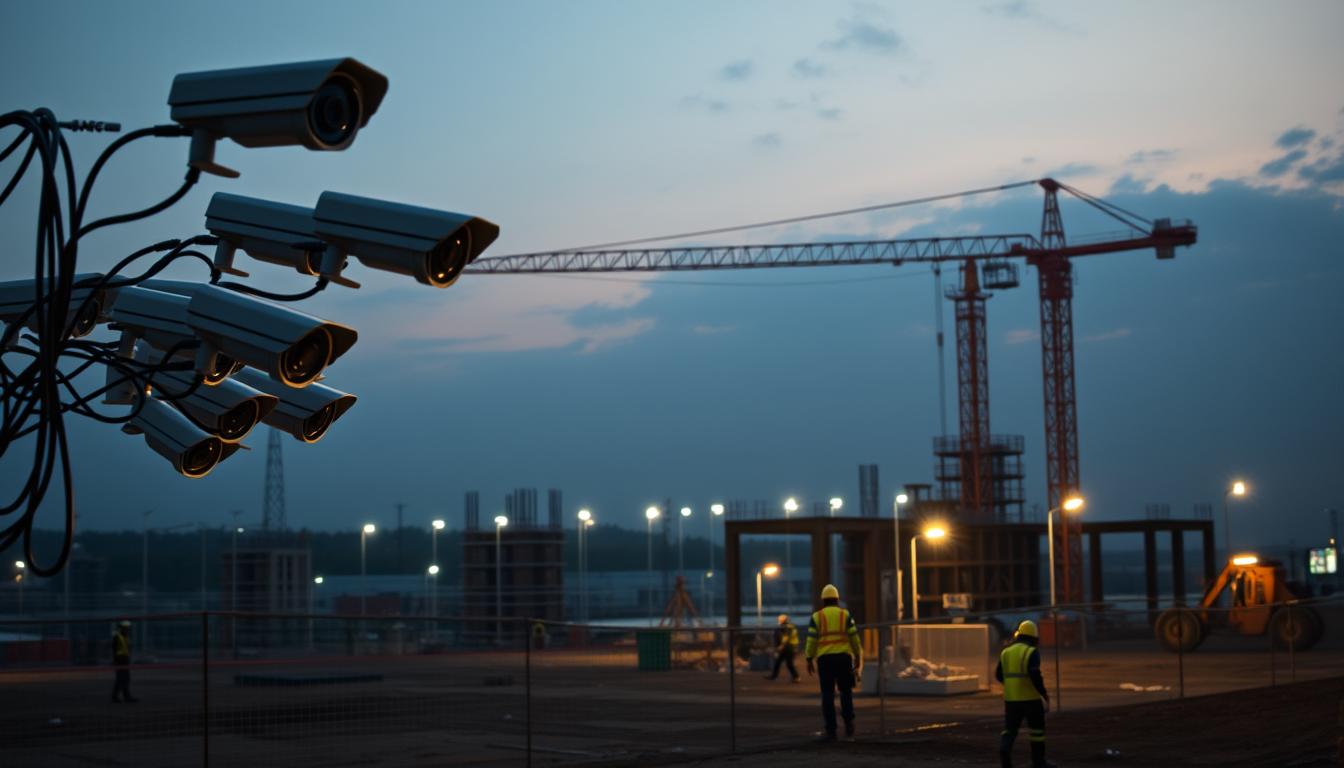
Expert Construction Site Security Surveillance Solutions
Singapore’s rapid infrastructure growth brings both opportunities and challenges. With large-scale projects increasing, protecting assets and ensuring safety has become a top priority. New regulations effective June 2024 now require mandatory CCTV installations for projects exceeding SGD 5 million.
Real-time monitoring has proven effective, reducing accidents by 20% in high-risk zones. Theft-related losses in the industry exceed $1 billion annually, making preventive measures essential. Many insurers also offer discounts for sites with verified surveillance systems.
High-definition 1080p recording plays a crucial role in incident documentation. Clear footage helps resolve disputes and supports legal claims efficiently. Investing in reliable monitoring solutions ensures compliance while enhancing operational safety.
Key Takeaways
- Singapore mandates CCTV for projects over SGD 5 million starting June 2024.
- Real-time monitoring reduces workplace accidents by 20%.
- The construction industry loses $1 billion yearly to theft.
- Insurance providers offer discounts for monitored sites.
- 1080p HD recording improves evidence collection.
Why Construction Site Security Surveillance is Essential
Unprotected areas face higher risks of theft and accidents. Without proper monitoring, projects lose valuable equipment and face costly delays. Surveillance systems cut these risks by over 50%, ensuring smoother operations.
Enhancing Worker Safety and Accountability
Cameras help track safety compliance in high-risk zones. Real-time alerts notify managers of hazards like unauthorized access. Time-lapse documentation also proves invaluable during incident investigations.
Reducing Theft and Vandalism Risks
Sites without monitoring are six times more likely to be targeted. Annual losses from stolen tools and materials range from $300 million to $1 billion. Key features like these deter criminals:
- Night vision for round-the-clock protection.
- Motion sensors triggering instant alerts.
- Solar-powered trailers cutting costs by 88%.
- Audio warnings reducing trespassing by 90%.
These tools minimize damage and keep projects on schedule. Investing in them pays off quickly through reduced losses and insurance discounts.
New Regulations for Video Surveillance in Singapore
Singapore’s Ministry of Manpower (MOM) has introduced strict video surveillance rules for high-risk projects. These measures aim to reduce workplace incidents and ensure compliance with safety protocols. Firms failing to adhere risk fines up to SGD 50,000 and operational delays.
Mandatory Requirements for High-Risk Projects
Projects exceeding SGD 5 million must install CCTV with 1080p resolution. MOM mandates coverage for hazardous zones like crane operation areas. A demerit system tracks violations, affecting future government tender eligibility.
Key obligations include:
- CEO safety training by March 2024 for leadership accountability.
- Multi-agency task forces to oversee permanent enforcement.
- Phase-in periods for existing projects to avoid disruptions.
Implementation Timeline and Penalties
Companies had a 1-year preparation window since the 2023 announcement. MOM issued 70 stop-work orders during the grace period for non-compliance. Penalties now escalate with repeat offenses, adding financial pressure.
Critical deadlines:
- New projects must comply immediately.
- Retrofits for ongoing work by Q3 2024.
- Manufacturing sector faces stricter demerit thresholds.
Types of Security Cameras for Construction Sites
Modern monitoring solutions now offer specialized options for different risk scenarios. Each camera type serves distinct purposes, from wide-area tracking to detailed identification. Proper selection ensures compliance with Singapore’s updated regulations while maximizing protection.
Dome, Bullet, and PTZ Cameras
Dome cameras provide 360° coverage for high-traffic zones. Their discreet design deters tampering while capturing clear footage. Ideal for equipment storage areas and entry points.
Bullet cameras offer long-range visibility up to 100 meters. Weather-resistant housing makes them perfect for outdoor perimeter monitoring. Many models feature infrared for night-time operation.
PTZ (Pan-Tilt-Zoom) cameras combine flexibility with precision. Remote operators can track movement across large sites. Advanced models include auto-tracking for suspicious activity detection.
Choosing the Right Camera for Your Site
Site assessments should identify high-risk zones before installation. Solar-powered trailers reduce wiring costs by 40% in temporary setups. LTE connectivity eliminates Wi-Fi dependency in remote locations.
Key selection factors include:
- Coverage gaps: Thermal mapping reveals blind spots needing attention
- Durability: IP66-rated housing withstands Singapore’s heavy rainfall
- Integration: Synchronized systems allow centralized monitoring
These solutions adapt to project phases, from groundwork to finishing. Strategic placement creates overlapping fields of view for complete protection.
Key Features of Effective CCTV Systems
AI-powered analytics are transforming how teams respond to risks in real time. The best systems combine high-resolution recording with proactive tools to minimize losses. These features ensure compliance while keeping projects on track.
High-Definition Recording Capabilities
1080p or 4K resolution captures critical details like license plates or faces. Sharp footage speeds up investigations and strengthens legal claims. Night vision extends coverage to 24/7, even in low-light zones.
Key advantages:
- Wide dynamic range balances light for clear images in shadows or glare.
- Digital zoom maintains clarity when enlarging footage.
- Encrypted storage prevents tampering with evidence.
Real-Time Monitoring and Alerts
AI reduces false alarms by 40% while detecting genuine *threats*. Live feeds enable *remote monitoring* from any device. Instant *alerts* notify managers via SMS or app notifications.
Optimized response protocols include:
- Two-way audio to warn trespassers immediately.
- Automated escalation paths for security teams.
- Direct feed sharing with authorities during emergencies.
These tools cut response times by 60%, preventing minor issues from escalating.
Best Practices for CCTV Implementation
Strategic planning prevents common pitfalls in surveillance technology deployment. Properly installed systems reduce the 15% failure rate linked to poor upkeep while ensuring compliance with Singapore’s regulations.
Optimal Camera Placement Strategies
Position cameras to cover high-traffic zones and blind spots. Entry points, equipment storage, and elevated areas need priority. Overlapping fields of view eliminate gaps in coverage.
Consider environmental factors like lighting and weather. Waterproof housings and sun shields protect hardware year-round. Regular audits verify angles remain unobstructed.
Regular Maintenance and Upkeep
Scheduled checks prevent 30% of system failures. Follow these protocols:
- Quarterly lens cleaning to ensure clear footage.
- Automated firmware updates for enhanced features.
- Backup power supplies to avoid downtime during outages.
Storage health checks every 30 days preserve recording integrity. Monsoon prep includes sealing connections and testing drainage.
Proactive maintenance extends hardware lifespan by 40%. Investing in these routines maximizes ROI and keeps projects secure.
Benefits of Construction Security Cameras
Visual monitoring transforms how teams handle workplace incidents and compliance. Modern systems streamline documentation while ensuring adherence to evolving regulations. This dual advantage reduces liabilities and enhances operational transparency across the *industry*.
Improved Incident Reporting and Investigation
High-resolution footage provides irrefutable evidence for accident analysis. Teams resolve disputes faster with timestamped records of events. Key applications include:
- Digital checklists to verify PPE usage in real time.
- Automated logging of confined space entries for audit trails.
- Hot work permit enforcement through motion-triggered alerts.
These tools cut investigation time by 60%, accelerating corrective actions.
Increased Compliance with Safety Regulations
Cameras help sites pass MOM audits with 40% fewer violations. Features like emergency drill recording ensure protocols are followed consistently. Real-time alerts for unauthorized access further reinforce *safety* standards.
Singapore’s phased enforcement rewards proactive adopters with:
- Higher eligibility scores for government tenders.
- Reduced insurance premiums for verified systems.
- Faster incident resolution with regulators.
This *way* of integrating technology minimizes penalties while maximizing workforce protection.
Integrating CCTV with Other Safety Technologies
Smart integration of monitoring tools enhances workplace safety and operational efficiency. Linking cameras with complementary systems creates a unified defense against theft, accidents, and regulatory violations. This approach addresses blind spots while streamlining compliance.
AI and Video Analytics for Threat Detection
Modern AI reduces false alarms by analyzing behavior patterns. Cameras with motion-tracking spot unauthorized access 40% faster than manual reviews. Key features include:
- RFID badge correlation to verify personnel in restricted zones.
- Automated alerts for loitering or after-hours activity.
- Thermal imaging to detect hazards like overheating equipment.
Combining Access Control with CCTV Monitoring
Biometric scanners sync with cameras to log entries in real time. Time-based restrictions limit access to high-risk areas during off-shifts. Benefits include:
- Visitor logs tied to video footage for full accountability.
- Emergency exits monitored without compromising safety.
- Delivery vehicles tracked from gate to unloading zones.
These layered protection measures ensure compliance while cutting response times.
Challenges in Implementing CCTV Systems
Deploying surveillance technology presents unique hurdles beyond equipment installation. Companies must balance protection needs with operational constraints and legal requirements.
Cost Implications for Companies
Initial investments often exceed SGD 15,000 for medium-sized projects. Recurring expenses include cloud storage fees and maintenance contracts.
The highest risks emerge when budgeting overlooks:
- Data encryption upgrades for PDPA compliance
- Specialized mounts for temporary structures
- Redundant power supplies for monsoon seasons
Addressing Privacy Concerns
Singapore’s Personal Data Protection Act requires explicit consent from people recorded. Nearly 15% of projects face disputes over footage access requests.
Best practices include:
- Automated blurring for public-facing camera coverage
- Two-factor authentication for video archives
- Quarterly audits of access logs
Secure cloud options now offer military-grade encryption at competitive rates. This helps firms meet regulations while maintaining workforce trust.
Solar-Powered Surveillance Solutions
Mobile surveillance units now offer plug-and-play protection without permanent infrastructure. These autonomous systems deliver 30% cost savings compared to traditional installations while maintaining full functionality. The quick setup process enables next-day deployment, ideal for time-sensitive projects.
Benefits of Autonomous Mobile Trailers
Self-contained units operate independently with solar panels and battery backups. No trenching or electrical work means zero disruption to ongoing operations. Key advantages include:
- Progressive site expansion as work zones shift
- Remote diagnostics for instant troubleshooting
- Damage waiver programs protecting your investment
Flexible Rental Options for Temporary Sites
Short-term project packages eliminate long-term commitment hassles. Providers handle everything from delivery to removal, including:
- Customizable durations from 30-360 days
- End-of-project removal services
- Seamless technology upgrades during rentals
These solutions adapt to changing needs while ensuring continuous monitoring coverage. The modular approach scales perfectly with project phases.
Remote Monitoring and Live Alerts
Live video feeds paired with AI analysis create powerful deterrents against unauthorized access. Systems with real-time capabilities reduce risks by 90%, while cutting police response times in half. This shift from passive recording to active intervention revolutionizes protection strategies.
How Real-Time Monitoring Enhances Protection
Instant alerts notify teams of perimeter breaches via SMS or app notifications. AI filters false alarms, focusing only on genuine threats like loitering or after-hours activity. Key features include:
- Customizable siren triggers for immediate intruder deterrence.
- Pre-recorded voice warnings to escalate situations safely.
- Automated guard dispatch protocols for rapid intervention.
Responding to Intrusions Immediately
Virtual fences trigger alerts when crossed, enabling instant lockdowns. Post-incident analysis tools review footage to refine future responses. For proactive monitoring solutions, integrated analytics optimize siren thresholds and alert escalation paths.
These systems transform reactive measures into preventive actions, mitigating risks before they escalate. The result? Safer environments and uninterrupted progress.
Case Studies: Successful Deployments
Leading firms have transformed their loss prevention through innovative surveillance implementations. These real-world examples demonstrate how strategic technology adoption creates measurable results.
Turner Construction Company’s Experience
The firm integrated material tracking with their camera network, creating a digital audit trail. This approach reduced equipment losses by 37% within six months. Forensic video analysis helped recover stolen assets worth $800,000 annually.
Key improvements included:
- Night patrol optimization using motion heatmaps
- Community watch programs that doubled reporting efficiency
- Fake equipment tagging to deter would-be thieves
Reducing Theft by 50% With Proactive Measures
One Singapore developer achieved $2.1M annual savings after overhauling their protection strategy. Their insurance premiums dropped 75% after implementing these verified solutions:
- AI-powered loitering detection at storage areas
- Automated inventory checks via RFID-tagged materials
- Real-time alerts for unauthorized vehicle access
These cases prove that modern approaches outperform traditional security methods. The right combination of technology and strategy delivers exceptional returns.
Cost-Effective Security Strategies
Insurance incentives are reshaping how firms approach asset protection. Companies now prioritize solutions that deliver both financial savings and reliable safeguarding. Two approaches dominate the market: permanent installations and flexible rental options.
Comparing Ownership vs Rental Models
Purchasing systems suits long-term projects with stable layouts. Upfront costs range from SGD 15,000-50,000 but offer lifetime value. Maintenance responsibilities fall entirely on the owner.
Rental alternatives provide 30-60% savings for temporary sites. Key benefits include:
- No capital expenditure – pay monthly operational costs instead
- Automatic technology upgrades every 12-24 months
- Included maintenance and emergency support
Insurance Discounts for Monitored Sites
Providers offer 25-40% premium reductions for verified systems. Faster claims processing comes with proper incident documentation. To qualify:
Complete insurer certification for your equipment. Align camera placement with risk assessment zones. Maintain safety score improvements through consistent operation.
This protection strategy turns surveillance from an expense into a profit center. Many policies now require endorsement of monitoring solutions during underwriting.
The Future of CCTV in Singapore’s Construction Sector
Emerging tech is reshaping how Singapore safeguards its projects. By 2025, AI and 5G-enabled surveillance will dominate, offering real-time threat detection. Drones with thermal cameras will scan hard-to-reach zones, slashing inspection times.
Predictive analytics will forecast risks like equipment failures before they occur. AR overlays will guide workers through hazards, while blockchain secures footage as court-admissible evidence. These advances align with Singapore’s push for zero workplace incidents.
The shift to smart technology isn’t optional—it’s a competitive edge. Firms adopting early will lead in safety and efficiency, setting new benchmarks for the industry.
FAQ
Why is video surveillance necessary for construction projects?
It helps prevent theft, vandalism, and unauthorized access while improving worker safety and compliance with regulations.
What are the latest regulations for CCTV in Singapore?
High-risk projects must now install monitored systems with real-time alerts, backed by strict penalties for non-compliance.
Which camera types work best for outdoor sites?
PTZ, bullet, and dome cameras offer weatherproof designs, night vision, and wide coverage for tracking movement in harsh conditions.
How does AI enhance traditional monitoring?
Advanced analytics detect unusual activity, like trespassing or equipment movement, and trigger instant alerts for faster response.
Can solar-powered units operate off-grid?
Yes, mobile trailers with solar panels provide 24/7 coverage in remote locations without electrical infrastructure.
What cost savings do monitored systems offer?
Reduced theft losses, lower insurance premiums, and flexible rental options minimize upfront investment for short-term projects.
How often should cameras be maintained?
Monthly checks ensure lenses stay clean, software updates are applied, and storage systems function properly.
Do these solutions integrate with access control?
Yes, combining CCTV with gate sensors and badge readers creates layered protection against unauthorized entry.


