

DVR vs NVR: What is the difference between DVR and NVR?
Choosing between DVR and NVR systems represents a crucial decision for Singaporean homeowners and businesses. Both options serve the same core purpose of recording security footage, but their underlying technologies differ significantly.
These recording systems vary in camera compatibility, cabling requirements, and video processing methods. Understanding these distinctions helps you select the optimal security solution for your specific needs and budget.
This guide provides a clear breakdown of both technologies. We’ll examine camera types, installation processes, video quality, and advanced features to help you make an informed choice for your Singapore property.
Key Takeaways
- DVR and NVR systems both record security footage but use different technologies
- Camera compatibility varies significantly between the two systems
- Cabling requirements differ, affecting installation complexity
- Video processing occurs at different points in each system
- Image quality and advanced features may vary between options
- Choosing the right system depends on your specific security needs
- Both systems offer reliable security solutions for Singaporean properties
Understanding DVR and NVR Security Systems
Security recording technology has evolved dramatically, offering two distinct approaches for property protection. Both digital video recorder and network video recorder systems serve the same fundamental purpose: capturing and storing surveillance footage. However, their technological foundations and implementation methods differ significantly.
These recording solutions represent different generations of security technology. Each system type determines camera compatibility, connection methods, and video processing approaches. Understanding these fundamentals helps Singaporean property owners make informed security decisions.
Core Function and Purpose
All security systems share a common objective: reliable video recording for protection and monitoring. DVR and NVR technologies achieve this through different technical pathways. The recorder type dictates how the system processes and manages video data.
Traditional DVR systems work with analog cameras using coaxial cables. They process video signals at the recorder unit itself. This approach represents established security technology that many properties already utilize.
Modern NVR systems employ IP cameras with Ethernet or wireless connections. These systems process video at the camera level before transmission. This digital approach enables higher flexibility and advanced features.
“The evolution from analog to digital recording represents the most significant advancement in surveillance technology.”
Evolution of Surveillance Technology
Security recording has progressed from VCR-based systems to today’s digital solutions. DVR technology emerged as the first major upgrade from tape-based recording. It provided digital storage and better reliability than previous systems.
The development of IP cameras enabled the creation of NVR systems. These network-based solutions coincided with internet technology advancements. They transformed how security systems process and manage video data.
This technological evolution has shifted user expectations toward higher resolution footage. Modern users demand remote accessibility and smart features like video analytics. Audio integration and mobile monitoring have become standard expectations.
Despite technological differences, both system types provide reliable security recording. The choice between them depends on budget considerations, existing infrastructure, and desired features. Understanding this evolution helps appreciate why each system offers different capabilities and pricing.
Current trends continue pushing security technology toward higher definition video and smarter analytics. Network integration and remote access capabilities have become essential features for modern security needs in Singaporean properties.
What is the difference between DVR and NVR?
Singapore property owners face a fundamental choice between two distinct surveillance architectures. These recording solutions represent different technological approaches to security monitoring.
Each system type operates on separate principles for video capture and data handling. The core distinction lies in their processing methods and camera compatibility.
Defining Digital Video Recorder Systems
Digital video recorder technology represents traditional surveillance methodology. These setups utilize analog cameras connected via coaxial cables.
The cameras capture raw video signals transmitted unprocessed to the central unit. The DVR system then converts analog footage into digital format using an AD encoder.
Key characteristics of these security solutions include:
- Reliance on established analog camera technology
- Mandatory coaxial cable connections with BNC connectors
- Centralized video processing at the recorder unit
- Cost-effective implementation for existing infrastructure
These systems work well with traditional CCTV setups. They offer reliable performance for basic surveillance needs.
Defining Network Video Recorder Systems
Network video recorder solutions represent modern digital surveillance technology. They employ IP cameras that process video internally before transmission.
These advanced cameras encode and compress video data at the source. The processed digital stream then travels via Ethernet cables or wireless connections.
“The shift to camera-level processing enables higher resolution footage and advanced analytics capabilities.”
Notable features of NVR setups include:
- Decentralized processing at each camera location
- Flexible connectivity options including Power over Ethernet
- Support for high-resolution video and native audio transmission
- Advanced features like smart analytics and remote viewing
This architecture provides greater installation flexibility and superior image quality. However, it typically involves higher initial investment compared to analog alternatives.
Both security architectures serve surveillance purposes effectively. The choice depends on specific requirements, existing infrastructure, and performance expectations.
DVR System: Components and Characteristics
Many Singapore properties still utilize analog-based security systems with coaxial infrastructure. These traditional setups provide reliable surveillance through established technology components.
Each element in a DVR configuration serves specific functions within the overall security framework. Understanding these components helps evaluate whether this system suits your property’s needs.
Analog Cameras: Capabilities and Limitations
Traditional CCTV cameras form the foundation of DVR security setups. These devices capture raw video signals without internal processing.
Their primary advantage lies in affordability and operational simplicity. You can deploy multiple units without significant investment.
Resolution limitations represent the main constraint. Most analog cameras deliver TVL resolution rather than high-definition digital video.
Advanced features like audio recording or smart analytics require additional hardware. Basic motion detection remains the extent of their capabilities.
Coaxial Cables: Installation and Performance
Thick coaxial cables with BNC connectors transmit analog signals to the recorder. Their rigid construction presents installation challenges in tight spaces.
These cables typically require separate power lines or combined siamese cables. Maximum reliable transmission distance reaches approximately 90 meters before signal degradation.
Native audio transmission isn’t supported through standard coaxial connections. Solutions like Swann’s audio-over-coax technology enable audio without extra ports.
“Coaxial infrastructure provides stable signal transmission but limits installation flexibility compared to modern alternatives.”
DVR Recorder: Video Processing and Storage
The central recorder unit processes raw analog signals using AD encoder chipsets. This conversion transforms footage into storable digital format.
Hard drive storage capabilities match modern systems, but video quality depends on analog input limitations. Each camera requires direct physical connection via coaxial cables.
These recorders don’t provide power to cameras, necessitating separate power sources. This adds complexity to the overall installation process.
Pros and Cons of DVR Systems
Advantages include lower upfront costs and compatibility with existing coaxial infrastructure. Integration with older systems becomes straightforward.
Reduced cybersecurity risk emerges from analog transmission being non-network-based. Signals remain stable over shorter distances without interference.
Disadvantages involve limited image quality and audio capabilities. Most systems support only a few audio channels with additional hardware.
Installation inflexibility arises from bulky cables and power outlet requirements. Wireless cameras cannot integrate with these analog systems.
Camera placement faces constraints due to cable length limitations. Recent analog HD advancements narrowed resolution gaps but couldn’t match modern features.
These systems deliver reliable basic surveillance while lacking remote viewing and scalability. They represent practical choices for budget-conscious users with existing wiring.
Final selection depends on cost considerations, infrastructure availability, and performance tolerance. DVR systems offer cost-effective security with trade-offs in future-proofing.
NVR System: Components and Characteristics
Network video recorders represent the cutting edge of surveillance technology. These advanced systems utilize digital IP cameras that process footage at the source before transmission.
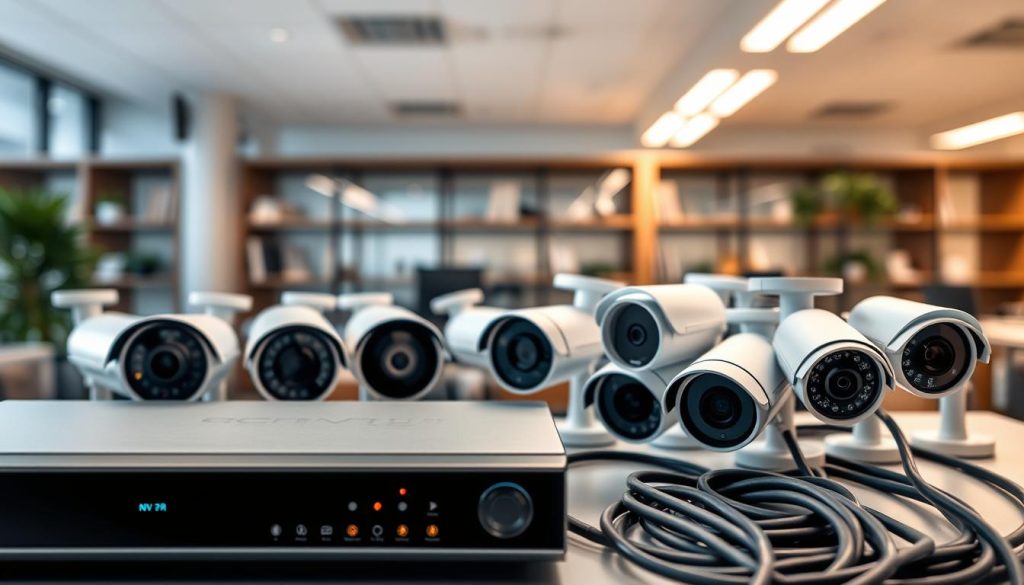
This architecture enables superior image quality and flexible installation options. Understanding these components helps determine if this modern approach suits your security requirements.
IP Cameras: Advanced Features and Functionality
Modern IP cameras contain built-in chipsets that encode and process video data internally. These digital devices capture high-resolution footage up to 4K quality.
Advanced features include native audio recording and transmission capabilities. Smart functionalities like facial recognition and license plate detection elevate security monitoring.
Video analytics provide intelligent motion detection and behavioral analysis. These cameras offer greater functionality than analog alternatives but command higher prices.
Ethernet Cables and Wireless Connectivity
Wired NVR setups typically use Cat5e or Cat6 Ethernet cables for connectivity. These cables support Power over Ethernet technology that delivers both power and data through a single connection.
Ethernet cables are thinner and more flexible than coaxial alternatives. Maximum reliable length reaches 328 feet per segment, though network switches can extend this range.
Wireless systems utilize WiFi for data transmission, eliminating cable requirements. This approach demands stable network connectivity for consistent performance.
“Power over Ethernet revolutionizes installation by combining power and data transmission in one cable.”
NVR Recorder: Storage and Remote Viewing
The central recorder unit focuses primarily on storage and accessibility functions. Since cameras process video internally, the recorder manages already-encoded digital data.
These units connect to cameras over network connections rather than direct physical links. Cloud storage options provide additional backup and accessibility features.
Remote viewing capabilities enable monitoring from internet-connected devices worldwide. This accessibility surpasses traditional DVR system limitations.
Pros and Cons of NVR Systems
Advantages include superior image and audio quality through digital transmission. Power over Ethernet simplifies installation by combining power and data delivery.
Wireless camera support offers placement flexibility without cable constraints. Scalability allows adding cameras anywhere on the network infrastructure.
Advanced analytics and remote viewing capabilities provide modern security features. This technology represents future-proof investment for growing security needs.
Disadvantages involve higher upfront costs for IP cameras and recording equipment. Compatibility requirements often necessitate brand-specific matching between components.
Network infrastructure and internet bandwidth demands can impact performance. Cybersecurity vulnerabilities require proper network protection measures.
Setup and maintenance complexity exceeds traditional analog system requirements. Professional installation often becomes necessary for optimal performance.
Ethernet cables cost less and remain more available than coaxial alternatives. Wireless options reduce wiring needs but depend on WiFi stability.
These systems suit users prioritizing image quality and flexibility over budget constraints. They represent ideal solutions for large properties and advanced security requirements.
Properly implemented NVR setups justify their cost through superior performance and modern features. They establish the current standard for comprehensive property protection.
Key Comparison Factors: DVR vs NVR
Several critical factors differentiate these surveillance recording technologies for residential and commercial applications. Understanding these distinctions helps Singapore property owners select the optimal solution for their specific security requirements.
Camera Technology: Analog vs IP
Traditional systems utilize analog cameras that transmit raw video signals. These devices offer basic functionality at lower cost points.
Modern IP cameras process footage internally before transmission. They support higher resolution and advanced features like audio recording.
Smart analytics capabilities distinguish IP camera technology. Facial recognition and license plate detection enhance security monitoring.
Cabling Requirements: Coaxial vs Ethernet
Coaxial cables provide stable signal transmission but require separate power lines. Their bulky nature complicates installation in tight spaces.
Ethernet cables deliver both power and data through single connections. Power over Ethernet technology simplifies setup and reduces cable clutter.
Wireless options eliminate physical cabling requirements entirely. They depend on robust network connectivity for consistent performance.
“Ethernet infrastructure provides greater installation flexibility while reducing overall system complexity.”
Video Processing: Recorder vs Camera
Traditional systems process video at the central recorder unit. This centralized approach can limit overall system performance.
Modern technology processes footage at each camera location. Distributed processing enables higher efficiency and advanced functionality.
Decentralized processing reduces single points of failure. System reliability improves through distributed intelligence architecture.
Installation Complexity and Flexibility
Traditional setups require direct physical connections between components. Camera placement faces constraints due to cable length limitations.
Network-based systems offer superior placement flexibility. Cameras can connect anywhere within network infrastructure boundaries.
Existing coaxial infrastructure favors traditional system upgrades. New constructions typically benefit from modern network-based installations.
Singapore businesses with legacy wiring might prefer traditional systems for cost-effective upgrades. New residential projects often choose network-based solutions for future-proofing.
Camera compatibility varies between system types. Traditional setups work with various analog cameras, while network systems often require brand-matched IP cameras.
These factors collectively determine which technology suits specific security needs. Budget considerations, existing infrastructure, and performance requirements guide final selection.
Performance and Quality Assessment
Evaluating surveillance system performance reveals significant distinctions between recording technologies. These differences impact daily operation and long-term satisfaction with your security investment.
Four key areas demonstrate how these systems perform in real-world Singaporean environments. Understanding these performance metrics helps property owners make informed decisions.
Video Resolution and Image Quality
Traditional dvr systems typically deliver lower resolution footage due to analog transmission limitations. Most analog cameras provide TVL resolution rather than true high-definition quality.
Recent analog HD advancements have narrowed the resolution gap somewhat. However, these improvements cannot match the clarity of modern digital solutions.
Modern nvr systems capture superior digital video quality, often reaching 4K resolution. This enhanced clarity proves crucial for identification purposes and detailed monitoring.
Digital transmission preserves image integrity without signal degradation. The difference becomes especially noticeable when examining fine details or license plates.
Audio Capabilities and Integration
Traditional setups lack native audio support through standard coaxial cables. Adding audio requires additional RCA connections or specialized audio-over-coax technology.
These solutions typically support only limited audio channels. Most installations forego audio entirely due to the complexity and cost.
Modern network video solutions natively transmit audio over Ethernet or wireless connections. Every camera with microphone capability can record sound seamlessly.
This integrated approach enhances surveillance comprehensiveness without extra wiring. Audio recording becomes a standard feature rather than an expensive add-on.
“Superior audio integration transforms surveillance from simple monitoring to comprehensive security documentation.”
Remote Viewing and Accessibility
Traditional dvr system configurations offer basic remote access capabilities. These often require complex setup procedures and direct network connections.
Accessing footage remotely typically involves computer-based applications. Mobile viewing remains limited and often unreliable.
Modern nvr systems excel at remote viewing through internet networks. Users can access live feeds and recorded footage from anywhere worldwide.
Smartphone applications provide intuitive interfaces for real-time monitoring. This accessibility supports modern lifestyles and business operations perfectly.
For Singaporean businesses requiring off-site monitoring, this capability proves invaluable. Property managers can respond immediately to security events regardless of location.
System Reliability and Maintenance
Traditional configurations demonstrate reliability for straightforward setups. They operate with minimal network dependencies, reducing potential failure points.
Maintenance challenges emerge from cable management and limited scalability. Expanding these systems often requires significant additional infrastructure.
Signal degradation over long distances presents another reliability concern. Coaxial cables perform best within their specified length limitations.
Modern network video recorder solutions avoid analog signal loss through digital transmission. Their reliability depends heavily on network stability and proper configuration.
Regular firmware updates and cybersecurity measures prevent potential vulnerabilities. Professional installation often ensures optimal performance and longevity.
Both security approaches offer reliable operation when properly implemented. The choice depends on specific performance requirements and existing infrastructure.
Performance assessments generally favor modern nvr systems for advanced users. Traditional dvr systems remain reliable choices for basic, budget-friendly applications.
For detailed guidance on selecting the right system for your specific needs, explore our comprehensive guide on DVR and NVR differences.
Choosing the Right System for Your Needs
Selecting the best security solution requires evaluating your specific situation. Property size, budget, and existing infrastructure play key roles in this decision.
DVR systems work well for smaller properties with tight budgets. They integrate easily with existing coaxial cables and analog cameras.
NVR systems suit larger properties needing high-resolution footage. They offer superior remote viewing and advanced video analytics.
Consider your long-term security needs and installation preferences. Both systems provide reliable protection for Singaporean homes and businesses.
There’s no universal answer—your ideal choice depends on individual circumstances. Carefully assess all factors before making your final decision.
FAQ
Which system offers better video quality, DVR or NVR?
NVR systems generally provide superior video quality. They support high-resolution IP cameras, including 4K and beyond, while DVR systems are limited by analog camera technology and coaxial cable bandwidth.
Can I use my existing analog cameras with an NVR system?
No, NVR systems require IP cameras. However, hybrid recorders exist that support both analog and IP cameras, offering a transitional solution for upgrading security systems.
Are NVR systems more difficult to install than DVR systems?
NVR installation offers greater flexibility, often supporting Power over Ethernet and wireless options. DVR systems require direct coaxial cable runs, which can be more restrictive during setup.
Do both systems support remote viewing capabilities?
Yes, both DVR and NVR systems support remote viewing. However, NVR systems typically provide more seamless integration with mobile apps and web interfaces due to their network-native design.
Which system provides better audio recording features?
NVR systems generally offer superior audio capabilities. Most IP cameras include built-in microphones and support audio over Ethernet, while analog cameras often require separate audio connections.
How does video storage differ between DVR and NVR systems?
Both systems use hard drives for storage, but NVRs often support more advanced storage options, including cloud integration and network-attached storage solutions, providing greater flexibility.
Are NVR systems more expensive than DVR systems?
Initially, NVR systems typically have higher equipment costs due to advanced IP camera technology. However, installation costs may be lower, and the long-term value often justifies the investment for modern security needs.


