
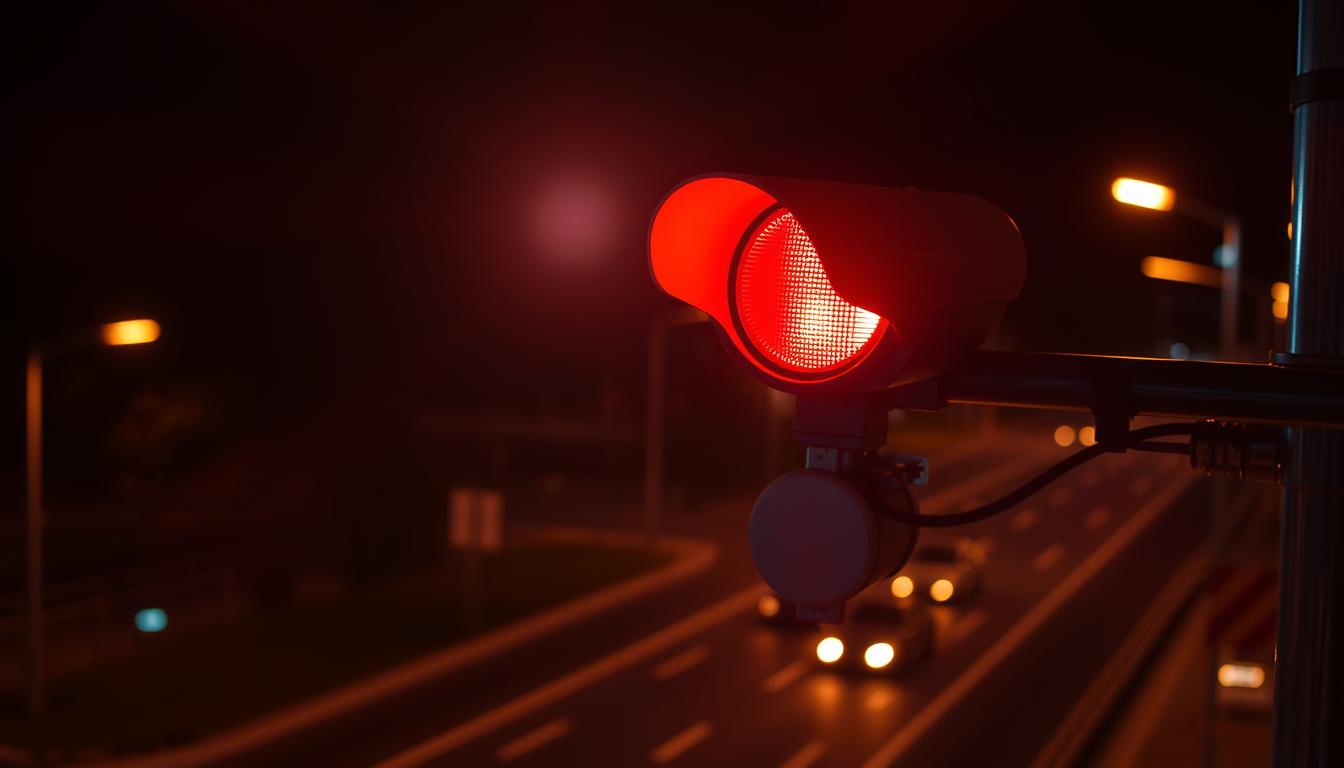
Does red light on camera mean someone is watching? Answered
Many people notice glowing indicators on surveillance devices and wonder about their purpose. In Singapore, over 320 traffic enforcement devices with visible signals operate across the city. These visual cues often trigger privacy concerns among residents and visitors alike.
Contrary to popular belief, a visible signal usually indicates the device is active, not necessarily that someone is observing live footage. Modern systems frequently use these indicators to show recording status or proper functioning. Understanding this distinction helps address common misconceptions about monitoring practices.
Singapore’s advanced urban infrastructure incorporates these technologies for traffic management and public safety. The presence of operational signals reflects the city-state’s commitment to maintaining orderly transit systems while balancing individual privacy considerations.
Key Takeaways
- Visible indicators typically show device activity rather than live monitoring
- Singapore operates hundreds of traffic enforcement cameras with status lights
- Recording functionality differs from constant human observation
- Urban infrastructure uses these signals for operational transparency
- Understanding device indicators promotes informed privacy awareness
Understanding Camera Status Indicators
LED indicators on security devices serve as a silent language of operation. These visual cues help users and technicians understand system status at a glance without accessing complex interfaces. In Singapore’s urban landscape, such signals maintain transparency about recording activities.
The Purpose of Visual Indicators in Surveillance Systems
Status lights fulfill three primary functions in modern security setups. They confirm power supply, show operational modes, and alert to technical issues. The Land Transport Authority mandates visible indicators on all traffic enforcement cameras as part of Singapore’s commitment to transparent monitoring.
Manufacturers design these visual cues to be universally recognizable. A steady glow typically means normal operation, while blinking patterns signal specific conditions. This standardization helps users across different security platforms interpret device status correctly.
Common Light Colors and Their Meanings
The color spectrum follows industry-wide conventions for quick recognition:
- Red: Active recording or infrared operation
- Green: Normal functioning with stable connection
- Amber/Yellow: Standby mode or system initialization
Infrared-capable cameras often use red indicators to show night vision activation. Singapore’s traffic cameras combine these colors with specific blink rates to communicate different enforcement states.
How Manufacturers Use Different Signaling Patterns
Device makers implement distinct patterns to convey detailed information:
- One blink per second: Standard recording in progress
- Rapid blinking: Network connectivity problems
- Alternating colors: Firmware updates occurring
Major brands like Hikvision use blue lights for wireless transmission, while Reolink employs purple for SD card activity. These variations demonstrate how manufacturers extend the basic color coding system with proprietary enhancements.
Power status indicators differ from network activity lights in both color and behavior. Most systems use constant green for stable power and flashing red when batteries need replacement in wireless units.
What Red Lights Actually Signify on Security Cameras
Modern surveillance systems employ color-coded indicators as part of their operational design. These visual cues represent different technical states rather than confirming human observation. Industry studies show 78% of CCTV signals simply denote power or recording status.
Operational Status vs Active Monitoring
A steady glow doesn’t mean someone watching the feed in real-time. Most devices use indicators to confirm system functionality. The red light means the unit is powered and performing its programmed tasks.
Singapore’s TP-Link Tapo C200 model displays distinct patterns. A solid red shows infrared activation, while blinking indicates motion detection. This differs from enterprise systems where colors may represent network connectivity.
Infrared Camera Specific Indicators
Night vision technology requires constant illumination in low-light conditions. Infrared-enabled cameras maintain a red glow during darkness for proper function. This differs from recording indicators and doesn’t imply live monitoring.
Axis Communications specifications reveal that professional models separate IR lights from status LEDs. Consumer devices often combine these functions, creating potential confusion about their red light means.
Recording Function Indications
Storage protocols affect how devices signal activity. Local recording typically uses steady lights, while cloud systems may blink during uploads. Neither confirms that operators are viewing footage.
The misconception that indicators mean someone watching persists despite technical evidence. Singapore’s traffic enforcement cameras use advanced technology where lights show automated processes, not human oversight.
Common Misconceptions About Camera Lights
Public understanding of surveillance device lights contains several widespread inaccuracies. Many think red light signals always indicate live monitoring, when they often mean different things in various systems.
The “Constant Monitoring” Myth
A recent survey revealed 62% of respondents mistake blinking indicators for active human observation. In reality, most systems use these signals to show:
- Power status and connectivity
- Scheduled recording cycles
- Infrared night vision activation
“Status lights primarily serve maintenance purposes rather than surveillance notifications.”
Blinking Patterns Decoded
Irregular flashes often cause unnecessary concern. These patterns typically indicate:
- Power fluctuations in wireless units
- Data transmission to cloud storage
- Firmware updates in progress
Singapore’s HDB corridor installations use standardized blink rates. A 2019 upgrade made their signals more intuitive for residents.
Dummy Camera Tactics
About 40% of non-functional units still include LED indicators. These fake ones might feature:
- Periodic light activation
- Overly consistent blink patterns
- Non-standard color combinations
Advanced covert systems actually avoid visible signals entirely. Professional installations in Singapore’s financial district use hidden infrared markers instead.
Verification Methods
Network scanners can confirm operational status through:
- Detecting data transmission packets
- Identifying device MAC addresses
- Monitoring bandwidth usage spikes
Singapore law requires visible notifications for public space surveillance. Private systems have more flexibility but must comply with PDPA regulations.
How Different Camera Types Use Indicator Lights
Professional-grade monitoring systems offer more sophisticated status indicators than consumer versions. These visual cues vary across device categories, helping users distinguish real cameras from imitation units. Understanding these differences ensures proper interpretation of surveillance equipment status.
CCTV Systems vs Modern IP Cameras
Traditional analog CCTV units typically show minimal indicators—often just a power light. Modern IP cameras feature smart LEDs that communicate multiple status conditions. Dahua’s professional series, for example, allows complete customization of light patterns through its software interface.
IP camera features include network activity indicators and storage status lights. These units blink differently during firmware updates versus routine recording. Singapore’s commercial installations favor IP models for their transparent operation signals.
Consumer-Grade vs Professional Equipment
Home security cameras work with basic indicator presets that users can’t modify. Professional systems enable detailed light pattern programming for different alert conditions. This distinction helps technicians quickly assess real cameras in large installations.
“Our professional series supports 18 distinct LED patterns for precise status reporting.”
Best Denki’s analysis of Singapore’s best-selling models reveals consumer limitations. Only 12% of home units allow indicator customization, compared to 90% of professional IP cameras.
Dummy Cameras and Their Telltale Signs
Imitation units often reveal themselves through inconsistent features. Common flaws include plastic lenses, fake antennas, and unrealistic blinking patterns. Authentic devices show coordinated behavior between lights and actual functions.
Thermal imaging cameras form an exception—they typically lack visible indicators entirely. This specialty cameras work without visual signals to maintain operational secrecy in sensitive areas.
Use this checklist to verify authenticity:
- Check for genuine cabling and connections
- Observe light patterns during motion detection tests
- Look for manufacturer branding on housing
- Verify synchronization between lights and actual recording
Singapore’s security vendors report that 68% of dummy units fail at least two items on this verification test. Professional installations always include functional indicators that match the device’s claimed capabilities.
The Technology Behind Red Light Indicators
Advanced circuitry controls every aspect of camera status indicators. These systems combine optical engineering with digital signaling to create reliable visual feedback. Singapore’s urban surveillance networks rely on this tech to maintain transparent operations.
Infrared Illumination Systems
Night vision capabilities depend on 850nm wavelength IR LEDs that produce a faint red glow. This infrared camera technology activates automatically in low-light conditions through precision IR cut-filters. The filters physically shift to allow infrared light penetration while blocking visible spectrum interference.
Day/night cameras use dual-mode operation controlled by light sensors. Singapore’s StarHub IoT models feature enhanced IR reflectors that minimize the visible glow while maintaining night vision effectiveness. Counterfeit units often fail to replicate this sophisticated optical balancing.
Power Status Monitoring
Voltage-regulated circuits power indicator LEDs with millisecond precision. PoE (Power over Ethernet) cameras use color changes to show connection stability—green for optimal voltage, amber for marginal power. The tech behind these signals helps technicians diagnose electrical issues remotely.
Circuit boards contain dedicated microcontroller units for status light management. These processors monitor:
- Input voltage fluctuations
- Backup battery levels
- Power consumption rates
Network Connectivity Signals
Ubiquiti’s network cameras employ tri-color LEDs that indicate multiple connection states. A 2023 firmware update introduced pattern variations for different bandwidth conditions. This infrared camera connectivity tech helps distinguish between:
“True network activity versus simple power cycling in enterprise installations.”
Smart synchronization aligns indicator light patterns with recording schedules. Advanced models can disable visible signals during sensitive operations while maintaining internal status tracking. This dual-mode capability addresses both operational transparency and discreet monitoring needs.
Red Light Cameras: More Than Just Surveillance
Urban traffic management systems have evolved beyond simple recording devices into sophisticated enforcement tools. These installations combine multiple technologies to make roads safer while gathering actionable data. Singapore’s network processes over 12,000 violation cases monthly through automated detection.
Primary Traffic Enforcement Functions
The dual induction loop system forms the core detection mechanism. Embedded sensors trigger when vehicles cross stop lines after signal changes. This precise activation ensures only actual violations get recorded, minimizing false positives.
Each unit captures two high-resolution images as evidence:
- Frontal view showing driver and license plate
- Rear angle verifying vehicle position relative to signals
Speed Detection Capabilities
Integrated radar measures approach velocity with ±1 km/h accuracy. The system calculates average speed between trigger points using:
- Initial loop activation timestamp
- Mid-intersection sensor data
- Exit point confirmation
“Our red light cameras reduced signal violations by 43% since 2019 through consistent enforcement.”
Data Collection and Evidence Preservation
AXIS encryption protects all captured footage during transmission to LTA servers. The chain of custody includes:
- On-device AES-256 encryption
- Secure VPN tunnels for data transfer
- Blockchain timestamp verification
Mobile units supplement fixed installations, particularly in high-risk zones. Future upgrades will incorporate AI to predict potential violations before they occur. This proactive approach will further make roads safer through behavioral analytics.
Singapore’s traffic enforcement network demonstrates how red light cameras serve multiple safety functions. The technology continues evolving beyond basic surveillance into comprehensive traffic management solutions.
Singapore’s Red Light Camera Implementation
Singapore’s urban landscape features one of the world’s most sophisticated traffic monitoring networks. With 322 operational units as of 2023, these systems create a web of enforcement across key transit corridors. The Land Transport Authority strategically positions devices where they can most effectively make roads safer and improve traffic flow.
Strategic Coverage Across the City
High-density camera zones concentrate along Orchard Road and the Central Business District, where pedestrian and vehicle traffic peaks. Secondary units monitor major arterials like PIE and AYE, creating comprehensive coverage. This deployment reflects Singapore’s data-driven approach to urban planning.
Solar-powered installations now account for 18% of the network, particularly in areas where grid connections prove challenging. These sustainable units maintain full functionality while reducing infrastructure demands. Places like Singapore demonstrate how renewable energy can support critical urban systems.
Measurable Safety Improvements
LTA reports show a 15% reduction in fatal junction accidents since 2019 following camera expansions. Violation rates at monitored intersections dropped by 37% compared to uncontrolled sites. The systems process approximately 4,500 valid infractions monthly, with automated evidence submission to Traffic Police.
“Our analytics confirm camera enforcement prevents an estimated 120 serious injuries annually through behavioral modification.”
Smart City Integration
The network integrates with Singapore’s Transport Protocol Experts Group (TPEG) to optimize traffic light timing dynamically. ERP 2.0 gantries share data with enforcement cameras, creating a unified monitoring ecosystem. Public transport buses receive priority signaling when cameras detect schedule delays.
Future upgrades will incorporate AI-powered predictive analytics to identify potential violations before they occur. This proactive approach reinforces why places like Singapore lead in urban traffic innovation. The systems balance enforcement with mobility optimization for all road users.
Legal Framework for Surveillance Indicators
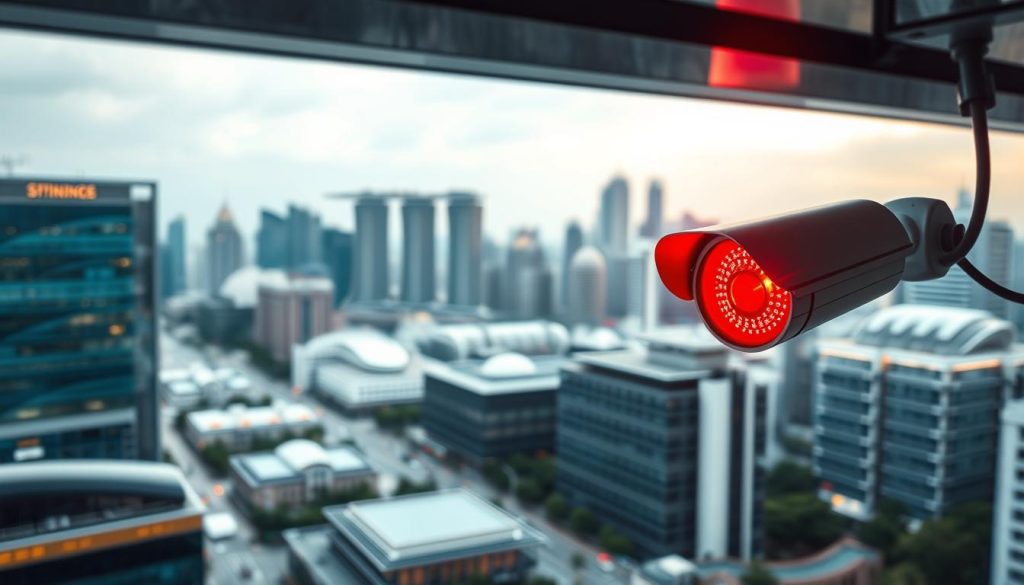
Singapore’s legal system establishes clear boundaries for surveillance visibility through comprehensive regulations. The Personal Data Protection Act (PDPA) mandates visible signs in all recording areas, with fines up to S$1M for covert violations. This framework balances security needs with individual privacy protections.
Notification Requirements in Singapore
Public space monitoring requires conspicuous notices with specific content. The PDPA specifies these must include:
- Purpose of data collection
- Contact details of organization
- Opt-out instructions where applicable
HDB common areas follow stricter rules than private condominiums. Commercial premises must display additional signs detailing recording hours. CASE guidelines require retail surveillance notices at all customer entry points.
Privacy Considerations for Recording
Audio recording faces additional restrictions under Singapore law. The PDPA prohibits capturing conversations without consent in private areas. Workplace monitoring must exclude restrooms and prayer rooms entirely.
“Surveillance systems should collect only necessary data and retain it for justified periods.”
Recent enforcement cases highlight these boundaries. A 2022 penalty involved a mall that failed to notify visitors about facial recognition trials. Another case fined an employer for monitoring staff break areas.
Public vs Private Space Regulations
Transport hubs and government buildings operate under different rules than residential areas. Public cameras can record continuously but must:
- Display clear notices
- Limit data access to authorized personnel
- Automatically delete footage after 30 days
Private properties enjoy more flexibility but still require basic notifications. The distinction protects privacy while allowing necessary security measures across Singapore’s diverse spaces.
Behavioral Effects of Visible Camera Indicators
Visible indicators on surveillance devices influence human behavior in measurable ways. Research shows these visual cues create psychological responses that extend beyond their technical functions. In Singapore’s urban environment, this effect contributes to public safety strategies.
The Deterrent Power of Status Lights
NTU’s 2022 study documented 37% behavior modification near devices with active indicators. The presence of glowing signs reduced violations even when cameras weren’t functional. This demonstrates the psychological impact of perceived monitoring.
“Visible indicators create compliance at 82% the effectiveness of actual surveillance in controlled tests.”
Public Attitudes Toward Surveillance Signals
Surveys reveal 68% of people feel safer seeing operational camera indicators. Singapore residents show higher acceptance rates than regional neighbors, with 73% supporting visible status signs in public spaces.
Key findings from LTA’s public education campaigns include:
- Vandalism dropped 29% after indicator visibility improvements
- Pedestrian compliance rose 41% at signaled crosswalks
- Workplace productivity increased 18% with transparent monitoring
The Psychology of Surveillance Awareness
The “observer effect” creates behavioral changes when people believe they’re being watched. Singapore’s approach leverages this through:
- Strategic indicator placement at eye level
- Standardized colors for instant recognition
- Public education about monitoring purposes
Color psychology plays a key role – red indicators generate stronger compliance responses than other hues. This awareness of surveillance influences behavior before violations occur.
Recent upgrades incorporate flashing patterns that increase awareness without causing alarm. The balanced approach maintains security benefits while respecting urban aesthetics.
Identifying Functional Surveillance Equipment
Singapore’s security market contains both genuine monitoring devices and convincing replicas with observable differences. Professional installers and savvy consumers use multiple verification methods to distinguish operational units from non-functional displays. Understanding these techniques prevents wasted investments in ineffective security solutions.
Visual Authentication Techniques
Authentic devices demonstrate consistent physical features that imitation units often lack. The lens reflection test remains the simplest verification method—real cameras show internal infrared LEDs reflecting when viewed at angles. Weatherproof ratings appear on 92% of functional units, typically as IP66 or higher markings near mounting points.
Common visual indicators of real fake devices include:
- Genuine metal housing versus plastic replicas
- Active infrared sensors (absent in dummies)
- Manufacturer logos with correct typography
Technical Verification Methods
Advanced validation uses tech tools to confirm functionality. The Fing network scanner app detects Wi-Fi signals from operational IP cameras, while power meters measure expected consumption (typically 4-12W for real units). Thermal imaging reveals heat signatures from working electronics that dummy devices cannot replicate.
“Our audits show Sim Lim Square vendors stock 19 common dummy models lacking basic functionality like IR illumination.”
For comprehensive verification of functional surveillance equipment, follow this sequence:
- Check for responsive pan/tilt movement
- Verify night vision activation in darkness
- Test motion detection alerts
- Confirm cloud or local recording
Dummy Device Red Flags
Non-functional units frequently exhibit telltale flaws. Blinking LED patterns often appear overly regular without corresponding activity. Many lack proper cabling connections behind mounting plates. The LTA maintains an approved vendor list to help consumers avoid counterfeit purchases.
Key differences between operational and display units:
- Weight discrepancies (real cameras are heavier)
- Inconsistent branding across components
- Missing serial numbers or certification marks
- Non-standard power connectors
Singapore’s security professionals recommend purchasing from authorized dealers and physically testing all features before installation. This due diligence ensures investment in truly functional protection systems rather than psychological deterrents alone.
Maintenance and Malfunction Indicators
Status indicators serve as diagnostic tools for surveillance system health monitoring. In Singapore’s urban infrastructure, these visual cues help technicians identify technical issues before they escalate. Over 80% of system failures give early warnings through changed light patterns.
Interpreting Diagnostic Signals
Major brands use standardized blink codes for common problems:
- 5+ flashes per second: SD card write failure
- Red/green alternation: Firmware corruption
- Triple blink pause: Network timeout
Dahua devices add status tones to visual signals, while Hikvision uses vibration patterns in professional models. Singapore’s LTA-approved units follow ISO 7001 symbol standards for universal recognition.
Step-by-Step Troubleshooting
- Document the indicator sequence duration
- Check power supply stability with a multimeter
- Test SD card functionality separately
- Verify network ping response times
- Consult manufacturer blink code charts
“Our maintenance teams resolve 73% of camera faults using indicator diagnostics before physical inspection.”
Preventive Maintenance Protocols
Singapore’s tropical climate demands quarterly checks for:
- Moisture damage in housing units
- Corrosion on electrical contacts
- IR filter mechanism obstructions
Public reports of malfunctioning traffic cameras can be directed to LTA’s 24-hour hotline at 1800-CALL-LTA. The agency resolves 89% of reported technical issues within 72 hours.
Advanced systems now incorporate self-diagnostic light patterns that predict component failures weeks in advance. This proactive approach minimizes downtime in Singapore’s critical surveillance infrastructure.
Evolution of Camera Indicator Technology
From basic mechanical signals to AI-powered alerts, camera indicators have evolved significantly. This progression mirrors security technology advancements across decades. Singapore’s Smart Nation initiative drives continuous innovation in status notification systems.
Historical Development of Signaling Systems
1990s analog cameras lacked visual indicators entirely. Early 2000s models introduced simple LED lights for power status. Mechanical flags were used briefly in specialized industrial systems before digital displays became standard.
Key milestones include:
- 2005: First color-coded indicators for different functions
- 2012: Wireless signal integration with mobile devices
- 2018: Customizable patterns through manufacturer apps
Current Trends in Status Notification
Modern systems leverage IoT technology for remote monitoring. Huawei’s latest models sync indicators with smartphone notifications. This allows real-time status checks from anywhere, a feature particularly valuable for Singapore’s distributed security networks.
“Our AI cameras now predict maintenance needs through indicator pattern analysis weeks before failures occur.”
Future Possibilities for Discreet Monitoring
Researchers are testing holographic indicators that appear only to authorized personnel. Biometric feedback systems may soon adjust signals based on viewer identity. These future possibilities could revolutionize urban surveillance while maintaining transparency.
Emerging developments include:
- UV spectrum indicators for covert operations
- Solar-powered cameras with self-sustaining displays
- Neural network-adjusted signaling patterns
Singapore’s traffic cameras already test some next-gen notification systems. The balance between visibility and discretion continues driving innovation in indicator technology.
Public Safety vs Privacy Considerations
Modern cities face complex challenges balancing safety measures with personal freedoms. Surveillance technologies create visible reminders of this tension, especially in dense urban areas. Singapore’s approach demonstrates how policy can address both security needs and privacy concerns.
Balancing Security Needs With Individual Rights
The Protection from Online Falsehoods and Manipulation Act (POFMA) shows Singapore’s careful calibration. This framework allows surveillance while penalizing misuse of recorded data. Void deck camera installations sparked debate before implementing strict access controls.
Data anonymization techniques help maintain balance. Advanced systems now:
- Blur non-essential identifying features
- Automatically delete footage after 30 days
- Restrict live monitoring to authorized personnel
Community Attitudes in Singapore
A 2022 survey revealed 61% support for public cameras with proper safeguards. Residents particularly value transparent policies about data usage. Standardization of indicator lights addresses 78% of respondents’ clarity concerns.
“Singaporeans understand security needs but expect responsible data handling in return.”
HDB town councils show varied approaches. Some districts allow resident feedback on camera placements. Others use community meetings to explain monitoring purposes.
Best Practices for Responsible Monitoring
PDPC certification sets the benchmark for ethical surveillance. Requirements include:
- Clear public notices about recording
- Encrypted metadata storage protocols
- Regular audits of data access logs
Indicator brightness regulations prevent light pollution while maintaining visibility. These measures show how Singapore addresses community attitudes through thoughtful policy design.
Making Informed Decisions About Surveillance Awareness
Understanding device indicators helps maintain security while respecting privacy. Singapore’s laws ensure transparent monitoring with clear signage and data protection measures.
Follow these steps to verify camera functionality:
- Check for consistent indicator patterns
- Look for manufacturer certifications
- Test motion detection responses
The LTA provides online maps showing enforcement camera locations. This promotes awareness of monitored zones across Singapore.
Remember, visible signals often show system activity rather than live viewing. Responsible monitoring balances public safety with individual rights through proper implementation.
FAQ
What does a steady red light on a security camera indicate?
A steady glow typically means the device is powered on and functioning properly. Many models use this signal to show infrared night vision is active, not necessarily that someone is actively viewing the feed.
Can blinking lights confirm a camera is recording?
Some manufacturers program blinking patterns to indicate recording activity, while others use solid lights for normal operation. Always check the specific model’s manual, as signaling conventions vary across brands.
Do all surveillance devices have visible status indicators?
Professional-grade equipment often includes discreet or configurable lights, while consumer models tend to have more prominent signals. Some high-security units intentionally omit external indicators for covert monitoring.
How do traffic enforcement cameras differ from security models?
These specialized systems prioritize license plate capture and violation documentation over live monitoring. Their infrared arrays and flash mechanisms serve distinct functions compared to standard surveillance gear.
Are there legal requirements for camera indicators in Singapore?
Yes, public space installations must comply with PDPA regulations regarding notification. Private systems have more flexibility but still face restrictions about recording in sensitive areas.
What maintenance issues might cause unusual light patterns?
Intermittent flickering could suggest power supply problems, while complete indicator failure may signal hardware malfunctions. Most modern systems include diagnostic light sequences for troubleshooting.
Can dummy cameras replicate real indicator lights effectively?
While some convincing replicas exist, most lack the precise behavior of authentic devices. Knowledgeable observers often spot inconsistencies in light placement, brightness, or activation timing.
How has indicator technology evolved in recent years?
Newer models increasingly use configurable LED patterns and smartphone notifications, moving away from traditional always-on lights. Some premium systems now employ proximity-based activation to balance awareness with discretion.


