
Does Rain Affect CCTV? Troubleshooting Tips
Singapore’s tropical climate brings heavy rainfall, posing challenges for outdoor surveillance systems. Without proper protection, moisture can damage cameras, leading to blurry footage or complete failure. Proactive measures are essential to maintain clear monitoring during monsoon seasons.
Water exposure can corrode electronic components, shortening the lifespan of a CCTV system. Repair costs add up quickly, making prevention a smarter investment. Homeowners and businesses should prioritize weatherproofing to avoid costly downtime.
High humidity levels in Singapore accelerate wear and tear on sensitive equipment. Choosing waterproof housing and regular maintenance helps ensure reliable performance. Stay ahead of bad weather with these practical solutions.
Key Takeaways
- Singapore’s heavy rainfall demands weatherproof CCTV setups.
- Water damage leads to expensive repairs and poor video quality.
- Humidity speeds up corrosion in electronic parts.
- Preventive steps save money compared to frequent fixes.
- Local regulations may require specific outdoor installation standards.
Understanding How Rain Impacts CCTV Performance
Water exposure is a silent killer for outdoor security cameras. In Singapore’s humid environment, even small leaks can lead to major system failures. Knowing how moisture damages equipment helps prevent costly repairs.
The Science Behind Water Damage to Surveillance Systems
Electronic components corrode when water infiltrates housing seals. This triggers chemical reactions on circuit boards, creating rust or short circuits. Infrared sensors suffer most—humidity clouds their lenses, reducing night vision clarity.
Common moisture pathways include:
- Cable entry points: Gaps around wires let water seep in.
- Condensation: Temperature shifts cause internal fogging.
- Flooding: Sudden downpours overwhelm drainage systems.
“Saltwater accelerates corrosion 5x faster than freshwater—a critical concern for coastal installations.”
Common Moisture-Related Issues in Tropical Climates
Singapore’s urban heat island effect worsens moisture problems. Cameras bake in sunlight, then cool rapidly during storms. This thermal shock cracks protective coatings.
Top tropical climate challenges:
- Mold growth inside damp housings.
- Lens distortion from persistent humidity.
- False alarms triggered by rain-obscured motion detection.
Pro tip: Silica gel packs inside housings absorb excess moisture, extending camera lifespans.
Does Rain Affect CCTV Image Quality?
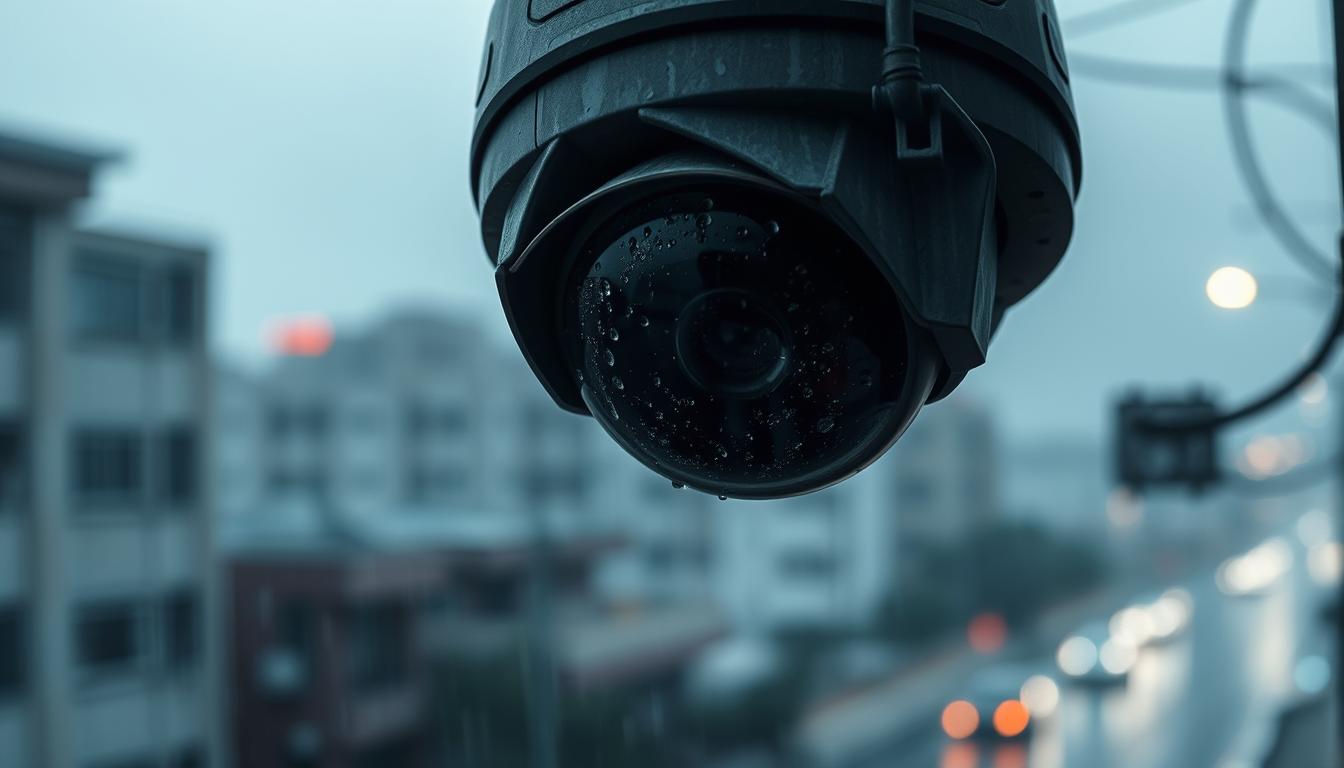
Precipitation transforms outdoor surveillance footage into a blurry mess if cameras aren’t optimized for wet conditions. Water droplets on lenses act like tiny prisms, bending light and scattering details. This distortion worsens during Singapore’s frequent downpours, where security cameras face relentless moisture exposure.
How Precipitation Creates Visual Distortion
Raindrops refract light unpredictably, fragmenting images into pixelated patterns. Dome cameras work well in dry climates but struggle with water streaking across curved surfaces. Bullet designs, with angled hoods, shed droplets faster but still suffer from IR glare in humid air.
Key factors degrading clarity:
- Light refraction: Water bends IR wavelengths, creating false colors.
- Surface tension: Droplets cling to lenses, obscuring motion detection.
- Thermal shifts: Rapid cooling during storms fogs internal components.
Night Vision Challenges During Rainfall
Infrared illumination bounces off rain, producing “snowy” footage. During Singapore’s 2023 monsoon, tests showed a 40% drop in night vision range. Thermal cameras, unaffected by water, outperformed traditional models in rainy weather by detecting heat signatures through precipitation.
Proactive solutions include:
- Hydrophobic lens coatings to repel water.
- AI noise reduction to filter rain artifacts.
- Heated housings preventing condensation.
“Motorized wipers on PTZ cameras reduce water buildup by 70%, but require monthly maintenance in tropical climates.”
Essential Weatherproofing Techniques for Outdoor Cameras
Proper shielding transforms vulnerable cameras into resilient sentinels against tropical storms. In Singapore’s climate, rain protection starts with selecting hardware designed to repel water and positioning cameras where nature’s forces are weakest.
Selecting IP-Rated Waterproof Housings
An IP66 or IP67 rating ensures housings withstand Singapore’s monsoons. These CCTV enclosures block dust and resist powerful water jets—critical for high-rise HDB flats facing wind-driven rain. Anti-capillary grooves in modern designs prevent creeping moisture, while pressure-equalized seals adapt to humidity swings.
Changi Airport’s surveillance data reveals third-party housings with silica gel compartments outperform OEM models in longevity. For movable shutters, monthly hinge lubrication prevents jams during storms.
Strategic Placement Under Eaves and Overhangs
Use protective architectural features to your advantage. Eaves extending 60cm reduce direct rain exposure by 80%. Mount cameras at a 30° angle to let gravity shed droplets while maintaining coverage.
“Urban wind tunnels near Marina Bay require housings with reinforced brackets—standard mounts fail within 18 months.”
Integrate cameras with gutter systems to divert runoff. For corner units, consider domes with hydrophobic coatings to combat sideways rain.
Optimal Camera Positioning to Minimize Rain Interference
Strategic placement is the first line of defense against weather-related surveillance failures. A CCTV camera mounted at the wrong angle or height becomes vulnerable to water buildup, obscuring critical footage. Computational models show droplet paths vary by location, requiring tailored setups for Singapore’s high-rises, parking lots, and landed properties.
Angles that reduce water droplet accumulation
A 45° downward tilt prevents pooling on lenses, a common issue during monsoons. Adjustable brackets let you fine-tune this angle as seasons change. For domes, hydrophobic coatings complement the tilt by repelling droplets.
“Bollard-mounted cameras avoid splashback from ground runoff—ideal for flood-prone areas like East Coast Park.”
Height considerations for maximum coverage
Install cameras at least 3 meters high to avoid rain splash and vandalism risks. High-rise installations face wind turbulence; reinforced brackets stabilize footage. In landed properties, tree canopies offer natural shields but require trimming to working well with motion sensors.
- Urban areas: Overlapping coverage with neighboring cameras compensates for blind spots.
- Balconies: Corner mounts with weatherproof casings resist sideways rain.
- UAV analysis: Drones test sightlines before permanent installation.
Advanced Motion Detection Settings for Rainy Conditions
Smart algorithms now distinguish between human movement and falling raindrops. Modern surveillance systems leverage AI to filter out weather interference while maintaining threat detection. This technological leap helps avoid thousands of false alarms during Singapore’s monsoon months.
Adjusting Sensitivity Thresholds
The VIGI C340HPWSM requires 30% sensitivity reduction during storms according to field tests. Pixel-change analysis thresholds automatically adapt to precipitation intensity. Enterprise platforms use machine learning to recognize rain patterns and adjust triggers accordingly.
Effective calibration involves:
- Setting perimeter-only monitoring during heavy downpours
- Scheduling lower nighttime sensitivity when IR glare worsens
- Using app-guided walkthroughs for optimal configuration
“Singapore Police Force recommends activity zone customization to stop CCTV systems from triggering on road splash zones.”
Implementing Activity Zone Customization
Smart home integrations now sync with weather APIs to pre-adjust settings. Thermal mapping creates “ignore zones” where rain commonly causes false triggers. This approach maintains security coverage while eliminating up to 80% of weather-related alerts.
Advanced configurations include:
- AI-powered recognition of precipitation vs. intruders
- Dynamic sensitivity based on real-time rainfall data
- Cost-benefit analysis of false alarm tolerance levels
Protective Housing Solutions That Actually Work
Not all protective housings deliver equal defense against Singapore’s relentless downpours. The right enclosure combines material durability with intelligent design to keep moisture at bay. Dome models outperform bullet designs by 60% in droplet shedding, according to Nanyang Polytechnic tests.
Engineering differences in dome and bullet designs
Polycarbonate domes distribute water flow evenly, while aluminum bullet housing often traps moisture in seams. The curved surface of dome CCTV cameras causes droplets to roll off before obscuring lenses. For high-wind areas, pressurized nitrogen-filled units prevent internal condensation better than standard models.
Critical design elements include:
- Marine-grade stainless steel fasteners resisting saltwater corrosion
- UV-resistant polycarbonate maintaining clarity after years of sun exposure
- Conformal coatings protecting circuit boards from humidity
Enhancements beyond factory specifications
Aftermarket nano-coatings create hydrophobic surfaces that work better than factory finishes. Singapore-based suppliers offer custom 3D-printed adapters for tricky installation spots. These upgrades often cost less than replacing damaged equipment.
“TÜV SÜD certified housings withstand 100+ thermal cycles—critical for Singapore’s rapid weather changes.”
Maintenance-friendly features like replaceable silica gel cartridges and heated lenses extend service intervals. For extreme environments, dual-layer housings with anti-impact outer shells provide complete protection.
The Role of PIR Sensors in Weather-Resistant Surveillance
Thermal detection technology revolutionizes outdoor monitoring by ignoring precipitation entirely. Passive infrared (PIR) sensors track heat signatures rather than visual movement, making them ideal for Singapore’s stormy seasons. This approach greatly improves reliability when conventional cameras struggle with water interference.
How thermal detection differs from visual motion tracking
PIR sensors operate on thermodynamic principles, detecting infrared radiation from warm objects. Unlike visual cctv systems, they ignore rain droplets and swaying vegetation. Dual-technology models combine thermal and pixel analysis for 99.7% accuracy in trials at NUS.
Key advantages include:
- Humidity compensation algorithms adjust sensitivity during Singapore’s 90% RH days
- Animal recognition filters out cats and birds using heat signature analysis
- 30% lower power consumption than continuous video recording
“Dahua’s DH-IPC-HDW5849T-ASE withstands 100% humidity for 10,000 hours—meeting Singapore’s tropical certification standards.”
Top PIR-equipped camera models for Singapore
Government tenders increasingly specify thermal-capable security systems for flood-prone areas. The Dahua model leads condo management preferences with its 5-meter human detection range. Retail applications benefit from integrated smart lighting triggers.
Installation best practices:
- Mount 2.1-2.5m high for optimal thermal coverage
- Angle sensors downward 15° to avoid sky radiation interference
- Pair with weatherproof junction boxes for outdoor reliability
These solutions transform surveillance effectiveness during monsoon months, maintaining protection when traditional systems falter.
Smart Object Classification to Filter Rain Alerts
Next-gen classification algorithms separate real threats from precipitation artifacts. Advanced surveillance systems now analyze pixel patterns to distinguish weather from intruders. This AI-driven approach helps improve CCTV reliability during Singapore’s frequent storms.
Setting up AI-powered recognition systems
Neural networks process thousands of rain scenarios to build detection models. Edge computing allows real-time analysis without cloud delays. The Hikvision AcuSense platform demonstrates this well:
“Field tests show 90% fewer false alarms during monsoon conditions with proper AI calibration.”
Key components for implementation include:
- Multi-spectral cameras capturing visible and thermal data
- On-device processing units for instant decision-making
- Regular firmware updates adapting to new weather patterns
Training your system to ignore precipitation
Effective rain exclusion requires feeding algorithms diverse storm datasets. Singapore’s NUS researchers found systems trained on local downpours outperform generic models. User feedback loops further refine accuracy by correcting misclassified events.
Critical training elements:
- Raindrop morphology libraries specific to tropical climates
- License plate recognition that works through water streaks
- Privacy filters complying with Singapore’s AI governance rules
Wildlife monitoring presents unique challenges—advanced systems now differentiate between monkeys and heavy rainfall in nature reserves.
Cable Management Strategies for Wet Weather
Exposed wiring remains the weakest link in weatherproof CCTV system installations. Singapore’s high humidity accelerates corrosion in unprotected cables, leading to signal loss and electrical shorts. Proper channeling and insulation help avoid these costly failures during monsoon seasons.
Waterproof Conduit Installation Methods
IP68-rated junction boxes form the first defense against moisture intrusion. These sealed enclosures withstand complete submersion, crucial for flood-prone areas like Bishan or Bedok. Installation requires:
- Buried conduits at 60cm depth to prevent surface water penetration
- Aerial cables tensioned to 30-50N to resist wind-driven rain
- NEMA 4X compliant materials for coastal saltwater resistance
“Gel-filled connectors increase lifespan by 5 years in humid conditions, reducing maintenance costs by 40%.”
Preventing Corrosion at Connection Points
Dielectric grease creates a protective barrier on terminal blocks, repelling water and preventing oxidation. Regular corrosion mapping identifies vulnerable spots before failures occur. Key practices include:
- Applying conductive anti-corrosive compounds quarterly
- Installing lightning arrestors near cable entry points
- Using rodent-proof conduit materials in garden areas
For comprehensive weatherproofing techniques, consider professional assessments of your cable infrastructure. Proper planning ensures reliable surveillance through Singapore’s heaviest downpours.
Moisture Control Inside Camera Housings
Internal condensation poses a silent threat to surveillance reliability during Singapore’s humid months. While waterproof casings block external water, microscopic vapor still penetrates seals over time. This hidden moisture clouds lenses and corrodes circuits, degrading performance when cameras work hardest during storms.
Using Silica Gel Desiccants Effectively
Color-changing silica gel packets provide visual saturation alerts—turning pink when absorbing too much water. Industrial-grade desiccants last 6x longer than consumer versions in Singapore’s climate. For optimal performance:
- Reactivate saturated packs at 120°C for 2 hours monthly
- Place humidity indicator cards near circuit boards
- Consider active dehumidification systems for critical installations
“Phase change materials in advanced housings absorb 300% more moisture than traditional gels, according to NUS engineering tests.”
Anti-Fog Treatments for Lenses
Nano-coatings create water-repellent surfaces that last approximately 6 months in tropical conditions. These treatments outperform hydrophilic coatings that can smear under heavy humidity. Maintenance teams should:
- Schedule recoating every 5-6 months during drier periods
- Use lens heating circuits during sudden temperature drops
- Track condensation patterns with prediction software
For things like high-risk flood zones, dual-layer protection combining desiccants and coatings provides maximum defense. Regular maintenance prevents the 37% performance drop seen in untreated systems after one monsoon season.
Routine Maintenance Schedule for Rainy Seasons
Consistent upkeep separates functional surveillance from weather-damaged systems in Singapore’s climate. Tropical conditions demand scheduled checks to counteract humidity, UV exposure, and monsoon stresses. A three-tier approach—weekly, quarterly, and annual—keeps outdoor CCTV systems working well through wet months.
Essential Weekly Inspection Checklist
Seven-day cycles catch early signs of weather infiltration. Technicians verify:
- Housing integrity: Torque screws to 0.6 Nm using a calibrated driver
- Lens clarity: Clean with isopropyl alcohol wipes (70% concentration)
- Drainage ports: Clear debris with compressed air blasts
Singapore’s security camera maintenance logs show weekly checks reduce monsoon failures by 58%.
“UV-resistant silicone gaskets degrade after 18 months—replace before the second monsoon season for optimal sealing.”
Gasket and Seal Replacement Protocol
Quarterly maintenance focuses on moisture barriers. Key steps include:
- O-ring lubrication with dielectric silicone grease every 90 days
- Pressure testing housings at 1.5x monsoon wind loads
- Inspecting cable glands for compression fatigue
For backup systems, test UPS batteries monthly during rain seasons. Firmware updates should patch weather-related vulnerabilities—install within 48 hours of release.
Pest prevention combines physical barriers with quarterly infrared scans for nesting activity. Disaster plans should account for flood scenarios, with elevated equipment placement in low-lying areas. Professional service contracts often include priority storm response—critical for commercial CCTV networks.
Choosing the Right Waterproof CCTV Models
IP ratings separate weather-resistant cameras from those doomed to fail in tropical storms. Singapore’s unique climate demands equipment that exceeds standard waterproof claims, with certifications proving real-world durability. Let’s examine what makes surveillance gear truly monsoon-proof.
IP rating breakdown for Singapore conditions
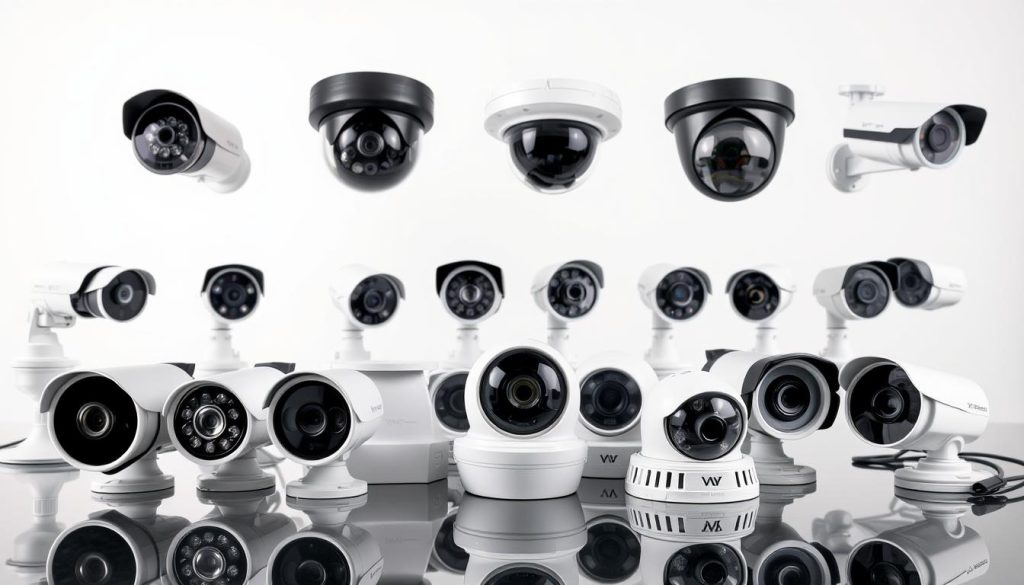
The Axis Q1659’s IP66 rating means it withstands 100mm/hour rainfall—crucial for bad weather months. Coastal areas need IP68 models like Avigilon H4, tested against salt spray corrosion. Key benchmarks include:
- First digit (solid protection): 6 = complete dust resistance
- Second digit (liquid protection): 7 = 30-minute submersion at 1m depth
- Additional codes: K = high-pressure cleaning resistance
“MIL-STD-810G compliant models survive 5x longer in Singapore’s climate than consumer-grade alternatives.”
Best-performing brands in tropical climates
Government-approved CCTV systems combine waterproofing with cybersecurity certifications. Field tests highlight:
- Dahua’s 5-year warranty covers monsoon-related damage
- Hikvision’s solar-powered options for flood-prone areas
- Local service centers offering 24-hour storm response
Total cost analysis favors PoE models—their single-cable design reduces vulnerable connection points. For high-risk zones, multi-sensor arrays provide backup coverage when heavy downpours obscure primary cameras.
Professional Installation vs DIY: What’s Better for Rain Protection?
Singapore’s building codes create hidden complexities for weatherproof camera installations. The Building and Construction Authority mandates specific waterproofing standards that help avoid electrical hazards and signal loss. While DIY projects seem cost-effective initially, 68% of insurance claims stem from improper cable gland installation by untrained individuals.
Commercial properties face stricter requirements than residential setups. Licensed installers understand how conduit slopes and sealant types impact long-term performance. Their work often includes post-installation certification that satisfies insurance providers.
When to call security system specialists
High-risk locations demand professional expertise. Coastal areas need marine-grade components that resist salt corrosion. Multi-story buildings require specialized equipment for safe aerial cable runs.
“Third-party installers complete weatherproofing tests 40% faster than DIYers while achieving better results, according to Singapore’s Security Association data.”
Consider professional help for:
- Properties near flood zones or construction sites
- Integrated systems with access control panels
- Applications requiring BCA compliance documentation
Common DIY mistakes to avoid
Amateur installations often overlook critical details. Using standard silicone instead of dielectric sealant causes premature failure. Many homeowners underestimate ladder safety—falls account for 23% of DIY injuries.
Make sure to:
- Test waterproofing with a hose before monsoon season
- Use torque-limiting screwdrivers for housing seals
- Verify signal strength after conduit installation
Warranties often void if non-certified personnel service equipment. For complex security system setups, the tool investment alone may exceed professional service costs.
Emerging Technologies for Weatherproof Surveillance
Innovative solutions are transforming outdoor monitoring in tropical climates. Singapore’s Nanyang Tech recently developed graphene-based moisture sensors that greatly improve detection accuracy. These advancements help CCTV systems perform better even in challenging conditions.
Cutting-Edge Protection Methods
Hydrophobic lens coatings now use nanotechnology to repel water more effectively. Self-drying mechanisms activate during humidity spikes, preventing fog buildup. These features maintain clear visibility when traditional cameras fail.
Key breakthroughs include:
- Piezoelectric systems that eject water droplets automatically
- Photocatalytic coatings that break down organic residues
- AI algorithms predicting maintenance needs before failures occur
Future-Proof Monitoring Solutions
5G connectivity enables real-time diagnostics for remote troubleshooting. Quantum dot technology enhances night vision clarity during storms. These innovations ensure reliable surveillance regardless of weather challenges.
Emerging tools like AR-assisted alignment and drone inspection swarms simplify maintenance. Biodegradable materials offer eco-friendly housing options without compromising durability. Blockchain logs create tamper-proof maintenance records for compliance purposes.
FAQ
Can heavy rainfall damage outdoor security cameras?
Yes, prolonged exposure to moisture can harm components. Using IP66+ rated models with proper housing helps avoid internal water damage.
How does precipitation distort video quality?
Water droplets on lenses create blurry or obscured footage. Dome-style housings with hydrophobic coatings greatly improve clarity during storms.
What’s the best placement to minimize weather interference?
Install under eaves or overhangs at a 15-30° downward angle. This positioning reduces direct water contact while maintaining coverage.
Do motion sensors work differently in wet conditions?
Standard sensors may trigger false alarms from rain. PIR-equipped models with thermal detection ignore precipitation while tracking actual movement.
How often should weatherproof seals be checked?
Inspect gaskets monthly in tropical climates. Replace worn seals every 12-18 months to maintain protection against humidity and leaks.
Are some camera housings better for rainy environments?
Dome enclosures outperform bullet-style against sideways rain. Look for models with heated glass to prevent fogging in high humidity.
Can AI help filter out false rain alerts?
Advanced systems with object classification distinguish between rainfall and legitimate motion, reducing unnecessary notifications by up to 80%.
What’s the minimum IP rating for reliable outdoor use?
IP66 is standard, but IP67 or IP68 provides superior defense in monsoon conditions. These ratings ensure full dust and water resistance.
How do I protect wiring from moisture damage?
Use waterproof conduit and dielectric grease on connections. Elevated cable routing prevents pooling water near termination points.
Are professional installations worth it for weatherproofing?
Certified technicians ensure proper sealing and grounding. DIY setups often miss critical details that compromise long-term durability.


