
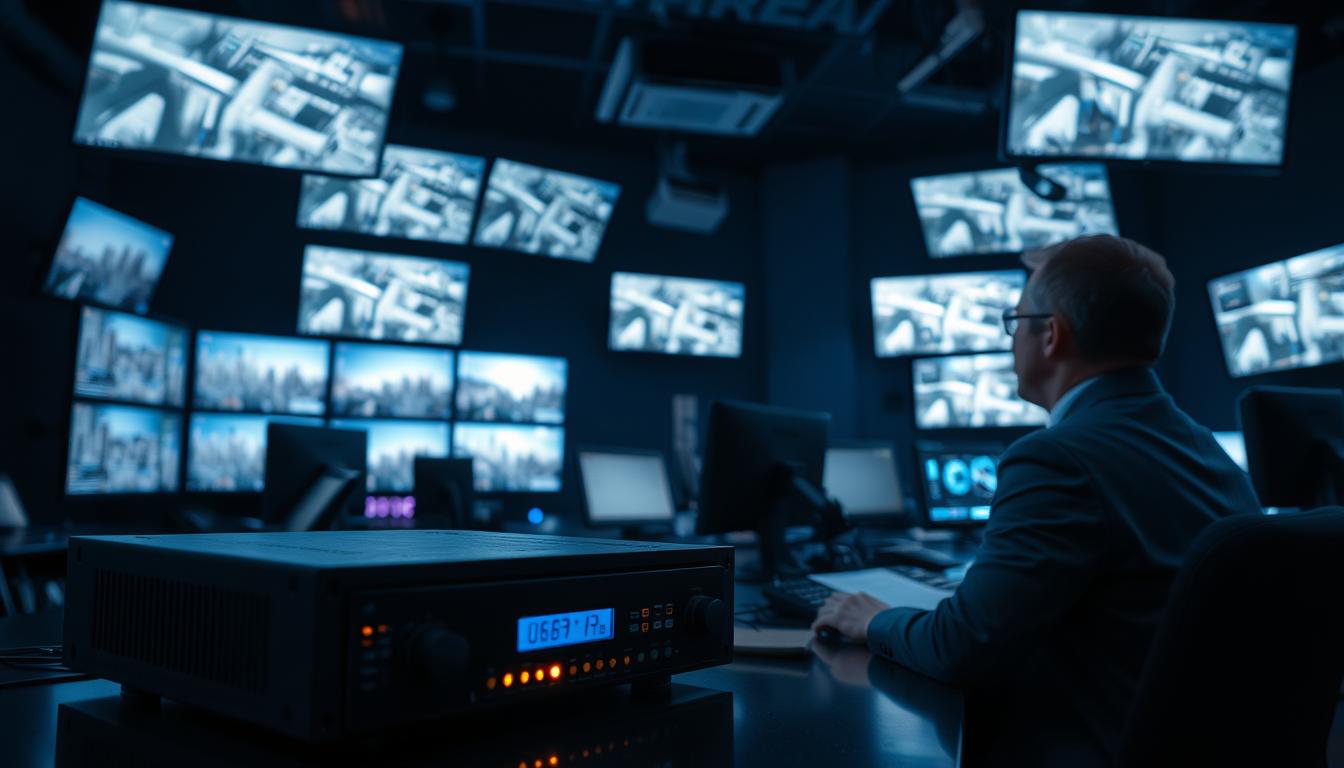
Does Jammer Stop CCTV? Understanding CCTV Jammer Technology
The question of whether signal-blocking equipment can disrupt surveillance is more complex than a simple yes or no. The effectiveness depends entirely on the type of security system in place. Modern installations use various technologies, from wireless to hardwired connections.
This creates a significant tension between advanced monitoring technology and the desire for personal or corporate privacy. In places like Singapore, with one of the world’s highest densities of public and private cameras, this issue is particularly relevant.
Understanding this technology, its limitations, and the strict legal framework is crucial. This article explores how these devices work, their impact on different security setups, and the serious legal consequences of their use.
We will also examine legitimate alternatives for protecting your privacy without breaking the law. The goal is to provide clear, factual information for anyone navigating security and privacy concerns.
Key Takeaways
- The effectiveness of signal disruption depends on the specific type of security camera system.
- There is a growing conflict between widespread surveillance technology and individual privacy rights.
- Singapore has extensive camera coverage and stringent regulations governing such equipment.
- Legal status and potential penalties for using these devices are severe in many jurisdictions.
- Different security systems (wireless vs. wired) respond differently to signal interference.
- Legal alternatives exist for enhancing privacy without resorting to illegal methods.
- Understanding both the technology and the law is essential for making informed decisions.
What Is a CCTV Jammer and Why Is It a Topic of Concern?
Privacy advocates sometimes turn to specialized equipment that emits radio waves to create interference zones around security cameras. This technology targets the wireless signals that many modern surveillance systems depend on for operation.
Formally known as a radio frequency (RF) interference device, this equipment floods specific frequency bands with noise. The goal is to disrupt communication between cameras and their recording stations or networks.
These devices are programmed to block common transmission bands. Key targets include WiFi at 2.4 GHz and 5 GHz, along with GSM and GPS frequencies. When successful, they prevent cameras from sending footage or recording properly.
Manufacturers produce two main configurations for different needs:
- Portable units are compact and battery-powered. They offer mobile privacy protection for temporary situations.
- Stationary installations provide fixed, long-term coverage. These are often used in offices or private residences.
Corporate environments deploy this technology to safeguard trade secrets during sensitive meetings. Individuals might seek it for personal privacy in rental properties or changing rooms. The desire to control one’s own data drives much of this interest.
Singapore’s unique context amplifies these concerns. The dense urban landscape features one of the world’s highest concentrations of public and private cameras. This extensive monitoring network naturally leads to public interest in privacy tools.
As explained in our guide on camera jammer technology, these devices sit at the center of a complex debate. They highlight the tension between security needs and personal rights in our smart home era.
The discussion inevitably touches on ethical and legal boundaries. While the technology exists, its application raises significant questions about responsible use. This controversy makes understanding both the equipment and its implications essential.
Does Jammer Stop CCTV? The Direct Answer and Its Nuances
The capability to disrupt monitoring equipment hinges on one crucial factor: how the camera transmits its footage. This creates a spectrum of vulnerability where some security setups can be interrupted while others remain completely operational.
Radio frequency interference equipment works by exploiting the same wireless signals that power modern surveillance. These devices flood specific frequency bands with noise, attempting to overwhelm receivers and disrupt communication.
The straightforward answer is conditional. Signal disruption technology can affect certain types of monitoring but fails against others. Understanding this distinction is essential for anyone evaluating security options or privacy concerns.
Wireless vs. Wired Systems: A Critical Distinction
Modern security installations fall into two primary categories with different vulnerabilities. This classification determines their resistance to external signal interference.
Wireless cameras depend on radio waves for communication. They transmit video data through WiFi networks or cellular signals to recording stations. This reliance makes them potentially susceptible to targeted frequency disruption.
Common wireless configurations include:
- WiFi-connected IP cameras for home and business use
- Battery-powered models with cellular backup
- Hybrid systems with wireless transmission components
Wired systems operate on an entirely different principle. They use physical cables to transmit both power and data. This hardwired approach creates a natural immunity to radio frequency interference.
Traditional analog cameras connected via coaxial cables represent the most resistant configuration. Even modern IP-based security systems gain protection when installed with Ethernet cabling for data transmission.
The physical connection acts as a shield. Signals travel through insulated wires rather than through the open air where they could be intercepted or disrupted.
The Role of Signal Frequency in Effectiveness
Successful interference requires precise frequency matching. Different wireless equipment operates on specific radio bands that must be targeted accurately.
Most consumer-grade surveillance uses common frequency ranges:
- 2.4 GHz for standard WiFi connectivity
- 5 GHz for higher-bandwidth applications
- Specific cellular bands for mobile transmission
Disruption equipment works by generating stronger radio noise on these exact frequencies. This noise overwhelms the camera’s receiver, creating static or complete signal loss. The technical term for this process is “receiver desensitization.”
However, effective range presents significant limitations. Portable units typically operate within 10-50 meters under ideal conditions. Environmental factors dramatically reduce this distance:
- Concrete walls can block or weaken signals
- Metal structures create interference patterns
- Distance from the target reduces power effectiveness
Advanced security systems incorporate defensive technologies. Frequency-hopping spread spectrum (FHSS) technology constantly changes transmission channels. This makes targeting specific frequencies much more difficult.
Encryption provides another layer of protection. Systems using AES-256 encryption maintain data integrity even if signals experience temporary disruption. The footage remains secure and unreadable without proper decryption keys.
Premium installations often combine multiple approaches. They might use wired connections for critical areas while employing encrypted wireless links for flexible coverage. This hybrid strategy balances security with installation flexibility.
The effectiveness of any interference attempt depends on matching specific conditions. It requires the right frequency, sufficient power, proximity to the target, and vulnerability in the security system itself. This complexity explains why results vary so dramatically in real-world situations.
How Camera Jammers Interact with Surveillance Systems
The interaction between signal interference equipment and monitoring technology follows a precise electronic dance of frequencies and noise. This process targets the communication link rather than the physical hardware of security cameras.
Specialized devices manipulate radio waves to interrupt data transmission. They aim to break the connection between cameras and their recording stations or networks.
Signal Disruption: Overwhelming the Receiver
Interference equipment works by flooding specific frequency bands with stronger competing signals. This noise overwhelms the receiver in wireless security cameras, creating static or complete signal loss.
The core mechanism involves radio frequency manipulation designed to interrupt communication. Devices emit noise on the same frequency as the camera’s transmission.
This effectively drowns out the legitimate signal. Two primary methods achieve this disruption:
- Continuous wave jamming emits sustained radio frequency interference. It creates constant noise across targeted bands.
- Pulse jamming uses short, targeted bursts of energy. This method can be more efficient and harder to detect.
Microwave pulse technology proves particularly effective against wireless systems. It delivers concentrated energy bursts that disrupt communication networks.
The effectiveness depends on matching the exact frequency of the target system. Successful jamming requires precise technical knowledge of the monitoring setup.
Temporary Disablement vs. Permanent Damage
Disruption caused by these devices is typically temporary rather than permanent. Most systems experience dysfunction only while the interference equipment remains active.
Common effects include signal loss, frozen video feeds, or delayed transmission. Once the device deactivates, normal operation usually resumes.
Some advanced security systems incorporate automatic recovery features. These include:
- Auto-reboot functions that restore operation after attack detection
- Failover systems that switch to backup communication channels
- Manual reset requirements for certain basic configurations
This interaction remains purely electronic and targets signal transmission. It does not constitute a physical attack on camera lenses or housing components.
The temporary nature of most effects means monitoring capability returns. System recovery time varies based on configuration and security measures in place.
Understanding this reversible dynamic helps evaluate actual risks to surveillance networks. It clarifies that permanent damage requires different approaches beyond signal interference.
Common Types of CCTV Jammers and Their Capabilities
Various configurations of interference devices exist, each engineered for specific applications ranging from personal privacy to corporate security. The market offers distinct categories with different operational ranges, power sources, and frequency coverage.
Understanding these variations helps clarify what each type can realistically achieve. This knowledge is particularly relevant in Singapore’s dense urban environment.
Portable Handheld Jammers
Compact, battery-powered units provide mobile privacy protection. Models like the Spy Hawk represent this category with operational ranges of 5-10 meters.
These devices are designed for short-term, on-the-spot use. They fit in a pocket or small bag for discreet transportation.
Key features include:
- Limited battery life – typically 1-2 hours of continuous operation
- Narrow frequency targeting – often focusing on 2.4GHz WiFi bands
- Basic heat management – simple cooling for intermittent use
Portable units offer temporary signal disruption in specific locations. Their effectiveness depends on proximity to target security cameras.
Fixed or Stationary Jamming Units
AC-powered installations provide continuous area denial in specific locations. The Jammer Pro serves as an example for corporate boardrooms or sensitive facilities.
These systems connect directly to building power for unlimited operation. They create persistent interference zones around protected areas.
Stationary equipment typically features:
- Extended operational range – up to 50 meters in open spaces
- Multiple frequency coverage – targeting WiFi, GSM, and GPS simultaneously
- Advanced cooling systems – for 24/7 operation without overheating
Fixed installations serve long-term security needs in commercial settings. They represent a more permanent approach to signal management.
“The gap between consumer and industrial signal disruption technology is vast, not just in price but in capability and reliability.”
Consumer-Grade vs. Industrial-Grade Equipment
The market divides sharply between readily available devices and specialized systems. This distinction affects every aspect of performance and application.
Consumer models typically target single frequencies like 2.4GHz. They’re designed for personal use with limited power output.
Industrial-grade systems offer completely different capabilities:
- Wideband coverage – disrupting multiple frequency bands simultaneously
- Extended range – affecting areas up to 100 meters or more
- Sophisticated targeting – precise frequency selection and power adjustment
Price differences reflect this capability gap. Basic consumer models start around S$200, while military-grade solutions can exceed S$5,000.
Industrial equipment often includes advanced features like remote monitoring and automated frequency adaptation. These systems serve government and large corporate needs.
For those seeking legal alternatives, Faraday cages provide passive signal blocking without active transmission. These enclosures use conductive materials to create electromagnetic shields.
Unlike active jamming devices, Faraday solutions don’t emit interfering signals. They simply prevent signals from entering or leaving the protected space.
This makes them compliant with Singapore’s strict telecommunications regulations. They offer privacy protection without violating signal transmission laws.
The Technology Behind Signal Interference: How Jammers Actually Work
At the core of signal disruption technology lies sophisticated engineering that manipulates electromagnetic waves to overwhelm communication channels. This equipment functions by generating targeted radio frequency noise that masks legitimate transmissions between cameras and their control stations.
Modern devices employ digital signal processing (DSP) to analyze and disrupt transmissions in real time. This allows them to identify active frequencies and generate counter-signals with precise timing. The technical approach creates significant problems for wireless surveillance networks attempting to maintain stable connections.
Targeting Specific Frequencies: 2.4GHz, 5GHz, and Beyond
These devices are precisely tuned to Industrial, Scientific, and Medical (ISM) radio bands. Consumer wireless cameras and WiFi networks commonly operate within these frequency ranges. The 2.4GHz band serves as a primary target due to its widespread use in home security systems.
Higher-end equipment also targets the 5.8GHz band used by advanced wireless networks. This dual-frequency approach increases the effectiveness against modern surveillance equipment. Some systems even scan for cellular frequencies used by 4G and 5G connected cameras.
Phase-locked loops provide critical timing synchronization within the interference equipment. These electronic circuits maintain precise frequency matching with target signals. Without this synchronization, the disruptive signals would miss their intended targets.
Directional antennas focus energy toward specific areas rather than broadcasting uniformly. This concentrated approach maximizes the disruptive power while minimizing collateral interference. In Singapore’s dense urban environment, directional targeting helps address specific security systems without affecting neighboring properties.
Understanding Operational Range and Environmental Limits
The operational range of any interference device depends on multiple physical factors. Output power measured in decibels-milliwatts (dBm) determines the initial energy available for disruption. Antenna design then shapes how this energy propagates through space.
Environmental obstacles dramatically reduce effective range in real-world settings. Concrete walls typically attenuate signals by 40-60%, while heavy rain causes 15-30% signal loss. Metal structures create even greater barriers, sometimes blocking interference completely.
Multipath interference presents unique challenges in urban environments. Radio waves bounce off buildings, creating multiple signal paths that arrive at different times. This phenomenon complicates jamming efforts by creating unpredictable signal patterns throughout Singapore’s cityscape.
Advanced models incorporate automatic frequency scanning to detect and adjust to active surveillance channels. These adaptive systems represent the most sophisticated approach to signal disruption. They continuously monitor the radio spectrum and target only frequencies currently in use.
High Energy Radio Frequency (HERF) generators represent another technological approach. These systems create powerful electromagnetic pulses designed to overwhelm receivers. However, their effectiveness remains limited by the same physical constraints affecting all radio-based equipment.
The practical limitations become apparent when considering real-world deployment. A device might claim 50-meter range in open fields but achieve only 10-15 meters indoors. This reality underscores the gap between theoretical capability and practical application in complex environments.
Purposes and Common Uses of Signal Jamming Devices
The deployment of frequency interference equipment spans both ethical applications and criminal activities across various sectors. These tools are employed for reasons ranging from protecting sensitive information to testing system vulnerabilities.
Understanding this spectrum helps clarify why such technology exists and how it’s regulated. The context determines whether the use is legal or constitutes a serious offense.
Privacy Protection in Sensitive Corporate or Personal Settings
Many organizations employ signal blocking technology to safeguard confidential discussions and proprietary information. Corporate boardrooms and research centers use these methods to prevent industrial espionage.
Diplomatic missions also implement similar protection measures in their secure zones. This ensures sensitive political communications remain private from potential surveillance.
Individuals concerned about personal privacy sometimes seek these solutions for their homes. They aim to control what data is collected within their private spaces.
In Singapore, the Personal Data Protection Act (PDPA) governs how organizations handle personal information. Some companies use temporary signal disruption during confidential meetings as part of their compliance strategy.
Media productions filming in public spaces may obtain permits for controlled interference. This prevents unauthorized recording of unreleased content during shoots.
Security System Vulnerability Testing (Authorized)
Security professionals conduct authorized assessments of surveillance networks using interference equipment. These ethical hackers test how well systems withstand signal disruption attempts.
This proactive approach helps organizations identify weaknesses before malicious actors exploit them. Regular audits ensure security standards meet current threats.
Critical infrastructure assessments include testing communication resilience. Power plants, transportation hubs, and financial institutions benefit from these security evaluations.
Authorized testing follows strict protocols to avoid affecting neighboring networks. Professionals document findings and recommend improvements to system defenses.
This legitimate business practice strengthens overall security posture. It represents responsible use of technology for protective purposes.
Malicious Use in Criminal Activities
Criminals have adapted interference technology to facilitate illegal activities. Burglars target wireless home security systems during break-ins.
Popular smart camera brands like Ring, Nest, and Arlo can be vulnerable to these attacks. Signal disruption prevents alerts from reaching homeowners or security services.
Smart locks and video doorbells also face similar risks. Criminals block communication signals to gain unauthorized access to property.
Several documented cases show organized theft rings using portable interference devices. They disable alarms and cameras while committing burglaries.
This criminal application creates significant needs for more resilient security solutions. It demonstrates why understanding these threats matters for home security planning.
Law enforcement agencies worldwide track these criminal methodologies. They develop countermeasures while investigating signal interference cases.
The distinction between authorized and malicious use depends on legal authority and intent. Military and specific federal agencies may employ similar technology for national security purposes.
Civilian application without proper authorization remains illegal in most jurisdictions. Singapore’s Cybersecurity Act addresses temporary disruptions that might affect critical services.
Understanding these varied applications provides context for regulatory frameworks. It explains why governments carefully control such powerful technology.
Legal Implications: A Global Perspective on Jamming Devices
International regulations governing signal interference equipment reveal a consistent pattern of strict prohibition across developed nations. This global consensus stems from the fundamental conflict between individual privacy desires and public communication integrity. Most countries prioritize protecting licensed radio spectrum over personal signal blocking.
The United States maintains some of the world’s most stringent controls through Federal Communications Commission (FCC) rules. These regulations completely ban consumer use, marketing, and importation of such equipment. Violators face fines reaching $16,000 per incident along with equipment seizure.
European Union member states operate under the Radio Equipment Directive (RED) framework. This requires CE certification for all radio equipment sold within the EU market. The directive explicitly prohibits devices designed specifically for illicit signal interference.
Japan’s Radio Law imposes similarly severe penalties for unauthorized operation. Individuals risk imprisonment for using unlicensed transmission equipment that disrupts communications. This reflects the country’s commitment to maintaining clear radio spectrum for public safety.
These examples illustrate a worldwide trend toward rigorous control. Private citizen use remains illegal in virtually all developed nations. The rationale centers on protecting critical infrastructure and emergency services.
Signal disruption affects more than just surveillance equipment. It can interfere with police radios, medical alert systems, and aviation communications. This creates unacceptable public safety risks that governments cannot ignore.
Limited exceptions exist under highly regulated circumstances. Authorized government and military operations may employ similar technology for national security purposes. Some testing facilities also receive special permits for vulnerability assessments.
Even these exceptions require strict oversight and compliance with technical standards. Organizations must demonstrate legitimate need and implement safeguards against collateral damage. Unauthorized use by corporations or individuals remains universally prohibited.
The global legal landscape leaves little room for ambiguity. Possessing or operating such equipment without proper authorization violates telecommunications laws worldwide. This consistent approach prepares us for examining Singapore’s specific regulatory framework.
Singapore’s Stance: Strict Regulations and Severe Penalties
Unlike some countries with ambiguous regulations, Singapore has established clear, enforceable prohibitions against signal disruption technology. The city-state takes a firm position to maintain communication integrity and public safety.
This approach balances technological advancement with robust legal safeguards. Understanding these regulations is essential for anyone considering privacy solutions.
IMDA Regulations Under the Telecommunications Act
The Infocomm Media Development Authority (IMDA) serves as Singapore’s telecommunications regulator. It operates under the comprehensive Telecommunications Act.
Sections 26 and 27 of this Act explicitly prohibit unauthorized signal interference. The IMDA classifies equipment designed for this purpose as prohibited devices.
These regulations protect licensed radio spectrum from disruption. They ensure emergency services and critical infrastructure maintain reliable communications.

Prohibited Equipment and Import Restrictions
Singapore implements a complete ban on consumer sales of signal interference devices. Retailers cannot legally offer these products to the public.
Importing such equipment requires special permits from the IMDA. These permits are exceptionally difficult to obtain for private individuals.
Even business applications face rigorous scrutiny. Companies must demonstrate legitimate security testing needs and implement strict controls.
The regulatory framework establishes clear technical standards for all radio equipment. Devices must comply with IMDA specifications before entering the market.
Potential Fines and Imprisonment for Violators
Penalties for violating these regulations are severe and consistently enforced. Individuals risk fines up to S$50,000 per offense.
Imprisonment terms can reach three years for serious violations. Courts consider both possession and operation of prohibited equipment.
Recent enforcement data demonstrates active oversight. Authorities reported 17 equipment confiscations and 3 prosecutions during 2023.
Exemptions remain extremely rare in practice. They are typically reserved for authorized national security operations.
Government agencies conducting legitimate security assessments follow strict protocols. These measures prevent collateral damage to public networks.
Singapore’s approach leaves no ambiguity about legal risks. The combination of financial penalties and potential imprisonment creates strong deterrents.
This regulatory environment prioritizes public safety over individual privacy concerns. It reflects the city-state’s commitment to maintaining reliable communications infrastructure.
Public Safety at Risk: How Jammers Threaten Critical Systems
The indiscriminate nature of radio frequency interference creates collateral damage that endangers public safety infrastructure. These devices cannot selectively target only one security camera.
They flood entire frequency bands with noise. This affects every system operating on those shared radio waves.
Singapore’s dense urban environment makes this especially concerning. Multiple critical services operate in close proximity throughout the city.
Disruption of Emergency Service Communications
Signal interference equipment can block essential radio bands used by first responders. The Singapore Civil Defence Force (SCDF) relies on specific frequencies for coordination.
Police, ambulance, and fire brigade communications share this spectrum. Delayed responses during emergencies create life-threatening situations.
Emergency radio networks operate on designated bands near common WiFi frequencies. Interference equipment often affects these adjacent channels unintentionally.
Rescue operations depend on clear communication between teams. Signal disruption during critical moments could have tragic consequences.
Interference with Medical and Navigation Equipment
Modern healthcare facilities use wireless telemetry systems for patient monitoring. Ventilators, ECG monitors, and infusion pumps transmit vital data.
These medical devices operate on protected frequency bands. However, strong interference can still disrupt their signals.
Navigation systems face similar problems. Maritime GPS guides ships through Singapore’s busy waterways.
Aviation navigation depends on precise satellite signals. Even temporary disruption creates security risks for transportation.
Smart traffic management systems also use wireless communication. Signal interference could disrupt traffic light coordination and monitoring.
“The Cyber Security Agency mandates penetration testing for critical infrastructure to identify such vulnerabilities. This proactive approach helps prevent service disruptions.”
The 2021 Changi Airport Incident as a Case Study
A real-world example demonstrated these dangers clearly. In 2021, unauthorized signal interference affected Changi Airport operations.
A single portable device disrupted air traffic control communications temporarily. This incident highlighted how vulnerable critical infrastructure can be.
Authorities traced the interference to a nearby location. The investigation revealed serious issues with unregulated equipment.
Aviation safety depends on uninterrupted communication between pilots and controllers. Even brief signal loss creates potential disaster scenarios.
This case study explains Singapore’s zero-tolerance policy. Public safety remains the paramount concern for regulators.
The incident prompted increased monitoring of radio frequencies around critical facilities. It also strengthened enforcement against illegal equipment.
Signal interference creates ripple effects through interconnected systems. What begins as a privacy tool can endanger entire communities.
This reality justifies strict legal frameworks worldwide. Protecting public infrastructure takes priority over individual privacy methods.
Technical Limitations That Reduce Jammer Effectiveness
The actual performance of signal blocking equipment often falls short of theoretical claims due to multiple physical and technological factors. Even if someone attempted to use such a device, numerous barriers would likely prevent successful disruption of modern surveillance.
These limitations provide inherent protection for many security systems. Understanding them offers reassurance about the resilience of properly installed monitoring networks.
Physical Barriers: Walls, Concrete, and Metal Structures
Building materials significantly attenuate radio frequency signals. Concrete walls, common in Singapore’s HDB flats and commercial buildings, reduce interference range by 40-60%.
This natural shielding drastically limits a device’s effective reach indoors. What might work in open spaces fails completely within constructed environments.
Metal reinforcements create accidental Faraday cages within structures. These metal frameworks block electromagnetic waves from penetrating building interiors.
Weather conditions introduce additional challenges. Heavy rain attenuates signals by 15-30%, while humidity affects transmission consistency.
Singapore’s urban density compounds these problems. Multiple structures create complex signal reflection patterns that disrupt interference attempts.
Advanced Camera Defenses: Encryption and Frequency Hopping
Modern surveillance systems incorporate proactive security features. These technologies actively counter attempts at wireless disruption.
Encryption represents the first line of defense. Advanced Encryption Standard (AES-256) makes intercepted signals unreadable without proper decryption keys.
Even if interference occurs temporarily, recorded footage remains secure. This protection ensures data integrity throughout transmission.
Frequency-hopping spread spectrum (FHSS) provides dynamic protection. Advanced models change transmission channels every 0.4 seconds.
This rapid switching prevents sustained targeting of specific frequencies. The system essentially dances around interference attempts.
Enterprise-grade installations combine multiple defensive layers:
- Real-time encryption for all transmitted data
- Adaptive frequency selection to avoid congested channels
- AI-powered anomaly detection that triggers alerts during interference
- Redundant communication paths for failover operation
Limited Range and Power Constraints
Consumer-grade equipment faces inherent power limitations. Portable units typically offer 1-2 hours of battery life at reduced output levels.
This makes them impractical for affecting large areas or prolonged periods. Their effectiveness diminishes rapidly with distance from target installations.
Output power measured in decibels-milliwatts (dBm) determines initial capability. Most consumer devices operate below legal transmission limits.
Professional security systems are specifically designed with anti-jamming features. They anticipate and mitigate these limitations through engineering.
Key constraints include:
- Limited operational range – typically 10-50 meters in ideal conditions
- Reduced indoor performance due to building material attenuation
- Heat management issues that prevent continuous operation
- Legal power restrictions that cap transmission strength
These factors combine to create significant practical barriers. The technological and physical realities provide natural protection for property monitoring systems.
Wired installations offer complete immunity to these wireless challenges. Their physical connections bypass radio frequency vulnerabilities entirely.
For wireless cameras and systems, modern defenses maintain reliable operation. They ensure security effectiveness despite potential interference attempts.
Safety Risks and Unintended Consequences of Using Jammers
The decision to employ signal disruption carries hidden costs that materialize in unexpected ways. Beyond legal prosecution, practical problems emerge that can undermine your original goals.
These consequences affect both personal and business environments. They create new vulnerabilities while attempting to address privacy concerns.
Collateral Damage to Neighboring Networks
Radio frequency interference cannot be perfectly contained within property boundaries. The signals spread indiscriminately, affecting every device on targeted bands.
This creates immediate problems for neighboring homes and businesses. Their legitimate wireless services experience disruption without warning.
Common casualties include WiFi networks, Bluetooth connections, and smart home devices. Baby monitors and medical alert systems may also fail temporarily.
In Singapore’s dense housing estates, this collateral damage becomes particularly problematic. Multiple households share limited radio spectrum in close quarters.
Affected neighbors will likely investigate the source of their connectivity issues. Technical users might employ spectrum analyzers to identify interference patterns.
This can lead to disputes between residents or business tenants. Complaints to building management or telecommunications authorities often follow.
Such attention defeats the purpose of discreet privacy protection. It creates documentation of the interference device‘s use and location.
Creating False Security and Liability Issues
Relying on signal blocking creates a dangerous illusion of complete protection. This false security leaves actual vulnerabilities unaddressed.
The equipment only affects wireless transmission of surveillance footage. Physical intrusion methods remain completely unaffected by radio frequency interference.
Wired security cameras continue operating normally during such attacks. Their physical connections provide immunity to this type of disruption.
This creates significant liability concerns for property owners. Insurance providers scrutinize security incidents involving prohibited equipment.
Most home and business insurance policies contain clauses about reasonable security measures. Using illegal devices may violate these requirements.
An insurance investigator might determine that employing such equipment constitutes contributory negligence. This could complicate or void coverage for theft or damage claims.
The financial consequences extend beyond any legal fines. Lost insurance protection represents a substantial long-term risk.
Modern security systems include anomaly detection features. These alert owners or monitoring services when signal interference occurs.
Authorities also employ detection equipment to locate illegal transmitters. The Singapore Police Force’s technology crime division actively monitors for such activity.
This creates multiple detection vectors beyond the immediate target. The interference device itself becomes a security vulnerability.
For legitimate business operations, these risks outweigh any potential privacy benefits. They create operational issues that require constant management.
Homeowners face similar challenges in maintaining actual security. Proper protection requires addressing all potential entry points, not just surveillance.
The practical downsides make signal interference a poor choice for addressing privacy needs. Legal alternatives provide more reliable solutions without creating new problems.
Choosing the Right Security System: Wired vs. Wireless
and the section. Write a standard_tags
.
First,
Legal Alternatives to Jammers for Privacy Protection
Protecting your privacy from surveillance doesn’t require illegal methods when numerous legal alternatives exist. These solutions address common privacy concerns without violating telecommunications laws.
They offer practical protection for both residential and commercial settings. Homeowners and businesses can implement these methods to control their personal space.
Singapore’s regulatory environment supports these lawful options. Understanding them helps resolve privacy issues through approved channels.
Physical Barriers and Privacy Screens
Architectural modifications provide effective visual blocking for sensitive areas. These physical solutions create natural boundaries against unwanted viewing.
Frosted window film is a popular choice for residential installations. It allows light transmission while obscuring interior details from outside observers.
Strategic landscaping offers another natural approach. Tall plants or bamboo screens can shield patios and garden areas.
Other effective physical barriers include:
- Privacy fences around property boundaries
- Smart glass that switches from clear to opaque
- Curtains and blinds for temporary coverage
- External shades for balconies and windows
These solutions respect neighbor relations while maintaining personal privacy. They work well in Singapore’s HDB estates and private residences.
Strategic Camera Placement and Privacy Masking Features
Proper camera positioning minimizes intrusion into private spaces. Angling equipment away from neighboring property addresses common concerns.
Many modern security cameras include built-in privacy features. These software tools help balance surveillance needs with community respect.
Reolink and other brands offer digital masking capabilities. This technology allows users to black out specific zones in video footage.
Effective implementation involves:
- Adjusting camera angles to avoid windows
- Using privacy masking for sensitive areas
- Setting motion detection boundaries
- Implementing scheduled recording times
These methods ensure monitoring focuses on security needs without unnecessary intrusion. They represent responsible use of surveillance technology.
Using Faraday Bags for Device-Specific Protection
Faraday containers offer passive signal blocking without illegal transmission. These specialized bags use conductive materials to create electromagnetic shields.
They prevent wireless signals from reaching enclosed electronic devices. This includes smartphones, laptops, and other connected equipment.
Unlike active interference methods, Faraday solutions don’t emit disruptive signals. They simply prevent communication with external networks.
Common applications include:
- Protecting personal data during sensitive meetings
- Preventing unauthorized access to mobile devices
- Securing confidential business information
- Testing electronic equipment security
These bags provide targeted protection for specific items. They comply with Singapore’s telecommunications regulations while addressing privacy concerns.
Understanding and Leveraging Singapore’s PDPA
The Personal Data Protection Act (PDPA) establishes clear guidelines for surveillance. This legislation governs how organizations handle personal information.
Under PDPA regulations, consent is required for recording in private spaces. This applies to both residential and commercial installations.
Individuals have rights regarding their personal data. They can request adjustments to camera placement that unjustifiably infringes on privacy.
Key PDPA provisions include:
- Consent requirements for personal data collection
- Purpose limitation for surveillance activities
- Notification obligations for monitoring systems
- Access and correction rights for individuals
Community mediation serves as a first resort for residential disputes. The Community Mediation Centre helps neighbors resolve surveillance problems amicably.
Law enforcement agencies can provide guidance on compliance matters. They help interpret how PDPA laws apply to specific situations.
Business owners should review their surveillance use against PDPA requirements. Proper documentation demonstrates compliance with privacy law.
These legal frameworks offer structured solutions for privacy concerns. They provide alternatives to risky interference methods while maintaining community harmony.
How to Strengthen Your CCTV System Against Interference
Proactive security measures transform vulnerable monitoring setups into fortified systems that resist external threats. Building true resilience requires moving beyond basic installation to implement layered defenses.
These strategies address both technical vulnerabilities and physical weaknesses. They create surveillance networks that maintain operation under challenging conditions.
Legal and effective approaches far surpass risky interference methods. They provide reliable protection without legal consequences.
Opting for Professional, Hardwired Installations
Professional installation represents the gold standard for surveillance security. Experts ensure optimal configuration that eliminates wireless vulnerabilities.
Wired systems provide inherent immunity to radio frequency interference. Physical cables transmit both power and data securely.
Concealed wiring prevents tampering and environmental damage. Proper installation includes weatherproof conduits for outdoor runs.
Companies like A1 Security Cameras follow industry standards for all installations. Their expertise ensures correct setup from day one.
“A professionally installed wired system isn’t just about cameras—it’s about creating an integrated security ecosystem with multiple defensive layers.”
These installations include proper cable management and surge protection. They address both security needs and long-term reliability.
Regular Firmware Updates and Network Security
Camera firmware requires regular updates to patch security flaws. Manufacturers release fixes for newly discovered vulnerabilities.
Enable automatic updates when available for consistent protection. Manual checks should occur quarterly for critical security systems.
Network security forms another essential layer of defense. Implement these measures to safeguard your surveillance network:
- Unique passwords for each camera and network device
- Network segmentation to isolate surveillance equipment
- Firewalls to filter unauthorized access attempts
- VPNs for secure remote monitoring access
Encrypted camera models add another security dimension. They protect video data during transmission and storage.
Regular security audits identify potential weaknesses. Professional assessments evaluate your entire surveillance infrastructure.
Implementing Redundant Recording and Power Systems
Redundancy ensures continuous operation during equipment failure or attacks. Multiple recording layers prevent total video loss.
Network Video Recorders (NVR) with onsite storage provide primary recording. Cloud backup creates offsite copies of critical footage.
This dual approach protects against both physical theft and digital attacks. Even if local storage is compromised, cloud backups remain accessible.
Power redundancy maintains operation during outages. Uninterruptible Power Supplies (UPS) provide temporary electricity during cuts.
Consider these redundant options for comprehensive protection:
- Dual recording: NVR plus cloud or secondary local storage
- Backup power: UPS systems for critical cameras
- Alternative transmission: Wired primary with cellular backup
- Regular testing: Verify backup systems function properly
Physical protection of equipment prevents direct tampering. Secure mounting and protective housings deter interference attempts.
Consulting with security professionals offers valuable insights. They conduct penetration testing to identify specific weaknesses in your setup.
These measures create a holistic security posture that addresses multiple threat vectors. They provide legal, effective alternatives to questionable methods.
Your surveillance network becomes resilient against both technical and physical challenges. This comprehensive approach delivers peace of mind through proven security practices.
Informed Security in a Monitored World
Building a secure home or business today means choosing resilience over vulnerability through smart planning. The complete answer to our central question involves understanding both capability and consequence.
While certain equipment can disrupt wireless signals, wired security systems remain completely immune. These professional installations offer reliable protection without legal risk.
Singapore’s strict laws prioritize public safety, making such interference methods illegal and dangerous. The responsible path forward embraces legal alternatives for privacy.
Informed security balances legitimate needs with community safety. It means investing in robust infrastructure and understanding rights under regulations like the PDPA.
True empowerment comes from knowledge, not shortcuts. Choose proven methods that protect your property and data while respecting the law.
FAQ
Can a signal jammer block all security cameras?
No, a device cannot block all cameras. Its effectiveness depends entirely on the type of security system. It only works against wireless cameras that transmit data on a frequency it can overpower. Wired systems, which send video through physical cables, are completely immune to this form of interference.
Are camera jammers legal to use?
In most countries, including Singapore, using a jammer is illegal for private citizens. Singapore’s IMDA enforces strict rules under the Telecommunications Act. These laws exist because jammers disrupt critical communications, posing a major risk to public safety, emergency services, and aviation. Penalties are severe, including heavy fines and imprisonment.
What is the main risk of using a jamming device?
The greatest danger is collateral damage. These devices are indiscriminate. While someone might try to block a surveillance camera, they will also disrupt nearby Wi-Fi networks, cell phone signals, and potentially critical equipment like medical devices. This creates significant liability and security problems for the user and endangers the community.
How can I protect my privacy without illegal jammers?
Several legal methods are effective. Use physical barriers like fences or privacy films on windows. For personal devices, a Faraday bag blocks all wireless signals. You can also discuss monitoring boundaries with neighbors. In Singapore, the PDPA (Personal Data Protection Act) provides a framework for addressing recording that invades personal privacy.
Why are wired security systems more secure than wireless?
Wired CCTV installations offer superior protection because they do not broadcast a radio signal. The video data travels through a physical cable to the recorder, making it impossible to block with wireless jamming. While installation is more involved, these systems provide a reliable, long-term security solution without the vulnerability of wireless transmission.
Can modern wireless cameras defend against jamming?
Yes, advanced wireless systems have defenses. Many use encryption for data security and frequency-hopping technology, which rapidly switches channels to avoid sustained interference. Regular firmware updates from manufacturers also patch vulnerabilities. However, a powerful, targeted jamming attack can still overwhelm these protections.


