
Does CCTV Record When There is No Electricity? Explained
Power outages can create serious security vulnerabilities for property owners. Many people wonder if their surveillance systems continue working during electrical failures.
Traditional security cameras typically stop functioning without a steady power supply. This leaves properties unprotected exactly when security matters most.
Modern technology offers effective solutions for uninterrupted monitoring. Battery-powered IP cameras can maintain recording for 24-48 hours during outages.
Advanced security systems incorporate multiple backup options. These include battery systems, UPS units, and generator support.
Understanding your specific system’s capabilities is crucial for reliable protection. Different camera types and power solutions affect recording continuity during electrical disruptions.
Key Takeaways
- Most traditional security cameras stop working during power outages
- Battery-powered IP cameras can record for 24-48 hours without electricity
- Modern systems use multiple backup solutions including batteries and generators
- Understanding your specific system’s capabilities is essential for continuous protection
- Proper backup systems ensure uninterrupted surveillance during electrical failures
- Different camera types have varying resilience to power disruptions
- Investing in reliable backup solutions is crucial for property security
Understanding How CCTV Systems Rely on Power
Modern surveillance depends completely on electrical current to function properly. Every component in a security setup needs consistent energy flow to perform its duties.
When main power fails, most conventional monitoring setups experience immediate shutdown. This creates dangerous gaps in property protection during critical moments.
The Default Behavior During Electrical Interruptions
Traditional plug-in surveillance equipment stops working entirely during blackouts. These units lack built-in energy storage capabilities.
Network connectivity fails simultaneously since routers and modems also lose their power supply. This prevents remote access to footage even if some components remain active.
In Singapore, approximately 73% of residential IP cameras use wireless connections for installation flexibility. However, this doesn’t solve the fundamental power dependency issue.
Critical Components Requiring Continuous Energy
Several essential elements demand uninterrupted electrical flow:
- Capture devices: The cameras themselves need power for operation and video transmission
- Recording equipment: DVR and NVR units require electricity to store footage
- Network infrastructure: Routers and switches need power for data transmission
- Monitoring stations: Display screens and control panels depend on consistent energy
Different camera types show varying vulnerability levels during disruptions. Analog systems prove particularly susceptible to complete failure.
Modern IP cameras often feature improved energy management. Still, they cannot work without electricity for extended periods without backup solutions.
Understanding these dependencies helps property owners identify where to implement protective measures. Proper backup strategies ensure continuous monitoring during electrical challenges.
Does CCTV Record When There is No Electricity? The Direct Answer
When the lights go out, most monitoring devices immediately cease functioning due to power dependency. Conventional security setups typically stop all operations during electrical failures.
The straightforward reality is that standard plug-in surveillance equipment cannot work without a continuous energy supply. These units lose recording capability, motion detection, and notification functions simultaneously.
Battery-powered cameras represent the notable exception to this limitation. These advanced devices can maintain surveillance operations for substantial periods during disruptions.
Modern IP cameras with adequate battery capacity typically provide 24-48 hours of continuous monitoring. This extended operation window covers most common outage scenarios.
Approximately 82% of professional security installations in Singapore now utilize AI-enhanced cameras. These systems often feature improved power management capabilities for better outage performance.
The recording capability during electrical interruptions depends entirely on backup solutions implementation. Property owners must understand their specific system configuration to assess outage resilience.
Modern surveillance technology has developed effective solutions that overcome traditional power dependency limitations. While most conventional systems fail during blackouts, technological advancements provide reliable alternatives.
Cameras with built-in storage can preserve captured footage even during complete power loss. This ensures critical evidence remains accessible after service restoration.
The answer varies significantly based on equipment type and backup provisions. Understanding these variables helps property owners make informed security decisions.
Battery Backup Solutions for Uninterrupted Surveillance
Modern security systems require reliable power solutions to maintain protection during electrical disruptions. Battery backup options provide essential coverage when main power fails, ensuring continuous monitoring capabilities.
These solutions range from individual camera batteries to comprehensive uninterruptible power supply units. Each option offers different benefits for various security needs and property types.
Built-in Camera Batteries and Their Limitations
Many modern security cameras feature integrated battery systems for standalone operation. These built-in power sources enable cameras to work without direct electrical connection for limited periods.
The Reolink Argus PT Ultra demonstrates advanced battery technology with impressive performance. This wireless camera can record continuously for 12 hours daily for up to 8 days on a single charge.
However, built-in batteries face several important limitations:
- Finite capacity restricts recording duration during extended outages
- Remote access may fail if network equipment loses power
- Battery degradation over time reduces overall performance
- Limited support for high-resolution continuous recording
Solar panel integration offers enhanced functionality for battery-powered devices. This technology provides virtually unlimited daytime operation during prolonged electrical disruptions.
Uninterruptible Power Supply (UPS) Systems
UPS units provide immediate emergency power to entire security setups during outages. These systems act as bridge solutions, maintaining operation until primary power returns or generators activate.
These backup power solutions typically support multiple components simultaneously. They keep cameras, recorders, routers, and monitors functioning during electrical failures.
Cost-effective options start around $30 for single-camera setups. Multi-channel systems requiring more robust protection typically exceed $100 investment.
Key advantages of UPS technology include:
- Complete system protection during power transitions
- Automatic activation without manual intervention
- Voltage regulation to prevent equipment damage
- Extended runtime options based on battery capacity
Proper battery capacity directly determines surveillance duration during outages. Higher capacity units provide longer coverage for critical security monitoring.
These systems represent the most practical approach to maintaining protection. They ensure security cameras continue operating even during challenging power situations.
Leveraging Generators for Extended Power Outages
Extended blackouts demand robust power solutions beyond typical battery limitations. Standby generator systems provide comprehensive coverage during prolonged electrical disruptions that last days or weeks.
These automated units activate immediately when main power fails. They create independent electricity generation using gasoline or other fuel sources.
Generator systems require brief startup time ranging from seconds to minutes. This transition period makes battery backup essential for uninterrupted security coverage.
Commercial properties particularly benefit from generator implementation. Supermarkets and businesses utilize these systems where security failure could cause significant losses.
Residential applications remain less common in Singapore due to higher costs. Some apartment complexes implement shared generator systems serving multiple units for cost efficiency.
Regular maintenance ensures reliability during extended outages. Property owners should schedule testing and fuel management for optimal performance.
The combination of UPS battery backup with generator power creates the most robust protection system. This layered approach guarantees continuous monitoring through any power challenge.
Each property owner must evaluate their specific security needs against implementation costs. Generator systems represent the ultimate solution for worst-case scenario outages.
Choosing the Right CCTV Cameras for Power Resilience
Smart security camera choices can maintain surveillance operations even during complete grid failures. Selecting equipment with built-in power resilience features ensures continuous property protection when you need it most.
Battery-Powered and Solar-Powered Camera Options
Modern security systems offer excellent alternatives to traditional plug-in cameras. Battery-powered options provide complete energy independence from electrical grids.
Popular models like the Reolink Argus 3 Pro deliver reliable performance in various conditions. These weather-resistant devices continue monitoring during challenging weather events.
Solar-powered cameras represent the ultimate sustainable security solution. With adequate sunlight exposure, these systems can operate indefinitely while storing energy for nighttime use.
Key benefits of these independent power solutions include:
- Complete operation without electricity dependency
- Extended monitoring during prolonged power outages
- Reduced installation complexity and wiring requirements
- Environmentally friendly energy consumption
- Flexible placement options in remote or difficult areas
4G cellular cameras like the Reolink Go PT Ultra offer complete infrastructure independence. These advanced devices function without both power and internet connections.
The Advantage of Power over Ethernet (PoE) Systems
Power over Ethernet technology represents a game-changer for modern security installations. This innovative approach delivers both data transmission and electrical power through single cables.
In Singapore, approximately 65% of IP security cameras utilize PoE technology. This widespread adoption reflects the system’s reliability and installation advantages.
PoE systems provide centralized power management that significantly enhances outage resilience. The technology ensures efficient energy distribution across multiple camera setups.
Major benefits of Power over Ethernet solutions include:
- Simplified installation with reduced cable requirements
- Centralized power backup management for entire systems
- Enhanced reliability during electrical disruptions
- Scalable solutions for expanding security needs
- Cost-effective infrastructure for multi-camera installations
Understanding recording duration capabilities helps property owners make informed decisions about their security investments.
The right camera selection combines power resilience features with overall security requirements. This balanced approach ensures optimal protection during both normal operations and unexpected outages.
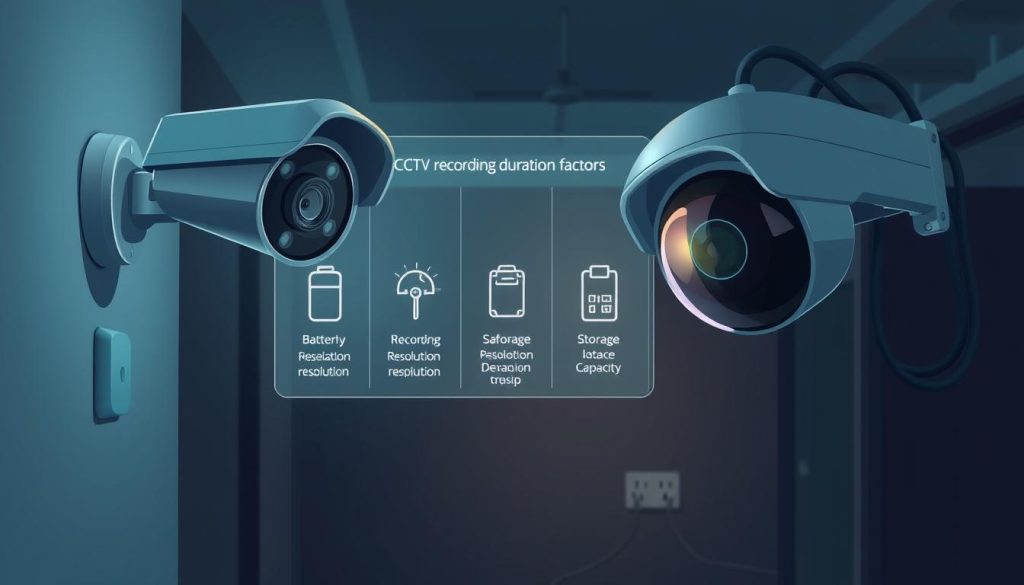
Key Factors That Determine Recording Duration Without Power
Property protection continuity during blackouts is determined by a combination of equipment specifications and system configuration. Understanding these variables helps homeowners optimize their surveillance resilience during electrical service interruptions.
Battery Capacity and Camera Power Consumption
Backup power duration primarily depends on energy storage capacity. Larger batteries enable extended operation when main power fails.
Different security cameras consume energy at varying rates. Efficient models with optimized processors can operate longer on the same battery capacity.
Modern surveillance technology continues improving power management. Advanced systems can adjust consumption based on activity levels and environmental conditions.
Key considerations include:
- Battery capacity measured in ampere-hours (Ah) determines total available energy
- Camera power draw varies from 4W to 15W depending on features and resolution
- Efficient designs with motion-activated recording conserve battery life
- Environmental temperatures affect battery performance and overall efficiency
Recording Resolution and Number of Active Cameras
Video quality settings significantly impact power requirements. Higher resolution recordings demand more processing power and energy.
Multiple cameras sharing a single backup system divide available resources. Each additional active device reduces individual recording duration.
System configuration choices affect overall power needs. Continuous recording consumes more energy than motion-activated monitoring.
Critical factors to consider:
- 1080p recording typically uses 30-50% more power than 720p footage
- 4K surveillance systems require substantial battery capacity for extended operation
- Infrared night vision features increase power consumption during darkness
- Network transmission and cloud storage add to overall energy requirements
Proper system design considering these variables can significantly extend surveillance capabilities. Understanding recording duration capabilities helps property owners make informed security decisions.
Modern technology offers various solutions for different needs. Battery advancements continue improving capacity while reducing physical size.
The right combination of equipment and configuration ensures optimal protection. This approach maintains security monitoring during challenging power situations.
Ensuring Continuous CCTV Monitoring and Footage Storage
Maintaining uninterrupted surveillance requires comprehensive planning for all system components. Modern security systems must address multiple elements to guarantee protection during electrical disruptions.
Complete monitoring continuity demands simultaneous power backup for cameras, recording equipment, and network infrastructure. Failure in any single component can compromise the entire security setup.
Advanced systems incorporate multiple storage layers for maximum footage protection. Local storage solutions preserve video evidence even during complete power loss.
Systems like Reolink Home Hub demonstrate this integrated approach effectively. They combine local storage with intelligent detection capabilities for reliable operation.
Key elements for maintaining surveillance during outages include:
- Comprehensive power backup for all security system components
- Redundant storage solutions including local and cloud options
- Automatic failover mechanisms between power sources
- Network equipment protection for remote access capabilities
- Regular system testing to ensure backup functionality
Cellular-based surveillance devices offer complete infrastructure independence. These advanced units maintain operation during both power and internet failures.
Modern technology provides various solutions for different security needs. Property owners should consider their specific requirements when designing backup systems.
Redundant storage approaches ensure footage preservation under challenging conditions. Cloud backup solutions can maintain video evidence when local systems experience difficulties.
System design must account for all components requiring energy supply. This comprehensive approach guarantees complete surveillance coverage during electrical challenges.
Advanced security systems incorporate automatic switching between power sources. This seamless transition maintains continuous monitoring without manual intervention.
The right combination of technology and planning ensures property protection. Modern solutions provide reliable security even during extended service interruptions.
Proactive Steps to Secure Your Property During an Outage
Effective property protection requires strategic planning before electrical disruptions occur. Implementing proactive measures ensures your surveillance remains operational when traditional systems fail.
Regular system evaluations identify potential weaknesses in your security setup. These assessments help optimize performance during challenging conditions.
Regular Maintenance and System Testing Checklist
Consistent maintenance guarantees reliability when you need it most. Backup power components require particular attention to ensure proper functionality.
Create a quarterly testing schedule for all security equipment. This routine verification catches issues before they compromise your protection.
Key maintenance tasks include:
- Battery health checks and replacement protocols
- Generator run tests and fuel management
- Complete system functionality verification
- Weatherproofing inspections for outdoor equipment
- Network connectivity testing during simulated outages
Professional security consultations provide expert insights into system optimization. These specialists can identify areas for improvement in your current setup.
Strategic Camera Placement for Maximum Coverage
Optimal camera positioning maximizes surveillance effectiveness during limited-power operation. Strategic placement ensures critical areas remain monitored even with reduced resources.
Consider these placement strategies for outage resilience:
- Focus on entry points and high-value areas first
- Utilize elevated positions for broader coverage
- Ensure clear lines of sight without obstructions
- Implement redundant coverage for essential locations
- Consider power availability during placement decisions
Modern security technology offers flexible placement options for various property types. Wireless cameras with independent power sources provide particular placement advantages.
Proactive system management significantly enhances security effectiveness during electrical challenges. Regular maintenance combined with strategic planning creates robust protection against unexpected disruptions.
Investing in a Fail-Safe Security System for Total Peace of Mind
Modern security systems offer reliable protection during unexpected disruptions. Investing in comprehensive backup solutions ensures continuous monitoring when you need it most.
Hybrid approaches combine multiple technologies for maximum reliability. These systems integrate battery backups, generator support, and solar options for complete coverage.
Professional consultation tailors solutions to your specific property needs. This personalized approach addresses local outage risks and security requirements.
Quality backup systems represent smart investments that maintain protection during critical periods. They provide confidence knowing your surveillance will perform reliably through any power situation.
The return includes maintained security, potential insurance benefits, and overall risk reduction. Modern technology continues improving accessibility for various applications.
FAQ
Will my security cameras work during a power outage?
Standard security cameras require electricity to operate. Without a backup power source, they will stop recording when the power goes out. Investing in a UPS or battery-powered options ensures continuous operation.
What is the best backup power solution for CCTV systems?
An Uninterruptible Power Supply (UPS) is highly effective for short outages, providing immediate power to your DVR/NVR and cameras. For extended outages, consider generators or solar-powered security cameras.
How long can a battery backup last for my surveillance system?
Battery life depends on capacity and power consumption. A typical UPS may provide 1-4 hours, while dedicated battery units or solar setups can offer longer coverage, especially with energy-efficient cameras.
Do PoE cameras function without electricity?
Power over Ethernet (PoE) systems rely on a network switch with power. If that switch loses electricity, the cameras go offline unless backed by a UPS protecting both the recorder and network equipment.
Can I still access recorded footage during an outage?
If your system uses cloud storage, previously recorded footage remains accessible. Local storage on DVRs/NVRs may be unavailable without power unless those devices are also on a backup supply.
Are there security cameras designed for areas with frequent power outages?
Yes. Battery-powered cameras, solar-powered options, and systems with robust UPS integration are ideal for unreliable power areas, offering resilience and continuous monitoring.


