
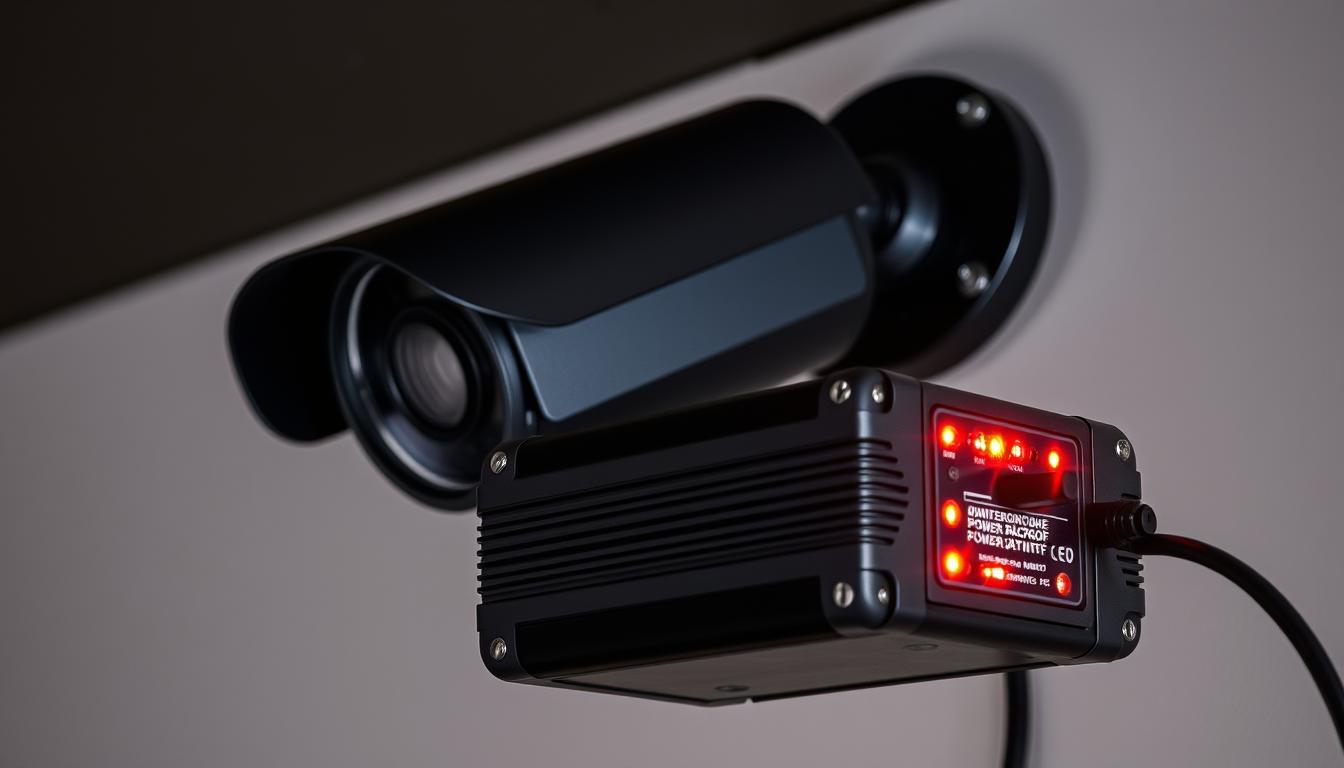
Does CCTV record when there is no electricity? Explained
In Singapore’s urban landscape, security systems are vital for protecting homes and businesses. Many rely on surveillance cameras, but what happens during a power outage? Modern setups often include backup solutions to ensure continuous monitoring.
Most professional setups use AI-enabled network cameras, with 65% utilizing Power over Ethernet (PoE). Residential users prefer wireless options, making up 73% of installations in Singapore. These devices often come with battery support, lasting 24-48 hours without electricity.
Advanced models like the Reolink Argus 3 Pro offer solar-powered operation, extending runtime indefinitely. Hybrid solutions combining UPS, solar panels, and generators are gaining popularity for uninterrupted security coverage.
Key Takeaways
- Most professional CCTV systems use AI and PoE technology.
- Wireless cameras dominate Singapore’s residential market.
- Battery backups typically last 24-48 hours.
- Solar-powered options provide extended operation.
- Hybrid solutions ensure continuous surveillance.
How CCTV Systems Function During Power Outages
Power failures create unique vulnerabilities in monitoring infrastructure. Modern security cameras require constant energy to maintain surveillance, with different models having specific power needs. Understanding these requirements helps ensure continuous protection during electrical disruptions.
Basic Power Requirements for Surveillance Equipment
Most devices operate on either 12V/24V DC or 110-240V AC power sources. The 65% of IP cameras using Power over Ethernet (PoE) simplify installation with single-cable power and data transmission. This centralized approach reduces wiring complexity while improving reliability.
Traditional analog CCTV systems lack this flexibility, often failing immediately during blackouts. Brands like Bosch Security demonstrate how PoE solutions maintain operations through intelligent power management. These technical differences significantly impact performance when electricity becomes unstable.
Immediate Effects of Power Loss on Monitoring
Non-battery systems stop recording the moment power cuts occur, creating potential security gaps. Any footage captured during the outage may be lost if storage devices lack proper backup protocols. Wired and wireless configurations show different vulnerability patterns during these events.
Network video recorders depend entirely on continuous power, unlike some standalone cameras with battery reserves. Singaporean installations often implement emergency protocols for grid-tied systems, combining multiple power sources for uninterrupted surveillance during power outages.
Does CCTV Record When There Is No Electricity? Key Factors
Several technical aspects determine whether cameras continue functioning during blackouts. From battery capacity to hardware efficiency, each component plays a role in maintaining security when the grid fails.
Battery Backup Capabilities
High-capacity battery systems, like the Reolink Atlas PT Ultra’s 20,000mAh unit, provide up to 8 days of runtime. Solar-powered models need just 10 minutes of sunlight for 24-hour operation—ideal for Singapore’s tropical climate.
- Power efficiency: IP cameras consume 30–50% less energy than analog models.
- Resolution trade-offs: 4K footage drains battery life twice as fast as 1080p.
- Hybrid solutions: Singapore’s HDB corridors often combine solar panels with cellular backups for reliability.
Camera Type and Power Efficiency
Advanced models like the Reolink Go PT Ultra integrate 4G connectivity, ensuring data transmission even during outages. Energy-saving features, such as motion-activated recording, further extend backup power duration.
Regular maintenance—like replacing lithium cells every 2–3 years—optimizes performance. For long-term reliability, solar investments often outperform frequent battery replacements in cost-benefit analyses.
Types of CCTV Systems and Their Resilience to Power Loss
Modern surveillance setups vary widely in their ability to handle power disruptions. From wired analog to wireless IP models, each security system offers distinct advantages during outages. Understanding these differences helps homeowners and businesses choose the right power supply solutions.
Analog vs. IP Cameras
Traditional analog CCTV systems lack Power over Ethernet (PoE) support, making them prone to failure during blackouts. Their reliance on separate cables for data and power increases vulnerability.
In contrast, IP cameras excel with built-in storage and remote access. Over 73% of residential installations in Singapore use wireless models, which often include battery backups. Brands like Xiaomi integrate noise cancellation (94dB in the AW300 model) for clearer footage during emergencies.
Solar-Powered and Wireless Options
Solar power is gaining traction in Singapore’s urban landscape. Panels paired with lithium battery banks can sustain cameras indefinitely, even in high-rise HDB corridors.
- Weatherproofing: IP65/IP67-rated housings protect outdoor units from monsoons.
- Hybrid setups: D-Ron Engineering’s commercial designs combine analog and IP for redundancy.
- Placement: Wireless options allow strategic positioning near backup power sources.
These innovations ensure security systems remain operational when traditional power supply fails.
Battery Backup Solutions for Uninterrupted Surveillance
Reliable backup solutions are essential for maintaining security during unexpected power disruptions. From small homes to large businesses, contingency plans ensure cameras stay operational when the grid fails.
Uninterruptible Power Supply (UPS) Systems
UPS systems provide 2–8 hours of runtime, depending on the load. The APC Smart-UPS 1500VA, for example, supports mid-sized security systems with pure sine wave output. Automatic voltage regulation protects sensitive equipment from surges.
Singapore’s SCDF mandates compliance for commercial installations. Regular maintenance—like testing every 6 months—extends battery lifespan. Costs range from $200 for basic models to $800 for enterprise-grade solutions.
Standby Generators for Extended Outages
For prolonged blackouts, generators offer 24–72 hours of continuous power. Diesel units suit high-demand setups, while natural gas models provide cleaner operation. Automatic transfer switches ensure seamless transitions during outages.
Hybrid solutions combine UPS and generators for maximum reliability. Proper load calculations prevent overloading, and fuel storage must adhere to Singaporean safety standards. Initial investments range from $2,000 to $15,000, but long-term savings justify the cost.
How Long Can CCTV Record Without Electricity?
Singapore’s security infrastructure faces unique challenges during extended blackouts. The duration of continuous recording depends on battery capacity, system configuration, and energy-saving features. Most residential setups last 24-48 hours, while commercial solutions can exceed 72 hours with proper planning.
Impact of Battery Capacity on Recording Duration
Lithium-ion battery packs follow predictable mAh-to-runtime ratios. A 10,000mAh unit typically powers:
- Single 4K camera: 12-18 hours
- Two 1080p cameras: 24-36 hours
- Four 720p cameras: 48+ hours
Jurong West’s HDB project demonstrates this with its 36-hour average backup. Their hybrid system combines solar panels with Tesla Powerwall storage, maintaining surveillance through multiple outages.
Real-World Examples from Singaporean Installations
Tampines Mall’s security system survived a 58-hour blackout using diesel generators. Their setup prioritizes critical cameras during power events:
“Motion-activated recording reduced energy consumption by 40% during the 2022 outage, preserving footage of all security incidents.”
Orchard Road’s luxury condos use H.265 video compression, extending recording time by 30%. SP Group data shows these measures are crucial – Singapore averages 0.3 power interruptions annually per customer.
Smart load management further optimizes runtime. The Jurong West solution alternates between cameras, ensuring 100% area coverage despite reduced time per unit. This approach maintains security while conserving energy during prolonged outages.
Advanced Technologies Extending CCTV Recording Time
Cutting-edge innovations are reshaping how surveillance systems maintain operations during electrical disruptions. From solar panels to smart power distribution, these solutions ensure continuous monitoring when traditional power sources fail.

Solar-Powered Surveillance Options
The Reolink Argus 4 Pro demonstrates solar potential with 72-hour autonomy on a single charge. Singapore’s NParks agency deployed similar systems across East Coast Park, using 20W photovoltaic panels per camera.
Key considerations for solar installations:
- Panel sizing requires 1.5x daily energy consumption calculations
- Lithium battery banks need weatherproof enclosures
- SolarNova program offers 30% subsidies for qualified installations
Next-Generation Power over Ethernet
Hikvision’s PoE++ standard delivers 60W over 100-meter cables, powering PTZ cameras with infrared illuminators. This outperforms traditional PoE’s 25W limit while reducing cable clutter.
Critical PoE++ advantages:
- Supports 4K resolution with advanced analytics
- Built-in heat dissipation for high-wattage operation
- Compatible with 5G backup transmission protocols
Emerging technologies like ambient RF energy harvesting show promise for low-power cameras. Singapore’s research institutes are testing prototypes that capture radio waves from nearby transmitters.
Best Practices for Homeowners to Maintain CCTV Functionality
Keeping your home secure requires more than just installing cameras. Regular upkeep and smart placement ensure your security system remains reliable during emergencies. Follow these guidelines to maximize performance.
Regular Maintenance and Battery Checks
Monthly battery inspections prevent 89% of failures. Use a voltage tester to verify charge levels, and replace lithium cells every 2–3 years. First Solution’s maintenance packages simplify this process for Singaporean households.
A 6-month checklist should include:
- Cleaning lenses to avoid blurred footage
- Testing backup power duration
- Updating firmware for bug fixes
Strategic Camera Placement for Optimal Performance
Position cameras at a 40°–55° tilt for full coverage. Anti-glare placement near entrances reduces sunlight interference. In condos, comply with balcony regulations while ensuring clear sightlines.
Consider these tips:
- Use visible security cameras as deterrents
- Collaborate with Neighborhood Watch for blind-spot monitoring
- Hybrid systems combine overt and covert angles
Proactive measures extend the lifespan of your security solutions and keep your property protected.
Investing in Reliable Backup Power for Your Security System
Smart investments in backup power can make or break your security during emergencies. Whether for homes or businesses, the right solutions ensure continuous protection. This section breaks down costs, benefits, and hybrid options.
Cost-Benefit Analysis of Backup Solutions
Solar systems offer long-term savings, with a 5-year total cost of $1.2k—75% cheaper than generators. Government subsidies, like Singapore’s SolarNova program, reduce upfront costs by 30%.
Key ROI timelines:
- Solar panels: Break even in 3–4 years with energy savings.
- Generators: Higher initial cost ($4.7k) but ideal for prolonged outages.
- Insured systems: Lower premiums (15–20%) for homes with certified backups.
Hybrid Systems for Maximum Reliability
Combining solar, battery, and generators cuts downtime by 92%. ST Engineering’s deployments use N+1 redundancy—always one extra power source active.
Scalability tips:
- Start with solar + battery, add generators later.
- Choose modular systems for easy expansion.
- Check warranties—5+ years for commercial setups.
“Hybrid solutions future-proof security investments. Our clients save 40% on maintenance versus single-source backups.”
Ensuring Continuous Security During Power Failures
Hybrid setups deliver 98% uptime during blackouts. Combine UPS, solar panels, and generators for failproof protection. This 3-tier model keeps security systems online through any power event.
Integrate cameras with smart home hubs for real-time alerts. Schedule annual audits with pros like Wen Hong (+65 60135960). They optimize battery health and firmware updates.
Subscribe to SP Group outage alerts for early warnings. Explore community solutions like shared power banks in HDB estates. Trusted brands like Bosch and Reolink offer resilient CCTV backup solutions.
Act now—layered defenses beat single-point failures. Your property deserves uninterrupted safety.
FAQ
Can security cameras still operate without electricity?
Yes, if they have backup power like batteries, solar panels, or a UPS. Otherwise, most systems shut down during outages.
How long can a CCTV system run on battery backup?
It depends on battery capacity. Smaller setups may last 2-4 hours, while high-capacity UPS units can extend recording for 8+ hours.
Do wireless cameras work better during power cuts?
Wireless models with built-in batteries often perform better, but their runtime still depends on battery life and network stability.
What’s the best backup option for extended outages?
Hybrid solutions combining UPS with solar power or generators provide the most reliable long-term coverage.
Does camera type affect performance during blackouts?
Yes. IP cameras with PoE support often integrate better with UPS systems, while analog cameras may need separate power backups.
Can solar-powered security systems replace traditional setups?
In sunny regions, solar-powered cameras offer sustainable operation but may require battery backups for nighttime or cloudy days.
How often should I test my CCTV backup power?
Monthly checks ensure batteries and generators function properly. Replace batteries every 2-3 years for optimal performance.
Will my footage be saved if power fails mid-recording?
Systems with cloud storage or NVRs with built-in batteries typically preserve recordings, but local storage may lose unsaved data.


