

CCTV Power Usage: Is It High in Electricity?
Ever thought, does CCTV use a lot of electricity? This is a big question for homeowners and businesses, like in Singapore. Knowing how much CCTV uses can help you save money on your security system.
Compared to other devices, CCTV systems use different amounts of power. For example, the Reolink RLC-810A PoE IP 4K HD security camera uses less than 12W. But, other cameras might need more power. Things like camera type, extra features, and whether you use a DVR or NVR system also matter. DVR/NVR systems can use 40-60 watts, showing how important it is to know your costs.
Let’s dive into CCTV and surveillance to understand their energy needs better. We’ll also look at how to make your system more efficient. For the latest CCTV solutions and deals, call Wen Hong at +65 60135960.
Key Takeaways
- Video surveillance cameras have varying power needs, with some models consuming less than 12W.
- CCTV energy consumption can increase with features like night vision and pan-tilt capabilities.
- DVR/NVR systems typically require 40-60 watts, impacting overall electricity costs.
- Choosing reliable cameras and optimizing settings can significantly reduce energy consumption.
- Solar-powered security cameras offer an eco-friendly alternative for reducing power needs.
Understanding CCTV Power Consumption
CCTV power use changes a lot based on the camera type and how it’s used. The main way to measure energy use is by looking at wattage. For example, the Axis M4215-LV dome camera uses about 4.8W, but can go up to 9.5W. Knowing these numbers helps figure out how much energy you’ll need.
Most CCTV cameras run on 12v DC. This makes it easier to compare different systems. For example, an 8-camera setup can use a lot of power, depending on the cameras.
| Camera Type | Typical Power Consumption (Watts) | Monthly Power Consumption (kWh) | Yearly Power Consumption (kWh) |
|---|---|---|---|
| Analog Camera | 4-8 | 3.456 | 41.472 |
| IP Camera | 5-10 | 3.456 | 41.472 |
| Infrared Camera | 8-12 | 3.456 | 41.472 |
| PTZ Camera | 12-15 | 3.456 | 41.472 |
| PoE Camera | 10-12 | 3.456 | 41.472 |
A CCTV camera usually uses about 0.1152 kWh in a day. This means it uses around 41.472 kWh a year. If you have more cameras, like 16, you’ll need to figure out how much power they all use together. This would be about 48 watts.
For more info and to see the latest CCTV options, call Wen Hong at +65 60135960. Find out about special deals that can improve your security system.
Does CCTV Consume a Lot of Electricity?
Understanding CCTV energy consumption is key to knowing if video surveillance is right for homes and businesses. Most CCTV systems don’t raise electricity bills much. So, the answer to “Does CCTV consume a lot of electricity?” is mostly no.
General Power Usage of CCTV Cameras
Analog cameras use 4 to 8 watts per hour. IP cameras use 5 to 10 watts. For example, the Reolink RLC-810A PoE IP camera uses less than 12 watts.
The CCTV power usage changes with the camera’s features. Cameras with infrared or pan-tilt need 2 to 4 watts more than others.
Factors Affecting Energy Consumption
Many things affect CCTV energy consumption. The number and type of cameras matter a lot. DVRs and NVRs use more power than cameras alone.
A Hikvision DVR uses about 40 watts. A Dahua DVR can use up to 60 watts. PoE technology also increases power needs, needing special switches or injectors.
Choosing good cameras and cables helps save power. Adjusting camera settings, like frame rates or motion detection, also cuts energy use. Solar-powered cameras, like the Reolink Argus 3 Pro, are a green option.
For more on CCTV solutions, contact Wen Hong at +65 60135960. Learn how to improve your security while saving energy.
CCTV Energy Consumption by Camera Type
It’s key to know how much power different CCTV cameras use. Each type has its own special features that affect how much electricity they need. Learning about analog, IP, and infrared cameras helps us better manage their energy use.
Analog vs. IP Cameras
Analog cameras usually need less power than IP cameras. Most analog models use less than 12W of power. Brands like Reolink have many analog options that save on energy costs.
IP cameras, with their better image quality and extra features, use more power. Cameras with infrared (IR) lights and that can move around use even more, adding 2-4 extra watts.
Infrared Cameras and Their Power Demands
Infrared cameras are big energy users in CCTV systems. They work well in dark places and run all the time, which means they use more surveillance camera energy consumption. They usually need 8-12 watts, depending on their use.
While security cameras don’t use a lot of energy, the number of cameras and how long they run can increase your electricity bill.
To save on energy costs for security cameras, consider different CCTV parts. Buying good cameras, reliable wiring, and setting them up efficiently can save money over time. For more info on CCTV solutions and deals, call Wen Hong at +65 60135960 today.
CCTV Power Usage for DVR/NVR Systems
Digital Video Recorders (DVR) and Network Video Recorders (NVR) use a lot of power. This is important when we talk about CCTV electricity costs. A Hikvision DVR uses about 40 watts, while a Dahua DVR can use up to 60 watts. This depends on their features and how much video they can store and process.
Using DVR/NVR systems all the time can really increase energy use. This makes us wonder, how much electricity does CCTV use? Many people don’t think about the power these recorders need, which can lead to high electricity bills.
Choosing good devices and using features wisely can help save energy. For example, picking cameras that use less power, like the Reolink RLC-810A, which uses under 12W, is smart.
To control CCTV electricity costs better, homeowners should think about a few things:
- Look for DVR/NVR systems that use less energy.
- Use solar-powered options, like the Reolink Argus 3 Pro, to use less energy.
- Use high-quality cables to keep the signal strong and reduce power loss.
- Adjust camera settings to use less power when you can.
By taking steps now, we can make CCTV systems use less energy. For more tips on saving energy, call Wen Hong at +65 60135960. Learn about the latest CCTV solutions and deals.
How Much Electricity Does CCTV Use?
It’s important to know how much electricity CCTV systems use. This knowledge helps with both setting up and managing security systems. Different factors, like the type of camera and how it’s used, affect the electricity usage.
Typical Wattage for Various CCTV Systems
CCTV systems use different amounts of power. For example, the Reolink RLC-810A PoE IP 4K HD security camera uses less than 12 watts. DVR systems, like the Hikvision DVR, can use up to 40 watts. The Dahua DVR can use even more, up to 60 watts.
On average, a camera might use 2 to 4 watts when not in use. Cameras with extra features, like night vision, might use a bit more, up to 6 to 8 watts. PoE cameras are more energy-efficient, using about 12 watts. But, using PoE switches or injectors can increase the total power used.
Energy Use in Standby Mode
Even when cameras are not in use, they can use some power. For example, the Hikvision Solar-Powered Security Camera uses very little, 0.01 to 0.1 watts, when not in use. Knowing this helps with managing energy better.
To figure out how much energy your CCTV system uses, use this formula: Total Energy Consumption (kWh) = (Total camera system wattage x Operation Hours per Day) / 1,000.
For help making your CCTV system more energy-efficient, contact Wen Hong at +65 60135960. Learn how to save on electricity while keeping your system running well.
| Device Type | Typical Power Consumption (Watts) |
|---|---|
| Reolink RLC-810A PoE IP Camera | Less than 12 |
| Hikvision DVR | Up to 40 |
| Dahua DVR | 60 |
| Typical Security Camera (Active) | 2-4 (increased with features) |
| Hikvision Solar-Powered Security Camera (Standby) | 0.01-0.1 |
Monitoring and Managing CCTV Electricity Costs
It’s key to know how much a CCTV system costs to run. This helps with budgeting and makes your system more CCTV energy efficient. With many cameras and systems running all the time, energy costs can pile up.
Calculating Monthly Costs of Energy Usage
To figure out your monthly costs, first find out how much power your cameras and systems use. A CCTV camera might use 4 to 6 watts a day. A Hikvision DVR unit might use about 40 watts. Here’s a table to help estimate costs:
| Device Type | Average Wattage (W) | Daily Usage (Hours) | Monthly Cost (SGD) |
|---|---|---|---|
| Single CCTV Camera | 6 | 24 | 5.20 |
| Hikvision DVR | 40 | 24 | 35.76 |
| Reolink RLC-810A | 12 | 24 | 10.44 |
This table gives a simple way to figure out your costs. Just adjust the numbers based on your devices and how you use them.
How to Optimize Power Consumption
To cut down on CCTV electricity costs, try a few things. Look into solar-powered cameras like the Reolink Argus 3 Pro. Also, use good wires and cables to reduce energy loss. And, change camera settings to use less power when you don’t need to.
For more tips on CCTV solutions and new products, call Wen Hong at +65 60135960.
CCTV Energy Efficiency: What to Look For
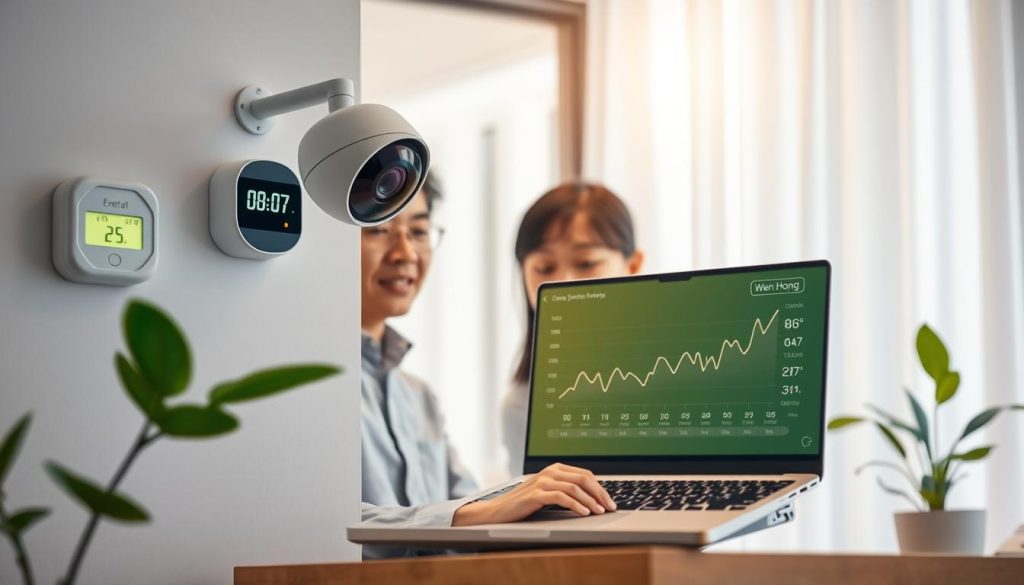
When looking at security cameras, it’s key to think about energy use. High-efficiency cameras watch over your space without costing too much in energy. For example, the Reolink RLC-810A PoE IP 4K HD camera uses less than 12W of power. This shows how new tech can cut down on energy use.
Systems with infrared and pan-tilt features use 2-4 watts more than basic ones. It’s important to know if these extra features are worth the extra energy cost. Also, understanding the power needs of DVR and NVR systems is key. Brands like Hikvision and Dahua might use 40-60 watts, which can add up over time.
Choosing the right parts is essential for saving energy with CCTV systems. Solar-powered cameras like the Reolink Argus 3 Pro and Reolink Go Plus use less energy. Using efficient wires, quality cables, and smart motion detection settings also helps cut down energy use.
When using PoE technology, knowing the power standards is important. The IEEE 802.3af standard uses up to 12.95 W, while IEEE 802.3bt Type 4 can use up to 71.3 W. The number of ports and the devices connected affect power use. Saving energy by turning off unused switches and using smart PoE solutions can also help.
For those seeking the best CCTV solutions, contact Wen Hong today at +65 60135960. Discover the latest options that balance security with energy efficiency.
Impact of PoE Technology on CCTV Power Consumption
Power over Ethernet (PoE) changes how CCTV systems work. It sends power and data through one Ethernet cable. This makes setup and management easier.
Without separate power cables, systems are more reliable. This also means cameras can be placed more freely. It’s perfect for big surveillance setups.
Understanding Power Over Ethernet
Each CCTV camera needs a certain voltage and current to work. For example, a camera needing 12 volts and 500 milliamps uses 6 watts. With 20 cameras, that’s 120 watts total.
For small setups, traditional power supplies work fine. But PoE is better for big systems.
Some key benefits of PoE include:
- It makes installation easier by combining power and data.
- It removes the need for separate power cables, giving more camera placement options.
- It makes systems more reliable by using one power source.
- It also makes installations look cleaner with fewer cables.
(Learn more about PoE benefits.)
But PoE isn’t perfect. Not all cameras work with it, so you might need extra equipment. Also, Ethernet cables can only go 100 meters without extenders.
Despite its limits, PoE makes CCTV systems more efficient. It saves energy and offers flexibility. It’s a smart choice for modern surveillance.
Alternative Power Sources for CCTV Systems
As the need for reliable surveillance grows, finding new power sources for CCTV is key. Traditional power may not always be available. Solar power is becoming more popular as a solution.
Solar-powered systems use solar panels to capture sunlight. They turn this sunlight into electricity stored in batteries. This is great for areas with frequent power cuts, providing a green solution.
Starting with solar tech might seem pricey at first. But, the long-term savings on energy costs make it worth it. For example, the Reolink Argus 3 Pro and Reolink Go Plus are energy-saving options that work well.
Power-over-Ethernet (PoE) is another smart choice. It sends both data and power through the same cables, making setup easier. But, remember, PoE might need extra power from switches or injectors.
During long power outages, Uninterruptible Power Supply (UPS) systems help. They give quick backup power until generators kick in. These generators run on diesel, petrol, or gas, keeping systems running during outages.
Choosing the right parts and setting them up right is key to saving energy. This approach ensures your CCTV system uses energy wisely, blending sustainability with security.
Want to learn more about using alternative power for CCTV? Contact Wen Hong at +65 60135960. They can help you find the best CCTV solutions and offers.
How to Reduce Cost Running CCTV/IP Home Security Cameras/Systems
Managing CCTV power usage can save a lot of money. By choosing the right equipment and settings, you can save energy without losing security. Two key ways to cut costs are picking energy-saving parts and adjusting camera settings.
Choosing Energy-Efficient Components
Choosing the right parts is key to saving on CCTV costs. Look for energy-saving cameras like the Reolink RLC-810A PoE IP camera, which uses less than 12 watts. Battery-powered cameras, like the Reolink Atlas PT Ultra, can last up to eight days. They’re great for those who don’t need to monitor all the time.
Also, consider PoE+ IP cameras, as they use 20% less energy than regular PoE cameras. Good wiring and cables also help save energy and improve system performance.
Scheduling and Custom Settings for Energy Savings
Adjusting camera settings can also save a lot of energy. You can set cameras to turn off when not needed. This saves energy and makes your equipment last longer. Turning on motion detection only when needed also cuts down on power use.
Solar-powered cameras, like the Reolink Argus 3 Pro, are a green choice. They work well in remote areas without needing electricity.
Choosing the right parts and settings is just the start. It’s also important to watch how much power your devices use. For example, a Hikvision DVR uses 40 watts, while a Dahua DVR uses 60 watts. Knowing these numbers helps you make smart choices to save money.
Learning how to save on CCTV costs is all about making smart choices. For the latest in CCTV solutions and deals, call Wen Hong at +65 60135960 today.
Innovations in CCTV Power Management
The quest for energy efficiency in security systems has led to big innovations in CCTV power management. New energy-efficient chipsets have cut down power use a lot. Cameras now have low power modes that save up to 50% of power in good temperatures.
This is key because 60 to 80 percent of a camera’s environmental impact comes from energy use. The right conditions can lower power use by 25%.
Tests in cities like Lund, New York, Madrid, and Dallas have shown these improvements work. They prove that new tech can make a big difference in many places.
Companies like Axis have made cameras like the AXIS Q6318/15-LE and AXIS Q6135-LE. These cameras have a low power mode. This lets users plan for energy use and carbon impact better.
More and more, people want to know about a project’s carbon footprint. This is because of growing concerns about the environment.
Solar-powered CCTV systems are changing how we install security. They use solar panels to make electricity from sunlight. This means less wiring and works well in tough places like construction sites.
These systems are also weather-resistant, so they work all year. They have rechargeable batteries for when it’s cloudy.
These systems can detect people and vehicles in all directions. They can also respond quickly in emergencies. They make places safer and more efficient.
They also come with security features, cloud storage, and AI. This makes them more effective. Video analytics help understand traffic and customer behavior.
For the latest in CCTV tech, contact Wen Hong at +65 60135960. He has exciting offers and more information.
Conclusion
Understanding if CCTV systems use a lot of electricity is key for those looking to save on energy costs. Some cameras, like the Reolink RLC-810A, use less than 12W. But others, with features like IR illumination and pan-tilt, use more power. DVRs and NVRs also add to the energy use, with some needing up to 40 watts.
To cut down on power use, it’s smart to check your current CCTV setup. Look into energy-saving options like motion detection or solar power. Choosing the right hardware and keeping systems at the right voltage can also help.
If you want to upgrade your CCTV system and save on electricity, getting expert advice is a good idea. Contact Wen Hong today at +65 60135960. They can help you find the latest CCTV tech that fits your energy-saving goals.
FAQ
Does CCTV consume a lot of electricity?
CCTV systems don’t use a lot of electricity. Analog cameras use 4-8 watts per hour. IP cameras use 5-10 watts.
How much electricity does CCTV use in standby mode?
In standby, CCTV systems use 2-4 watts. This is less than when they’re active, but it adds to energy costs.
What factors affect CCTV energy consumption?
Several things affect CCTV energy use. These include camera type, features like infrared, the number of cameras, and the environment.
How can I calculate my CCTV electricity costs?
To find your monthly costs, first, multiply the wattage of each camera by its operating hours. Then, multiply by your local electricity rate.
Are there energy-efficient options for CCTV systems?
Yes, look for cameras with energy-saving features. Features like low-power processors and Power over Ethernet (PoE) technology are good choices.
What is the power consumption difference between DVRs and NVRs?
DVRs and NVRs use more power than cameras. They can use 40 to 60 watts, depending on their design and capacity.
How can I reduce the costs associated with running CCTV systems?
To cut costs, use energy-efficient components. Set cameras to power down when not needed. Use schedules for energy savings.
Can I use solar power for my CCTV systems?
Yes, solar panels are a green energy option for CCTV systems. They reduce electrical costs over time, despite initial costs.
What are the latest innovations in CCTV power management?
New advancements include energy-saving chipsets and machine learning. These improve efficiency and sustainability in CCTV systems.
Source Links
- https://reolink.com/blog/cctv-ip-security-camera-power-consumption/?srsltid=AfmBOoo3ExsjQ1WiDx83RC7wEeuf3FPhJ9DTjG3tUj7WNIhXUlLf47ii
- https://www.firstsolution.com.sg/everything-you-need-to-know-about-cctv-power-supplies/
- https://edgewaretech.com/how-much-power-does-cctv-use/.html
- https://blog.ecoflow.com/us/how-many-watts-does-camera-use/
- https://www.vaultelectricity.com/unlocking-the-secrets-of-cctv-power-consumption/
- https://reolink.com/blog/cctv-ip-security-camera-power-consumption/?srsltid=AfmBOoo7KFsea0S1g-FF1629CUtCwu0WWEmx_PeKzj4FJZMU19n7rHJp
- https://blog.zositech.com/cctv-ip-security-camera-power-consumption/
- https://reolink.com/blog/cctv-ip-security-camera-power-consumption/?srsltid=AfmBOoqMdyjThA8MX4GEYHWKtYwYVX1oltGq8rRtGhuss1w_w4XHjwUZ
- https://www.cctvsg.net/5-types-of-security-camera-cables/
- https://www.hikvision.com/en/products/IP-Products/Network-Cameras/solar-powered-security-camera-setup/
- https://reolink.com/blog/cctv-ip-security-camera-power-consumption/?srsltid=AfmBOoo7C_QEqnBiD_gVOJ-uhG_MPQBNq0AZ4VBRewre-S4taMYRfjqr
- https://reolink.com/blog/cctv-ip-security-camera-power-consumption/?srsltid=AfmBOopjUqBsFBbxGctiTRW59YIrSzyPl8jsaiXU3Esmb5-UA3EQeDKA
- https://www.hikvision.com/content/dam/hikvision/usa/white-papers/solar_low_power_consumption_technology_white_paper.pdf
- https://reolink.com/blog/cctv-ip-security-camera-power-consumption/?srsltid=AfmBOopvYnZY7QTzVFrkd1aL0MuhXgrgflojB0klYYNvJP7fBVZHRw34
- https://schoolwatch.co.uk/101-cctv-questions-answered-what-didnt-you-know-about-cctv/
- https://veesion.io/en/connected-cameras-how-much-data-does-a-security-camera-consume/
- https://reolink.com/blog/cctv-ip-security-camera-power-consumption/?srsltid=AfmBOoqMyyCTaCYkfP_0r2XQldj-bh9yE5nrkRWhALO5YBfnqCG-Ku_d
- https://www.versitron.com/blogs/post/understanding-and-reducing-power-consumption-of-poe-network-switches?srsltid=AfmBOop6RbdTj5It-hUKQn08DJv0uafGT86Bu2liIzPYFn21bVaIdV3B
- https://bas-ip.com/articles/cctv-power-supply/
- https://reolink.com/blog/cctv-ip-security-camera-power-consumption/?srsltid=AfmBOopobVpVuT2YuvADngpmprvQLCNF0_hc2j5VP3J8S1yxbNTY-zTc
- https://reolink.com/blog/cctv-ip-security-camera-power-consumption/?srsltid=AfmBOor0RFAD9oQkL2ADlGQdYp5FWK0k7ckh4SmdhZb4aKtAlqP5Yuct
- https://www.skyfiveproperties.com/blog/alternative-power-solutions-maintaining-cctv-camera-operations-power-outages
- https://reolink.com/blog/cctv-ip-security-camera-power-consumption/?srsltid=AfmBOooXiP56_3JWYJfi_mNZRndx7wQYAYxcBiTJlPhY–Ocy1n0hyDE
- https://info.verkada.com/security-cameras/ip-camera/
- https://newsroom.axis.com/article/sustainability-power-efficient-cameras
- https://www.kingdom.co.uk/blog/discover-the-benefits-of-solar-power-cctv
- https://impulsecctv.com/blog/innovations-in-cutting-edge-cctv-technology/
- https://reolink.com/blog/cctv-ip-security-camera-power-consumption/?srsltid=AfmBOopmGMO4q42U7PFLmXN5o5Cl711WDvp1mNmRL85UPpIboZVZuSJL
- https://www.clintonelectronics.com/cctv-101-camera-power-explained/
- https://www.westerndigital.com/en-in/solutions/cctv/blog/7-reasons-why-you-need-a-special-storage-for-cctv-use


