
Can CCTV Identify a Person? Expert Insights
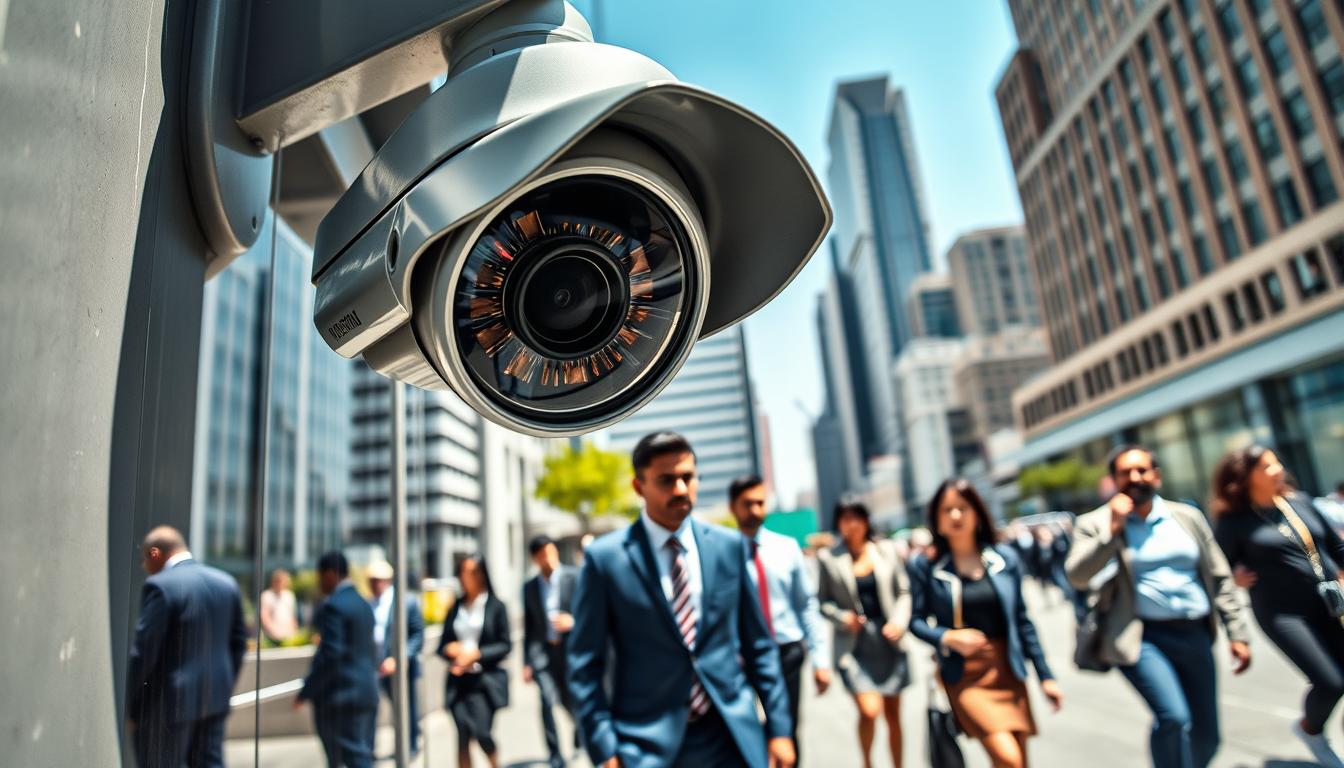
Modern urban landscapes are increasingly monitored. Advanced surveillance technology now does much more than just record video.
Nations like Singapore deploy top-tier systems. These networks aim to enhance public security and aid law enforcement. The core question is about their power for accurate identification.
Traditional video cameras provided evidence after an event. Today’s systems are proactive. They use artificial intelligence and biometric data to analyze scenes in real time.
This shift transforms public safety and raises important privacy discussions. Understanding the capabilities and limits of these tools is crucial for everyone.
Key Takeaways
- Modern surveillance systems have evolved from passive recording to active analysis tools.
- Facial recognition and AI are key technologies enabling person identification.
- Singapore’s expanding camera network serves as a leading global case study.
- Biometric data is central to contemporary identification processes.
- Effective deployment relies on proper installation, maintenance, and clear regulations.
- Enhanced security capabilities must be balanced with ethical privacy considerations.
- The accuracy and applications of this technology vary based on system quality and environment.
Understanding Modern CCTV: More Than Just Recording
Gone are the days when a security camera was merely a silent witness to events. Contemporary protection networks are proactive and intelligent. They form the backbone of modern security infrastructure.
In Singapore, this technology is pivotal. The nation’s extensive network underscores a commitment to public safety. A dense deployment supports this strategy effectively.
The core function has evolved from simple recording. Today’s solutions provide real-time analysis and forensic capabilities. This shift transforms raw video into actionable intelligence.
Advanced facial mapping and behavioral analytics are now standard. These features enable systems to recognize patterns and anomalies. The goal is proactive threat detection, not just post-event review.
Modern setups involve a complete ecosystem. A typical system includes several key components:
- Digital IP Cameras: These devices capture high-definition streams. They offer remote access and support powerful analytics.
- Network Video Recorders (NVRs): These units store and manage digital footage. They are central to data retrieval and review.
- Monitoring Software: This application provides the user interface. It allows for live viewing, alert management, and investigation.
Choosing the right type of observation device is crucial. Each model serves a specific purpose in a comprehensive plan.
- Dome Cameras: These are discreet and suitable for indoor retail or office settings.
- Bullet Cameras: These are visible and deterrent-focused, ideal for outdoor perimeters.
- PTZ (Pan-Tilt-Zoom) Cameras: These offer remote directional control for tracking movement across large areas.
- Thermal Cameras: These detect heat signatures, providing capability in total darkness or fog.
Professional installation is non-negotiable for optimal performance. Experts assess site-specific needs like lighting and blind spots. Proper placement ensures maximum coverage and evidence quality.
For businesses and homeowners in Singapore, practical considerations extend to regulations. Compliance with local data protection guidelines is a key part of responsible deployment. A well-designed network balances powerful surveillance with community trust.
The true power lies in integration. Modern cameras connect with alarm systems and electronic access control. This creates a unified and responsive security environment.
Can CCTV Identify a Person? The Role of Facial Recognition
At the heart of modern security systems lies a powerful capability: matching human faces to specific identities. This technology transforms ordinary video feeds into intelligent tools for verification. The answer to whether surveillance networks can accomplish this task depends entirely on facial recognition software.
Sophisticated algorithms analyze unique facial characteristics. They compare these against massive digital registries. Successful matches provide names and profiles where previously there were only anonymous figures.
From Face Detection to Facial Recognition: Knowing the Difference
Many people confuse two distinct functions. Face detection is the simpler first step. A camera or software scans a scene and confirms, “There is a face here.”
This basic function does not know whose face it sees. It merely locates facial patterns within the frame. Facial recognition represents the advanced next stage.
This complex process asks, “Whose face is this?” It analyzes the specific arrangement of facial features. The system then attempts to match this data against known profiles in a database.
Detection finds a face. Recognition discovers an identity.
Commercial systems illustrate this scale. Cameras from brands like Hikvision and Dahua can store templates for up to 60,000 different people. This capacity shows how using facial recognition moves far beyond simple observation.
The Core Process: Capturing, Analyzing, and Matching
Successful face recognition follows a precise technical sequence. Each stage builds upon the last to deliver reliable results.
Stage 1: High-Quality Image Capture
Everything begins with clear visual data. Camera resolution, lighting, and angle are critical. A blurry or poorly lit image will fail at later stages.
Modern security cameras capture high-definition images. They often work in varied lighting conditions. This quality provides the raw material for accurate analysis.
Stage 2: Feature Extraction and Template Creation
Specialized algorithms then get to work. They map dozens of unique nodal points on a face. Key measurements include the distance between eyes, nose shape, and jawline contour.
This data converts into a mathematical model called a faceprint. Think of it as a digital fingerprint for a person’s visage. The template is a compact, numerical representation of facial geometry.
Stage 3: Database Comparison and Verification
The system searches its stored library of faceprints. It looks for a statistical match between the new template and existing records. A successful match returns an associated identity.
Real-world accuracy depends on several factors. Camera quality, subject pose, and facial expressions all influence results. Modern systems are designed to account for these variables.
In Singapore, this technology supports various applications. Security teams use it for controlled access to sensitive areas. It helps monitor crowded public spaces for persons of interest.
The process enables rapid identification in emergencies. It can track movement patterns across different camera locations. When deployed responsibly, it becomes a formidable tool for public safety.
The Engine Behind Identification: Biometric Data & AI
The remarkable precision of contemporary security networks stems from two intertwined technological forces. These are biometric measurements and artificial intelligence. Together they transform simple video into powerful verification tools.
This combination enables proactive security measures. It moves beyond passive recording to active analysis. The synergy creates systems that learn and adapt over time.
What Constitutes Biometric Data in Surveillance?
Biometric information refers to unique physical characteristics. These markers are difficult to fake or change. They provide a reliable method for verifying individual identity.
In surveillance contexts, several types of biometric data are commonly used. Facial geometry is the most prevalent for public monitoring. Iris patterns and fingerprints serve access control purposes.
Facial biometrics work by mapping specific features. The system measures distances between eyes, nose width, and jaw shape. These measurements create a mathematical faceprint template.
This template is not a photograph. It is a numerical representation of facial structure. Computers process and compare these templates rapidly.
The process protects privacy in one specific way. Original images are not stored in most secure systems. Only the encrypted mathematical model remains in the databases.
How Machine Learning Algorithms Enhance Accuracy
Artificial intelligence provides the brain for modern recognition tools. Machine learning algorithms form the core of this intelligence. They enable continuous improvement in matching accuracy.
These algorithms learn from massive datasets of facial images. They analyze millions of examples under different conditions. This training helps them handle real-world challenges.
Poor lighting and unusual angles once caused failures. Modern software now compensates for these variables. Partial obstructions like masks or hats present less obstacle today.
Search failure rates dropped from 4% in 2014 to just 0.2% by 2018 for databases containing 26.6 million photos.
Deep learning neural networks drive this progress. They mimic how human brains process visual information. Multiple layers analyze increasingly complex facial features.
The best facial recognition technology now achieves remarkable precision. A 2020 NIST test showed a top error rate of only 0.08%. This represents near-perfect identification under ideal conditions.
These systems continuously evolve through feedback loops. Each verification attempt provides new training data. False positives decrease as the algorithms refine their parameters.
Computational power determines where processing occurs. Edge computing handles analysis within the camera itself. Centralized servers manage larger databases and complex queries.
Advanced analytics extend beyond simple facial recognition. Behavior prediction spots unusual patterns in crowds. Anomaly detection flags potential security threats automatically.
These capabilities transform how we protect public spaces. They enable rapid response to emerging situations. The technology supports both security and efficient crowd management.
For individuals in Singapore, this means enhanced public safety. The systems operate transparently within legal frameworks. They balance powerful recognition tools with personal privacy protections.
How Facial Recognition Technology Works in CCTV Systems
The operational mechanics of facial recognition within surveillance networks follow a precise, multi-stage sequence. This technical workflow transforms raw visual data into actionable identity information. Each phase builds upon the last to deliver reliable results.
Modern software orchestrates this entire process. It begins with capturing a clear image and concludes with a verification decision. Understanding these steps clarifies the technology’s capabilities and limitations.
Step 1: Image Acquisition and Face Detection
Everything starts with high-quality visual input. Surveillance cameras capture video streams or still images. The clarity of this initial capture directly impacts all subsequent stages.
Technical specifications are crucial for success. High-resolution sensors provide detailed pixel data. Proper lens quality and adequate frame rates ensure sharp, usable footage.
Environmental factors play an equally important role. Optimal lighting conditions allow cameras to function at their best. Strategic placement avoids obstructions and provides clear frontal views of faces.
The detection phase begins immediately. Specialized algorithms scan each frame for human facial patterns. This initial scan answers a simple question: “Is there a face present in this image?”
Successful isolation of a face region prepares the data for deeper analysis. The system crops and standardizes the image at this point. This normalization ensures consistency before feature measurement begins.
Step 2: Feature Extraction and Template Creation
This phase converts visual information into mathematical data. Advanced algorithms analyze the detected face. They identify dozens of unique nodal points and landmarks.
Key measurements include the distance between the eyes. The system also maps the width of the nose and the contour of the jawline. These features form a distinctive facial signature.
The technology creates a numerical model called a face template. This template is not a stored photograph. It represents a mathematical abstraction of facial geometry.
A face template is a compact numerical code, similar to a digital fingerprint for one’s visage.
This approach addresses common privacy concerns. Original images can be discarded after template generation. The mathematical model alone cannot be reverse-engineered into a recognizable photo.
The extraction process accounts for real-world variables. It adjusts for different facial expressions and slight head rotations. Modern systems maintain accuracy despite these natural variations.
Step 3: Database Comparison and Match Verification
The newly created template now seeks a match. The system compares it against a pre-existing database of enrolled templates. This comparison happens almost instantaneously.
Matching algorithms calculate a similarity score. They measure how closely the new template aligns with each stored record. A predetermined threshold determines what constitutes a valid match.
Two primary matching modes exist in practice. Verification performs a one-to-one check. It asks: “Is this person who they claim to be?”
Identification conducts a one-to-many search. It asks: “Who is this person among thousands of possibilities?” Law enforcement applications typically use this broader search mode.
The database itself is a critical component. Its size, security protocols, and update frequency all influence system performance. Regular maintenance ensures accuracy over time.
Successful matches trigger configured actions. These may include real-time alerts for security personnel. They can also grant physical access through integrated control systems.
This entire three-step sequence occurs within seconds. The speed enables proactive security responses. It transforms passive monitoring into an active identification tool for public safety.
Singapore’s Surveillance Landscape: A Case Study in Implementation
The city-state of Singapore stands as a global benchmark for the strategic implementation of integrated surveillance networks. Its approach provides a concrete model for how theoretical capabilities are translated into real-world public safety solutions. This national strategy balances technological ambition with clear operational goals.
The PolCam Network and National Security Goals
Central to this strategy is the PolCam initiative by the Singapore Police Force. This project involves installing police-operated cameras in public housing estates, town centers, and other communal areas. The current PolCam 2.0 phase alone deploys about 10,500 devices.
The national security objectives are multifaceted and clearly defined. Primary goals include deterring criminal activity and supporting investigations. Enhanced overall public safety is the ultimate aim.
Recent data demonstrates its effectiveness. Law enforcement officials have reported multiple successful apprehensions directly aided by PolCam footage. In one instance, the network helped capture 15 suspects linked to various cases.
Singapore’s plan is to expand its public camera network to over 200,000 units by 2030, creating one of the world’s most dense urban surveillance grids.
From HDB Estates to City Centers: Coverage and Growth
The geographical coverage of this network is extensive and deliberate. It spans from the heartlands of Housing & Development Board (HDB) residential estates to bustling commercial zones. Major thoroughfares like Orchard Road and the Central Business District are under constant observation.
The scale is already significant and growing rapidly. Official figures indicate over 90,000 government-installed cameras are currently in use. When combined with private systems, the total exceeds 109,000.
This creates a remarkable density of coverage. Statistically, there is approximately one public camera for every 13 residents. This integration forms a comprehensive monitoring web.
Private cctv from malls, offices, and transport hubs often complements the public network. This collaboration creates a more unified security ecosystem. The technological standards for public surveillance are consistently high.
Features like high-resolution imaging and robust low-light performance are standard. Advanced analytics, including facial recognition capabilities, are integrated into the systems. Proper installation and maintenance ensure high quality evidentiary video.
The public rationale for this investment is framed around a pragmatic trade-off. In a densely populated city-state, the government presents enhanced surveillance as essential for collective security. This case study shows how advanced cctv networks operate in a real-world, national setting.
Enhancing CCTV with AI: Security Camera Analytics in Action
Artificial intelligence transforms passive monitoring networks into active security partners. This integration represents the next frontier for surveillance technology. Video analytics software provides contextual understanding of recorded scenes.
Advanced algorithms classify and track objects in real time. These systems distinguish genuine threats from harmless actions. The result is a significant reduction in false alarms.
Modern solutions analyze both live feeds and recorded footage. They automatically detect objects of interest without human intervention. This capability moves beyond basic recording or simple facial recognition.
Real-Time Alerts and Behavioral Analysis
Immediate notification represents a key advantage of intelligent surveillance. Security personnel receive instant alerts about specific events. Unauthorized entry into restricted zones triggers immediate warnings.
Loitering detection monitors individuals who remain in one area too long. Unusual crowd formations signal potential security concerns. These real-time capabilities enable proactive responses.
Behavioral analysis learns normal movement patterns within monitored spaces. The technology establishes baselines for typical activity. Deviations from these patterns flag potential security incidents.
Suspicious movements might include someone testing door handles. Unusual running in a secure facility could indicate trouble. Theft prevention benefits from monitoring atypical interactions with merchandise.
AI-powered analytics filter out 95% of irrelevant activity, allowing security teams to focus on genuine threats.
Convolutional neural networks provide the technical foundation. These CNNs process visual data through multiple analysis layers. They identify complex patterns that simpler systems would miss.
Singapore’s PolCam network incorporates these intelligent features. Commercial entities use similar analytics for queue management. Heat mapping in retail spaces optimizes customer flow and security.
Beyond Faces: Vehicle and Object Recognition
Modern recognition capabilities extend far beyond human identification. License Plate Recognition systems automatically capture vehicle information. This technology works in various lighting and weather conditions.
LPR databases cross-reference plates against authorized lists. Stolen vehicles trigger immediate security alerts. Parking management systems use this technology for automated access control.
Object classification identifies specific items within camera views. Unattended bags in transit hubs receive special attention. The system can distinguish between ordinary luggage and potential threats.
Firearm detection represents another critical application. The software recognizes weapon shapes within video feeds. Immediate alerts give security teams crucial response time.
Operational efficiency improves dramatically with these tools. Monitoring requirements decrease as AI handles routine observation. Personnel focus on verified incidents rather than constant screen watching.
Practical implementation requires careful planning. Computing resources must support the analytical workload. Initial training data teaches the system what constitutes normal activity.
Singapore’s advanced infrastructure supports these sophisticated applications. The technology balances powerful surveillance with responsible data use. This approach maintains public trust while enhancing security.
Key Features of an Effective Facial Recognition Security System
Selecting the right facial recognition security system demands careful evaluation of several critical technical specifications. The difference between a basic setup and a high-performance network lies in specific features and capabilities. This guide outlines the essential characteristics that define reliable solutions.
Modern deployments require more than just a camera with recognition software. They need integrated ecosystems designed for real-world conditions. Performance depends on both hardware excellence and intelligent system architecture.
High-Resolution Imaging and Low-Light Performance
Image quality forms the foundation of accurate facial recognition. High-resolution sensors capture the fine details necessary for reliable analysis. Megapixel count directly determines the clarity of facial features available for matching.
Systems typically start at 4MP for basic applications. More demanding environments require 8MP or higher resolutions. This ensures enough pixel data for algorithms to work effectively, even at longer distances.
Low-light capability is equally critical for round-the-clock security systems. Technologies like infrared illumination enable clear imaging in complete darkness. Wide dynamic range compensates for challenging backlighting conditions.
Starlight sensors represent the latest advancement in low-light performance. These specialized components deliver color video in near-dark environments. This technology maintains identification accuracy when natural lighting fails.
Without clear facial details, even the most advanced recognition algorithms cannot deliver reliable results.
Database Management and Scalability
An effective system must handle thousands or millions of facial templates efficiently. Database architecture determines how quickly matches occur during searches. Well-organized databases support rapid enrollment and retrieval operations.
Scalability ensures the network grows without performance degradation. Adding more cameras should not slow down matching speeds. Increasing template capacity must maintain consistent response times.
Edge-based processing represents one architectural approach. The camera itself performs initial analysis and template creation. This reduces network bandwidth requirements and central server load.
Server-based processing offers different advantages. Centralized software manages larger databases and complex matching algorithms. This approach supports more sophisticated analytics and reporting features.
Most enterprise implementations use hybrid architectures. They balance edge processing for speed with server management for scale. This combination delivers both immediate alerts and comprehensive forensic capabilities.
Integration Capabilities with Access Control
True security value emerges when facial recognition connects with other protection components. Integration transforms standalone technology into automated workflows. Electronic door locks can release automatically for recognized personnel.
Turnstiles and gates respond to verified identities without manual intervention. Alarm panels receive signals from the recognition system. Visitor management platforms update in real time based on facial verification.
These integrations create powerful automated responses. Authorized individuals gain seamless access to permitted areas. Unrecognized faces trigger immediate security alerts through multiple channels.
Modern systems support standard protocols like ONVIF for camera interoperability. They integrate with building management systems through APIs. This ensures the cctv system works within existing infrastructure.
Remote access capabilities allow monitoring from any location. Security teams receive push notifications about specific events. Email alerts and automated sirens provide additional response mechanisms.
Additional Critical Features for Reliable Operation
Real-time processing speed determines how quickly matches occur. Latency under one second enables immediate responses to security events. This requires sufficient computational power within the chosen architecture.
Network robustness ensures continuous operation during peak usage. Redundant connections and failover mechanisms maintain system availability. Data encryption protects facial templates during transmission and storage.
User permission controls define who can enroll new individuals. They determine who can review match logs and configure alert rules. Multi-level authentication prevents unauthorized system changes.
Reliable alert mechanisms include configurable notification rules. Security personnel define which events trigger specific responses. Audit trails document all system activities for compliance purposes.
Recommendations for Singapore Businesses
Local infrastructure supports sophisticated facial recognition deployments. High-speed internet connectivity enables cloud-based solutions where appropriate. Reliable power grids ensure continuous system operation.
Typical use cases include corporate access control and retail security. Visitor management in office buildings represents another common application. Each scenario demands specific feature prioritization.
Compliance with Singapore’s Personal Data Protection Act is essential. Systems should include privacy-by-design features like template-only storage. Clear data retention policies must align with regulatory requirements.
Professional installation ensures optimal camera placement and configuration. Regular maintenance keeps lenses clean and software updated. These practices maintain the quality necessary for reliable performance.
Evaluating vendors should include their local support capabilities. Response times for technical issues affect overall system reliability. Training resources help staff utilize all available features effectively.
A comprehensive checklist guides selection and implementation. It covers imaging quality, database management, integration options, and compliance considerations. This approach ensures investments deliver expected security value.
Navigating the Rules: CCTV Regulations in Singapore
Singapore has established clear boundaries for surveillance through detailed legislation and enforcement mechanisms. Operating monitoring technology here means following specific rules that balance public safety with individual rights. These regulations create a framework where technology serves community interests responsibly.
With over 900,000 surveillance cameras across the island, regulatory oversight is essential. Every recording device must comply with national standards for proper use. This ensures both effective security and respect for personal privacy.
The Personal Data Protection Act (PDPA) Explained
The PDPA serves as Singapore’s cornerstone legislation for personal information protection. It governs how organizations collect, use, and disclose personal data. This includes all footage from surveillance systems.
Facial images and recognition templates qualify as personal data under this law. The Act applies to both commercial entities and government agencies. Its primary goal is balancing organizational needs with individual privacy rights.
Key obligations under the PDPA create specific requirements for monitoring deployments:
- Purpose Limitation: Organizations must collect footage only for legitimate, stated reasons. The purpose should be communicated clearly to the public.
- Notification Requirement: Clear signs must inform individuals when they enter monitored areas. This transparency allows people to make informed choices.
- Protection Obligation: Recorded data requires robust security measures against unauthorized access. This includes encryption and access controls.
The Personal Data Protection Commission oversees PDPA enforcement. This regulatory body issues specific guidelines for surveillance technology. Their directives help organizations implement compliant solutions.
Organizations must conduct a privacy impact assessment before deploying surveillance systems with facial recognition capabilities.
Guidelines for Responsible Biometric Data Use
Specific rules govern biometric information collection through surveillance technology. The PDPC provides detailed guidance for responsible implementation. These guidelines address both technical and ethical considerations.
Certain locations are strictly off-limits for camera placement. Toilets, changing rooms, and hotel bedrooms cannot have monitoring devices. These restrictions protect fundamental privacy expectations.
For residential installation, additional considerations apply. Homeowners need permission when cameras point at common areas or neighboring properties. This respects community living arrangements and prevents disputes.
Consent operates on different levels depending on the situation. Public spaces often involve “deemed consent” where presence implies acceptance. More intrusive collection requires explicit, informed consent from each person.
Data management follows strict protocols under these regulations:
- Retention Periods: Footage should only be kept as long as necessary for the stated purpose. Most organizations establish clear deletion schedules.
- Secure Disposal: When footage is no longer needed, it must be permanently erased. Physical destruction of storage media may be required.
- Access Rights: Individuals can request access to recordings featuring themselves. Organizations must provide this access within statutory timeframes.
Compliance is mandatory, not optional. Breaches can lead to significant financial penalties reaching S$1 million. Reputational damage often exceeds monetary fines for affected organizations.
Singapore’s police operate within this same regulatory framework. Their extensive public camera network follows PDPA requirements. This demonstrates how security and privacy protections can coexist effectively.
For businesses planning surveillance deployments, practical steps ensure compliance. Conducting a PDPA assessment before implementation is crucial. This evaluation should examine:
- The legitimate purpose for camera placement
- Notification methods for employees and visitors
- Data protection measures for stored footage
- Retention and disposal policies
- Procedures for handling access requests
Professional security consultants often assist with this compliance process. They understand both technological capabilities and regulatory requirements. Their expertise helps organizations deploy effective, lawful monitoring systems.
The regulatory environment continues evolving alongside technological advancements. Singapore maintains its commitment to balanced, responsible surveillance. This approach supports both public safety and individual rights in the digital age.
Balancing Act: Privacy Concerns and Public Safety
The proliferation of surveillance networks presents a fundamental societal dilemma. How do we maximize public safety while safeguarding personal privacy? This tension defines the ethical landscape of modern monitoring.
Advanced technology, particularly facial recognition, has intensified this debate. The capability for constant tracking and mass data collection raises significant questions. Organizations must navigate this complex terrain with transparency and responsibility.
Public Perception of Surveillance in Singapore
In Singapore, public opinion on monitoring is nuanced. Many citizens accept extensive networks as a trade-off for low crime rates. High trust in public institutions often underpins this acceptance.
Surveys indicate a pragmatic view prevails among residents. The perceived benefit to collective security frequently outweighs abstract privacy concerns. This is especially true in densely populated housing estates and transport hubs.
However, unease exists regarding potential overreach. The concept of “function creep” worries some individuals. This is when collected data is used for purposes beyond its original intent.
Public acceptance hinges on perceived necessity, proportionality, and trust in the governing authority.
Cultural values emphasizing social harmony also shape local perception. The discourse focuses more on communal benefits than absolute individual rights. This creates a distinct context for the surveillance debate.
Best Practices for Transparent and Responsible Use
Technological capability does not automatically justify its application. An ethical framework must guide the use of all monitoring systems. This is crucial for maintaining public trust.
Businesses and organizations deploying these tools must lead with transparency. Clear signage should announce camera presence and its specific purpose. Published privacy policies explain how footage is handled.
The principle of data minimization is paramount. Collect only the visual information necessary for the stated security objective. Retain it only for as long as absolutely required.
Strong cybersecurity measures are non-negotiable. Biometric databases and video archives are high-value targets. Robust encryption and access controls protect against breaches.
Independent oversight and regular audits build accountability. They ensure systems operate within their defined boundaries. This provides a check against misuse.
For people in Singapore, these practices translate to tangible protections. They ensure powerful tools serve the public good without eroding fundamental freedoms. The goal is a sustainable balance, not a choice between one or the other.
Responsible use involves ongoing dialogue with the community. Establishing channels for public inquiries addresses concerns directly. It turns monitoring from a source of anxiety into a pillar of shared safety.
The Impact on Law Enforcement and Public Security
The integration of facial recognition into public security frameworks has created both unprecedented opportunities and complex ethical challenges. This technology transforms how authorities protect communities and investigate incidents.
Singapore’s experience provides valuable insights into this transformation. The balance between effective enforcement and civil liberties remains a central discussion point.
Success Stories from Singapore’s Police Force
The Singapore Police Force demonstrates practical benefits through its PolCam network. This technology helps solve cases with remarkable speed and precision.
One documented case involved tracking suspects across multiple housing estates. Facial recognition analysis of surveillance footage identified individuals involved in a series of thefts. Authorities made arrests within hours instead of days.
Another success story concerns public event security. During major gatherings, the system scans crowds for persons of interest. This proactive approach has prevented potential incidents before they occur.
Investigative efficiency shows measurable improvement. Video evidence provides irrefutable visual proof in court proceedings. It helps establish accurate timelines of criminal activities.
Advanced surveillance tools have reduced investigation time for certain cases by up to 40%, allowing officers to focus resources more effectively.
Public perception reflects this effectiveness. Approximately 60% of Singapore residents support police use of these tools. They view enhanced security as a worthwhile trade-off for increased monitoring.
The technology proves particularly valuable in counter-terrorism operations. Rapid identification of potential threats helps secure transportation hubs and public spaces. This capability represents a significant advancement in preventive safety measures.
Ethical Considerations in Policing and Investigation
Powerful surveillance tools demand equally strong ethical frameworks. The potential for misuse requires clear boundaries and oversight mechanisms.
Algorithmic bias represents a serious concern. Studies show some recognition systems have higher error rates for specific demographic groups.
Women and people with darker skin tones face greater misidentification risks. This disparity raises questions about equitable policing practices.
The phenomenon of ‘mission creep’ requires constant vigilance. Tools installed for serious crime investigation might gradually expand to minor infractions. Clear protocols must prevent this expansion without proper justification.
Legal safeguards form the foundation of responsible deployment. Judicial oversight ensures surveillance operations respect constitutional rights. Singapore’s Personal Data Protection Act provides one regulatory model.
Essential measures for ethical implementation include:
- Continuous accuracy testing of facial recognition algorithms across diverse populations
- Regular algorithm auditing by independent third parties to detect and correct biases
- Comprehensive officer training on proper technology use and legal limitations
- Transparent reporting on surveillance activities and outcomes
Proper camera placement and maintenance ensure high-quality video evidence. This technical requirement directly impacts ethical outcomes. Blurry or poorly lit footage increases misidentification risks.
Public trust depends on responsible data management. Strict retention policies prevent indefinite storage of biometric information. Access controls limit which individuals can view sensitive recordings.
The Singapore approach balances operational needs with rights protection. Regular reviews assess whether surveillance methods remain proportionate to their stated purposes. This ongoing evaluation maintains public confidence in security institutions.
For more detailed insights into how surveillance technology achieves accurate results, explore our analysis of identification accuracy in modern systems.
Modern law enforcement faces the challenge of leveraging technological advantages while protecting fundamental freedoms. Singapore’s experience shows this balance is achievable with careful planning and continuous oversight.
Current Challenges and Limitations of Identification Systems
Despite significant advancements, current identification technology faces substantial hurdles that limit its reliability. These obstacles affect both technical performance and ethical implementation. Understanding these limitations is essential for realistic expectations.
Even the most sophisticated systems encounter real-world complications. Environmental factors and human variables create complex scenarios. These challenges impact the effectiveness of surveillance networks.
Issues of Misidentification, Bias, and Accuracy
Misidentification represents a serious problem for surveillance technology. False positives occur when innocent individuals match watchlist profiles. False negatives happen when guilty parties evade detection.
The consequences extend beyond technical errors. Wrongful accusations damage lives and reputations. Law enforcement resources get diverted to false leads.
Public trust erodes when systems make repeated mistakes. Communities may resist surveillance deployments they perceive as unreliable. This undermines the security benefits these tools should provide.
Algorithmic bias remains a persistent concern. Many training datasets lack demographic diversity. Systems often perform poorly on certain population groups.
Research indicates some facial recognition software shows higher error rates for women and people with darker skin tones.
This disparity perpetuates systemic inequalities in security practices. Marginalized communities face disproportionate scrutiny. The technology can amplify existing social biases.
Training data quality directly affects recognition accuracy. Datasets with limited variety create flawed algorithms. Systems trained primarily on one demographic group struggle with others.
The Critical Dependence on High-Quality Footage
Even advanced algorithms require clear source material for reliable identification. Pixelated or dark images provide insufficient data for analysis. Camera placement and angle significantly impact results.
Environmental conditions create numerous practical challenges. Subjects wearing hats, masks, or sunglasses obscure facial features. Rapid movement causes motion blur in captured footage.
Extreme lighting contrasts complicate image processing. Backlighting creates silhouettes instead of recognizable faces. Poor weather conditions reduce visibility and clarity.
Physical obstructions like trees or signage block camera views. These barriers create blind spots in surveillance coverage. Maintenance issues like dirty lenses further degrade image quality.
The “garbage in, garbage out” principle applies directly to identification systems. Low-quality reference images in databases produce unreliable matches. Enrollment photographs must meet strict standards for useful templates.
Computational requirements present additional barriers. Real-time processing demands substantial processing power. Large-scale deployments require significant infrastructure investment.
Cost considerations limit access to high-accuracy solutions. Advanced systems with superior capabilities carry premium pricing. Many organizations settle for less effective alternatives.
Understanding these limitations guides responsible deployment strategies. Realistic expectations prevent overreliance on imperfect technology. Acknowledging challenges drives research toward meaningful improvements.
These hurdles do not invalidate surveillance technology’s value. They highlight areas needing continued development and refinement. Ethical application requires honest assessment of current capabilities.
The Future of CCTV and Person Identification
Emerging trends point toward more intelligent, connected, and responsive monitoring networks. Advancements in artificial intelligence and deep learning will boost facial recognition accuracy.
Faster 5G networks enable real-time, high-definition video streaming. Edge computing processes data within cameras for quicker local decisions.
Integration with IoT creates comprehensive situational awareness platforms. These systems support smart city management and retail services.
Cybersecurity becomes crucial as surveillance technology advances. New standards and regulations will address ethical concerns.
The future balances powerful security solutions with robust privacy safeguards. Continuous innovation will redefine public safety and societal norms.
FAQ
How does facial recognition work with security cameras?
Modern surveillance systems use specialized software to analyze video feeds. The technology first detects a human face within the frame. It then maps unique facial features like the distance between eyes or jawline shape to create a digital template. This template is instantly compared against a watchlist database to find a potential match, enabling identification.
What makes a surveillance system effective for recognizing individuals?
Several features are crucial for reliable performance. High-resolution imaging and excellent low-light capabilities ensure clear footage for analysis. The underlying algorithms must be advanced and regularly updated. Furthermore, seamless integration with other security solutions, like access control systems, and a well-managed biometric database are key for practical, real-world application.
Are there privacy rules for using this technology in Singapore?
A> Yes, usage is governed by strict regulations. The Personal Data Protection Act (PDPA) sets the standard for collecting and using personal data, including biometric information from facial recognition. Organizations must have a legitimate purpose, obtain consent where required, and implement strong safeguards to protect the collected data from misuse or breaches.
Can these systems make mistakes?
A> While rapidly improving, no technology is infallible. Accuracy can be affected by poor video quality, camera angle, or lighting conditions. Algorithmic bias has also been a concern, where systems perform less accurately on certain demographics. These limitations highlight why human verification remains an essential part of the process for critical decisions.
How is this technology used by law enforcement?
A> Police forces use it as a powerful investigative tool. It can help identify suspects from footage, track persons of interest across public areas, and find missing individuals. In Singapore, the extensive PolCam network supports these public safety goals. Ethical guidelines are crucial to ensure its use balances effective policing with civil liberties.
What’s next for surveillance and identification technology?
A> The future points toward more integrated and intelligent systems. Expect advancements in artificial intelligence that improve behavioral analysis and object recognition beyond just faces. There will also be a stronger focus on developing ethical frameworks and transparency standards to build public trust as these powerful tools become more widespread in our cities.


