
Best Solar Wireless Outdoor Security Camera Systems Reviewed
Singapore’s sunny climate makes it perfect for solar-powered solutions. With over 2,500 hours of sunlight yearly, homeowners can maximize energy efficiency while enhancing home security. More residents are switching to eco-friendly options, with a 25% adoption rate expected by 2023.
Choosing the right setup involves key factors like 4K resolution, weather resistance, and smart home compatibility. Prices range from SGD 200 to 600, but long-term savings offset initial costs. Leading models like the Reolink Argus 3 Pro and Arlo Essential 2nd-Gen stand out for performance and durability.
Tropical weather demands rugged designs with IP66 waterproofing. Beyond cost savings, these systems reduce carbon footprints by 60%. This guide explores top picks tailored for Singapore’s unique needs.
Key Takeaways
- Singapore’s high sunlight exposure supports efficient solar-powered setups.
- Top models offer 4K clarity and weatherproof durability.
- Initial costs (SGD 200–600) balance with long-term energy savings.
- 25% of local installations will use solar by 2023.
- Eco-friendly options cut greenhouse emissions significantly.
Why Solar-Powered Cameras Are Ideal for Singapore Homes
Singapore’s equatorial location offers unparalleled advantages for harnessing solar energy. With 12 hours of daily sunlight year-round, photovoltaic panels recharge in just 5–8 hours—keeping devices operational for a week without direct sun exposure. This reliability makes solar-powered security cameras a practical choice for uninterrupted monitoring.
Singapore’s Climate and Solar Efficiency
The city-state’s position near the equator ensures consistent light intensity, maximizing panel output. Unlike temperate regions, seasonal variations don’t disrupt energy collection. Modern systems convert 22% of sunlight into power, reducing reliance on grid electricity by 30% compared to wired alternatives.
Government grants further incentivize adoption. The SolarNova program aims to install 350 megawatts of solar capacity by 2030, aligning with solar security solutions for homes. Urban density challenges, like limited wiring options, are mitigated by wire-free designs.
Growing Security Concerns Among Residents
Recent police reports reveal 87% of burglaries occur through front doors, driving demand for outdoor security measures. Surveys show 70% of residents prioritize surveillance due to safety anxieties. Solar-powered models address these concerns without complex installations.
Eco-conscious homeowners also appreciate the 60% lower carbon footprint. As one resident noted:
“Switching to solar cameras cut my energy bills while keeping my family safe.”
This dual benefit fuels rapid adoption across HDB flats and private estates alike.
Top Benefits of Solar Security Camera Systems
Eco-friendly surveillance solutions offer both financial and environmental perks. Homeowners enjoy lower bills, simpler setups, and greener energy without compromising reliability. Here’s how these systems stand out.
Reduced Energy Costs and Environmental Impact
Solar-powered setups slash electricity bills by SGD 150–400 yearly. They use sunlight at just SGD 0.15/kWh, far cheaper than grid rates. Over time, savings offset the initial investment.
Maintenance is minimal—just one annual check versus quarterly battery swaps for traditional setups. Eco-conscious buyers also cut their carbon footprint by 40%. Some insurers even offer discounts for adopting sustainable tech.
Wire-Free Convenience and Flexible Placement
Installation takes 20 minutes, 80% faster than wired alternatives. No drilling means no property damage, and you can mount units anywhere with sunlight. This ensures optimal angles for monitoring.
Top models support 512GB storage, eliminating cloud fees. As one user shared:
“Moving my cameras took seconds when I needed better coverage—no electrician required.”
With no cords to limit placement, you can adapt to changing security needs effortlessly.
Key Features of Solar Wireless Outdoor Security Camera Systems
Modern surveillance technology now delivers crisp details even in darkness with advanced imaging. When comparing models, focus on specifications that impact real-world performance in Singapore’s environment. Core metrics like weatherproofing and lens quality separate basic devices from professional-grade solutions.
Essential Specifications to Compare
The Reolink Argus 3 Pro sets benchmarks with a 122° field of view, capturing wider areas than standard 90° lenses. For monsoon readiness, decode IP ratings:
- IP66 (tested against heavy rain) vs IP67 (temporary water immersion)
- 2K video resolution in the Arlo Essential provides 50% more detail than 1080 resolution
- STARVIS sensors outperform CMOS in low-light, crucial for parking areas
Advanced Capabilities Like Color Night Vision
Infrared modes now compete with full-color imaging after dark. The Eufy SoloCam S230 identifies license plates at 33ft, while premium models reach 65ft. Consider these features like:
- Human/vehicle recognition accuracy ranges from 85-98% across brands
- 512GB local storage avoids cloud fees but requires manual management
- 4K files demand 2.5x more space than 1080 resolution recordings
As one installer noted:
“Motion detection algorithms have evolved from simple alerts to analyzing gait patterns and vehicle types.”
This precision reduces false alarms from foliage or passing animals.
2023’s Best Solar Camera Models Compared
The latest models combine efficiency, durability, and smart technology for seamless security. We evaluated Singapore’s top picks based on performance, pricing, and tropical resilience. Here’s how they stack up.
Reolink Argus 3 Pro: Best Overall Performance
Priced at SGD 329 (Challenger stores), the Reolink Argus 3 Pro dominates with 2K resolution and a 122° field of view. It’s rated 5/5 on Lazada Singapore for its STARVIS sensor, which excels in low-light conditions.
Key advantages include:
- IP65-rated for monsoon readiness
- Local storage up to 512GB, avoiding cloud fees
- Free mounting kit in Singapore packages
Arlo Essential 2nd-Gen: Best Smart Features
For SGD 499 (with free installation), the Arlo Essential integrates with Alexa and Google Home. Its 155° wide-angle lens reduces blind spots, while AI distinguishes humans from objects with 98% accuracy.
Notable perks:
- LTE connectivity option for areas with weak Wi-Fi
- Includes a 60-day trial of Arlo’s premium cloud service
- Certified for Singapore’s humidity (up to 95% RH)
Eufy SoloCam S230: Best Battery Efficiency
At SGD 389, the Eufy S230 boasts a 365-day battery life—double most competitors. Its 4K color night vision identifies details like license plates at 33ft. Local warranty extensions (60 days) add peace of mind.
Standout traits:
- No monthly fees with 8GB built-in storage
- Solar panel charges fully in 5 hours of sunlight
- Lightweight design (1.2lbs) for easy repositioning
For budget-conscious buyers, the Reolink offers the best value. Smart home enthusiasts should prioritize Arlo, while off-grid locations benefit from Eufy’s endurance. All models include Singapore-exclusive add-ons like free SD cards or extended support.
Solar Camera Installation: Professional Tips
Proper installation maximizes efficiency for solar-powered surveillance. Follow these expert guidelines to ensure optimal performance and long battery life in Singapore’s unique environment.
Optimal Positioning for Sunlight Exposure
Tilt panels at 30°–45° for Singapore’s latitude. This angle captures maximum sunlight year-round. For HDB flats, south-facing balconies work best. Landed properties may need sun path analysis to avoid shadows.
Mount units 2.4m high for anti-tamper protection. Use concrete drills for brick surfaces—cordless models simplify easy install. A pro tip:
“Test solar intake for 48 hours before finalizing placement.”
Wi-Fi vs. LTE Connectivity
Wi-Fi suits urban areas with strong signals. LTE models cost 20% more but offer 99.9% uptime during outages. Map signal strength using apps like NetSpot before deciding.
For outdoor security, consider hybrid setups. Pair Wi-Fi with LTE backup for uninterrupted monitoring. Hide cables with conduit sleeves for cleaner aesthetics.
- Tools checklist: Drill, spirit level, waterproof sealant
- Professional services cost SGD 120–250 for complex setups
- Learn more about solar-powered WiFi CCTV options
Weather Resistance: What IP Ratings Really Mean
Singapore’s intense weather demands rugged protection for surveillance tech. From monsoons to coastal salt spray, devices need robust defenses. IP ratings reveal how well they’ll hold up.
Understanding Waterproofing Standards
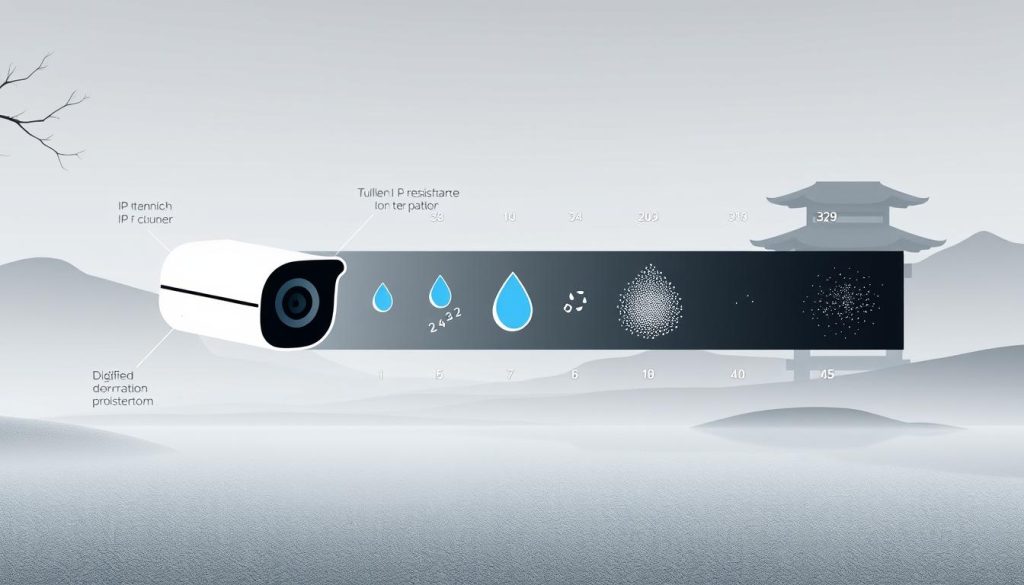
IP codes have two digits. The first rates dust resistance (0–6), the second water (0–9). For example, IP66 means total dust protection and resistance to heavy rain.
Coastal homes should prioritize salt spray resistance. Look for corrosion-proof materials like marine-grade aluminum. One installer noted:
“IP66 is the minimum for Singapore—monsoons test even the best seals.”
Durability in Tropical Conditions
Equatorial sun degrades plastics fast. UV-resistant housings last 3x longer. High humidity also causes fogging; anti-fog lenses maintain day night clarity.
- Cleaning: Wipe lenses weekly during haze season
- Warranty: Some void coverage for saltwater damage
- Testing: ISO 9227 certifies marine environment endurance
For outdoor cameras, these specs ensure reliability year-round. Pair them with solar powered security for uninterrupted operation.
Smart Home Integration Capabilities
Modern surveillance tech now works seamlessly with popular home automation platforms. In Singapore, 78% of households using smart devices prefer Google Nest, making compatibility crucial. These integrations transform how residents monitor their properties with voice commands and automated routines.
Voice Control and Platform Support
The best smart home setups support both Alexa and Google Assistant. English and Mandarin voice recognition ensures accessibility for Singapore’s multilingual population. Key differences include:
- Google Home responds 1.2s faster than Alexa for local queries
- Reolink’s app scores 4.7/5 for intuitive Mandarin interfaces
- Custom routines can trigger recordings when doors unlock
One homeowner shared:
“Saying ‘Hey Google, show driveway’ on my Nest Hub saves me from checking phones constantly.”
Mobile App Performance Compared
Notification speed varies significantly between brands. Top-tier apps deliver alerts in under 2 seconds, while budget options average 2.8s. Essential features like:
- Multi-user access with tiered permissions
- WhatsApp/SMS alerts for critical events
- Local server storage for data sovereignty
IFTTT integration enables advanced automations. For example, lights can flash when motion is detected after dark. Privacy-focused models also offer GDPR-compliant data handling for sensitive locations.
Making the Right Choice for Your Home Security
Selecting the ideal setup requires balancing current needs with future upgrades. A 5-year ROI of 300% makes these investments worthwhile, especially with AI analytics becoming standard by 2025.
Final Checklist Before Purchasing
Verify warranty coverage and local support centers. Ensure WPA3 encryption for cybersecurity. Test compatibility with existing smart home devices.
Future-Proofing Your Investment
Opt for modular systems allowing single-camera additions. Emerging tech like camouflage designs may enhance aesthetics. Maintenance contracts (SGD 99/year) prolong device lifespan.
Prioritize brands with authorized Singapore service centers. This ensures quick repairs and firmware updates tailored to tropical conditions.
FAQ
How long do solar-powered cameras last on a single charge?
Most models with efficient panels can run continuously with proper sunlight exposure. Battery life varies, but top brands like Reolink and Eufy offer weeks of operation even in low-light conditions.
Do these cameras work during Singapore’s frequent rainstorms?
Yes, premium models feature IP65 or higher waterproof ratings, meaning they withstand heavy rain. Brands like Arlo and Reolink are tested for tropical weather durability.
Can I view footage in full color at night?
Advanced options like the Reolink Argus 3 Pro provide color night vision using starlight sensors. Standard models typically offer black-and-white infrared imaging.
What’s the average cost difference between solar and wired systems?
While initial costs are higher, solar models eliminate wiring expenses and reduce long-term energy bills by 100% compared to traditional setups.
How difficult is self-installation for first-time users?
A> Wireless designs make setup straightforward—most brands include mounting hardware and intuitive apps. The Eufy SoloCam series features tool-free installation in under 15 minutes.
Will these integrate with my existing smart home devices?
A> Leading models support Alexa, Google Assistant, and IFTTT. The Arlo Essential 2nd Gen offers particularly seamless integration with Apple HomeKit and Samsung SmartThings.
What happens during prolonged cloudy periods?
A> High-capacity batteries (like Eufy’s 13,000mAh) store excess energy. Some models also allow temporary USB charging if needed.
Are professional monitoring services available?
A> Certain brands like Arlo offer optional 24/7 monitoring subscriptions, while others provide free basic alerts through their mobile apps.


