
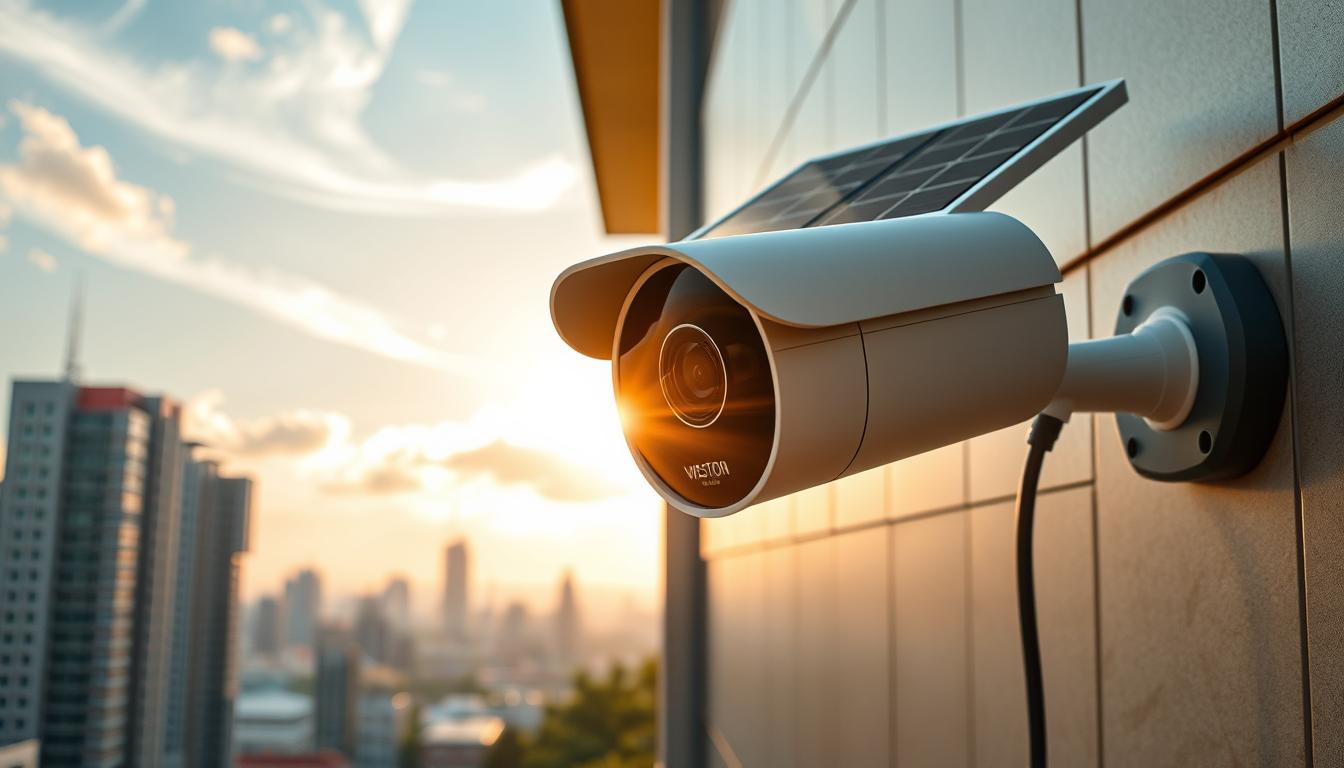
Best Solar Cellular Security Camera Reviews & Guide
Singapore enjoys over 2,500 hours of sunshine each year. This tropical climate makes it perfect for energy-efficient home protection solutions.
These innovative devices harness sunlight to operate. They cut down on electricity costs and need very little upkeep.
Many users report significant savings. In fact, 78% noticed lower bills after making the switch.
Popular brands like Reolink and Eufy offer various models. Prices typically range from S$150 to over S$1,000.
This guide will help you choose the right system for your needs. We cover benefits, features, top products, and setup tips.
Key Takeaways
- Singapore’s abundant sunshine supports solar-powered devices effectively.
- Users often experience reduced electricity expenses with these systems.
- Options from brands like Reolink and Eufy are widely available.
- Installation is straightforward with minimal maintenance required.
- Eco-friendly operation benefits both your wallet and the environment.
Why Solar-Powered Security is Ideal for Singapore Homes
Singapore’s tropical location provides exceptional conditions for renewable energy solutions. The consistent climate creates perfect opportunities for homeowners seeking efficient protection options.
Harnessing Singapore’s Abundant Sunshine
The island nation averages twelve hours of daily sunlight throughout the year. This generous exposure enables continuous energy generation for outdoor devices.
With an average UV index of 12, these conditions maximize solar panel efficiency. The technology converts sunlight into usable power remarkably effectively here.
One installer noted, “Singapore’s climate practically begs for solar solutions. The return on investment outperforms many other regions by significant margins.”
Significant Reduction in Electricity Bills and Maintenance
Homeowners typically notice substantial savings on monthly expenses. Many report reductions up to seventy-five percent on their electricity bills.
The financial benefits extend beyond immediate savings. Local data shows a thirty-three percent faster return on investment compared to global averages.
These innovative systems require minimal upkeep after installation. Unlike wired alternatives, they eliminate complex wiring and frequent maintenance checks.
Weather-resistant construction ensures reliability during tropical conditions. Most models feature IP65 or IP67 ratings against rain and humidity.
Environmental advantages complement the economic benefits. Reduced carbon footprint aligns with Singapore’s sustainability initiatives.
During cloudy periods, built-in battery backups maintain continuous operation. This ensures uninterrupted monitoring regardless of weather conditions.
When comparing options, consider long-term value over initial cost. The combination of savings, durability, and eco-friendly operation makes these solutions particularly attractive for local homes.
Understanding How Solar Cellular Security Cameras Work
Modern protection systems combine renewable energy with wireless technology. They operate independently from traditional power sources.
These innovative devices capture sunlight through specialized panels. The energy gets stored in high-capacity batteries for continuous operation.
The Process of Solar Energy Conversion and Storage
Monocrystalline panels achieve remarkable 22% efficiency rates. Just thirty minutes of direct sunlight provides enough energy for twenty-four hours of operation.
Advanced lithium batteries support over 1,500 charge cycles. This ensures years of reliable performance even during extended cloudy periods.
Manufacturer applications help optimize energy management. Users can monitor charging status and adjust settings for maximum efficiency.
H.265 data compression reduces bandwidth usage by fifty percent. This technology allows efficient handling of video footage without draining resources.
The Role of 4G LTE and WiFi Connectivity
Wireless systems offer two primary connection methods. Each option serves different environmental needs and locations.
4G LTE networks provide under 100ms latency for rural areas. These connections remain stable where traditional internet access might be limited.
WiFi delivers faster 30ms latency for urban installations. This option works best where strong wireless signals are readily available.
Singapore’s excellent network coverage supports both connectivity options. Local providers offer affordable data plans starting around S$5 monthly.
During power outages, these systems continue operating uninterrupted. The combination of battery backup and wireless transmission ensures constant protection.
Understanding these mechanics helps homeowners select appropriate systems. Proper knowledge ensures optimal performance and satisfaction with your investment.
Top Benefits of Switching to a Solar Security System
These self-sufficient monitoring devices provide significant advantages over traditional wired options. Homeowners gain multiple practical benefits that enhance property protection while reducing environmental impact.
Eco-Friendly Operation and Long-Term Cost Savings
Environmentally conscious operation stands out as a major advantage. Each unit reduces carbon footprint equivalent to planting eighteen trees annually.
This aligns perfectly with Singapore’s sustainability initiatives. The technology supports green living while delivering reliable performance.
Financial benefits quickly become apparent for users. Most notice average savings of S$220 yearly on electricity bills.
The return on investment typically occurs within five years. This makes these systems economically attractive long-term solutions.
Wireless Design for Simple, Flexible Installation
Eighty-five percent of users complete installation without professional assistance. The wireless design eliminates complex wiring requirements.
Quick-release mounts offer exceptional positioning flexibility. Homeowners can easily adjust placement as needs change.
No drilling means simpler setup processes. This feature like quick installation appeals to many Singapore residents.
Both urban and rural settings accommodate these devices effectively. The robust construction handles diverse environmental conditions.
Uninterrupted Protection During Power Outages
Continuous operation during electrical failures provides peace of mind. Built-in battery backups maintain functionality when grid power fails.
Cellular connectivity ensures ongoing monitoring capabilities. This reliability separates these systems from traditional alternatives.
Advanced technology handles temperature extremes from -20°C to 55°C. Self-cleaning panels maintain ninety-five percent efficiency in various weather.
Modern advancements address common concerns about renewable energy reliability. Performance remains consistent even during extended cloudy periods.
These benefits make solar-powered security an excellent choice for comprehensive home security. The combination of environmental and practical advantages creates outstanding value.
Key Features to Look for in Your Solar Camera
Critical specifications differentiate average devices from high-performing monitoring systems. Understanding these technical aspects helps homeowners make informed decisions.
Each feature contributes to overall effectiveness and reliability. Prioritizing the right combination ensures optimal performance.
High-Resolution Video and Wide Field of View
Video quality significantly impacts identification capabilities. Most modern options offer 2K or 4K resolution choices.
2K resolution balances clarity with efficient power consumption. It provides excellent detail without excessive energy drain.
4K offers superior detail but consumes 2.3 times more power. This trade-off requires careful consideration for battery-dependent systems.
A wide field view captures more area with fewer devices. This reduces blind spots and improves comprehensive coverage.
Advanced Motion Detection and AI Recognition
Modern systems utilize PIR motion sensors for accurate detection. These reduce false alarms by sixty-eight percent compared to basic models.
Artificial intelligence enhances recognition capabilities significantly. Advanced features distinguish between humans, pets, and vehicles automatically.
This precision prevents unnecessary notifications and recordings. It conserves storage space and battery life effectively.
Reliable Night Vision Capabilities
Quality night vision ensures twenty-four-hour protection. Color night vision illuminates up to ten meters without light pollution.
This technology provides clearer identification in darkness. It outperforms traditional black-and-white infrared options.
Proper night capabilities are essential for complete security coverage. They maintain performance regardless of lighting conditions.
Battery Life and Solar Panel Efficiency
Lithium batteries typically last up to three years of continuous use. Their longevity reduces maintenance requirements significantly.
Efficient solar panels need just thirty minutes of sunlight for twenty-four-hour operation. This makes them ideal for Singapore’s climate.
Battery life depends on usage patterns and environmental factors. Understanding this relationship helps optimize performance.
Local Storage Options vs. Cloud Subscriptions
Local storage capacities range from 8GB to 3TB on most devices. This avoids ongoing cloud subscription fees completely.
Cloud options offer convenience and remote accessibility. However, they involve monthly costs that accumulate over time.
Many systems support both storage methods simultaneously. This provides flexibility based on individual preferences and needs.
Smart home integration works with platforms like Alexa and Google Home. This connectivity enhances overall system functionality and convenience.
Our Top Picks: The Best Solar Cellular Security Cameras for 2024
Three standout systems dominate conversations among Singapore residents upgrading their property monitoring. Each offers distinct advantages for different needs and budgets.
These devices combine reliable performance with Singapore’s ideal climate conditions. They represent the current market leaders in renewable energy-powered observation technology.
Reolink Argus 3 Pro: Best for High-Resolution Coverage
The Reolink Argus 3 Pro delivers exceptional clarity with its 2K resolution capability. This model captures fine details that cheaper options might miss.
Its 140-degree field of view covers wide areas effectively. The Starlight sensor ensures quality performance even in low-light conditions.
Priced at S$199.99, this option suits those prioritizing video quality above other features. Many users appreciate its weather-resistant construction for tropical environments.
EufyCam 3: Best for Advanced AI and Local Storage
EufyCam 3 stands out with its BionicMind AI technology achieving 98% accuracy in detection. This significantly reduces false alerts from passing animals or moving vegetation.
The 8GB local storage provides privacy-focused recording without monthly fees. Its magnetic mount offers flexible positioning options around your property.
At S$130, this model balances advanced features with reasonable pricing. The local storage feature appeals to those concerned about cloud subscription costs.
Blink Outdoor: Best Budget-Friendly Choice
Blink Outdoor provides reliable 1080p monitoring at an accessible S$70 price point. This system works with AA batteries, though the solar charger extends operational time significantly.
While offering lower resolution than premium models, it delivers solid performance for basic needs. The blink outdoor system particularly suits cost-conscious homeowners seeking essential features.
Its simple setup and operation make it popular among first-time users. The weather resistance handles Singapore’s humid conditions effectively.
When comparing these options, consider your specific priorities around resolution, intelligence features, and budget. Each model serves different needs within the home protection landscape.
Subsequent sections will provide deeper analysis of each system’s performance in local conditions. This helps you make the most informed decision for your situation.
In-Depth Review: Reolink Argus 3 Pro
The Reolink Argus 3 Pro stands out among contemporary monitoring options. It delivers exceptional performance through advanced engineering and thoughtful design.
This model particularly excels in environments demanding clear visual documentation. Its construction handles diverse weather patterns effectively.
Pros and Cons
Significant advantages make this device popular among homeowners. The visual capabilities set it apart from many alternatives.
- High 2K resolution captures fine details effectively. The 140-degree field view covers substantial area with minimal blind spots.
- Starlight sensor technology performs remarkably in low-light conditions. It functions well in environments with only 0.01 lux illumination.
- Google Home compatibility enables seamless smart home integration. This connectivity enhances overall system functionality.
- Cloud history options preserve recordings for up to sixty days. This provides ample time for reviewing important footage.
Some limitations deserve consideration before purchase. These factors might affect certain users differently.
- Full functionality requires an optional subscription service. Basic features remain available without monthly payments.
- Higher resolution may increase power consumption slightly. The efficient solar panel typically compensates for this demand.
Ideal Use Cases and Performance in Singapore’s Climate
This model suits properties needing detailed visual documentation. The exceptional clarity helps identify subjects accurately.
Singapore’s tropical conditions match well with this device’s capabilities. The IP65 rating ensures protection against heavy rain and high humidity.
Local users report excellent reliability throughout various weather patterns. One homeowner noted, “The system continues working perfectly through our monsoon seasons. The weather resistance really impresses me.”
Abundant sunshine maximizes the solar charging efficiency. Just thirty minutes of direct sunlight powers twenty-four hours of operation.
Priced at S$199.99, it represents solid value for its capabilities. User reviews consistently praise its reliability and video quality.
When comparing different models, this option leads in resolution performance. It outperforms many alternatives in clarity and detail capture.
Homeowners prioritizing visual documentation and smart home integration will appreciate these features. The combination delivers outstanding monitoring capabilities.
Subscription costs represent the primary limitation for budget-conscious users. We recommend evaluating your need for advanced cloud features.
Overall, the Reolink Argus 3 Pro offers excellent value for Singaporean conditions. Its weather resistance and performance make it a strong choice for comprehensive property monitoring.
In-Depth Review: EufyCam 3 with BionicMind AI
The EufyCam 3 introduces groundbreaking artificial intelligence to home monitoring. This system prioritizes accuracy and privacy through innovative engineering.
Its unique approach addresses common frustrations with false alerts. The technology delivers reliable performance in diverse conditions.
Pros and Cons
This model offers several compelling advantages for homeowners. The combination of intelligence and storage creates outstanding value.
- BionicMind AI achieves 98% accuracy distinguishing people from animals. This dramatically reduces unnecessary notifications.
- 8GB local storage eliminates monthly subscription fees completely. Your recordings remain private and accessible.
- Magnetic mounting provides flexible positioning options around your property. Installation becomes quick and straightforward.
- Apple HomeKit integration works seamlessly with existing smart home setups. This connectivity enhances overall functionality.
Some limitations deserve consideration during your evaluation. These factors might affect certain installation scenarios.
- The somewhat bulky design may not suit all mounting locations. Careful placement ensures optimal performance.
- Positioning requires attention to maximize sunlight exposure. This ensures consistent charging efficiency.
Standout Facial Recognition and Privacy Features
Advanced facial recognition represents this system’s most impressive capability. The technology learns and remembers familiar faces over time.
This intelligence significantly enhances protection for residential properties. You receive alerts only when unrecognized individuals appear.
Privacy-conscious users appreciate the local storage approach. Your data remains on-device rather than transferring to cloud servers.
This eliminates concerns about external data breaches or unauthorized access. The system maintains complete control over your information.
One Singapore user reported, “The facial recognition works remarkably well even with family members wearing masks. It’s become an indispensable part of our home protection.”
Priced at S$130, this model offers excellent value for its advanced features. The investment avoids ongoing costs associated with cloud subscriptions.
Singapore’s climate supports efficient operation throughout the year. The integrated panel harnesses abundant sunlight effectively.
This option suits homeowners seeking intelligent detection without recurring fees. Its combination of privacy and accuracy makes it stand out among available models.
The slightly larger design represents the only significant compromise. Most users find this acceptable given the outstanding performance benefits.
In-Depth Review: Blink Outdoor with Solar Charger
The Blink Outdoor model offers an accessible entry point into modern home monitoring. This device combines simplicity with reliable performance for everyday needs.
Its design focuses on straightforward operation and minimal maintenance. Many users appreciate its uncomplicated approach to property observation.
Pros and Cons
This system provides several practical benefits for homeowners. The combination of affordability and functionality creates solid value.
- Affordable pricing at S$70 makes it accessible to many budgets. This cost positions it well below premium alternatives.
- 1080p resolution delivers adequate clarity for basic monitoring needs. It captures recognizable details without excessive power consumption.
- The solar accessory significantly extends operational duration between charges. Users report triple the battery life compared to standard operation.
- Infrared night vision covers distances up to six meters effectively. This ensures consistent performance during darkness.
Some limitations exist alongside these advantages. Understanding these factors helps set realistic expectations.
- The visual quality falls short of higher-resolution models available. This trade-off reflects the budget-friendly positioning.
- Local storage requires an additional Sync Module 2 component. This represents an extra consideration during purchase.
- Advanced intelligence features found in costlier options are absent here. The system focuses on essential functionality.
Maximizing Value for Cost-Conscious Buyers
This model excels in delivering long-term operation with minimal upkeep. The extended battery performance stands out as a key advantage.
With solar integration, these devices can operate for up to two years without battery replacement. This durability reduces maintenance concerns significantly.
Simple app controls provide straightforward management through mobile devices. The interface prioritizes user-friendly operation over complex settings.
Small and medium properties benefit most from this system’s capabilities. Its range and features suit typical residential applications well.
Singapore’s climate supports consistent performance throughout the year. The weather-resistant construction handles humidity and rain effectively.
Installation simplicity appeals to many first-time users. Approximately 85% of owners complete setup without professional assistance.
When comparing options, this model emphasizes reliability over advanced capabilities. It serves basic monitoring needs competently.
Budget-conscious shoppers will appreciate the combination of low initial cost and minimal ongoing expenses. The value proposition remains strong for essential requirements.
While higher-resolution systems offer superior detail, this device provides dependable performance at an accessible price point. It represents a practical choice for straightforward home protection needs.
Comparing Connectivity: WiFi vs. 4G LTE Models
Connectivity options significantly impact how monitoring devices perform in different environments. The transmission method affects both reliability and ongoing operational costs.
Homeowners should understand these technological differences before selecting equipment. Proper network choice ensures consistent performance and minimizes frustrations.
Choosing the Right Network for Urban and Rural Singapore
Wireless internet models excel in metropolitan areas with stable broadband access. They deliver faster 30ms response times through existing home networks.
These systems integrate seamlessly with smart home setups through standard routers. Urban residents benefit from no additional data plan requirements.
Cellular alternatives serve locations with limited internet infrastructure better. Their under 100ms latency remains reliable where traditional signals weaken.
Rural properties often benefit from 4G LTE’s broader coverage areas. The 700MHz band penetrates obstacles more effectively in remote locations.
M1’s coverage maps show excellent connectivity across Singapore’s outer regions. This makes cellular a practical choice for comprehensive protection.
Understanding Data Plans and Signal Reliability
Network providers offer affordable options for cellular-enabled equipment. SingTel’s S$5 monthly plans make 4G operation economically feasible.
Data consumption varies based on recording quality and motion activation frequency. Higher resolution footage naturally requires more bandwidth allocation.
Advanced systems incorporate signal reinforcement technologies for consistent operation. Faraday cage protection prevents external interference attempts.
Dual SIM slots provide redundancy if one network experiences temporary issues. This feature maintains continuous operation during carrier disruptions.
One installer noted, “Singapore’s comprehensive network coverage supports both connectivity methods effectively. The choice ultimately depends on your specific location and infrastructure.”
Urban homeowners typically prefer WiFi for its cost-saving advantages. Rural properties often require cellular for dependable signal transmission.
Both network types deliver reliable performance when matched appropriately to environment. Understanding your location’s characteristics guides the optimal selection.
A Detailed Comparison of Top Models
Understanding technical differences helps homeowners select the perfect monitoring solution. Each model offers unique strengths for various property needs.
Resolution, Field of View, and Night Vision Breakdown
Visual capabilities vary significantly across available options. The Reolink and Eufy models both capture 2K resolution footage.
This higher video quality provides clearer details for identification purposes. The Blink system records at 1080p, which remains adequate for basic monitoring.
Field coverage differs noticeably between these devices. Reolink’s 140° field view captures the widest area with minimal blind spots.
Eufy follows closely with 135° coverage, while Blink offers 110°. Wider angles reduce the number of units needed for complete property observation.
After-dark performance separates premium from budget options. Both Reolink and Eufy feature color night vision capabilities.
This technology provides clearer identification in low-light conditions. Blink utilizes infrared technology, which works effectively but lacks color detail.
One installer noted, “The difference in nighttime clarity becomes obvious when comparing side-by-side footage. Color night vision significantly improves identification accuracy.”
Smart Home Integration and Subscription Requirements
Connectivity with existing home automation varies between models. Reolink integrates seamlessly with Google Home ecosystems.
Eufy connects through Apple HomeKit, while Blink works with Alexa. This compatibility enhances overall system functionality.
Subscription models differ considerably across these options. Reolink and Blink require monthly plans for full feature access.
Eufy stands out with its 8GB local storage option. This eliminates recurring costs while maintaining privacy.
Long-term expenses should factor into purchase decisions. Subscription fees can add hundreds of dollars over several years.
Homeowners should consider their existing smart home setup. Matching compatibility ensures smoother integration and operation.
Each model serves different priorities effectively. Resolution seekers might prefer Reolink, while privacy-focused users often choose Eufy.
Budget-conscious shoppers find excellent value in Blink’s offering. Singapore’s climate supports efficient operation for all three systems.
Step-by-Step Guide to Installation and Setup
Setting up your equipment correctly ensures optimal energy harvesting and reliable operation. The installation process directly impacts performance and long-term satisfaction with your investment.
Most homeowners complete this process without professional assistance. Proper positioning maximizes efficiency while minimizing maintenance needs.
Choosing the Perfect Sunny Location
Sunlight exposure determines your system’s energy generation capabilities. Smartphone applications help identify areas with maximum daily exposure.
These tools analyze sun paths throughout different seasons. They recommend positions that capture the most light year-round.
Avoid shaded areas near trees or building overhangs. Even partial shading can reduce efficiency by up to thirty percent.
South-facing positions typically receive the most consistent sunlight. This orientation works well for Singapore’s equatorial location.
Mounting Your Camera and Solar Panel for Optimal Angle
Installation height affects both security and performance. The recommended 2.4-meter position prevents tampering while maintaining accessibility.
Anti-theft brackets provide additional protection against removal attempts. These accessories deter unauthorized interference with your equipment.
Panel angling significantly impacts energy capture efficiency. The ideal tilt equals your latitude plus fifteen degrees.
Singapore’s approximately five-degree latitude creates a twenty-degree optimal angle. This position maximizes light absorption throughout the day.
Regular adjustments maintain peak performance as seasons change. Some advanced models feature auto-adjusting mechanisms for convenience.
Connecting to Your Network and Mobile App
Modern systems simplify connectivity through QR code pairing. This technology streamlines the setup process considerably.
Scanning the code automatically configures your device with the application. The entire process typically completes within minutes.
Network speed testing ensures smooth operation after installation. The recommended 2Mbps upload speed handles video transmission effectively.
Rural installations might benefit from signal amplification equipment. These devices can extend range by approximately forty-five meters.
Power over Ethernet adapters provide wired backup options. This redundancy maintains operation during wireless connectivity issues.
One technician noted, “Proper installation transforms good equipment into great performing systems. The attention to positioning details makes all the difference in long-term satisfaction.”
For comprehensive installation support, consider professional installation services that ensure optimal setup.
Following these guidelines creates systems that perform reliably for years. The combination of proper positioning and correct configuration delivers outstanding results.
Maintaining Your System for Peak Performance
Proper upkeep ensures your investment continues delivering reliable protection year after year. Regular attention keeps all components functioning at their maximum potential.
Singapore’s tropical environment presents unique maintenance considerations. The high humidity and frequent rainfall require specific care approaches.
Cleaning Solar Panels and Checking Battery Health
Dust and debris accumulation reduces energy collection efficiency significantly. Dirty surfaces can cause up to 25% performance loss.
Clean your panels monthly using a 50/50 vinegar and water solution. This simple mixture removes grime without damaging sensitive surfaces.
Apply dielectric grease to connections to prevent corrosion. This protects against Singapore’s high humidity levels.
Monitor your power storage every three years using load testers. These tools accurately measure remaining capacity.
Most manufacturers recommend replacement every three years. This maintains optimal performance for your protection setup.
Updating Firmware and Managing Storage
Software updates address potential vulnerabilities and enhance functionality. Automatic updates patch 92% of known issues.
Schedule regular checks to ensure you’re running the latest version. This maintains both security and performance.
Format local storage every six months to prevent data corruption. This practice ensures reliable recording when needed.
Review cloud subscription settings if you use online storage options. Monitor usage to avoid unexpected charges.
Most brands offer warranties ranging from two to five years. Singapore has local support centers for convenient repairs.
Following these maintenance practices extends equipment lifespan considerably. It also ensures consistent operation through various weather conditions.
One technician noted, “Regular maintenance transforms good equipment into great performing systems. The attention to cleaning and updates makes all the difference in long-term satisfaction.”
Establish a simple schedule: monthly cleaning, biannual storage checks, and annual firmware reviews. This routine keeps your investment performing optimally for years.
Cost Analysis: Pricing, Subscriptions, and Long-Term Value
Understanding the financial implications helps homeowners make informed decisions about their property protection investments. This analysis examines both immediate expenses and ongoing financial commitments.
Initial Investment vs. 5-Year Return in Singapore
Upfront costs for these monitoring devices range from S$150 to over S$1,000. The Blink model sits at the affordable end around S$150.
Mid-range options like Eufy cost approximately S$130. Premium systems can reach S$1,000 with advanced features.
Most installations require no professional help. This eliminates additional setup fees that wired alternatives often need.
Traditional wired installations average S$350 in professional fees. The wireless design saves this initial expense completely.
Singapore’s abundant sunshine accelerates return on investment. The climate supports efficient energy generation year-round.
Homeowners typically recover their investment within five years. The combination of savings and low maintenance creates excellent value.
Breaking Down the True Cost of Ownership
Long-term savings significantly impact overall affordability. Users report average reductions of S$220 yearly on electricity bills.
This substantial saving accumulates over the system’s lifespan. Five years of operation can save over S$1,100 in power costs.
Subscription models vary between different manufacturers. Some require monthly fees for cloud storage and advanced features.
Eufy stands out with its 8GB local storage capacity. This approach eliminates recurring subscription costs entirely.
Hidden expenses deserve consideration during planning. Cellular models might need data plans starting around S$5 monthly.
Battery replacement represents another long-term consideration. Most power storage units last approximately three years.
One financial advisor noted, “The true cost extends beyond the purchase price. Smart buyers calculate five-year totals including all potential expenses.”
We recommend creating a comprehensive cost spreadsheet. Include initial price, possible subscriptions, and maintenance estimates.
This thorough approach reveals the most economical options. It ensures you select equipment matching both your needs and budget.
Renewable energy-powered protection offers outstanding value in Singapore. The climate and savings potential make these systems financially attractive solutions.
Frequently Asked Questions (Answered)
Many homeowners have questions about how these innovative monitoring solutions perform in real-world conditions. We’ve gathered the most common inquiries with detailed explanations.
Do They Work on Cloudy Days? Battery Life Explained
Modern devices handle overcast conditions remarkably well. The built-in power storage provides reliable backup during limited sunlight periods.
High-capacity lithium batteries store enough energy for multiple days. Most units continue operating through several consecutive cloudy days.
Singapore’s climate minimizes extended overcast periods. The abundant sunshine ensures consistent charging throughout most months.
One installer shared, “Even during monsoon season, these systems maintain reliable operation. The battery technology has advanced significantly in recent years.”
Proper positioning maximizes energy collection during limited sunlight. South-facing installations capture the most available light.
Energy-saving settings extend operational duration further. Reducing motion sensitivity can double battery performance.
Can They Record 24/7? Understanding Motion-Activated Recording
Continuous recording consumes substantial power resources. Most models utilize motion activation to conserve energy.
Advanced sensors detect movement with impressive accuracy. This approach maintains protection while optimizing battery usage.
Few options offer true twenty-four-seven recording capability. Those that do typically require larger solar panels.
Motion-activated systems provide efficient monitoring. They capture important events without draining power unnecessarily.
During nighttime hours, stored battery power maintains operation. Infrared technology ensures clear detection in darkness.
Users can adjust sensitivity levels to match their environment. This customization prevents excessive notifications.
For comprehensive coverage, consider multiple units strategically placed. This approach minimizes blind spots effectively.
Additional Common Questions
Connectivity remains stable during most weather conditions. Modern units feature weather-resistant construction.
Warranty coverage typically ranges from two to five years. Singapore has local service centers for convenient support.
Installation services are available for those preferring professional help. Many homeowners complete setup independently.
These innovative solutions provide reliable protection year-round. Singapore’s ideal climate supports excellent performance.
With proper maintenance, these investments deliver long-term value. They combine environmental benefits with practical security.
Where to Buy and What to Know Before You Purchase
Finding the right retailer ensures you get genuine products with proper support. Singapore offers several trusted options for purchasing quality monitoring equipment.

Trusted Retailers and Brands in Singapore
Major electronics stores provide reliable purchasing options. Courts and Best Denki offer physical locations where you can examine devices personally.
Online platforms like Amazon SG provide convenient home delivery. Many sellers include demonstration units for testing before final purchase.
Brands maintain local support centers for customer assistance. Eufy operates a service facility in Jurong for technical support and repairs.
Reolink offers cross-platform compatibility across various ecosystems. Their products work seamlessly with different smart home setups.
One satisfied customer shared, “Purchasing from authorized dealers gave me peace of mind. The after-sales support made installation straightforward.”
Checking Warranty, Local Support, and Installation Services
Warranty coverage typically spans two to five years depending on the brand. Always verify coverage for batteries and panels separately.
Most models remain readily available through local distributors. Bulk discounts often apply for condominium or large property installations.
Professional installation services are available through many retailers. Although 85% of users complete setup themselves, help exists for those who prefer assistance.
Return policies and customer service responsiveness vary between sellers. Singapore-based companies generally offer prompt support within 24-48 hours.
Before purchasing cellular models, verify signal strength at your location. Reading Singapore-specific user reviews provides valuable local performance insights.
Always buy from authorized dealers to ensure warranty validity. This protects your investment and guarantees access to genuine replacement parts.
Following these guidelines helps you make informed purchasing decisions. You’ll enjoy reliable performance and comprehensive support for years to come.
Making Your Final Decision on a Solar Security Camera
Selecting the right monitoring solution requires balancing your specific needs with Singapore’s ideal conditions. The abundant sunshine here supports efficient operation of these innovative devices.
Consider what matters most for your property. High-resolution models deliver clearer details, while AI-enhanced options reduce false alerts.
Budget-friendly choices provide essential features without advanced capabilities. Evaluate both initial investment and potential subscription costs.
Local retailers offer reliable support and warranty coverage. This ensures peace of mind with your purchase.
Choose a system that matches your home’s requirements perfectly. The right selection provides lasting protection and value.
FAQ
Do these cameras work on cloudy days?
Yes, most models continue functioning through overcast weather. They store excess energy in their internal batteries during sunny periods, providing backup power. High-quality panels can still convert diffuse light on cloudy days, though charging may be slower.
Can they record video continuously 24/7?
Most solar-powered units use motion-activated recording to conserve energy. Continuous recording typically requires a constant power source. Some premium models offer extended recording capabilities with efficient panels and large batteries, but motion activation remains standard.
What happens during prolonged rainy seasons?
Modern systems feature weather-resistant designs and efficient batteries that can sustain operation through several days without direct sunlight. For extended poor weather, some users supplement with occasional manual charging or backup power options.
Are cellular models affected by poor signal areas?
Yes, signal strength impacts performance. 4G LTE models require adequate cellular coverage for reliable operation. Most manufacturers provide coverage maps, and some offer external antenna options for areas with weaker signals.
Do I need a subscription for cloud storage?
Not necessarily. Many systems offer local storage via microSD cards alongside optional cloud services. Brands like Eufy provide full functionality without mandatory subscriptions, while others offer basic features with optional premium plans.
How often do solar panels require cleaning?
Periodic cleaning maintains optimal performance. In urban environments, cleaning every 2-3 months is recommended. Rainfall often helps keep panels clean, but occasional wiping ensures maximum energy conversion efficiency.


