
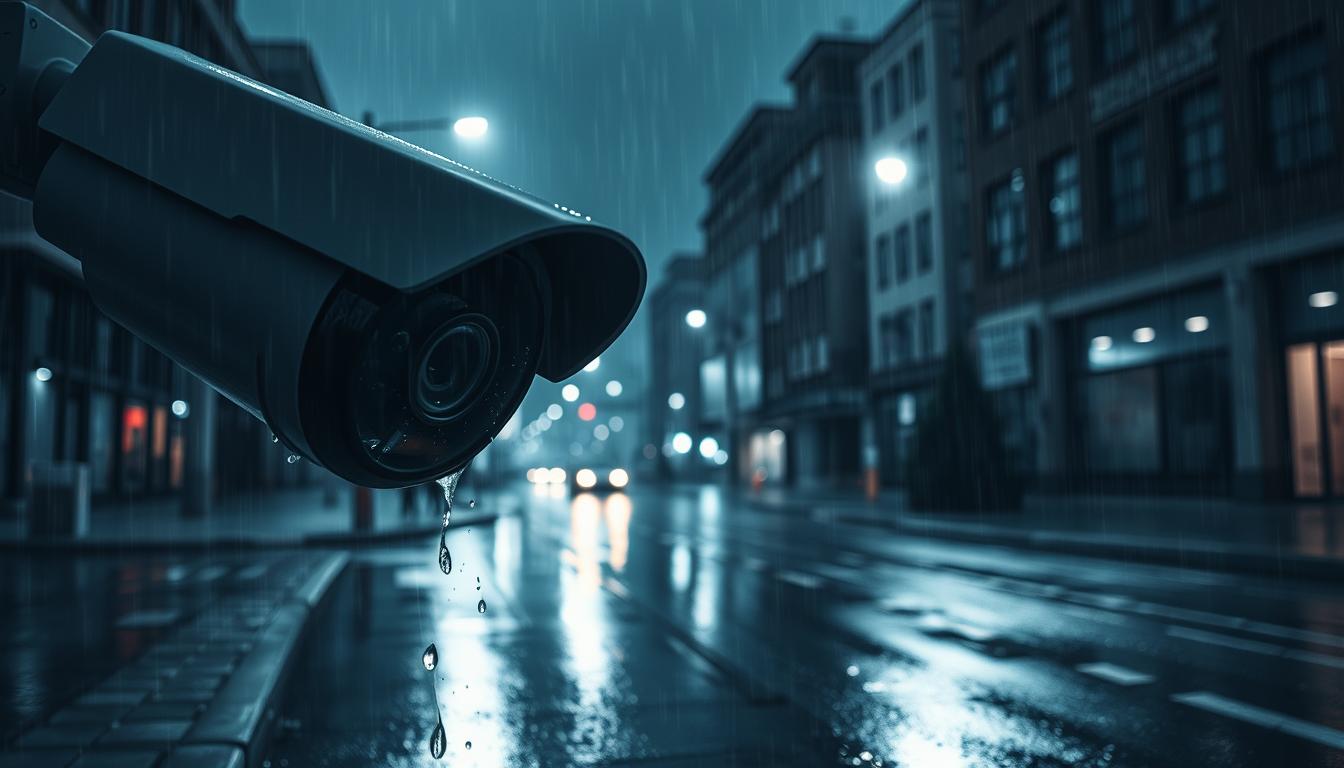
Does Rain Affect CCTV? Tips for Reliable Surveillance
Singapore’s frequent tropical downpours pose a real challenge for outdoor security cameras. Many homeowners and business owners wonder if their surveillance systems can handle the wet weather.
Heavy precipitation can blur your video feed. It may also trigger false motion alerts from water droplets on the lens. Over time, moisture can damage sensitive electronic components.
This undermines the protection these devices are meant to provide. The good news is that reliable surveillance is achievable in any weather.
With proper knowledge and a few adjustments, you can maintain clear footage. This guide offers practical solutions for Singapore’s unique climate.
We will cover optimizing camera settings for bad weather. Strategic placement and selecting durable hardware are also key. Regular maintenance routines will keep your system working well for years.
Proactive measures are essential for any outdoor setup here. They ensure your security investment performs when you need it most.
Key Takeaways
- Singapore’s heavy rainfall can significantly impact outdoor security camera performance.
- Common issues include blurred image quality, false alarms, and potential hardware damage.
- Proper planning and equipment selection are crucial for reliable operation.
- Strategic installation locations help shield cameras from the worst weather effects.
- Regular maintenance checks prevent long-term problems and extend system life.
- Adjustable camera settings can optimize footage during rainy conditions.
- Weatherproof housing and accessories provide essential protection for components.
Understanding the Challenge of Rain for Singaporean Surveillance
Singapore’s climate presents unique hurdles for video surveillance that demand specialized solutions. High humidity and frequent downpours create a harsh environment for outdoor equipment.
Rapid temperature shifts add another layer of complexity. These conditions test the limits of standard security cameras.
The problems come in two forms. Immediate issues disrupt daily monitoring. Long-term threats slowly damage hardware components.
During operation, water droplets on the lens distort the view. This leads to blurry footage where details get lost. At night, infrared lights illuminate falling precipitation.
To the camera’s sensor, each drop looks like movement. This creates a “snowstorm” of false alerts. Basic motion detection becomes nearly useless in a storm.
Constant notifications cause user fatigue. People start ignoring their security system. This creates risk when real events occur.
Moisture poses a stealthier danger over time. It can seep into protective housings. Internal condensation then fogs the lens from inside.
This type of fogging is hard to clear. It permanently reduces image quality. The problem worsens with each wet season.
Corrosion attacks electronic circuits silently. Salt in humid air accelerates this process. Electrical short circuits can destroy cameras completely.
These factors shorten the operational life of equipment. What should work for years might fail in months. The financial loss goes beyond replacing hardware.
Missed security events carry their own cost. A compromised video feed offers little protection. The entire purpose of surveillance is defeated.
Understanding these challenges is the first step. It explains why basic setups often struggle here. Special features and planning become essential.
The right solutions address both immediate and long-term threats. They ensure your surveillance remains reliable. Your investment continues working well through any weather.
Does Rain Affect CCTV? The Direct Impact Explained
Precipitation creates two distinct problems for monitoring equipment: automated false alarms and visual degradation. Understanding these mechanisms shows why basic setups struggle during wet weather.
Each issue attacks a different function of your surveillance. The combined effect can render a security system nearly useless when you need it most.
How Rain Triggers False Motion Detection Alerts
Most modern cameras use pixel-based motion detection. This technology constantly analyzes changes between video frames.
When pixels shift significantly, the algorithm registers movement. It then triggers recording and sends alerts.
Falling water creates constant pixel changes across the entire frame. Each droplet reflects light differently as it moves.
The camera’s processor cannot distinguish rain from genuine activity. It interprets the shimmering curtain as continuous motion.
This problem intensifies at night. Infrared illumination makes every drop glow brightly.
The result is a flood of meaningless notifications. Storage fills with useless footage of weather events.
Specific models like the VIGI C340HPWSM and Tapo C200 are particularly susceptible. Their sensitive detection algorithms work against them during storms.
Users experience alert fatigue quickly. They may disable notifications entirely, creating security gaps.
The Effects of Moisture and Condensation on Image Clarity
Water droplets on the lens scatter incoming light. This causes blurring, distortion, and halos around light sources.
Critical details become obscured. Faces, license plates, and other identifiers vanish into a murky haze.
The more insidious threat forms inside the housing. Internal condensation occurs when warm, moist air meets cooler surfaces.
This fogging appears behind the lens where wiping is impossible. It permanently reduces optical performance.
Improper installation often causes this issue. Inadequate sealing allows humid air to enter supposedly weatherproof units.
Once inside, moisture has nowhere to escape. It condenses during temperature drops each evening.
Real-world data reveals this is common. Some brands see condensation issues in up to half their outdoor units.
That means 5 out of 10 cameras might develop this problem. It’s not a rare defect but a frequent design challenge.
Corrosion follows condensation. Electronic circuits slowly degrade from prolonged exposure.
This damage often proves irreversible. Complete camera failure becomes inevitable over time.
Together, these impacts undermine every surveillance function. False alerts cripple automated monitoring.
Poor image quality makes manual review pointless. Your security investment loses all value during precisely the conditions when protection matters most.
Your First Line of Defense: Optimizing Camera Settings
The immediate battle against false alerts and poor footage during storms begins not on your roof, but within your camera’s software. Tweaking a few digital controls is your most cost-effective solution. It requires no new hardware and can yield dramatic improvements.
These adjustments help your security system ignore environmental noise. They also focus its attention on genuine threats. Think of it as fine-tuning your electronic sentry for Singapore’s unique conditions.
Step 1: Lowering Motion Detection Sensitivity
Start by accessing your camera’s settings through its mobile app or web interface. Look for the “Motion Detection” or “Alert Settings” menu. Here, you’ll find a sensitivity slider.
During clear weather, high sensitivity is great. For wet weather, you need to lower it. This tells the camera to ignore smaller, rapid changes in pixels—like those caused by falling water.
Finding the right balance is crucial. Set it too low, and you might miss a real, subtle intrusion. A good practice is to test at night during a light drizzle. Adjust until the false alerts stop, but the camera still detects a person walking through the scene.
Step 2: Defining and Calibrating Activity Zones
Most modern security cameras allow you to draw digital zones over the live view. This feature lets you tell the camera exactly which areas to monitor. You can exclude zones where interference is common.
For example, draw a zone around your front gate or driveway. Then, exclude the open sky above it or a busy tree line. This focuses the system’s processing power on the spots that matter most.
It prevents alerts from cars splashing through puddles on a distant road. Your alerts and recordings become far more relevant. This simple step makes your entire setup work better.
Step 3: Enabling Smart Object Classification Features
Advanced models offer AI-powered features like “Smart Detection” or “Object Classification.” This technology analyzes the shape and movement pattern of objects. It can distinguish a human form from a swirling leaf or falling water.
Enable this feature in your app’s detection settings. Then, set it to prioritize alerts for “Human” or “Vehicle.” The camera will now filter out most environmental noise.
This is a key differentiator for modern cctv systems. Data shows it can reduce false alerts by over 90% during bad weather. It ensures you only get notifications for things that truly need your attention, dramatically improving surveillance accuracy.
By mastering these three settings, you give your existing equipment a major upgrade. You improve image quality during operations and provide smarter protection. It’s the fastest way to make sure your surveillance investment continues to work well.
Strategic Camera Placement to Minimize Weather Interference
Strategic positioning can dramatically reduce weather-related issues before they impact your footage. Where you mount your equipment is as critical as adjusting its digital settings.
This physical barrier approach works alongside your software tweaks. It provides constant protection against the elements, day and night.
Good placement shields the lens and housing from direct exposure. It also helps maintain a stable temperature around sensitive electronics.
Your goal is to find spots that offer both coverage and shelter. The right location extends the operational life of your entire surveillance system.
Ideal Installation Angles and Protected Locations
Start by looking for natural overhangs on your property. The eaves of your roof create excellent sheltered zones.
These areas keep cameras dry during downpours while maintaining a clear field of view. A sturdy awning over a porch or entryway works similarly well.
The recessed space within a soffit offers another smart option. It provides three-sided protection from wind-driven precipitation.
Covered garage entrances and enclosed balconies are also prime real estate. These spots combine accessibility with environmental shielding.
Your mounting angle matters just as much as the location. Always tilt the unit slightly downward.
This simple adjustment serves two important purposes. First, it gives you a better surveillance angle of key areas.
Second, it allows water to run off the lens and housing naturally. Gravity prevents pooling on critical surfaces.
A 10 to 15-degree downward tilt is usually perfect. It keeps the view focused on activity zones while promoting drainage.
Areas to Avoid for Stable Surveillance Footage
Some spots will consistently cause problems for your outdoor surveillance. Direct, unprotected exposure to the sky tops this list.
Mounting a unit on an open fence post or pole invites trouble. It faces the full force of every storm without any shelter.
Avoid positions that face reflective surfaces like windows or metal siding. These create intense glare and lens flare during wet conditions.
Stay clear of sprinkler systems and drainage spouts. Unexpected sprays can trigger false alerts and leave mineral deposits.
Heavy foliage presents multiple challenges. Leaves drip water long after a storm ends and sway constantly in the wind.
This movement confuses motion detection algorithms. It also blocks the camera’s view during critical moments.
Professional installers recommend avoiding metal poles for mounting. Metal conducts electricity and increases lightning surge risk to your equipment.
Choose locations that minimize dramatic temperature swings. Spots that cycle from full sun to deep shade encourage internal condensation.
By steering clear of these problematic areas, you ensure clearer footage. Your security cameras will require less maintenance and last longer.
Take time to audit your property before finalizing any installation. Identify both the protected spots and the no-go zones.
This planning step makes sure your cameras work reliably through Singapore’s unpredictable weather. It transforms good equipment into a great surveillance solution.
Leveraging PIR Sensors for Accurate Motion Detection
Software tweaks and smart placement are excellent first steps. For a more robust solution, consider upgrading the detection method itself.
Passive Infrared (PIR) technology represents a fundamental shift in how motion is detected outdoors. These sensors solve the core alert problem at its hardware root.
They provide a layer of intelligence that standard pixel-based systems lack. This makes them a powerful ally for reliable security.
How Passive Infrared Technology Cuts Through Rain
PIR sensors work on a simple, brilliant principle. They detect changes in infrared radiation, which we feel as heat.
Living beings and running vehicles emit a distinct heat signature. The sensor is tuned to recognize this specific signal.
Environmental clutter like falling water or blowing leaves is roughly the same temperature as the air. It does not create a detectable heat change the sensor cares about.
This allows the system to ignore the visual noise of a storm completely. Your camera’s lens might still see the downpour, but the alert trigger remains silent.
Standard camera sensors are effectively blinded by this visual chaos. PIR technology cuts straight through it, focusing only on what matters.
Key Benefits of Integrating PIR with Your CCTV System
Adding PIR capability transforms your surveillance accuracy. The advantages are clear and impactful for any outdoor setup.
The most immediate benefit is a drastic reduction in false alarms. Since precipitation doesn’t trigger the sensor, your alert inbox stays relevant. This restores trust in your security notifications.
These sensors are also very power-efficient. They consume less energy than constantly analyzing video frames.
This is perfect for battery-powered or solar camera setups. It helps everything work better for longer on a single charge.
PIR detection is completely independent of light. It performs with equal reliability in bright daylight and total darkness.
Many models can integrate directly with broader alarm systems. This allows for immediate, automated responses when a genuine threat is detected.
For the best results, look for security cameras with built-in PIR sensors. Brands like Hikvision and Dahua offer models featuring this technology.
Integrating PIR is a proactive upgrade. It ensures your cameras work with precision, regardless of the weather.
Decoding IP Ratings: Choosing a Truly Weatherproof Camera
The difference between adequate and excellent outdoor performance often lies in a simple two-digit code. This technical specification tells you exactly how well your equipment will handle environmental challenges.
IP ratings provide standardized, measurable data about dust and water resistance. Understanding this code helps you select hardware built for Singapore’s climate.
It transforms vague marketing claims into concrete performance guarantees. Your investment in surveillance technology deserves this level of clarity.
What IP65, IP66, IP67, and IP68 Really Mean for You
IP stands for Ingress Protection. This international standard classifies enclosure protection levels.
The code always has two digits. The first indicates protection against solid objects like dust.
The second digit reveals protection against liquids. This is the crucial number for outdoor surveillance.
All ratings starting with “6” are dust-tight. This means complete protection against dust ingress.
The water protection scale tells a more detailed story. Each level offers different practical benefits.
- IP65: Protects against low-pressure water jets from any direction. Suitable for light rain and occasional splashing.
- IP66: Guards against powerful water jets. Handles heavy rain, hose-down cleaning, and severe weather.
- IP67: Withstands temporary immersion up to 1 meter for 30 minutes. Survives flooding or accidental submersion.
- IP68: Protected against continuous immersion under specified conditions. For permanent underwater installation.
For most outdoor applications, the second digit is what matters most. Ratings like IP65 offer good basic protection.
However, IP66 and above are engineered for more severe conditions. They represent a significant step up in durability.
Recommended IP Ratings for Singapore’s Outdoor Conditions
Singapore’s tropical climate demands specific hardware standards. Heavy downpours and constant humidity test equipment limits.
For reliable outdoor surveillance here, IP66 should be your minimum standard. This rating ensures protection against powerful water jets.
It matches the intensity of tropical storms common in the region. Your camera will work well during the heaviest precipitation.
Choosing IP67 provides even greater peace of mind. This extra margin handles unexpected flooding or extreme situations.
It represents a more robust solution for challenging installation places. The hardware will last longer in harsh conditions.
Be cautious of products marketed simply as “weatherproof.” Without a specific IP rating, this claim lacks verification.
Such vague terminology is a red flag for serious outdoor applications. Always look for the standardized IP code on product specifications.
This knowledge empowers you to make informed purchasing decisions. You can confidently select equipment built to withstand local weather.
Your entire security system benefits from this careful selection. Proper protection maintains image quality and prevents moisture damage.
Investing in the right IP rating solves many potential problems before they occur. It ensures your surveillance solution delivers consistent performance.
Make sure to verify this specification when comparing different camera models. This simple check guarantees better long-term value from your security investment.
Proactive Hardware Protection: Housings and Accessories
For cameras facing Singapore’s most demanding conditions, specialized protective gear provides critical reinforcement. These physical add-ons create an extra defensive layer beyond what internal components offer.
They shield sensitive electronics from direct environmental assault. This approach proves especially valuable for equipment with lower IP ratings.
Challenging installation spots also benefit greatly from these enhancements. The right accessories ensure reliable operation through any weather event.
Selecting the Right Protective Camera Housing
External enclosures come in several specialized types for different needs. Standard weatherproof domes offer basic shelter from the elements.
Vandal-resistant casings provide impact protection in high-traffic places. Climate-controlled units maintain stable internal temperatures automatically.
Material choice significantly affects performance and durability. Polycarbonate housings resist physical impacts and weathering well.
Aluminum options excel at heat dissipation in sunny locations. This prevents overheating during extended operation.
Look for useful features that address specific local challenges. Built-in sun shields reduce glare and lens flare during bright days.
Some models include automatic wiper systems for the lens. These clear water droplets during precipitation for clearer views.
Always verify the housing’s own IP rating during selection. The enclosure must match or exceed your camera’s protection level.
Inspect all rubber seals and gaskets before installation. Damaged seals compromise the entire weatherproofing system.
Proper mounting ensures the housing performs as designed. Follow manufacturer guidelines for orientation and secure attachment.
Using Blowers, Heaters, and Silica Gel for Moisture Control
Internal condensation represents a persistent threat to image clarity. Moisture accumulation inside the housing causes lens fogging.
This problem requires targeted solutions beyond basic sealing. Several effective methods combat this issue directly.
Silica gel desiccant packets offer a simple, passive approach. These small bags absorb ambient moisture from the enclosed air.
Place them inside the camera housing during installation. They need periodic replacement or regeneration to remain effective.
Baking the packets restores their drying capacity. This makes them a cost-effective moisture control solution.
For more challenging environments, active systems provide superior protection. Miniature blower fans circulate air within the enclosure.
This prevents stagnant, humid air from settling on cool surfaces. Constant airflow inhibits condensation formation completely.
Thermostatically controlled heaters represent another professional option. These devices maintain internal temperature above the dew point.
Warm air holds more moisture without condensing. The heater creates conditions where fog cannot form on the lens.
Climate-controlled enclosures with integrated heating represent the gold standard for humid tropical installations. They ensure optical components remain clear through temperature fluctuations.
These accessories serve as professional-grade enhancements. They deliver optimal performance in Singapore’s humid environment.
Your surveillance investment gains extended longevity and reliability. The entire cctv system operates with consistent clarity.
Consider these solutions for cameras exposed to heavy rain regularly. They keep cameras working properly through seasonal changes.
Implementation requires careful planning during the installation phase. Consult with security professionals for complex setups.
These measures address moisture at its source. They prevent problems before they can degrade your surveillance footage.
An Essential Maintenance Routine for All-Weather Reliability
Consistent upkeep transforms good security equipment into a reliable long-term investment for Singapore’s climate. Proper installation and quality hardware form only part of the equation.
The ongoing discipline of maintenance sustains performance through repeated exposure to wet conditions. This routine directly links to your system’s operational lifespan and clarity.
Neglecting these simple tasks can undo all your careful planning. A small, unnoticed issue today often becomes a complete failure tomorrow.
Establishing regular check-ups ensures your surveillance solution remains effective. It protects both your financial investment and your property’s security.
Regular Cleaning and Seal Inspection Checklist
Perform visual inspections of each outdoor unit every month. This proactive approach catches problems before they escalate.
Begin by gently cleaning the external lens dome with a soft, lint-free cloth. Remove water spots, dirt, and salt residue that accumulate over time.
Use a mild cleaning solution if necessary, but avoid harsh chemicals. They can damage protective coatings on the glass surface.
Next, meticulously inspect all rubber gaskets and sealing rings. Look for cracks, brittleness, or deformation that compromises their function.
Even a tiny breach in a seal can completely nullify a camera’s IP rating. Moisture enters silently, leading to rapid internal component failure.
Verify that every cable entry point remains completely watertight. Check for corrosion on connectors and ensure weatherproof caps are secure.
Examine the mounting bracket and housing for stability. Tighten any loose screws that might have worked free from vibration.
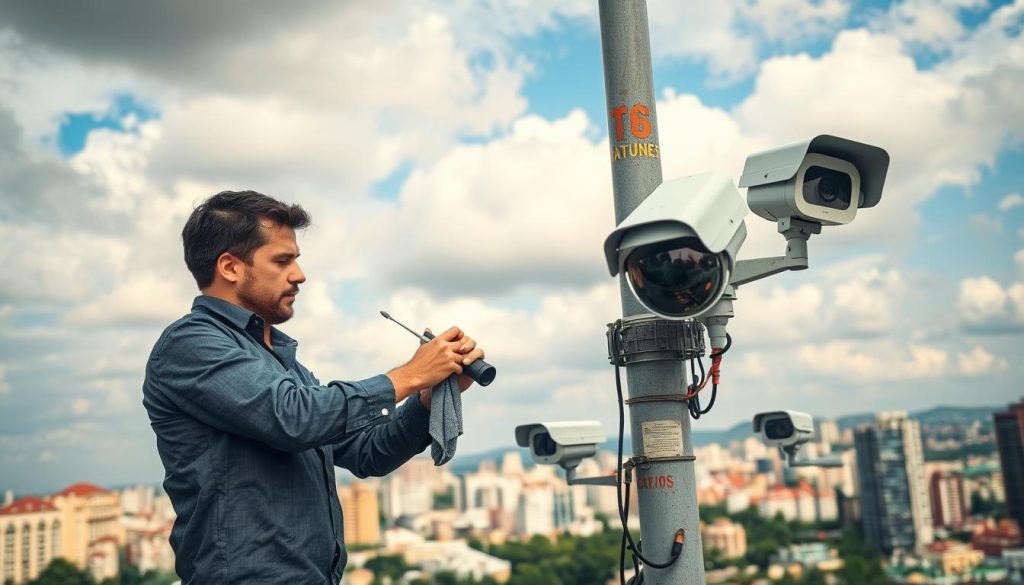
This systematic inspection takes only minutes per unit. It preserves optical clarity and prevents most common hardware issues.
Your video quality depends on these basic care steps. They keep the entire setup working well through seasonal changes.
Pre-Monsoon System Checks and Firmware Updates
Schedule a comprehensive inspection before Singapore’s heavy monsoon periods. This seasonal timing prepares your equipment for the most demanding conditions.
Test every camera’s field of view and night vision capabilities. Ensure no new obstructions like plant growth block critical surveillance areas.
Install lightning arrestors or surge protectors on all power and data lines. Electrical surges from storms represent a frequent cause of sudden electronic failure.
These protective devices divert excess voltage away from sensitive components. They provide essential defense for your entire security infrastructure.
Check backup power supplies like UPS units or battery packs. Verify they hold sufficient charge to maintain operation during outages.
Update all software and firmware to the latest available versions. Manufacturers regularly release improvements to motion detection algorithms.
These updates often include bug fixes that specifically enhance wet-weather performance. They can significantly improve your cctv system’s accuracy.
Review recorded footage from recent precipitation events. Look for any degradation in image quality that might indicate developing issues.
Document all findings and completed maintenance actions. This record helps track the health of your surveillance network over time.
Following this pre-monsoon routine extends the functional life of your equipment. It ensures reliable operation when you need protection most.
These simple, non-negotiable actions deliver peace of mind. Your security investment continues to work well through any Singaporean downpour.
Comparing CCTV Models: VIGI vs. Tapo for Wet Weather
Choosing between these two lines involves weighing hardware durability against software intelligence. Each offers distinct advantages for Singapore’s climate.
Your decision should align with your property’s specific exposure levels. Consider both immediate needs and long-term reliability.
Weather Resistance and Smart Feature Analysis
The VIGI series emphasizes robust physical construction for demanding outdoor use. Models like the C340HPWSM feature industrial-grade weatherproofing.
Their housing materials withstand prolonged exposure to harsh elements. This makes them suitable for fully exposed perimeter walls.
Tapo cameras prioritize user-friendly operation and affordability. The Tapo C200 model offers excellent value for residential settings.
Its design focuses on easy installation and intuitive mobile access. Cloud storage options provide convenient footage management.
Smart feature implementation differs significantly between brands. VIGI systems often include sophisticated AI-based person and vehicle detection.
This technology helps filter out environmental noise during precipitation. It reduces false alerts from water movement.
Tapo solutions offer reliable basic object classification at a lower price point. Their algorithms work well in moderately sheltered locations.
Both brands provide mobile app control and remote viewing capabilities. The user experience varies based on interface design.
Which System is Best for Your Specific Environment?
Selecting the right equipment depends on your installation location’s exposure. Consider these practical guidelines for Singaporean properties.
VIGI models represent the better choice for maximum weather resistance. They excel in completely unprotected areas facing direct storms.
Business premises requiring industrial-grade reliability benefit from this robustness. The investment pays off through extended hardware lifespan.
Tapo cameras work better for covered residential spaces like porches or balconies. Their value proposition shines in partially sheltered environments.
Homeowners prioritizing ease of use and budget find Tapo solutions appealing. Simple setup processes appeal to non-technical users.
Evaluate your need for advanced filtering against basic weather protection. Exposed locations demand hardware toughness first.
Sheltered spots can leverage smart software features more effectively. This balance determines which system delivers optimal camera performance.
Remember that proper installation affects any product’s effectiveness. Even robust equipment needs correct positioning to work properly.
For insights on preventing moisture issues with any brand, learn more about protecting your equipment from water damage. This knowledge helps extend all security investments.
Your final decision should match product strengths to environmental realities. Both brands offer competent solutions for different scenarios.
Addressing Severe Weather Threats Beyond Rain
Successful long-term surveillance in Singapore demands defenses against a full spectrum of environmental aggressors. While water is a primary concern, other forces can degrade your setup.
Lightning, intense heat, and salty air pose silent but serious risks. Each requires specific countermeasures for reliable operation.
Ignoring these factors shortens equipment lifespan dramatically. A holistic approach ensures your investment remains effective.
Protecting Your System from Lightning and Power Surges
Electrical storms present one of the fastest ways to destroy outdoor cameras. A nearby strike can induce massive power surges through wiring.
These voltage spikes cause instant short circuits in sensitive electronics. Your entire security network becomes vulnerable during thunderstorms.
Surge protection devices are non-negotiable for any exposed installation. Install them at both power and data connection points.
For comprehensive protection, consider these essential devices:
- Uninterruptible Power Supplies (UPS) with surge protection: These units filter incoming power and provide backup during outages.
- Dedicated Ethernet surge protectors: Network cables can carry destructive currents directly to camera circuits.
- Lightning arrestors for coaxial cables: Older analog systems need this specialized protection.
Avoid mounting cameras on metal poles or structures whenever possible. Metal conducts electrical currents efficiently during strikes.
This can channel surge energy straight into your equipment. Choose wooden or composite materials for outdoor mounts instead.
Proper grounding of all components adds another safety layer. Consult a qualified electrician for complex installations.
Mitigating Heat, Humidity, and Salt Air Damage
Singapore’s constant high humidity drives internal condensation year-round. Warm, moist air enters housings through microscopic gaps.
When temperatures drop at night, this moisture condenses on cool lens surfaces. The resulting fog destroys video quality completely.
Select cameras with wide operating temperature ranges suited for tropics. Look for models rated from 0°C to 50°C or higher.
Ensure protective housings have adequate ventilation features. Small vents allow air circulation while blocking direct water entry.
This prevents stagnant, humid air from accumulating inside. Climate-controlled enclosures with heaters offer premium solutions.
Extreme heat presents another operational challenge. Cameras left in direct sunlight can overheat and shut down.
Internal components suffer accelerated aging from thermal stress. Image sensors may develop permanent hot pixels over time.
For coastal properties, salt-laden air accelerates corrosion ten times faster than inland conditions. This invisible threat requires specialized hardware selection.
Seek cameras marketed with “salt damage resistance” or similar certifications. These models use materials that withstand corrosive environments.
Stainless steel mounting hardware resists rust far better than standard options. Specially coated polycarbonate housings prevent surface degradation.
Regular cleaning with fresh water removes salt deposits from external surfaces. This simple maintenance step extends functional life significantly.
Your surveillance solution must handle all these environmental factors. Comprehensive protection keeps cameras working well through seasonal extremes.
Combine physical safeguards with proper installation practices. This approach delivers reliable security despite challenging local conditions.
When to Consider a Professional Upgrade for Your System
Recognizing the boundary between manageable issues and systemic failure is crucial for property protection. Temporary fixes eventually reach their limit against Singapore’s relentless climate.
Your surveillance equipment should work reliably through every season. When it cannot, your entire security posture weakens.
This moment demands careful evaluation. Upgrading represents a strategic investment rather than mere replacement.
Modern technology offers dramatic improvements over older setups. The right upgrade transforms frustration into confidence.
Signs Your Current CCTV is No Longer Weather-Competent
Several clear indicators suggest your equipment has passed its effective lifespan. These symptoms point to fundamental hardware limitations.
Recurring condensation inside the lens dome is a major red flag. Proper cleaning should resolve fogging temporarily.
If mist returns quickly after wiping, seals have likely failed. Moisture now circulates freely within the housing.
Persistent false alerts signal another serious problem. Even after adjusting sensitivity and activity zones, the system remains confused.
This indicates the processing unit cannot distinguish environmental noise from real threats. Basic motion detection algorithms are overwhelmed.
Visible physical damage provides obvious evidence. Look for corrosion on connectors or water stains inside the casing.
These signs show moisture has breached protective barriers. Internal components face ongoing exposure.
Poor image quality that persists after storms ends suggests sensor degradation. Blurry footage during clear weather means permanent damage.
The camera cannot capture usable details for identification. This defeats the core purpose of surveillance.
These issues represent more than minor annoyances. They indicate a system that cannot perform its essential security function.
Continuing with compromised equipment creates significant risk. Your property remains vulnerable during critical moments.
Addressing these symptoms requires more than maintenance. A comprehensive upgrade becomes the only prudent solution.
Modern Features That Solve Traditional Rain Problems
Contemporary surveillance technology directly targets the challenges of wet weather. Manufacturers now design for tropical conditions.
True IP66 and IP67 ratings provide verified protection. These certifications guarantee resistance against powerful water jets.
Advanced AI-powered filtering represents a game changer. Smart detection algorithms classify objects by shape and movement pattern.
These systems distinguish humans and vehicles from environmental clutter. False alerts from precipitation drop dramatically.
Integrated PIR sensors add another layer of intelligence. They detect heat signatures rather than visual pixel changes.
Falling water does not trigger these thermal sensors. Your alerts become highly accurate during storms.
Robust housings with anti-corrosion coatings extend hardware life. Specialized materials withstand constant humidity and salt air.
Climate-controlled enclosures maintain stable internal temperatures. This prevents condensation from forming on critical lenses.
High-resolution sensors capture clearer details despite challenging conditions. Improved low-light performance ensures visibility at night.
These features work together to create resilient surveillance solutions. They address the specific problems outlined throughout this guide.
Upgrading offers an opportunity to leap forward in reliability. Modern systems provide peace of mind through intelligent design.
Your investment delivers consistent camera performance regardless of weather. The entire security infrastructure becomes more dependable.
Professional installation ensures optimal positioning and configuration. Experts can tailor the system to your property’s unique layout.
This approach guarantees your new equipment will work better from day one. It represents the final step in achieving uninterrupted protection.
Ensuring Uninterrupted Security in Any Singaporean Downpour
Your outdoor monitoring setup can deliver consistent performance year-round when you implement the right combination of technical adjustments and protective measures. While precipitation impacts surveillance, its effects are manageable through a layered defense strategy.
Start with smart software settings for motion detection. Add strategic physical placement under shelter. Choose hardware with proper IP ratings for water resistance.
View your security investment as a complete system requiring appropriate care. Regular maintenance and climate-specific accessories extend equipment life significantly.
With these tips, your cameras work reliably through all conditions. They provide clear video evidence and strong deterrence. You gain peace of mind knowing your property remains protected.
FAQ
How can I stop my security camera from sending alerts every time it rains?
Adjusting your system’s settings is key. Lower the motion detection sensitivity and use activity zones to ignore areas where rain or moving foliage is common. Enabling smart features like person or vehicle detection can also filter out false alarms caused by weather.
What is the best IP rating for outdoor cameras in Singapore?
For reliable performance in Singapore’s tropical climate, look for a rating of IP66 or higher. An IP66-certified device is dust-tight and protected against powerful water jets, making it suitable for heavy downpours and high humidity.
Can I just use a protective housing for my existing camera?
Yes, adding a protective housing is an excellent upgrade. Choose one with a built-in sunshield and sealed gaskets. For areas prone to condensation, models with a small blower or heater can keep the lens view clear and prevent internal moisture.
How does a PIR sensor improve motion detection in bad weather?
Passive Infrared (PIR) sensors detect body heat, not visual movement. This means falling rain, swaying branches, or camera spray won’t trigger an alert. Integrating PIR with your video system creates a more accurate and reliable security solution.
What regular maintenance do outdoor surveillance systems need?
A simple routine ensures long-term performance. Gently clean the lens and housing monthly, and check all cable seals. Before the monsoon season, update your camera’s firmware and test the video feed to confirm everything is working well.
When should I consider upgrading my entire CCTV setup?
Consider an upgrade if you frequently experience poor image quality, constant false alerts, or visible moisture inside the camera dome. Modern systems from brands like TP-Link VIGI or Tapo offer superior weatherproofing and AI features that handle local conditions much better.


