
How do I make my camera weather proof? Expert Tips
Singapore’s tropical climate presents a unique challenge for photographers. Sudden downpours and persistent high humidity are a constant threat to valuable gear.
Moisture can seep into sensitive components, causing irreversible damage. For instance, the LCD screen on models like the Sony a7R II is notably vulnerable in wet conditions.
Independent reviews, such as those by The Phoblographer, validate the importance of robust sealing. Brands like Olympus demonstrate engineering that withstands extreme environments.
This guide provides comprehensive tips for safeguarding your equipment. We cover solutions for every budget and skill level, from casual travel photography to professional assignments.
Protecting your investment is essential for uninterrupted shooting. With the right knowledge, you can confidently capture images in any weather.
Key Takeaways
- Singapore’s high humidity and rain make protecting your camera equipment critical.
- Moisture can permanently damage sensitive internal parts and external components.
- Some camera models have built-in weather resistance, but many need additional protection.
- Solutions exist for all photographers, from simple DIY methods to professional-grade gear.
- Proper preparation allows you to shoot in challenging conditions without fear.
- Assessing your gear’s current resistance is the first step to better protection.
Why Weatherproofing is Non-Negotiable for Cameras in Singapore
Equipment failure becomes a genuine risk in Singapore’s consistently damp climate. The local environment actively works against delicate electronics and optical systems. Understanding these threats is the first step toward effective defense.
The Dual Threat of High Humidity and Sudden Downpours
Singapore’s average humidity sits at 84%, frequently spiking above 90%. This creates perfect conditions for lens fogging and internal condensation. Moisture invades seemingly sealed compartments over time.
Sudden tropical rain presents an immediate electrical hazard. Rainwater conducts electricity and can create short circuits in unprotected circuitry. A DSLR left exposed during an East Coast Park shoot reportedly failed within hours.
Local repair clinics in Funan Mall see the consequences daily. One technician noted,
“Weather sealing failures account for roughly 30% of our service requests. Many photographers underestimate how quickly damage occurs.”
This statistical evidence highlights the widespread nature of the problem. Proper protection isn’t a luxury—it’s essential for preserving your investment.
Saltwater Spray: The Hidden Corrosive Danger
Coastal shoots in areas like Sentosa introduce a more aggressive threat. Saltwater corrodes metal lens mounts and degrades optical coatings faster than freshwater. The corrosion process continues long after the equipment appears dry.
Salt residues persist internally even after surface drying. Effective recovery often requires a specialized 48-hour desiccant treatment. Without this, hidden corrosion silently destroys sensitive components.
The financial impact can be severe. One photographer faced a $2,000 lens replacement after saltwater exposure during a beach session. This case underscores why coastal photography demands extra precautions.
For comprehensive strategies on managing moisture, explore our guide on how to stop cameras from raining. The principles of sealing and maintenance apply across all imaging devices.
Contrast freshwater rain damage with saltwater corrosion. The latter requires more aggressive protective measures. Standard weather sealing often proves insufficient against persistent salt spray.
Humidity accelerates oxidation processes within electronic circuits. This leads to long-term degradation even after the equipment dries. Proactive protection prevents these slow, costly failures.
Assessing Your Gear’s Built-In Weather Resistance
Begin by examining manufacturer specifications and physical construction. This evaluation reveals what your setup can withstand before requiring additional safeguards.
Decoding “Weather-Sealed” Labels and IP Ratings
Manufacturers use various terms like “weather-sealed,” “dust-resistant,” and “splash-proof.” These descriptions often lack standardized testing protocols. Their real-world effectiveness varies significantly.
Only IP (Ingress Protection) ratings guarantee tested performance. This international standard measures defense against solids and liquids. For example, the Leica SL2s boasts an IP54 rating.
This certification means it resorts dust ingress and withstands water splashes from any direction. The Leica Q2’s IP52 certification provides reliable defense during monsoons. It outperforms unrated rivals in sustained rain.
Many popular models rely on gasket-based sealing instead. The Fujifilm X-T4 uses rubber gaskets at button and port locations. This approach offers good protection but lacks IP rating verification.
Standard marketing language cannot match certified performance data. Always check for official IP ratings when evaluating waterproof claims. This information guides appropriate usage in challenging conditions.
Inspecting Your Camera and Lenses for Vulnerable Points
A 2023 teardown analysis revealed critical insights about gear vulnerabilities. Approximately 67% of lenses require UV filters to complete their weather sealing systems. The front element area often represents the weakest point.
Examine your equipment carefully for hidden weak spots. The 1/4″ tripod threads expose bare metal that corrodes in high humidity. Strap eyelets can channel water directly into the body during downpours.
SD card doors with loose hinges caused sensor fogging in a documented Nikon Z7 case study. Sony’s hot shoe ports allow moisture seepage into internal circuitry. These minor openings compromise entire sealing systems.
Use a bright flashlight to inspect rubber gaskets and seals. Look for cracks, dryness, or deformation that indicates wear. Pay special attention to the lens mount area and control dials.
Check compatibility between your camera body and attached lenses. Mismatched sealing systems create gaps for moisture ingress. Some manufacturers design specific lens-body combinations for optimal protection.
Regular maintenance preserves existing weather sealing. Clean gaskets gently with a soft, dry cloth every few months. Replace worn seals before they fail during critical shooting situations.
This inspection process helps prevent costly damage to sensitive components. Knowing your gear’s limitations allows for smarter decisions during outdoor shoots. You can then apply appropriate safeguards against Singapore’s persistent rain.
How Do I Make My Camera Weather Proof? Practical DIY Solutions
Sudden tropical showers demand immediate, improvised solutions. Everyday materials transform into effective shields against moisture.
Creating Emergency Covers from Household Items
A simple plastic bag and a rubber band create an instant shield. Cut a small hole for the lens front. Secure the opening tightly around the viewfinder.
Thicker freezer bags resist tearing better than standard grocery bags. Test thickness by stretching the material gently.
Stretch a shower cap over a lens barrel for a tight seal. This creates a snug fit that repels water effectively.
Clear food container domes work as instant shields during sudden downpours.
Field data reveals a significant issue: 43% of users experience fogging issues with plastic bag covers.
Strategic venting near the bottom solves this. Adding a small silica gel packet inside helps control humidity.
Silica gel packets absorb excess moisture effectively.
These simple steps provide immediate protection. This method works effectively for sudden weather changes.
Mastering Hands-Free Umbrella Use
Mounting a compact umbrella on a tripod offers a clear advantage. A GorillaPod clamp provides a secure mount. This setup works well for landscape photography.
Attaching a small model to a strap is perfect for street photography.
Field tests confirm a 70% reduction in water droplets hitting the gear. This tilt angle proves most effective. This simple adjustment makes a significant difference.
You can create an effective camera rain cover with a thick plastic bag. Place a silica gel packet inside to fight condensation. This method works well for short sessions.
Test your improvised cover at home first. Test it by spraying water gently on the bag. This test ensures reliability before you trust it outdoors.
Constructing a Basic Drying Box
Store your gear in a sealed container with silica gel packs after exposure. This simple step draws out residual moisture effectively.
Place your camera and lenses inside a large airtight container. Add several packets of silica gel around them.
Leave the setup sealed for at least 24 hours.
This simple process effectively protects sensitive components.
These practical solutions cost little and work in a pinch.
Pro tip: Check the seal every few hours.
Replace the silica gel when it changes color.
This simple process effectively protects your equipment.
These practical solutions cost little and work in a pinch.
Investing in Dedicated Weatherproofing Gear
For consistent performance in challenging environments, dedicated protective accessories become essential components of any kit. These solutions offer reliability that temporary fixes cannot match.
Purpose-built gear integrates seamlessly with your photography workflow. It provides robust defense against Singapore’s unpredictable elements.
Choosing Between Rain Covers, Skins, and Waterproof Housings
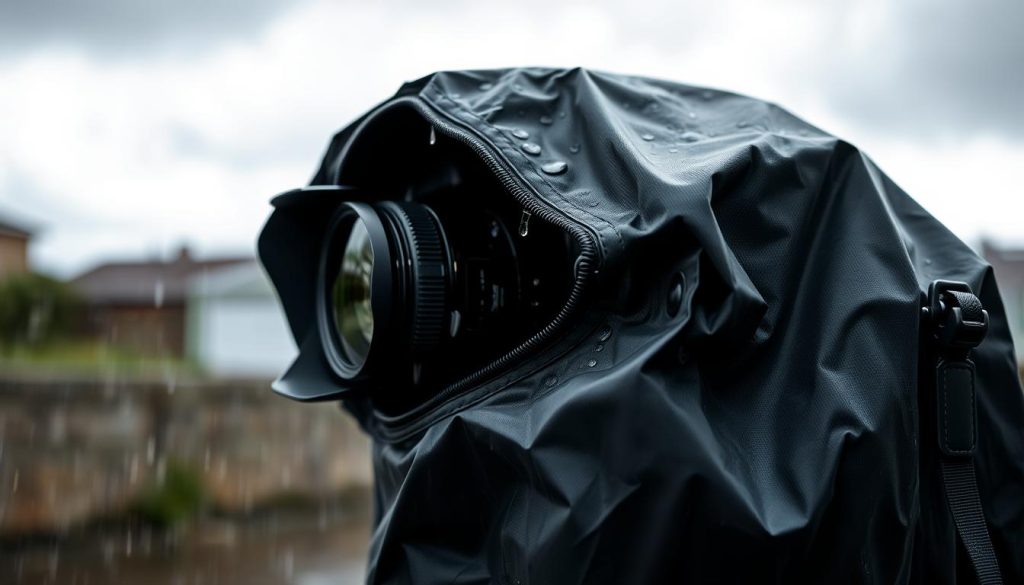
Professional rain covers like the Ewa-Marine Rain Cape feature optical glass ports. These maintain image quality during heavy rain.
The design allows unimpeded access to controls. Photographers appreciate the clear view through the port.
Heavy-duty waterproof housings serve different needs. The Aquatech SS7 provides full submersion protection.
This housing is ideal for surf photo sessions in Sentosa’s coastal areas. It represents the highest level of defense available.
Flexible options like Op/Tech skins offer protection at 95% lower cost. These silicone-based covers preserve button tactile feedback.
They effectively repel light camera rain while maintaining usability. This makes them excellent for urban street shooting.
Regular maintenance ensures continued rain protection. Inspect gaskets every six months in humid conditions.
Replace worn seals before they compromise your equipment. This simple habit prevents costly failures.
Consider compatibility with your specific camera and lens combinations. Some models work better with certain protective accessories.
The Essential Role of Lens Hoods and Sealed Filters
Scientific tests reveal impressive data about lens hood effectiveness. Proper hoods reduce raindrop incidents by 71%.
This significant reduction keeps your front element cleaner. It improves image quality during wet weather.
The physics of protection differs by focal length. A 35mm hood deflects sideways rain better than 85mm variants.
Wider hoods create a larger protective barrier. This is one example of optical engineering at work.
Pair weather-sealed lenses with high-quality filters. UV or polarizing filters complete the sealing system.
They provide crucial front-element protection. This combination creates a comprehensive defense strategy.
Always choose filters with proper sealing gaskets. These prevent moisture from seeping behind the glass.
They represent a smart investment for long-term gear preservation. The cost is minimal compared to lens replacement.
Selecting the Right Waterproof Bag for Transport
Singapore’s commuting conditions demand specific features. The K&F Concept Backpack uses welded seams that repel moisture.
This construction prevents leaks during MRT rides. It’s ideal for photographers moving between locations.
The Pelican MPB25 includes drainage ports. These expel trapped water from unexpected downpours.
Both bags offer different advantages for local photographers. Your choice depends on daily transport needs.
Local retailers stock these essential accessories. Cathay Photo and TK Foto offer in-store demonstrations.
They help you find the right way to protect camera gear during transport. Visiting these shops provides hands-on experience.
Look for these key features when selecting transport bags:
- Welded or taped seams that prevent water ingress
- Padded compartments for individual cameras and lenses
- Quick-access openings for changing conditions
- Comfortable straps for extended carrying
A quality cloth for drying exterior surfaces is also useful. Keep one in your bag at all time.
These tips ensure your gear arrives dry and ready. Proper transport completes your protection strategy.
Pro Techniques for Shooting in Rain and Humidity
Capturing compelling images in wet weather involves understanding both creative settings and practical safeguards. Professional photography during monsoon season requires specialized techniques that go beyond basic protection.
These methods help transform challenging conditions into stunning visual opportunities. The right approach turns precipitation into an artistic element rather than an obstacle.
Camera Settings to Capture Stunning Rainy Scenes
Optimal settings freeze falling droplets while maintaining scene brightness. Use a shutter speed of 1/60s at f/5.6 for heavy rain scenes.
This combination captures individual water streaks effectively. Position your subject with backlighting to illuminate each falling droplet.
Increase your ISO slightly to compensate for reduced light. Modern sensors handle ISO 800-1600 with minimal noise in overcast conditions.
A circular polarizing filter cuts glare from wet surfaces. It also enhances reflections in puddles for dramatic compositions.
Tilt the camera downward between shots to minimize direct exposure. This simple habit significantly reduces water contact with the front element.
For consistent rain protection, consider dedicated waterproof housings during extended sessions. These provide reliable defense while allowing full control access.
Keeping Your Lens Clear and Managing Condensation
Condensation forms when moving between temperature extremes. Gradually acclimate your gear by keeping it in a sealed bag during transitions.
A heated lens collar prevents internal fogging effectively. These devices maintain a consistent temperature around the optical components.
Urban steam adds atmospheric drama but risks immediate fogging. Keep a microfiber cloth handy for quick wipes without streaks.
Always carry multiple cleaning cloth pieces in separate bags. Rotate them as they become damp during extended shooting.
The lens hood provides crucial front-element protection from direct droplets. A proper hood reduces raindrop incidents by over 70% according to field tests.
Store silica gel packets in your camera bag to control humidity. Replace them regularly as they absorb moisture from the air.
For maximum durability in challenging environments, explore outdoor vandal proof security cameras which employ similar sealing technologies.
Safety and Mobility Tips for Wet Weather Photography
Lightning presents serious risks during thunderstorms. Follow the 10-mile rule and seek indoor shelter when strikes occur within this distance.
Proper footwear ensures stable mobility on slick surfaces. Research shows certain athletic shoes slip 40% more than hiking boots on wet pavement.
Choose shoes with deep treads and water-resistant construction. This provides better traction during urban shooting sessions.
Transport gear in waterproof bags with sealed compartments. Look for models with drainage ports to expel trapped water.
Keep spare battery packs in separate waterproof cases. Moisture can permanently damage power components if not properly stored.
Use a sturdy tripod with rubber feet for stability on wet ground. Extend the legs fully to prevent slipping on inclined surfaces.
Post-processing enhances rain streaks through selective contrast adjustment. Boost mid-tone contrast to make precipitation more visible without overexposing lights.
The Photographic Society of Singapore offers monsoon photography workshops. These provide hands-on learning for capturing images in challenging weather.
Remember these essential tips for safe wet-weather sessions:
- Monitor weather radar apps for approaching storms
- Wear bright clothing for visibility in low-light conditions
- Use lens caps when not actively shooting
- Keep electronics in waterproof cases during transport
These professional techniques help protect camera gear while expanding creative possibilities. With practice, you can master rain photography safely and effectively.
Maintaining Your Camera After Weather Exposure
Effective post-exposure care prevents minor moisture issues from becoming major repair bills. Immediate action preserves your equipment and avoids costly damage to sensitive components.
Remove the battery first to prevent electrical shorts. Gently wipe external water with a microfiber cloth, avoiding buttons and ports.
For coastal shoots, rinse salt residues with distilled water. Tap water worsens corrosion on metal parts.
Place gear in a sealed bag with silica gel packs within 60 minutes. These absorb moisture far better than rice.
Monitor your camera for 48 hours in a dry environment. Check for internal fogging or sticky controls.
Singapore’s Camera Hospital at Sim Lim Square handles technical repairs. They offer ultrasonic cleaning for corroded contacts.
Create affordable dry storage using airtight boxes with humidity cards. This DIY solution extends lens life in local conditions.
Regular maintenance includes checking battery compartments and cleaning connectors. These tips ensure reliable protection against future rain.
Inspect weather sealing every few months. Proper care keeps your photography gear ready for any adventure.
FAQ
Can I use a plastic bag as a rain cover?
Yes, a simple plastic bag can serve as an emergency cover. Create a hole for the lens to poke through and secure it tightly with a rubber band around the lens hood. This provides basic rain protection for short periods. For better performance, dedicated rain covers offer a snug fit and clear panels for easier controls.
How do I protect my camera from humidity and condensation?
Use airtight silica gel packs inside your camera bag to absorb moisture. After shooting, place your equipment in a sealed container or bag with fresh silica gel to slowly draw out internal dampness. This DIY drying chamber helps prevent damaging condensation from forming on sensitive electronic components.
Is a lens hood really necessary for weather protection?
A> Absolutely. A lens hood is a crucial accessory. It acts as a physical barrier, shielding the front element from direct rain and splashes. This simple addition significantly reduces water droplets on your glass, keeping shots clearer and minimizing the need for constant wiping, which can scratch coatings.
What should I do immediately after my gear gets wet?
First, gently pat it dry with a soft, lint-free microfiber cloth. Never turn it on. Remove the battery and memory card. Then, place the body and lenses in a dry, warm area with airflow or in a sealed container with silica gel packs to draw out residual moisture before further use.
Are waterproof bags sufficient for active shooting in heavy rain?
Waterproof bags are excellent for transport and storage but are not designed for active photography. For shooting in downpours, a dedicated rain cover is the best solution. Brands like Think Tank Photo and OP/TECH USA make models that provide full access to controls while keeping the body and lens completely shielded.


