
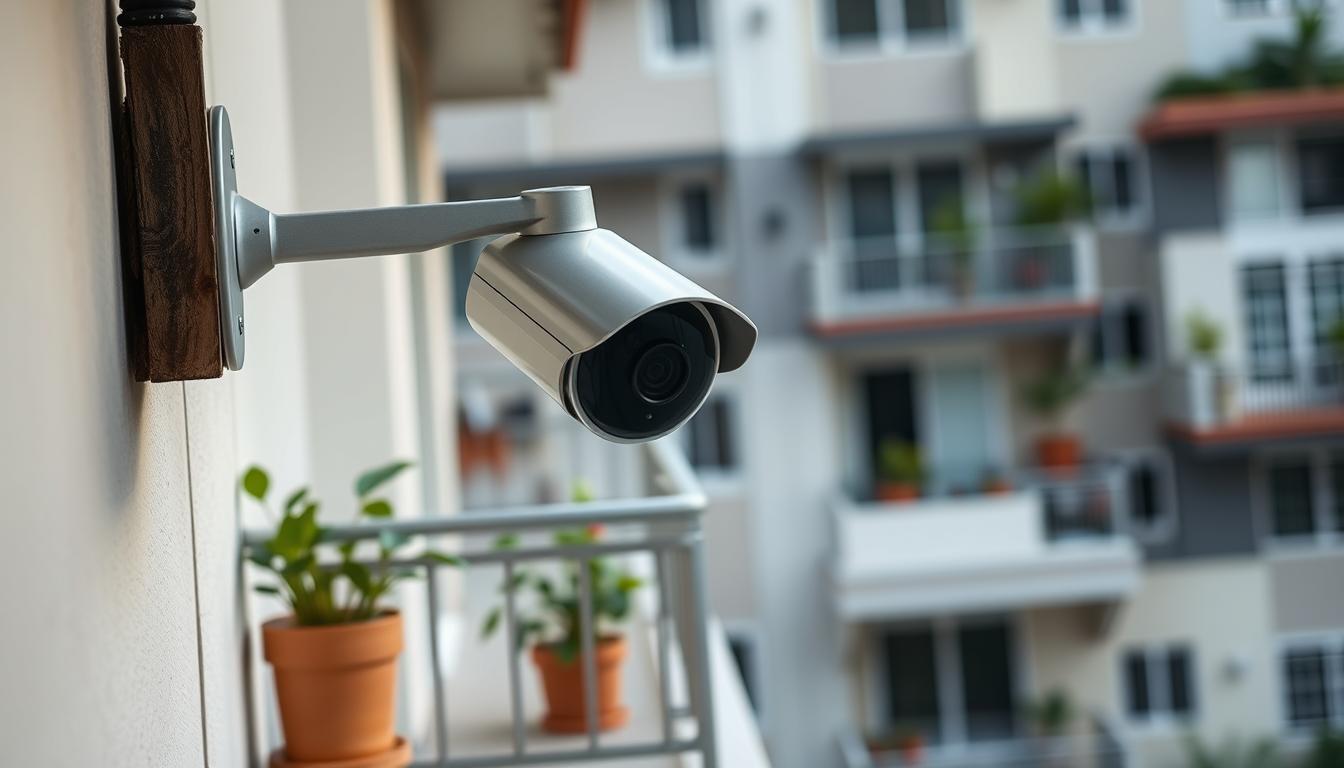
Is it illegal to install CCTV outside HDB flat? A Guide
Many Singaporean homeowners wonder about security options for their public housing. Setting up surveillance systems raises important questions about regulations and community harmony.
The simple answer is no, placing cameras externally isn’t automatically forbidden. However, specific rules govern these installations to protect everyone’s rights. A clear framework balances personal safety with respect for neighbors’ privacy.
Governing bodies like HDB and your Town Council establish guidelines for external security equipment. Their updated 2023 policies simplified procedures for corridor-facing devices. This change made the process more straightforward for residents.
Strategic placement prevents conflicts with people living nearby. Cameras should monitor your own property without intruding on others’ personal spaces. Improper positioning targeting private areas can create disputes.
Smart doorbells with cameras offer a popular alternative with fewer restrictions. These devices often face simpler approval processes while providing effective monitoring.
This guide explains how to enhance your home’s protection responsibly. You’ll learn about required permissions, optimal placement strategies, and legal considerations. Understanding these elements helps maintain peaceful community living.
Key Takeaways
- External security camera placement in HDB residences follows specific regulations rather than being prohibited.
- Homeowners must consider both personal safety needs and neighbors’ privacy rights when planning installations.
- HDB and Town Council guidelines underwent significant updates in 2023, simplifying procedures for common area cameras.
- Strategic positioning focused on your own property helps prevent community disputes and legal issues.
- Smart doorbell cameras present a less intrusive alternative that often faces fewer regulatory hurdles.
- The Community Disputes Resolution Act provides legal framework for addressing surveillance-related conflicts between residents.
- Proper installation requires understanding data protection principles and respecting shared living environments.
Understanding HDB’s Updated CCTV Regulations
Navigating the rules for surveillance equipment in public housing requires attention to detail.
A pivotal 2023 policy change removed the prior HDB approval requirement for standard, compliant installations. These devices must be mounted within a resident’s private property boundary.
The Simplified Approval Process Since 2023
Before May 2023, homeowners needed formal permission from HDB to install CCTV devices facing common corridors.
The updated policy removes this requirement. Cameras are now allowed when mounted within private property boundaries.
This simplification significantly helps homeowners.
You must understand what “private property boundary” means for an HDB flat. It typically refers to the area within your own gate or the external side of your front door.
The camera must be physically mounted on this private property. It cannot be on common building structures.
While HDB approval is no longer needed for standard, compliant installations, Town Council approval may still be required.
This is the case if the installation affects common property. We will cover this in a later section.
Key Positioning and Technical Guidelines
Concrete technical advice is essential. Using angle brackets set between 15° and 45° directs the camera’s view appropriately.
Ensuring a minimum clearance from adjacent units avoids capturing neighbors’ private spaces.
Windows and main doors must remain private.
Explicit prohibitions exist. Cameras cannot be mounted on building facades.
Equipment must not extend beyond a flat’s boundary into common corridors. It should never obstruct walkways or create hazards.
Non-compliance has clear consequences. You may receive a formal warning from the Town Council.
A fine of up to $5,000 can be imposed. You might be ordered to remove or modify your installation.
Practical steps prevent issues. Homeowners should check the camera’s live view during initial setup.
Technical solutions help. Using fisheye lenses or masking features available in many modern cameras limits the field of view.
The core principle balances your need for security with your responsibility to respect the privacy and peaceful enjoyment of other residents.
This balance is crucial in the shared HDB environment.
Is It Illegal to Install CCTV Outside HDB Flat? The Legal Framework
The Community Disputes Resolution Act establishes definitive legal parameters for neighborhood monitoring systems. This legislation creates the primary legal framework governing residential surveillance disputes across Singapore.
Homeowners must understand how this law interacts with HDB guidelines. The combination defines what constitutes permissible security measures.
Legal Status Under the Community Disputes Resolution Act
Section 21 of the Community Disputes Resolution Act specifically addresses recording devices. It prohibits any surveillance equipment that captures activity within a neighbor’s private property.
What qualifies as a “private area” under this law? The definition typically includes interior spaces visible through windows.
Balconies and main door areas within a unit’s exclusive possession also fall under protection. The legislation safeguards these spaces from unauthorized observation.
A properly positioned security system remains completely lawful. Devices facing common corridors are legal when they avoid intruding on neighboring units.
The field of view must be limited to public areas and the homeowner’s own property. This careful positioning prevents legal issues.
Real-world cases demonstrate this balance. Lawfully installed footage helped authorities in the Boon Lay cat abuse investigation.
This example shows the evidentiary value of compliant monitoring systems. It contrasts sharply with the risks of intrusive setups violating privacy boundaries.
Special Circumstances and Exceptions
Certain situations justify seeking special permission beyond standard guidelines. Residents facing exceptional security threats may qualify for temporary approvals.
Documented loan shark harassment or repeated vandalism represents valid grounds. These cases often require supporting evidence like police reports.
Temporary six-month permits exist for residents with legitimate security concerns. These require documented evidence of specific threats.
The process and strictness of regulations can vary significantly. Private condominium management often imposes different bylaws compared to HDB guidelines.
For public housing residents, the primary references remain HDB policies and the CDRA. Understanding this distinction prevents confusion.
Homeowners with unique flat layouts might need adjusted solutions. A camera requiring a wider angle due to architectural design presents one example.
Proactive communication represents the best first step in these situations. Discussing plans with both neighbors and the Town Council before installation prevents conflicts.
The law ultimately protects dual rights: individual security and community privacy. Understanding this framework ensures legal, respectful surveillance solutions.
Responsible homeowners balance their protection needs with neighborhood harmony. This approach maintains peaceful community living while enhancing safety.
Where You Can Legally Place Your CCTV Cameras
Proper camera placement hinges on distinguishing between personal property areas and communal zones. This practical guide maps out exactly where monitoring equipment belongs and where it doesn’t. Following these spatial rules prevents conflicts and ensures your security measures remain within legal boundaries.
Permitted Mounting Areas on Your Property
You have clear options for positioning surveillance equipment on your private premises. The key requirement involves physical attachment to structures that are part of your residential unit.
Specific approved locations include:
- The door frame of your main gate
- The wall area immediately adjacent to your front door
- The ceiling of your own porch area, if your flat has one
Smart doorbell cameras mounted directly on your private door also qualify as permitted installations. These devices offer convenient monitoring without complex mounting requirements.
Mounting brackets become essential tools for achieving compliant angles. Using brackets set between 15° and 45° helps direct the camera’s view appropriately. This adjustment proves crucial for units facing directly across corridors from neighbors.
The equipment’s body and mount must connect to your unit’s structure. They cannot attach to common corridor walls or ceilings. This distinction forms the foundation of compliant placement.
Common Property and Shared Space Restrictions
Shared spaces come with strict limitations for surveillance equipment. Residents cannot mount devices on common property without explicit written permission.
Prohibited areas include:
- Common corridor walls and pillars
- Shared ceiling spaces in hallways
- The external facade of the HDB block
- Any structure designated as communal property
Running cables along or through these shared zones also requires approval. These common areas fall under Town Council jurisdiction rather than individual homeowner control.
The rationale behind these restrictions is threefold. First, they prevent damage to shared infrastructure maintained by the community. Second, they avoid creating obstructions or safety hazards in public walkways.
Third, they help maintain the aesthetic uniformity of the housing estate. Facade mounts pose particular risks, including potential “killer litter” hazards if equipment becomes dislodged.
For more details on prohibited locations, review this guide on where surveillance cameras are not allowed.
Homeowners with challenging flat layouts need creative solutions. Corner units or residences with odd angles may require special approaches.
A combination of bracket adjustments and camera settings often works best. Many modern devices offer digital privacy zones that mask specific areas from recording.
Visualizing the field of view before installation prevents problems. Use your smartphone or the camera’s live preview feature during setup. Check for any inadvertent intrusion into neighboring spaces.
Mark the intended coverage area physically before drilling any holes. This simple step can prevent disputes and costly adjustments later.
Legal placement depends entirely on precise positioning. When uncertain, choose a more restricted field of view. This conservative approach respects community harmony while providing essential security coverage.
How to Install CCTV Cameras Without Violating Privacy
A successful security camera setup balances effective monitoring with respect for personal privacy. This practical guide details implementation strategies that protect both your home and your neighbors’ rights.
Moving from placement rules to actual configuration requires careful planning. Each step should minimize intrusion into others’ personal spaces while maximizing your own security coverage.
Avoiding Neighbors’ Doors and Windows
Physical positioning forms your first defense against privacy violations. Maintain a minimum 2.4-meter clearance from adjacent units when mounting devices.
This distance helps ensure your camera’s view focuses on your property. Angle brackets set between 15° and 45° should direct the lens away from private spaces.
Zoom functions on modern cameras help tighten the focus on your own entry point. Avoid wide-angle settings that might capture neighboring doors or windows unintentionally.
During setup, physically mark the intended coverage area. Check the live feed to confirm no adjacent property appears in the frame.
Technical Solutions for Privacy Compliance
Modern security cameras offer built-in features that aid regulatory compliance. These technical solutions provide digital safeguards for community harmony.
Privacy masking or digital zoning lets you block specific portions of the video feed. You can permanently obscure a neighbor’s window so that area is never recorded.
Many brands like Xiaomi offer cameras with customizable privacy zones. Motion-activated recording minimizes unnecessary footage of passersby in common corridors.
Fisheye lenses naturally limit coverage areas to reduce peripheral intrusion. These lenses provide a focused view without capturing adjacent spaces.
Data security represents another critical consideration. Enable encryption on your camera’s feed to protect stored footage from unauthorized access.
Use strong, unique passwords for the associated mobile application. Secure your home Wi-Fi network since most modern systems connect wirelessly.
Storage management also matters for data protection. Standard 256GB storage cards typically retain recordings for 21 days before automatic overwrite.
Ethical Considerations and Neighbor Communication
Proactive communication serves as both ethical practice and practical conflict prevention. Informing immediate neighbors about your security measures builds trust and understanding.
A simple courtesy letter or message through community apps works effectively. Explain your purpose clearly—deterring parcel theft or enhancing general safety.
Assure neighbors about the steps taken to protect their privacy. Mention your use of angle brackets, privacy masking, and focused coverage areas.
Transparent communication transforms surveillance from a source of suspicion into a shared community asset.
The Personal Data Protection Act (PDPA) provides useful ethical guidance. While imposing stricter rules for businesses, its principles inform residential best practices.
Purpose limitation means recording only for legitimate security reasons. Data retention involves automatically deleting old footage after a reasonable period.
Set your system to purge recordings after 15-30 days unless needed for a specific incident. This practice aligns with PDPA’s emphasis on not keeping personal data indefinitely.
The Community Disputes Resolution Act underscores why communication matters. Proactive dialogue can prevent disputes before they require formal intervention.
This approach demonstrates respect for shared living environments in HDB flats. It acknowledges that homeowners have dual responsibilities for security and community harmony.
A privacy-conscious installation proves sustainable long-term. It reduces complaint risks, legal notices, and the hassle of repositioning equipment later.
Your Town Council views transparent setups more favorably during any required approval processes. Neighbors who feel respected are less likely to object to properly configured cameras.
Ultimately, ethical implementation strengthens both security and community relations. It represents the mature approach to residential surveillance in Singapore’s shared housing landscape.
Choosing the Right Security System: Smart Doorbells vs. Traditional CCTV
Homeowners face a practical choice between modern smart doorbells and conventional surveillance systems when securing their premises. Each option offers distinct advantages for residential protection. Understanding their differences helps you select the most suitable solution for your needs.
HDB’s Stance on Smart Doorbell Installations
Public housing authorities treat smart doorbell devices differently from standard surveillance equipment. Since these units typically replace existing doorbell hardware, they often bypass formal approval requirements.
The key factor is mounting location. Devices attached directly to your private door fall within your property boundary. This positioning usually eliminates the need for HDB or Town Council permission.
Privacy regulations still apply to all recording devices. Your doorbell camera should focus on your doorstep area. It must avoid peering unnecessarily down the common corridor.
Proper configuration ensures compliance. Adjust the field of view to capture visitors without monitoring neighboring units. Many models offer digital privacy zones for this purpose.
Comparing Features, Installation, and Suitability
A Techcom Engineering survey revealed compelling data. Smart doorbell adoption correlates with a 73% reduction in neighbor disputes compared to traditional systems. Their discrete, purpose-built design minimizes community friction.
These integrated devices combine multiple functions. They act as a security camera, door viewer, and two-way intercom. Many models include package detection and motion alerts.
Consider these key differences when evaluating options:
- Field of View: Doorbells offer narrower, focused coverage ideal for entryways. Traditional cameras provide wider area monitoring.
- Installation: Smart doorbells often fit existing doorbell slots or use adhesive mounts. Conventional systems require more complex wiring and mounting.
- Power Source: Many doorbells use battery power or low-voltage wiring. Standard CCTV typically needs continuous electrical connections.
- Functionality: Doorbells specialize in visitor interaction and package security. Traditional systems excel at continuous area surveillance.
Specific considerations matter for HDB environments. Corridors often have poor lighting, making good night vision essential. Stable connectivity is crucial—2.4GHz Wi-Fi signals penetrate walls better than 5GHz networks.
Installation simplicity varies significantly. Basic smart doorbell models start around $120. Advanced systems with enhanced features can reach $400.
Popular brands available in Singapore include Xiaomi, Ring, and Reolink. Each offers different feature sets suitable for various needs and budgets.
Smart doorbells represent a less intrusive security solution specifically designed for residential entry points. Their focused functionality and ease of installation make them particularly suitable for dense housing environments.
Choose based on your specific security requirements. A traditional CCTV system might better monitor a larger porch area. A smart doorbell excels at focused doorstep monitoring and visitor interaction.
Evaluate your primary concerns. Preventing parcel theft or screening visitors suggests a doorbell solution. Monitoring a broader exterior space may require conventional cameras.
Both systems must respect community living principles. Proper configuration protects neighbors’ privacy while securing your home. This balance maintains harmonious relationships in shared housing estates.
Steps to Get Town Council Approval (If Required)
The Town Council approval process provides a formal pathway for legitimate security needs in communal areas. Most residents can proceed without this step when mounting devices on their private property. Specific circumstances, however, trigger a mandatory review by local authorities.
This procedural guide helps homeowners navigate the official channels. Understanding when and how to seek formal consent prevents compliance issues. The system exists to balance individual security with community welfare.
When Formal Approval Becomes Necessary
Certain scenarios automatically require you to obtain official permission. The primary trigger involves any physical attachment to common property structures.
You must seek Town Council approval for these specific situations:
- Mounting equipment on shared walls, ceilings, or pillars in corridors
- Running cables through common areas like lift lobbies or void decks
- Monitoring shared spaces rather than just your immediate doorway
- Installing devices that extend beyond your property boundary
The purpose of this review process is threefold. Authorities verify the installation poses no safety hazard to residents. They ensure it won’t damage common property maintained by the community.
Most importantly, they assess whether the setup unreasonably infringes on other residents’ rights. This evaluation maintains harmony in densely populated housing estates.

Emergency situations receive special consideration. Documented cases involving loan shark harassment or repeated vandalism may qualify for priority review.
Residents facing genuine threats should gather supporting evidence. Police reports or official case numbers strengthen your application significantly.
The Application Submission Process
Submitting a complete application streamlines the approval timeline. The standard review period ranges from seven to fourteen working days. Emergency cases with proper documentation often receive faster attention.
Follow this step-by-step approach for successful submission:
- Locate the correct digital form on your specific Town Council’s website
- Complete all required fields with accurate information
- Attach scanned copies of your NRIC and marked floor plans
- Include police report details if applicable to your situation
- Submit through the official portal or designated email address
Document preparation proves crucial for approval success. Your floor plan should clearly mark the proposed camera location. Include a brief diagram or photo showing the intended field of view.
Provide a concise rationale explaining your security needs. For non-standard requests, this justification becomes particularly important.
Statistics indicate an 89% approval rate for harassment cases with proper documentation. Complete applications with clear security justifications receive favorable outcomes.
Set realistic expectations about authorization validity. Many approvals come with a six-month validity period. You may need to re-apply if your security situation requires ongoing monitoring beyond this timeframe.
Rejected applications include a fourteen-day window for appeal. If your submission isn’t approved, request specific clarification on the reasons. Address these concerns directly when preparing your appeal or revised application.
The Town Council’s decision considers multiple community factors. They evaluate potential obstructions in shared walkways. Electrical safety and structural integrity receive careful assessment.
Your proposal’s impact on the estate’s aesthetic uniformity also matters. Presenting a neat, professional installation plan increases approval chances.
This formal process ensures all residents’ interests receive proper consideration. While requiring some administrative effort, it provides legal certainty for necessary security measures. Responsible homeowners benefit from following established community protocols.
Professional Installation vs. DIY: What You Need to Know
Home security enhancement presents residents with a fundamental decision: hire certified experts or undertake the project themselves. This choice impacts compliance, effectiveness, and long-term satisfaction with your surveillance setup.
Understanding the regulatory landscape and practical considerations helps homeowners make informed decisions. Each approach offers distinct advantages that suit different needs and circumstances.
Licensing Requirements for Professional Installers
Singapore’s Private Security Industry Act (PSIA) establishes clear rules for security service providers. Anyone performing paid installation work must hold valid PSIA certification.
Unlicensed contractors face significant penalties. They risk fines of up to $5,000 per violation under current regulations.
Always verify a contractor’s credentials before engagement. Request their PSIA license number and confirm its validity through official channels.
Professional installations deliver measurable advantages. Certified technicians complete projects 94% faster than typical DIY attempts.
Their expertise ensures optimal camera placement for both security coverage and regulatory compliance. Proper cable management maintains aesthetic appeal while preventing safety hazards.
Technical configuration represents another key benefit. Professionals correctly set up network connections, privacy zones, and data security features.
Most professional services include warranties covering both labor and equipment. This protection provides peace of mind against future technical issues.
The average cost for professional installation sits around $250 in Singapore. This investment includes comprehensive setup and optimization of your security system.
Risks and Considerations for DIY Setups
Do-it-yourself approaches appeal to budget-conscious homeowners. Basic DIY installations average approximately $80 for materials and equipment.
This apparent cost savings carries hidden risks that many residents overlook. Improper drilling into HDB structures can void certain building warranties.
Insurance providers may deny claims related to unapproved modifications. Damaging hidden pipes or electrical cables during installation creates expensive repair needs.
Technical misconfiguration represents a common DIY pitfall. Poor network settings or weak passwords compromise your entire security system’s effectiveness.
Placement errors frequently violate privacy regulations. Cameras capturing neighbors’ doors or windows contravene the Community Disputes Resolution Act.
Consider these practical guidelines for safer DIY projects:
- Begin with wireless, battery-powered cameras requiring minimal structural modification
- Study your HDB floor plan thoroughly before any drilling
- Utilize non-permanent mounting solutions like heavy-duty adhesive pads
- Double-check all camera angles during setup before finalizing positions
Smart doorbell cameras offer excellent DIY options. Their focused functionality and simple mounting reduce compliance risks significantly.
Evaluate the total cost of ownership rather than just upfront expenses. Factor in your time investment, potential error costs, and compliance assurance value.
For complex wired systems or challenging mounting locations, professional installation provides clear advantages. Certified technicians navigate technical and regulatory complexities efficiently.
They ensure your security cameras operate effectively while respecting data protection principles. This balanced approach maintains community harmony in HDB flats.
Your choice ultimately depends on technical confidence, available time, and specific security needs. Both approaches can deliver effective protection when implemented correctly.
Handling Disputes and Maintaining Good Neighbor Relations
Maintaining positive relationships with your neighbors is a crucial part of responsible security camera ownership. If a concern arises, start with a calm, polite conversation. Listen to their specific worry about privacy and explain your own safety needs.
Practical compromises often resolve issues. You can adjust the camera’s angle, enable digital privacy masking, or agree on data retention periods. Showing the actual camera feed can build trust.
If informal talks fail, Singapore’s Community Disputes Resolution Act provides a formal path. This involves mediation at the Community Mediation Centre. As a last resort, the Tribunal can order removal of intrusive devices and award damages.
A 2023 High Court ruling confirmed that cameras capturing private spaces constitute harassment. This underscores why compliant setup from the start is vital. For practical installation advice, consult our DIY guide for Singapore homes.
Ultimately, being a considerate homeowner—informing neighbors and addressing concerns—is your best tool. It fosters a safer, more harmonious community for everyone.
FAQ
Do I need town council permission to mount a security camera on my HDB door?
Typically, no. Since 2023, HDB rules have been simplified. You generally do not need formal approval to mount a camera on your own front door or within the immediate recess of your unit. However, if your device protrudes significantly or requires drilling into common property, you should check with your town council.
Can my CCTV point at my neighbor’s front door or window?
No, this is strongly discouraged and can lead to legal issues. The Community Disputes Resolution Act protects residents from intrusive surveillance. Your camera’s field of view should be focused on your own property. Aiming devices at a neighbor’s door or windows infringes on their privacy and can be considered a nuisance.
Are smart video doorbells like Ring or Google Nest allowed in HDB corridors?
Yes, they are generally treated like traditional security cameras under the updated guidelines. As long as the smart doorbell is installed on your own door and does not monitor common areas or neighbors’ homes, it is usually permissible. Ensure its viewing angle is adjusted for privacy compliance.
What happens if a neighbor complains about my security camera?
A> First, communicate openly with your neighbor to understand their concern. You may need to adjust the camera angle. If unresolved, the dispute could fall under the Community Disputes Resolution Act. Persistent complaints might involve the town council or even the Personal Data Protection Commission (PDPC) if personal data collection is involved.
Is professional installation required for HDB CCTV setups?
A> No, professional installation is not mandatory. Many homeowners opt for DIY solutions. However, if you hire a professional, ensure they are licensed by the Police Licensing & Regulatory Department (PLRD) for security work. Professionals can help with optimal, compliant placement and proper wiring.
Can I install a camera on the HDB corridor ceiling opposite my flat?
A> No. Mounting devices on common property like corridor ceilings or walls almost always requires explicit town council approval. Such installations are rarely permitted as they involve shared space and raise significant privacy concerns for other residents passing through the common area.


