
How many CCTV cameras should I have? Expert Advice
Choosing the right surveillance setup is a crucial step for any property owner. A well-planned system acts as a powerful deterrent and provides vital evidence if needed. This guide offers expert advice to help you make an informed decision.
Every home or business has unique security needs. The perfect number of devices depends on your property’s size, layout, and specific risk areas. There is no universal answer, but there are clear best practices to follow.
We will break down the key factors that determine your ideal setup. You’ll get practical recommendations for both residential and commercial spaces in Singapore. Our goal is to help you achieve maximum coverage and peace of mind.
Strategic placement is just as important as the quantity. We’ll show you how to avoid blind spots and optimize your investment. Understanding different camera types and essential features will also boost your surveillance effectiveness.
By the end, you’ll know how to develop a cohesive security plan. You can balance quality coverage with your budget. Learn common mistakes to avoid and when to call in professional installation services.
Key Takeaways
- The right number of security cameras depends on your property’s specific size, layout, and vulnerabilities.
- Proper camera placement is critical to eliminate blind spots and maximize surveillance coverage.
- Different camera types and features, like night vision, directly impact your system’s effectiveness.
- A cohesive plan integrates cameras with other security measures for layered protection.
- Professional installation in Singapore can ensure optimal setup and avoid common mistakes.
- Balancing comprehensive coverage with your budget is key to a practical security investment.
- The ultimate goal is a system that deters crime and provides reliable evidence for peace of mind.
Understanding the Critical Role of CCTV in Modern Security
In today’s urban environments, electronic monitoring plays a fundamental role in comprehensive protection plans. Modern surveillance systems offer multiple layers of defense that extend far beyond simple recording.
These technologies address security needs through prevention, documentation, and psychological assurance. Understanding their full value helps property owners make informed investment decisions.
Deterrence, Evidence, and Peace of Mind
Visible security cameras serve as powerful psychological barriers against criminal activity. Research indicates that properties with obvious surveillance experience significantly lower incident rates.
Studies show visible cameras can reduce burglary risks by approximately 31%. This deterrent effect makes your property a less attractive target compared to unprotected neighbors.
Beyond prevention, these systems provide crucial evidence collection capabilities. High-quality footage aids law enforcement investigations and supports insurance claims.
The documented record becomes invaluable during disputes or incident reviews. Whether resolving neighbor disagreements or investigating workplace incidents, visual proof offers clarity.
Perhaps the most significant benefit is the psychological comfort these systems provide. Homeowners and business operators gain genuine peace of mind knowing their spaces are monitored.
The Impact of Visible Surveillance on Crime Rates
Visible monitoring has proven particularly effective in commercial settings where trust and safety are essential. Shops, banks, and offices benefit from both security and operational improvements.
Modern systems do more than record incidents—they enhance business efficiency. Monitoring customer service interactions and staff performance creates opportunities for improvement.
In Singapore’s dense urban landscape, properties often share close boundaries. Surveillance helps establish clear perimeters and documented proof of activities.
Strategic placement maximizes effectiveness. Approximately 34% of burglars enter through the front door, making this a critical coverage area.
Surveillance technology continues to evolve with features like motion detection and night vision. These advancements ensure around-the-clock protection regardless of lighting conditions.
Understanding these multiple roles helps appreciate the true value of proper surveillance coverage. A well-planned system becomes an investment in safety, efficiency, and tranquility.
The First Step: Conducting Your Personal Security Assessment
Before selecting any equipment, a thorough evaluation of your space forms the foundation of solid protection. This personal assessment ensures your surveillance investment directly addresses your unique situation.
Every property has distinct characteristics that influence security needs. A detailed analysis helps identify weak spots before they become problems.
Evaluating Your Property’s Layout and Vulnerabilities
Start by walking around your entire property with fresh eyes. Look for architectural features that create natural hiding spots or blind areas.
Note the placement of windows, doors, and other access points. Consider how vegetation or structures might block camera views.
Pay special attention to lighting conditions throughout the day and night. Dark corners and unlit pathways often attract unwanted activity.
Assess your property’s size and complexity. Larger spaces with multiple buildings need more comprehensive planning.
Document movement patterns of residents, employees, or visitors. Understanding normal traffic flow helps spot abnormal behavior.
Identifying High-Risk Areas and Common Entry Points
Certain locations consistently present higher security risks. These areas demand priority in your surveillance plan.
All entry points require monitoring. This includes obvious locations like front and back doors, plus less obvious ones.
- Ground-floor windows accessible from outside
- Garage doors and side gates
- Basement access points or utility entries
- Second-floor windows near trees or structures
Statistics reveal important patterns about break-in methods. Approximately 34% of burglars use the front door.
Another 22% gain entry through back doors. This makes rear access a critical coverage area for any security system.
Secluded corners and poorly lit spaces also rank as high-risk zones. These locations offer privacy for unauthorized activities.
Areas containing valuable assets need extra protection. This could be a home office, retail inventory, or equipment storage.
Defining Your Security Priorities: Home vs. Business
Residential and commercial properties have different protection requirements. Understanding these distinctions shapes your camera setup.
Home security typically focuses on family safety and property protection. Most residences function well with two to six strategically placed devices.
Key priorities for homes include:
- Monitoring all exterior doors
- Covering ground-floor windows
- Watching driveways and garage areas
- Securing backyard spaces and side gates
Business security involves more complex considerations. Commercial spaces must protect inventory, ensure employee safety, and reduce liability.
Retail stores, offices, and warehouses face different challenges. Large outdoor areas might require up to ten cameras for complete coverage.
Commercial priorities often include:
- Perimeter monitoring of entire property
- Entry and exit point surveillance
- Cash handling area observation
- Inventory storage protection
- Parking lot and loading zone security
Your specific concerns determine camera placement. Package theft, vandalism, and employee monitoring each require different approaches.
Establish clear objectives before deciding on equipment quantities. This ensures your system effectively addresses your most pressing security needs.
How Many CCTV Cameras Should I Have? The Core Answer
Arriving at the right surveillance device count requires balancing multiple practical factors. The optimal quantity depends on your specific circumstances rather than a universal formula.
Property owners must consider both immediate protection and long-term value. A well-planned system delivers maximum effectiveness without unnecessary expense.
Professional assessments often begin with a simple baseline. Many experts recommend one surveillance device per 500 square feet of property space.
This starting point adjusts based on specific risk factors and coverage requirements. The goal remains consistent: eliminate blind spots while maintaining cost efficiency.
Typical Camera Ranges for Residential Properties
Most homes function effectively with a modest number of devices. Residential security focuses on key entry points and vulnerable zones.
Standard HDB flats and apartments often need just two to four units. This covers primary doors, ground-floor windows, and common areas.
Landed properties and larger homes typically require four to six devices. Additional units monitor front and back yards, side entrances, and garage spaces.
Outdoor cameras form the first line of defense for any residence. Most residential setups benefit from two to four exterior units.
Consider these common residential configurations:
- Compact apartments: 2-3 devices covering main door and living area
- Standard HDB flats: 3-4 units monitoring doors, windows, and hallway
- Landed houses: 4-6 devices securing perimeter and interior zones
- Multi-story homes: Additional units for stairwells and upper floors
The right home security camera setup provides layered protection. Strategic placement matters more than sheer quantity.
Recommended Camera Counts for Commercial Spaces
Business environments demand more comprehensive surveillance solutions. Commercial security addresses multiple operational and safety concerns.
Small retail establishments might start with eight to sixteen devices. This covers entry points, sales floors, and storage areas adequately.
Larger commercial operations require significantly more units. Warehouses, manufacturing facilities, and office complexes often need thirty-two to sixty-four devices.
“Commercial surveillance must address both theft prevention and liability protection. Complete coverage becomes a business necessity rather than just a security feature.”
Different business types have distinct surveillance requirements:
- Retail stores: 8-16 devices for sales areas, entrances, and stock rooms
- Restaurants: 6-12 units covering dining areas, kitchen, and cash points
- Office buildings: 16-32 devices monitoring lobbies, corridors, and work spaces
- Industrial facilities: 32-64 units securing perimeters, loading docks, and production floors
Commercial systems typically separate indoor and outdoor monitoring needs. Perimeter security requires dedicated devices with weather-resistant features.
Future scalability remains crucial for business installations. A flexible system accommodates growth and changing security requirements.
Ultimately, the ideal device count provides overlapping coverage without significant gaps. It balances comprehensive protection with practical budget considerations.
Professional installation ensures optimal placement and system integration. This maximizes your investment in surveillance technology.
Key Factors That Determine Your Ideal Camera Count
The optimal number of surveillance units for any location is dictated by a blend of physical, technical, and financial considerations. A one-size-fits-all approach does not work for effective protection.
Your specific combination of these elements points to the right quantity. Understanding each factor helps you build a logical and effective plan.
Property Size, Type, and Overall Layout
Larger properties naturally require more devices for complete visibility. A sprawling landed home needs greater coverage than a compact apartment.
The building’s design heavily influences your plan. Multi-story structures, separate outbuildings, and complex floor plans create more zones to monitor.
Outdoor cameras must cover the entire perimeter. This prevents blind spots where intruders could approach unseen.
Indoor camera needs vary with room count and layout. Open-concept spaces might need fewer units than homes with many hallways and closed rooms.
Number and Type of Access Points
Every door, window, and gate is a potential entry point. These are the most critical spots for your security cameras need.
Start by counting all ground-level access points. Do not forget secondary entries like basement windows or garage service doors.
Each primary entry, like the front door, deserves dedicated monitoring. High-traffic points may need specialized devices, like video doorbells.
Consider the vulnerability of each point. A large window near a fence is higher risk than a small, locked window on an upper floor.
Specific Security Concerns and Vulnerable Zones
Your unique risks shape camera placement and quantity. General home security differs from protecting a retail stockroom or a warehouse yard.
Identify areas where valuable assets are kept. This could be a home office, a jewelry cabinet, or a commercial safe.
Secluded spots demand extra attention. Dark alleys, rear parking lots, and shielded side yards are common vulnerable zones.
Is employee or operational monitoring a goal? This need can significantly increase the required number of cameras for internal spaces.
Budget Constraints and Future Scalability
Financial reality plays a decisive role. It is wise to start with a core system that covers your highest-priority areas.
Many modern security systems are designed for easy expansion. You can add more units later as your budget allows.
Plan for future growth from the start. Choose a recording system and network that can handle additional devices. This protects your initial investment.
Advanced camera technology can offer cost-effective coverage. Features like high-resolution sensors, wide field of view, and superior night vision mean one device can monitor a larger area effectively.
Balancing immediate coverage with future needs is key. A scalable plan ensures your security grows alongside your property.
Strategic Camera Placement for Maximum Coverage
Effective surveillance depends as much on strategic positioning as it does on the quantity of devices deployed. Proper placement transforms individual units into a cohesive security network. This approach eliminates vulnerabilities and ensures comprehensive monitoring.
Thoughtful positioning addresses both prevention and evidence collection. It maximizes your investment by ensuring every device contributes meaningfully. A well-planned layout creates overlapping fields of view.
Essential Areas for Every Installation: Front Door, Back Door, Garage
Certain locations demand priority in any security plan. These areas experience the highest frequency of security incidents. Focusing here provides the greatest return on your investment.
The front door is the most common entry point for unauthorized access. Position a device to capture faces clearly as visitors approach. Ensure it covers the doorway itself and the immediate approach.
Back doors and side entrances are equally critical. These secluded spots offer privacy for attempted entries. A dedicated camera here prevents blind spots in your perimeter.
Garage areas represent complex security challenges. They often contain valuable tools and vehicle access points. Monitoring should cover both the main garage door and any pedestrian entrances.
For comprehensive home security, these three zones form your essential foundation. Each requires a device with appropriate features for its environment. Outdoor cameras here need weather resistance and reliable night vision.
Covering Blind Spots: Driveways, Side Gates, and Ground-Floor Windows
Beyond primary doors, secondary access points create vulnerability. These are the blind spots intruders seek to exploit. Systematic coverage of these areas closes security gaps.
Driveways and parking lots require specific attention. Position cameras to capture license plates and vehicle details. Consider the angle needed to read plates as cars enter and exit.
Side gates and fences are common overlooked entry points. These perimeter breaches often go unnoticed without proper monitoring. A camera here can alert you to unauthorized perimeter crossings.
Ground-floor windows present unique challenges. They are accessible yet often lack dedicated security monitoring. Each vulnerable window deserves coverage in your overall plan.
Common areas with high people traffic need careful consideration. Hallways, stairwells, and lobbies benefit from surveillance. This applies to both residential and commercial settings.
Identifying all potential blind spots requires walking your property. Look for hidden corners and obscured sightlines. This proactive approach ensures complete coverage.
Maximizing Views with Strategic Height and Angles
Physical positioning dramatically affects what your cameras capture. Height and angle determine the field of view and detail quality. Optimal placement balances visibility with discretion.
Install devices approximately eight to ten feet high. This elevation provides broad viewing angles while reducing tampering risks. It maintains a discreet profile that doesn’t attract unwanted attention.
Angles should be calculated to minimize obstructions. Avoid vegetation, architectural features, or reflective surfaces that block views. Test camera perspectives during both day and night conditions.
Consider these positioning strategies:
- Overlapping coverage: Position devices so their fields of view intersect, creating continuous monitoring without gaps
- Approach monitoring: Cover both the entry point itself and the approach path to capture activities before access attempts
- Height variation: Use different elevations to cover both ground-level details and broader area views
- Angled placements: Single units can often monitor multiple vulnerable zones when positioned strategically
Advanced camera technology enhances placement effectiveness. PTZ (pan-tilt-zoom) and fisheye lenses offer exceptionally wide views. These options allow comprehensive monitoring of large areas with fewer devices.
Your camera setup should capture everything without obvious positioning. The goal is comprehensive surveillance that remains unobtrusive. This balance ensures both effectiveness and aesthetic consideration.
Regularly review and adjust placements as needed. Property changes, vegetation growth, or new structures can create new blind spots. Maintaining optimal positioning is an ongoing process for sustained security.
Choosing the Right Cameras: Types and Must-Have Features
Selecting appropriate surveillance technology involves matching specific device capabilities to your unique security requirements. The right equipment choices enhance your system’s effectiveness and provide clearer evidence when needed.
Different environments demand different solutions. Understanding camera types and key specifications ensures your investment delivers optimal protection.
Indoor vs. Outdoor Cameras: Understanding the Differences
Outdoor security cameras face harsh environmental challenges. They require robust weatherproofing to withstand Singapore’s tropical climate, including heavy rain and high humidity.
Temperature resistance is equally important for reliable year-round operation. These devices must function in both intense heat and occasional cooler periods.
Enhanced night vision capabilities are non-negotiable for exterior monitoring. Modern outdoor models often feature full-color night vision, providing detailed footage after dark without additional lighting.
Indoor cameras serve different purposes. They typically prioritize discreet design and subtle monitoring rather than weather resistance.
Dome cameras are popular for interior spaces. Their unobtrusive appearance helps maintain aesthetics while providing comprehensive room coverage.
This subtle approach can effectively deter internal incidents. Employees or residents aware of monitoring tend to follow protocols more consistently.
Resolution, Night Vision, and Field of View
Resolution directly impacts identification capabilities. Higher megapixel counts produce sharper images with finer details visible upon zooming.
4K cameras provide exceptional clarity for facial recognition. They capture license plates and other identifying features at greater distances.
1080p resolution offers a cost-effective balance for general monitoring. This standard delivers clear footage suitable for most residential applications.
Night vision technology has evolved significantly. Basic infrared systems produce monochrome images, while advanced models maintain color accuracy in low light.
Full-color night vision uses sophisticated sensors and image processing. It delivers usable evidence even in near-total darkness.
Field of view specifications determine coverage area. Wide-angle lenses, often 110 degrees or more, monitor larger zones with fewer devices.
This reduces the total number of units needed for comprehensive surveillance. Proper lens selection maximizes your investment efficiency.
The Role of Video Doorbells and PTZ Cameras
Video doorbells revolutionize entry point monitoring. These devices combine visual surveillance with two-way audio communication.
They provide real-time alerts directly to your smartphone. You can interact with delivery personnel or screen visitors remotely from anywhere.
This integration enhances both security and convenience. Many models feature package detection and person-only alerts to reduce false notifications.
PTZ (Pan-Tilt-Zoom) cameras offer dynamic coverage for large areas. Remote control of viewing angles and zoom capabilities provides exceptional flexibility.
These units are ideal for retail stores, warehouses, and spacious properties. Security personnel can track movement and inspect suspicious activities in detail.
Other camera types serve specific purposes:
- Bullet cameras: Long-range outdoor coverage with visible deterrent presence
- Turret cameras: Flexible placement with vandal-resistant design
- Wireless cameras: Easy installation without extensive cabling requirements
Essential features elevate basic monitoring to intelligent security. Motion detection with customizable zones focuses attention on critical areas.
Two-way audio enables communication through the camera itself. This allows you to warn intruders or speak with family members remotely.
Smart home integration connects surveillance with other devices. Voice control and automated routines create a cohesive protection ecosystem.
Mobile app accessibility provides constant oversight. View live feeds, review recordings, and adjust settings from your smartphone.
Storage options influence both cost and accessibility. Local DVR/NVR systems keep data on-premises, while cloud storage offers remote backup.
Hybrid approaches balance these considerations. Advanced AI features like person detection and vehicle recognition reduce false alerts significantly.
These intelligent systems distinguish between relevant events and routine movements. They ensure you receive notifications only for genuine security concerns.
Matching camera types to specific locations optimizes your entire setup. Each device should address the unique challenges of its installation point.
Developing a Cohesive and Cost-Effective Surveillance Plan
A truly effective protection strategy emerges when surveillance devices work together in a unified plan. Individual components become far more powerful when integrated into a comprehensive security system. This approach maximizes both deterrence and evidence collection capabilities.
Strategic planning considers immediate needs and future expansion. It balances upfront investment with long-term value. A cohesive design ensures all elements complement each other for optimal performance.
Every property owner faces budget constraints. Smart allocation of resources creates robust protection without overspending. The right plan addresses high-priority zones first while allowing for gradual system growth.
Integrating Cameras with Alarms and Other Security Devices
Modern protection relies on layered technology working in harmony. Security cameras form just one component of a complete defense network. When combined with alarms and sensors, they create synergistic effects.
Motion detectors can trigger camera recording when activity occurs. This conserves storage space while ensuring critical events get captured. Alarms can activate visual verification through linked surveillance feeds.
Access control systems benefit greatly from integrated video monitoring. Each entry attempt gets logged with corresponding footage. This provides visual confirmation of authorized and unauthorized access attempts.
System integration creates powerful automated responses. A triggered motion sensor might activate specific camera angles. It could also turn on lights or send immediate alerts to security personnel.
Consider these integration opportunities:
- Door/window sensors paired with cameras covering those entry points
- Motion-activated lighting that improves camera visibility at night
- Smart locks that record video each time access is granted or denied
- Panic buttons that immediately focus cameras on the emergency location
This interconnected approach transforms isolated devices into an intelligent security ecosystem. Each component enhances the others’ effectiveness. The whole system becomes greater than the sum of its parts.
Balancing Coverage Quality with Your Budget
Financial considerations play a crucial role in security planning. Most property owners must work within specific budget limitations. Strategic choices ensure quality protection without excessive spending.
Begin by identifying your highest-risk areas. Entry points like the front door deserve priority investment. Common areas and perimeter zones also rank high on the protection list.
DIY security camera options offer significant cost savings. Basic models range from $30 to $300 per unit. These work well for homeowners with technical skills and simple security needs.
Professional installation provides expert placement and system optimization. This service typically costs $100 to $400 per camera in Singapore. The investment includes proper configuration and integration.
Quality doesn’t always mean highest price. Mid-range cameras with essential features often provide excellent value. Key specifications like resolution and night vision should meet your specific requirements.
Consider implementing your security system in phases. Start with core coverage of critical zones. Expand to secondary areas as your budget allows over subsequent months.
Total cost calculations should include several factors:
- Equipment purchase prices for cameras and supporting devices
- Installation expenses, whether DIY or professional
- Storage solutions and associated ongoing costs
- Regular maintenance and potential upgrades
- Integration with existing security infrastructure
Professional security assessments can reveal cost-saving opportunities. Experts might suggest strategic placement that reduces the number of units needed. They can recommend technology choices that maximize coverage per dollar spent.
Balance immediate security needs with long-term scalability. Choose a system that can grow alongside your property. This protects your initial investment while accommodating future expansion.
Planning for Storage: Local DVR vs. Cloud Solutions
Video storage represents a critical component of any surveillance plan. The right choice depends on your specific needs and preferences. Both local and cloud options offer distinct advantages.
Local DVR/NVR systems provide complete control over your footage. These devices store video on-site without monthly subscription fees. You maintain physical possession of all recorded material.
These systems require upfront investment in hardware. They also need proper physical security to prevent tampering. Regular maintenance ensures reliable operation and adequate storage capacity.
Cloud storage services offer remote accessibility and off-site backup. Typical plans cost between $5 and $10 monthly in Singapore. This approach eliminates concerns about local hardware failures.
Cloud solutions provide convenient remote viewing capabilities. You can access footage from any internet-connected device. Many services include advanced features like AI analysis and smart search functions.
Consider these storage factors for your decision:
- Required retention period for recorded footage
- Need for remote access and mobile viewing
- Concerns about data privacy and control
- Budget for ongoing subscription fees versus one-time hardware costs
- Technical expertise available for system management
Hybrid approaches combine both storage methods. Critical footage might upload to the cloud while routine recording stays local. This balances cost control with essential backup protection.
Storage capacity planning depends on several variables. Camera resolution, frame rate, and recording schedule all affect space needs. Compression technology can significantly extend available storage duration.
Future-proof your storage strategy. Choose solutions that can accommodate additional cameras. Ensure your system can handle increased data loads as your security needs evolve.
The optimal storage choice supports your overall security objectives. It should provide reliable access to footage when needed. It must balance cost considerations with practical requirements for evidence preservation.
A cohesive surveillance plan addresses equipment, integration, budget, and storage. Each element supports the others in creating comprehensive protection. This holistic approach delivers lasting security and genuine peace of mind for Singapore property owners.
Common Installation and Planning Mistakes to Avoid
A significant portion of surveillance system underperformance stems from preventable mistakes made during installation and planning. These errors can render even expensive equipment useless, creating false confidence.
Understanding these pitfalls helps you build a reliable security network. It ensures your investment delivers the protection and peace of mind you expect.
Poor Placement Leading to Critical Blind Spots
Incorrect positioning is a top reason for security failures. Nearly half of all installations suffer from this issue.
Proper placement can boost effective surveillance by up to 30%. The goal is to eliminate areas where activity goes unseen.
Blind spots often occur at corners, behind landscaping, or above door frames. A device mounted too high may capture only the tops of heads, not identifiable faces.
Another common error is pointing a lens directly at a light source. This causes glare and washes out the entire image. The camera becomes useless during key hours.
Failing to secure mounting hardware is another oversight. Loose brackets make units vulnerable to tampering or shifting in the wind. This alters the critical field of view.
Test your camera views from the intruder’s perspective. Walk around your property and note where you are not visible. This simple check reveals hidden gaps in your coverage.
Neglecting Lighting and Environmental Factors
Lighting problems cause more than half of all surveillance failures. A camera without adequate light cannot produce usable footage.
Image quality can drop by 40% at night without proper support. Relying on streetlights or occasional motion lights is not a plan.
Cameras with superior night vision technology are essential for 24-hour security. Ensure your chosen models perform well in your specific environment.
Environmental factors also degrade equipment. Outdoor cameras need proper weatherproof ratings for Singapore’s humidity and rain.
Direct sun exposure can overheat a unit and shorten its lifespan. Consider sun paths and provide some shade if possible.
Overgrown plants or new construction can block views months after installation. Schedule regular checks to maintain clear sightlines. This prevents nature from creating new blind spots.
Overlooking Legal and Privacy Considerations in Singapore
Your security should not violate the privacy of others. Singapore has specific regulations governing surveillance.
Pointing a lens into a neighbor’s home or private balcony is generally not permitted. Your camera’s field of view should be confined to your own property.
For HDB residents, guidelines may restrict where you can mount external devices. Always check with relevant authorities before drilling.
Monitoring public areas like sidewalks may require notification. The goal is to protect your space without recording the comings and goings of the public.
Privacy is a shared responsibility in our dense urban landscape. A good security plan respects boundaries while maintaining robust protection.
Other frequent mistakes include underestimating data storage needs. This causes 37% of system failures when critical footage gets overwritten.
Choosing the wrong camera type for the job accounts for 63% of functional errors. An indoor unit will not survive monsoon season on an exterior wall.
Ignoring network security leaves your feed vulnerable. Always change default passwords and use encrypted connections.
Finally, plan for the future. A scalable system saves about 25% on future upgrade costs. Think about your needs not just today, but in the years to come.
When to Seek Professional CCTV Installation Services
While DIY options exist, certain scenarios demand the precision and knowledge that only professional installers provide. Complex property layouts, multi-building sites, and specialized security requirements often exceed typical homeowner capabilities. Professional services transform equipment into a cohesive, high-performing surveillance network.
Investing in expert installation typically costs between $100 and $400 per device in Singapore. Complete system investments frequently exceed $1,000. This upfront cost delivers long-term value through optimal performance and reduced risk.
Reputable providers like Scutum South East combine competitive pricing with extensive experience. They understand local regulations and environmental challenges. Their expertise ensures your security cameras need are met effectively.
Benefits of Expert Site Surveys and Custom System Design
Professional site surveys provide comprehensive security assessments. Experts identify vulnerabilities that DIY approaches often miss. They evaluate optimal camera placements and integration opportunities.
Custom system design matches your specific security objectives. Professionals consider your property characteristics and budget constraints. The result is a tailored solution rather than a generic package.
Expert surveys analyze lighting conditions, structural challenges, and access patterns. This data informs strategic placement for maximum coverage. It ensures your investment addresses actual risks.
Consider these professional advantages:
- Complex layout navigation: Experts handle multi-story buildings, sprawling properties, and challenging architectures
- Integration planning: Professionals ensure new systems work with existing alarms and access controls
- Future-proof design: Custom plans accommodate growth and evolving security needs
- Technical specification: Experts match camera types to specific monitoring requirements
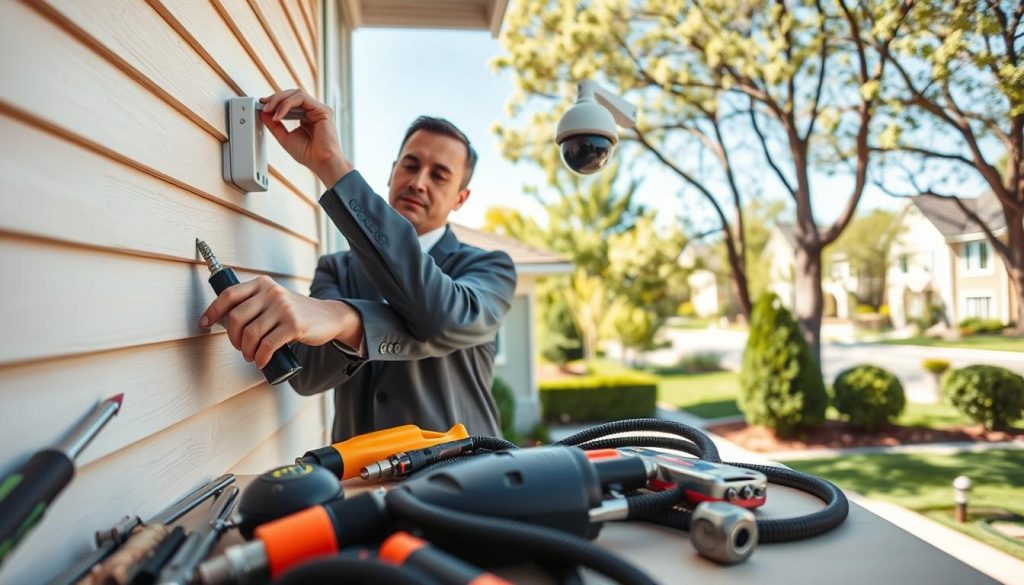
Quality equipment sourcing through professional channels offers additional benefits. Installers maintain manufacturer relationships that ensure genuine products. They select devices with proper specifications for reliable performance.
Technical support and warranty coverage typically accompany professional installations. This provides peace of mind and long-term system reliability. Ongoing maintenance services extend system lifespan significantly.
Ensuring Optimal Performance and Legal Compliance
Professional installers guarantee optimal camera performance through proper calibration. Correct mounting and thorough testing prevent common functional errors. Every component operates at peak efficiency from day one.
Legal compliance is crucial in Singapore’s regulated environment. Professionals understand privacy laws, HDB regulations, and surveillance restrictions. They ensure your setup respects boundaries while maintaining robust protection.
“Insurance benefits can be substantial with professionally installed systems. Some providers offer premium reductions of up to 20% for certified installations.”
Complex integrations require specialized expertise for seamless operation. Connecting surveillance with alarm systems, access control, or smart home technology demands technical knowledge. Professionals manage these integrations without compromising security.
Consider these compliance and performance factors:
- Regulatory knowledge: Installers stay current with evolving Singapore surveillance laws
- Proper documentation: Professionals provide installation records for insurance and compliance
- Quality assurance: Every connection and setting undergoes rigorous testing
- Environmental adaptation: Systems are optimized for Singapore’s climate and urban density
Ongoing support ensures continuous security coverage without technical interruptions. Professional services include regular system checks and updates. This proactive approach prevents failures before they occur.
The choice between DIY and professional installation depends on your specific situation. For complex needs or compliance concerns, expert services offer undeniable value. They transform security equipment into a reliable protection system.
Taking the Next Step Toward Comprehensive Security
The final phase of securing your property involves translating insights into a functional surveillance network. Begin with your personal assessment to identify critical zones. Then develop a cohesive plan addressing those specific security needs.
Expert guidance proves invaluable for complex layouts or specialized requirements. Professionals ensure optimal camera placement and system integration. They help balance quality coverage with practical budget considerations.
For tailored advice on surveillance solutions, contact Wen Hong at +65 60135960. ED Viston at +65 8313 4578 specializes in outdoor security systems. Our team at 888-653-2288 provides complete property assessments.
Proper installation transforms equipment into reliable protection. A well-executed security system delivers lasting peace of mind. Your investment today creates a safer tomorrow.
FAQ
What is the most important area to cover with a surveillance system?
The primary entry points, like your front and back doors, are absolutely essential. These are the most common access areas for any property. A clear view here provides critical footage for identifying anyone entering or exiting.
Can I use indoor security cameras outside?
No, you should not. Indoor units are not built to withstand weather, moisture, or temperature extremes. Using them outdoors will lead to rapid failure. Always choose models specifically rated for outdoor use to ensure durability and reliable operation.
How does night vision affect my camera setup?
Effective night vision is non-negotiable for 24/7 monitoring. It determines if your cameras can capture usable footage in low light. For comprehensive coverage, ensure all units covering external zones have infrared (IR) capabilities to illuminate dark areas like driveways and side gates.
Do I need a professional for the installation?
While DIY kits exist, a professional installer provides significant value. They perform a site survey to identify blind spots, ensure optimal placement for maximum field of view, and handle wiring cleanly. This expertise guarantees your system performs as intended from day one.
What is a common mistake people make with camera placement?
A frequent error is mounting units too high or at a bad angle, which can obscure facial details. Position cameras at head height, around 8-10 feet, pointing slightly downward. This placement offers the best chance for clear identification while protecting the equipment from easy tampering.
How much video storage do I typically need?
Storage needs depend on recording quality, the number of units, and whether you record continuously or only on motion. For a standard home setup with 4-6 cameras, a 1TB or 2TB hard drive in a Network Video Recorder (NVR) often provides several days to weeks of retained footage before overwriting.


