
When Should I Replace My CCTV Camera? Tips & Signs
Effective surveillance is essential for property protection in Singapore. A reliable security setup acts as both a deterrent and an evidence collection tool.
Planning ahead for your surveillance equipment ensures continuous protection. Most devices have a functional lifespan that requires attention.
This guide examines proactive strategies for maintaining your property’s safety. We focus on recognizing warning signs before they become problems.
Local climate and regulations in Singapore affect surveillance technology. Understanding these factors helps create an optimal maintenance schedule.
Technological advancements offer new features for enhanced monitoring. Staying current with these developments improves overall protection.
Key Takeaways
- Modern surveillance acts as a deterrent and evidence collection tool.
- Most security cameras have a limited operational lifespan.
- Recognizing early warning signs prevents security gaps.
- Singapore’s environment impacts surveillance equipment durability.
- Technological advancements provide opportunities for better protection.
- Proactive planning ensures continuous security coverage.
- Regular assessment helps identify coverage gaps in your system.
The Critical Role of CCTV Systems in Singapore’s Security Landscape
The security landscape across Singapore increasingly relies on sophisticated monitoring solutions for both residential and commercial spaces. These technological frameworks address evolving security needs in an urban environment known for its safety standards.
Properly implemented surveillance serves multiple functions beyond simple recording. It creates a comprehensive protective network for properties throughout the city-state.
Deterrence and Crime Prevention
Visible surveillance equipment acts as a powerful psychological barrier against criminal activity. Studies confirm that up-to-date CCTV systems prove significantly more effective at deterrence than outdated models.
For homes businesses, this visible presence forms a crucial first line of defense. Potential offenders often reconsider their actions when they notice modern monitoring technology.
This preventive function contributes directly to community safety efforts. A reliable surveillance setup transforms passive observation into an active security component.
Evidence Collection and Legal Compliance
The primary operational function of any surveillance setup involves collecting clear, usable evidence. Approximately 80% of CCTV footage submitted in court cases proves unhelpful due to poor quality.
Modern technology addresses this critical gap with high-resolution recording capabilities. Features like 1080p or 4K resolution and enhanced night vision ensure evidentiary quality meets legal standards.
Clear footage is crucial for effective law enforcement collaboration and subsequent legal proceedings.
Compliance with Singapore’s specific regulations regarding data retention and camera placement remains mandatory. A well-maintained system helps property owners avoid legal complications and potential fines.
Technological integration has transformed basic monitoring into intelligent security networks. Remote access via smartphones and compatibility with smart home automation creates responsive protection ecosystems.
Regular updates protect these networks against emerging cyber vulnerabilities. Maintaining system integrity ensures continuous, reliable surveillance of assets and property.
Investing in quality surveillance solutions delivers tangible benefits beyond basic recording. These include faster emergency response coordination and greater peace of mind for property owners.
Understanding Your CCTV Camera’s Lifespan
Strategic security planning begins with realistic expectations about surveillance technology durability. Knowing how long your security cameras should function helps prevent unexpected failures. This knowledge is key for effective budgeting and maintaining continuous protection.
There is no single answer for every installation. A device’s operational life spans a wide range, typically from three to ten years. Several factors influence this timeline, including camera type, build quality, and local environment.
Average Lifespan Ranges: From 3 to 10 Years
Most surveillance equipment operates reliably for several years. The average functional period for a complete system falls between three and ten years. This range accounts for different technologies and installation conditions.
Recording devices like NVRs and DVRs often form the backbone of your setup. These components usually last between five to ten years with proper maintenance. Their longevity frequently exceeds that of individual cameras.
Commercial-grade models from established brands offer extended service life. Products from companies like Avigilon, Uniview, or Axis are built for durability. Their superior components and construction translate to longer operational periods, often reaching five to ten years.
Lifespan Expectations by Camera Type (Analog vs. IP)
Different surveillance technologies have distinct durability profiles. Analog cameras are known for their robustness and simpler internal design. These devices often provide reliable service for five to ten years before requiring attention.
IP-based cameras pack more advanced features into their design. They deliver higher resolution and smart capabilities for enhanced monitoring. However, their more complex electronic components may lead to a shorter average functional period of three to five years.
“Understanding these general lifespan expectations helps establish a realistic timeline for evaluating system performance.”
This knowledge supports proactive planning for future upgrades. It allows property owners to budget effectively and avoid coverage gaps. Regular assessment based on these timelines ensures your security remains current and reliable.
Your specific environment in Singapore also plays a crucial role. The tropical climate can accelerate wear on external components. Factoring this into your planning creates a more accurate maintenance schedule.
Key Factors That Influence CCTV Camera Longevity
Multiple determinants converge to establish the serviceable period for property surveillance technology. A device’s lifespan is not fixed from the start. It evolves based on several controllable and external factors that owners must understand.
These elements work together to determine how long your monitoring setup remains effective. Recognizing them helps with proactive planning and better investment decisions.
Environmental Factors: Humidity, Heat, and Physical Exposure
Singapore’s tropical climate presents unique challenges for electronic systems. Constant high humidity and temperature extremes accelerate wear on surveillance equipment. Moisture can seep into housings, damaging sensitive internal components over time.
Outdoor installations face additional stress from rain and dust. Cameras designed for exterior use require robust protection. An IP rating of IP65 or higher is essential for withstanding harsh weather conditions.
Protective housing adds another layer of defense against the elements. Without proper sealing, even durable cameras can fail prematurely. Physical exposure to direct sunlight also affects lens clarity and housing integrity.
Mechanical models with moving parts face different challenges. PTZ cameras usually experience more wear than fixed-lens alternatives. Their motors and gears degrade faster under continuous operation in demanding environments.
Quality of Components and Installation
The inherent build quality of surveillance equipment makes a significant difference. Devices constructed with premium materials and solid-state electronics inherently last longer. Budget models often use inferior parts that compromise durability.
Commercial-grade products from established brands offer superior construction. Their components withstand environmental stress better than entry-level alternatives. This investment pays off through extended operational periods and consistent performance.
Professional installation is critical for maximizing equipment longevity and preventing early failures.
Expert technicians ensure devices are securely mounted and correctly angled. They properly seal connections against environmental ingress. This attention to detail during setup prevents many common issues that shorten lifespan.
Correct wiring and power management also contribute to system reliability. Poor electrical connections create points of failure. Professional installers follow best practices that support long-term operation.
Usage Patterns and Technological Obsolescence
How often a surveillance system operates directly impacts its wear rate. Systems recording continuously under demanding conditions experience more stress. Intermittent use for basic monitoring creates less strain on components.
Continuous operation generates heat and wears down mechanical parts faster. This is particularly true for devices with moving components or intensive processing needs. Understanding your actual usage helps predict maintenance requirements.
Technological obsolescence represents a different kind of lifespan limitation. A device might function physically but become outdated. It may lack compatibility with modern networks, software updates, or security protocols.
Advancing tech standards can make older equipment ineffective against current threats. Features like high-resolution recording or smart analytics may be unavailable. This functional obsolescence often necessitates upgrades before physical failure occurs.
Proactive cctv maintenance and regular checks help identify issues early. Monitoring image quality and system responsiveness provides valuable insights. Addressing minor problems promptly prevents them from developing into major failures.
When Should I Replace My CCTV Camera? Recognizing the Red Flags
Identifying a failing security camera before it completely stops working is key to maintaining protection. Specific warning signs signal that a unit is nearing the end of its useful life.
Recognizing these red flags early allows for a planned upgrade. It prevents sudden security gaps that leave your property vulnerable.
Conducting regular checks on your system’s performance is the best practice. Look for these common indicators that it might be the right time for an upgrade.
Deteriorating Image and Video Quality
Clarity is the cornerstone of effective surveillance. A noticeable decline in image quality is often the first major red flag.
This degradation manifests in several ways. Footage may become consistently blurry or pixelated, even after cleaning the lens.
You might see strange lines, flickering, or incorrect color reproduction on screen. Night vision could become grainy or fail entirely.
These issues usually point to a failing image sensor or internal lens component. Environmental stress or simple age can cause this critical failure.
If your recorded video no longer provides identifiable details, its evidentiary value drops to zero. This is a clear signal that the device needs attention.
Persistent Technical Failures and Glitches
Reliable operation is non-negotiable for security. Persistent technical problems indicate deeper hardware or software issues.
Frequent disconnections from the network are a serious concern. Cameras that randomly drop offline create dangerous blind spots.
Other red flags include delayed live feeds, failure to record motion events, or complete system crashes. These glitches undermine the entire purpose of your surveillance setup.
A camera that cannot be depended upon to record reliably has effectively already failed, regardless of its physical condition.
Often, troubleshooting and reboots provide only temporary fixes. When problems recur consistently, it points to a fundamental flaw. This unreliability is a strong answer to the question, “When should I replace my CCTV camera?”
Physical Damage and Environmental Wear
The tropical climate in Singapore takes a toll on exterior equipment. Visible physical damage is a straightforward sign for replacement.
Inspect housing for cracks, severe fading, or dents. Look for corrosion on metal parts, especially around screws and mounts.
Moisture or condensation inside the lens dome is a critical failure. It means environmental seals are breached, leading to internal corrosion.
For PTZ models, listen for unusual grinding noises or observe restricted movement. These mechanical failures often require complete unit replacement.
Proactive maintenance can delay this wear, but physical degradation is inevitable. A strategic upgrade plan considers this environmental reality.
Ignoring physical signs risks a total failure during severe weather. This could leave your property unprotected at the worst possible moment.
The Impact of Technological Advancements on Surveillance
Today’s surveillance solutions represent a quantum leap forward from their predecessors in both capability and intelligence. Modern technology offers compelling reasons for property owners to consider upgrades beyond basic equipment failure.
New monitoring systems simply work better and smarter than older models. They provide enhanced protection through advanced features and superior integration.
From Standard Definition to 4K Ultra-HD Clarity
The visual clarity gap between old and new surveillance equipment is dramatic. Standard definition footage often appears grainy and lacks identifiable details.
Modern 4K Ultra-HD cameras deliver over eight million pixels for crystal-clear imaging. This forensic-level detail proves invaluable for identifying license plates, faces, and other critical evidence.
The transformation in image quality represents one of the most significant tech advancements. Property owners gain unprecedented visual intelligence from their monitoring solutions.
The Rise of Smart Features: Analytics, AI, and Cloud Storage
Artificial intelligence has revolutionized how surveillance systems operate. Traditional motion detection generates numerous false alarms from pets or moving shadows.
AI-powered analytics can reduce false alerts by up to 95% compared to basic motion sensors. These intelligent features include facial recognition, behavior analysis, and object classification.
Cloud storage has transformed data management for property protection. It offers scalable, off-site storage accessible from anywhere with an internet connection.
This approach eliminates the limitations and vulnerabilities of local hard drives. Remote access to footage simplifies monitoring and evidence retrieval.
Enhanced Cybersecurity and Integration Capabilities
Modern surveillance technology prioritizes digital protection alongside physical security. Older systems often lack current cybersecurity protocols.
Newer equipment receives regular firmware updates to patch vulnerabilities. This proactive approach protects against evolving digital threats.
Seamless integration has become standard across modern security ecosystems.
Today’s cameras easily connect with other smart devices and home automation platforms. They work with mobile apps for convenient remote monitoring and control.
This unified approach creates a comprehensive protective network. Property owners benefit from coordinated responses and simplified management.
The evolution of surveillance tech represents an investment in proactive, intelligent security. These advancements help prevent incidents more effectively while providing superior evidence when needed.
Conducting a Thorough Security Needs Assessment
Before committing to new equipment, a methodical review of your existing security framework ensures optimal resource allocation. This process examines every aspect of your property’s protection requirements.
A comprehensive evaluation creates a clear blueprint for enhancements. It matches technological solutions with specific protection challenges.
Evaluating Coverage Gaps and Blind Spots
Physical inspection remains the most effective method for identifying vulnerabilities. Walk your entire property with a critical eye for surveillance weaknesses.
Look for areas where views are obstructed by new growth or structures. Recent renovations often create unexpected blind spots in existing systems.
Professional security assessments uncover significantly more issues than self-inspections. Experts identify approximately 47% additional vulnerabilities during formal evaluations.
This expertise proves invaluable for complex properties. Specialists understand how lighting, angles, and environmental factors affect monitoring effectiveness.
They can recommend optimal camera placements for complete coverage. This eliminates dangerous gaps in your surveillance network.
Assessing Recording Quality and Storage Requirements
Video clarity determines the practical value of any surveillance footage. Ask whether current recordings provide identifiable details at critical distances.
Can you distinguish facial features or read license plates from key vantage points? If not, your surveillance system fails its primary evidentiary purpose.
Storage capacity represents another crucial consideration. Legal requirements and operational needs dictate retention periods for recorded footage.
Longer retention demands more robust storage solutions. Modern systems offer scalable options that grow with your requirements.
Cloud-based storage provides flexibility and remote access advantages. It eliminates physical storage limitations while enhancing data security.
Aligning with Current and Future Security Threats
Protection requirements evolve alongside emerging threats. Your assessment must consider both present vulnerabilities and future risks.
New criminal methodologies may demand advanced detection capabilities. Features like license plate recognition or perimeter intrusion alerts address specific modern challenges.
Integration with other security components creates a coordinated defense network. Your security needs assessment should determine compatibility requirements.
Does your surveillance require connection with access control or alarm systems? Smart lighting integration can enhance nighttime monitoring effectiveness.
A forward-looking assessment anticipates property changes that alter protection requirements. Expansions, renovations, or new construction all impact surveillance planning.
This proactive approach ensures your investment remains relevant for years. It addresses both immediate security needs and long-term protection goals.
Timing upgrades appropriately maximizes their value and effectiveness. Consulting professionals helps identify the right time for implementation based on your specific situation.
For guidance on scheduling your enhancement project, consider the optimal timing to replace your CCTV based on comprehensive assessment findings.
Weighing the Decision: Repairing vs. Replacing Your Cameras
Property owners face a critical choice when surveillance equipment begins to falter: repair the existing unit or invest in new technology. This financial and strategic decision requires careful analysis of both immediate costs and long-term security value.
A clear-eyed evaluation framework helps determine the most sensible path forward. The right choice balances budget constraints with protection requirements.
Cost-Benefit Analysis of Repairs
Evaluating repair options involves more than just the price of replacement parts. Labor charges and diagnostic fees add significantly to the total expense.
The likelihood of recurrent issues with aging equipment must also factor into calculations. A single repair might fix today’s problem while another component fails tomorrow.
Repair costs often exceed replacement value for outdated surveillance technology. This makes fixing older units a questionable financial decision.
Professional technicians typically charge for both diagnosis and labor. These fees can approach the cost of a new, more capable camera.
Consider whether the repair extends the life of a still-adequate system. Or does it merely postpone the inevitable need for modern upgrades?
The Long-Term Value of Investing in New Technology
Modern surveillance systems deliver substantial advantages beyond basic functionality. They offer improved reliability and comprehensive warranty coverage that repairs cannot match.
Energy efficiency represents a significant operational benefit. New models provide 30-40% better power consumption compared to units from five years ago.
Advanced features like AI analytics and high-resolution recording enhance security performance. These capabilities transform passive monitoring into proactive protection.
Investing in current technology ensures compatibility with modern networks and robust encryption standards that older equipment often lacks.
New cameras usually last longer and require less frequent cctv maintenance. Their superior components and construction translate to extended service life.
The total cost of ownership often favors replacement over repeated repairs. An energy-efficient setup with minimal maintenance needs proves more economical over time.
When Repair Is No Longer Economically Viable
Several clear indicators signal that repair represents poor value. The most straightforward is when repair costs approach or exceed 50% of a new camera’s price.
Parts scarcity for outdated models creates practical barriers to fixing older equipment. Manufacturers eventually discontinue support for legacy products.
Technological obsolescence presents another compelling reason for replacement. A camera that cannot support modern resolution standards or cybersecurity protocols has limited utility.
Security cameras usually last several years, but their functional relevance may expire sooner. Integration capabilities with current software and smart home ecosystems matter greatly.
Older systems may lack compatibility with current encryption standards. This vulnerability exposes your property to digital security threats.
Consider whether constantly repairing aging equipment makes financial sense. New technology often provides better security at a comparable long-term cost.
The decision ultimately hinges on value preservation versus security enhancement. Modern upgrades typically deliver superior protection and operational efficiency.
Proactive Maintenance to Maximize Your Camera’s Lifespan
Preserving your surveillance investment requires a commitment to consistent, proactive care. Data shows that systems receiving regular maintenance demonstrate a 40% longer operational lifespan than neglected equipment.
This disciplined approach ensures optimal performance and prevents costly emergency repairs. A structured plan is the best defense against premature failure.
Essential Routine Maintenance Practices
Several straightforward tasks form the foundation of effective cctv maintenance. Property owners can perform these regular checks to safeguard their equipment.
Gently cleaning camera lenses removes dust, pollen, and smudges. This simple act directly preserves image quality and prevents blurry footage.
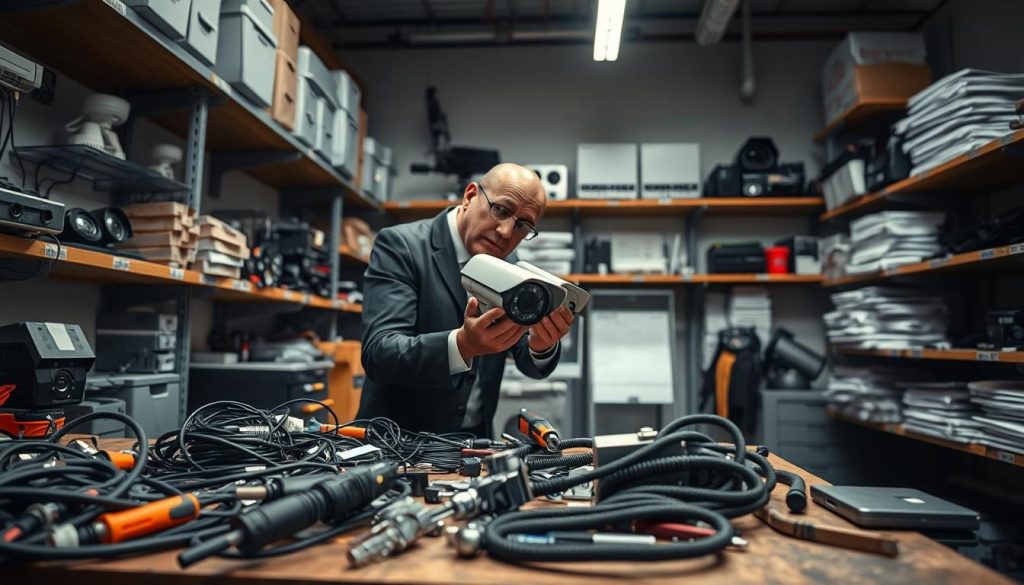
Inspect all cable connections for tightness and signs of corrosion. Loose or damaged wires are a common point of failure for any system.
Examine the physical housing for cracks, water ingress, or insect nests. Addressing these issues early prevents internal damage to sensitive components.
Regularly updating your camera’s firmware is a critical security step. These updates patch vulnerabilities and often improve device functionality and stability.
Finally, verify that your storage solution is functioning correctly. Ensure recordings are saving properly and that allocated space is sufficient.
The Value of Professional Inspections and Servicing
While owner checks are vital, professional inspections uncover issues untrained eyes miss. Certified technicians perform advanced diagnostics and precise calibration.
They can identify subtle problems like degrading night vision performance or minor water damage inside a housing. Early detection here prevents major failures later.
“A professional inspection is not an expense; it’s an investment in the longevity and reliability of your entire security infrastructure.”
For Singapore’s tropical climate, servicing must include specific checks. Technicians verify humidity protection seals and overall weather resistance ratings.
This climate-specific focus is critical for long-term durability. It ensures your cameras withstand constant heat and moisture exposure.
Recommended Maintenance Frequency for Different Environments
Maintenance schedules are not one-size-fits-all. Frequency must be tailored to the operational environment to be effective.
Harsh, dusty, or coastal areas demand the most attention. Quarterly to biannual regular checks are advisable for these demanding conditions.
Standard commercial installations typically benefit from an annual professional inspection. This balances thoroughness with operational practicality.
For protected indoor residential systems, a biannual schedule is often sufficient. These environments present fewer extreme stressors on the equipment.
Adhering to a scheduled maintenance plan is a small investment with significant returns. Well-maintained cameras last longer and systems last longer, delaying the need for capital replacement.
This proactive care often maintains warranty validity. It keeps your security equipment functioning at its best for years.
Understanding the Optimal Replacement Timeline in Singapore
Optimal timing for security system enhancements combines technical assessment with local environmental and regulatory awareness. This approach ensures your surveillance investment delivers maximum protection value. Finding the right time involves more than watching for equipment failure.
Singapore’s unique conditions create specific considerations for property owners. The tropical climate and regulatory framework directly impact how long systems last. A thoughtful timeline prevents coverage gaps while maximizing equipment lifespan.
Aligning Upgrades with Local Regulations and Climate
Singapore’s Personal Data Protection Act (PDPA) establishes clear guidelines for surveillance. Compliance ensures your monitoring solutions respect privacy while providing protection. HDB approvals for corridor-facing units simplify certain installations.
Other building management rules may apply to your specific property. Understanding these requirements before upgrading prevents costly adjustments later. Data retention periods are another key regulatory consideration.
The tropical environment demands equipment rated for constant heat and humidity. Proper climate adaptation extends operational life by approximately 30%. Devices without IP66 or IP67 ratings face accelerated degradation.
Cameras usually withstand Singapore’s conditions better with specific environmental ratings. Investing in climate-appropriate technology today extends functional years significantly.
This combination of legal and environmental factors shapes the ideal upgrade window. Proactive planning addresses both aspects simultaneously. The result is a surveillance setup that performs reliably under local conditions.
Strategic Timing for Minimal Operational Disruption
Coordinating equipment updates with low-activity periods maintains continuous protection. Weekends or scheduled business downtime offer ideal installation windows. This strategic approach avoids leaving assets vulnerable during transitions.
Phased implementation provides another effective strategy. Begin with the most critical or failed surveillance points first. Expand the new network gradually according to budget and assessment findings.
Holiday periods often work well for residential upgrades. Families may be traveling or schedules are more flexible. Commercial properties benefit from planned maintenance shutdowns.
Proactive replacement always beats reactive emergency fixes. Scheduling before complete failure prevents security incidents during downtime. This forward-thinking approach safeguards your property consistently.
Consulting with a local provider today helps pinpoint your ideal timeline. Experts analyze equipment condition, layout, and specific security needs. Their assessment creates a customized upgrade schedule for your situation.
A well-timed system refresh maintains protection without unnecessary expense. It balances technological advancement with practical implementation timing. The goal is seamless transition to enhanced monitoring capabilities.
Benefits of Upgrading Your CCTV System
Investing in contemporary security technology yields measurable returns through improved protection and operational efficiency. Modern upgrades transform basic monitoring into intelligent property defense networks.
These enhancements deliver value across multiple dimensions for property owners. The advantages extend well beyond simple equipment replacement.
Improved Image Clarity for Better Identification
Modern 4K surveillance systems capture forensic-level detail that standard definition cannot match. This clarity proves essential for accurate identification of people, vehicles, and specific incidents.
High-resolution cameras provide over eight million pixels for crystal-clear imaging. License plates, facial features, and other crucial details become clearly visible in recorded cctv footage.
This visual intelligence transforms how evidence is collected and utilized. Property owners gain unprecedented detail from their monitoring solutions.
Advanced Features for Proactive Security
Artificial intelligence has revolutionized surveillance capabilities. AI-powered analytics distinguish between relevant threats and false alarms with remarkable accuracy.
These intelligent features reduce false alerts by up to 95% compared to basic motion sensors. Systems can now identify specific behaviors, objects, and patterns.
Smart detection enables proactive monitoring rather than passive recording. Property owners receive relevant alerts for actual security concerns.
Cloud storage represents another significant advancement in surveillance tech. It provides scalable, remote access to footage from any internet-connected device.
This flexibility eliminates physical storage limitations while enhancing data security. Expansion becomes simple without hardware modifications.
Cost Savings from Improved Efficiency and Reliability
Newer surveillance systems demonstrate 30-40% better energy efficiency than models from five years ago. This reduction in power consumption translates directly to lower operational expenses.
Enhanced reliability means fewer system failures and less downtime. Property owners experience reduced stress from worrying about recording gaps.
The long-term value of modern surveillance technology often outweighs the initial investment through sustained performance and reduced maintenance.
Modern equipment requires less frequent servicing and fewer emergency repairs. These factors contribute to significant cost savings over the system’s lifespan.
Integration capabilities allow new systems to work better within holistic security ecosystems. They connect seamlessly with alarms, access control, and smart lighting.
This coordination creates a more responsive property defense network. Both homes businesses benefit from these interconnected features.
The operational advantages of current surveillance tech justify strategic upgrades. These investments protect assets while optimizing long-term security budgets.
Choosing the Right CCTV Solutions for Your Singapore Property
Property owners evaluating surveillance options must prioritize equipment that can withstand Singapore’s unique tropical environment while meeting their security objectives. The selection process involves more than comparing technical specifications.
It requires matching hardware capabilities with practical installation considerations and long-term maintenance needs. A thoughtful approach ensures your investment delivers reliable protection for years.
Considering Singapore’s Tropical Climate in Your Choice
Singapore’s constant heat and heavy rainfall demand specific equipment ratings. Outdoor cameras require high Ingress Protection (IP) ratings for reliable operation.
An IP66 or IP67 rating is essential for resistance against powerful water jets and dust. These ratings ensure devices remain functional during intense tropical downpours.
Humidity protection is equally critical for electronic components. Proper sealing prevents moisture damage that shortens equipment lifespan significantly.
Climate-appropriate solutions demonstrate 30% better longevity in local conditions. They maintain performance despite constant environmental stress.
Selecting cameras with appropriate environmental ratings is the first step toward a durable surveillance system in Singapore.
Selecting Between Residential and Commercial-Grade Systems
The distinction between residential and commercial equipment affects durability and capability. Commercial-grade systems use higher quality components built for continuous operation.
These professional solutions generally last longer under demanding conditions. They withstand 24/7 monitoring without performance degradation.
Camera type selection also influences effectiveness. Fixed models provide constant coverage for specific areas with minimal maintenance needs.
PTZ (Pan-Tilt-Zoom) units offer active monitoring for large spaces. They require more frequent regular checks due to mechanical components.
A balanced approach often works best for comprehensive coverage. Combining camera types addresses different security needs across your property.
The Importance of Professional Installation and Support
Expert installation transforms hardware into an effective security network. Certified technicians position cameras to eliminate blind spots and maximize coverage.
Proper mounting ensures stability during severe weather events. Correct weatherproofing protects connections from Singapore’s humid environment.
Network configuration optimizes footage quality and storage efficiency. Professional setup prevents common issues that compromise system reliability.
Ongoing support maintains operational effectiveness over time. Providers like Wen Hong offer maintenance packages and technical assistance.
This professional relationship ensures your surveillance security investment continues meeting protection needs. Reliable after-sales service provides peace of mind.
A well-chosen system installed by experts delivers superior return on investment. It performs reliably while adapting to evolving security requirements.
Making informed decisions today establishes a foundation for long-term property protection. The right combination of equipment and professional support creates lasting value.
Budgeting for Your CCTV Camera Replacement
Smart financial planning transforms security investments from simple purchases into long-term protection assets. A comprehensive budget examines costs across the entire lifecycle of your surveillance setup.
This approach ensures your financial resources align with security requirements. It prevents unexpected expenses that could compromise property protection.
Initial Investment vs. Long-Term Operational Costs
Calculating the total cost of ownership provides a true financial picture for property owners. This method combines upfront expenses with ongoing operational costs over the system‘s lifespan.
The initial investment includes several key components. High-quality cameras, recording equipment, adequate storage, and professional installation form the foundation.
Avoiding corners during this phase reduces long-term expenses significantly. Superior components from established brands usually last longer and perform more reliably.
Long-term operational costs encompass various ongoing expenses. Electricity consumption represents a continuous financial consideration for any surveillance network.
Cloud storage subscription fees may apply for remote access solutions. Scheduled maintenance packages keep the system healthy and functional.
Professional cctv maintenance extends operational life by identifying issues early. Well-maintained equipment avoids costly emergency repairs.
Investing in quality components from the start saves money over years by extending service life and reducing repair frequency.
Modern surveillance technology offers potential cost savings. Energy-efficient cameras can reduce power bills compared to older models.
Improved reliability means less downtime and fewer service calls. These factors contribute to a lower total cost of ownership.
Planning for Future Upgrades and Scalability
Forward-thinking budgeting incorporates expansion possibilities from the beginning. Choosing scalable solutions allows for gradual enhancements without complete overhauls.
Look for systems that support additional cameras as needs evolve. Storage capacity should be expandable to accommodate longer retention periods.
This strategic approach protects your initial investment. It ensures your security solution remains relevant as requirements change.
Phased budgeting offers practical flexibility for property owners. Prioritize replacing the most critical or failed components first when resources are limited.
Create a timeline for upgrading other sections in subsequent budget cycles. This method maintains protection while spreading costs over time.
Consider the upgrades available in current surveillance technology. Advanced features like AI analytics may justify slightly higher initial costs.
These intelligent capabilities reduce false alarms and improve response time. They transform basic monitoring into proactive security management.
A realistic budget accounts for both immediate and future financial requirements. It enables investment in solutions that meet security needs today.
The right financial plan ensures your surveillance network remains viable for years. Quality equipment with proper maintenance delivers sustained protection value.
Security cameras cameras usually last several years with appropriate care. Planning for their eventual replacement as part of your overall security strategy makes financial sense.
Implementing Your CCTV Replacement Plan
A detailed implementation blueprint is essential for seamless technology transition. It minimizes operational disruption while maintaining continuous surveillance coverage.
Professional coordination ensures each phase connects smoothly to the next. This systematic approach addresses both technical and logistical needs effectively.
Step-by-Step Guide to a Smooth System Upgrade
Begin by finalizing your equipment selection with your provider. This creates a precise installation blueprint with clear timelines.
Schedule the physical work during periods of low activity. Weekends or planned business closures often work best for minimal disruption.
Installation technicians handle mounting, cabling, and network configuration. Their expertise ensures optimal placement and performance from day one.
Comprehensive testing verifies every component functions correctly. Check camera feeds, recording functionality, and remote access capabilities.
Smart features and alert systems require specific configuration. Verify these advanced solutions operate as intended before finalizing the setup.
A methodical installation process is the foundation for reliable long-term surveillance performance.
Proper decommissioning completes the upgrade cycle securely. Wipe data from old recorders and dispose of equipment responsibly.
This structured approach answers the question, “When should I replace my CCTV camera?” with action. The right time is when you have a clear plan ready for execution.
Ensuring Data Migration and System Integration
Data preservation requires careful planning before system shutdown. Determine if any historical footage needs archiving for legal or operational reasons.
Transfer essential recordings to secure storage before decommissioning old equipment. This maintains evidentiary continuity during the transition period.
New cameras must integrate seamlessly with existing security infrastructure. Compatibility with alarms and access control systems is crucial.
Test integration points thoroughly to prevent functional gaps. Modern solutions should enhance rather than disrupt your current protection network.
Address any compatibility issues during the installation phase. Professional technicians can configure systems to work together harmoniously.
This integration creates a unified defense network for your property. Coordinated responses become more effective with properly connected security components.
Starting the process today moves you toward enhanced protection. Each camera upgrade strengthens your overall surveillance capabilities.
Well-executed implementation delivers the security benefits identified during assessment. Your property gains improved monitoring with minimal operational interruption.
Securing Your Property with Confidence for Years to Come
Building lasting confidence in your property‘s protection requires more than just installing cameras. It demands a proactive strategy for managing your surveillance tech. This approach transforms basic monitoring into intelligent security.
Modern cctv solutions offer smart features like cloud storage and analytics. These advancements help both homes businesses create integrated defense networks. High-quality equipment from trusted providers ensures reliable performance.
Well-maintained systems last longer and cameras last through Singapore’s climate. Professional support maximizes your investment value over time. Your surveillance becomes a robust guardian against threats.
Begin evaluating your current cctv setup today. Plan for upgrades that keep your property protected with confidence. This forward-thinking approach delivers lasting peace of mind.
FAQ
How long do surveillance cameras typically last?
A security camera’s lifespan varies, but most modern systems last between 5 to 10 years. Higher-quality commercial-grade equipment from brands like Hikvision or Dahua often outlasts basic models. Regular CCTV maintenance and the local environment, like Singapore’s humidity, are major factors in longevity.
What are the main signs it’s time for a new security system?
A> Key red flags include consistently poor image quality, frequent technical glitches, and visible physical wear. If your footage is too grainy for identification or the system fails during monitoring, an upgrade is likely needed. Modern tech also offers superior performance and features.
Can regular checks and maintenance extend my camera’s life?
A> Absolutely. Proactive maintenance like cleaning lenses, checking cables, and ensuring proper ventilation can add years. For homes and businesses in demanding environments, professional servicing is crucial to prevent early failure and protect your property investment.
Is it better to repair an old camera or install a new one?
A> This depends on a cost-benefit analysis. For newer models, a repair might be worthwhile. However, for older technology, replacement often provides more long-term value through better video clarity, cloud storage, and advanced analytics that work better for today’s security needs.
How do technological advancements impact my current surveillance?
A> Tech evolves rapidly. Older systems may lack essential features like high-resolution recording, AI-powered analytics, or robust cybersecurity. Upgrading ensures your surveillance system can leverage these innovations for more proactive and effective monitoring.


