
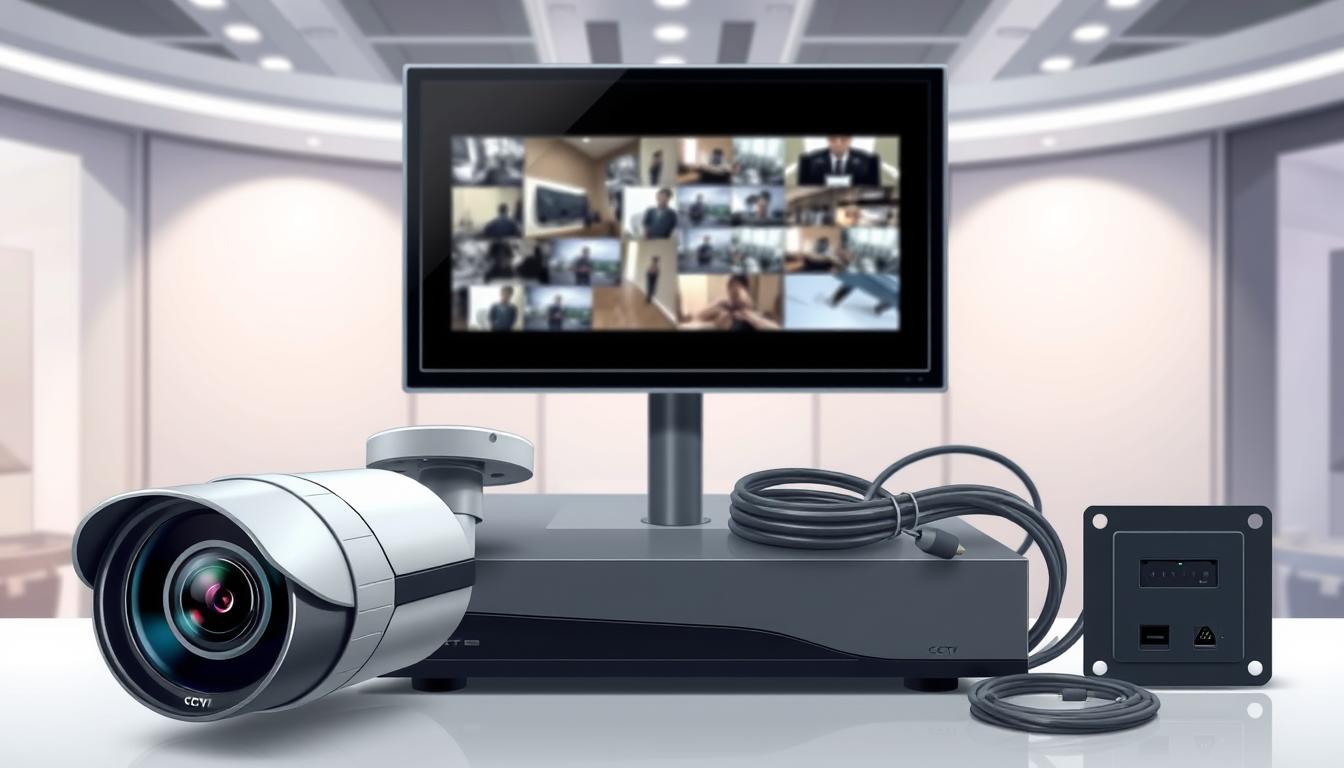
Learn CCTV: What are the 7 components of CCTV?
Modern security relies on surveillance technology to protect properties and people. Understanding how these systems work is essential for effective protection.
Closed-circuit television provides constant monitoring for homes and businesses. This technology has evolved from basic analog to advanced digital solutions.
Singaporean properties benefit greatly from proper security implementation. Different environments require tailored approaches to surveillance.
This guide explores the fundamental elements that create a complete monitoring solution. You’ll discover how each piece contributes to overall protection.
Key Takeaways
- CCTV systems provide essential security monitoring for various properties
- Modern surveillance technology includes both analog and digital options
- Proper component selection ensures effective security implementation
- Different environments require customized surveillance approaches
- Understanding system elements helps make informed security decisions
- Complete monitoring solutions involve multiple working components
- Singapore properties have specific security needs and considerations
Understanding the Critical Role of CCTV in Modern Security
Surveillance technology has transformed property protection across urban landscapes. These systems create private monitoring networks that differ from broadcast television.
Modern security solutions offer real-time observation and recording capabilities. Property owners can monitor events as they happen from any location.
The Evolution of Surveillance Technology
Security monitoring has advanced from basic analog cameras to sophisticated digital IP systems. Early systems used VCR tapes for recording limited footage.
Today’s digital revolution brought DVR and NVR recording solutions. These provide crystal-clear video quality and extensive storage capacity.
Remote access represents the latest breakthrough in surveillance technology. Mobile apps now allow monitoring from smartphones and tablets anywhere.
Why Effective CCTV is Paramount for Singaporean Properties
Singapore’s urban environment creates unique security challenges that demand robust solutions. High-density living and commercial spaces require vigilant monitoring.
Visible cameras serve as powerful crime deterrents in public areas. Potential offenders often reconsider illegal acts when under observation.
These systems provide crucial evidence for investigations and legal proceedings. High-quality footage helps authorities identify suspects and reconstruct events.
Psychological security represents another significant benefit for communities. Residents and visitors feel safer knowing commercial buildings and public spaces have proper monitoring.
Different environments require customized surveillance approaches. Schools need different solutions than shopping malls or transportation hubs.
Understanding this technology helps Singaporean property owners make informed security investments. The right system provides peace of mind and actual protection.
What are the 7 Components of CCTV?
Modern security installations combine several technological elements to create complete protection. These elements form an integrated network that captures, processes, and stores visual data.
A High-Level Overview of a Complete Surveillance System
Every effective monitoring setup includes seven fundamental parts working together. Each element serves a specific purpose in the overall security solution.
Capture devices form the foundation of any surveillance network. These include various camera types like IP and analog models.
Observation stations allow human operators to monitor live feeds. They provide the interface for immediate response to security incidents.
Recording equipment processes and saves captured footage. Modern systems use DVR and NVR technology for this function.
Connectivity accessories enable communication between different parts. Cables, connectors, and routers ensure smooth data transmission.
Data retention solutions store video information long-term. Proper storage ensures footage remains accessible when needed.
Power systems deliver electricity to all components continuously. Reliable power is essential for 24/7 operation.
Management software integrates everything into a unified control center. This software coordinates all elements of the surveillance system.
Each component must work harmoniously with the others for optimal performance. Compatibility between parts ensures smooth operation.
Understanding this complete setup helps design effective security solutions. Property owners can make informed decisions about their protection needs.
“A well-designed surveillance network is greater than the sum of its parts. Each component contributes uniquely to overall security.”
Singapore properties benefit from tailored approaches to monitoring. Different environments require specific configurations of these elements.
Security Cameras: Selecting the Eyes of Your System
Camera selection determines the effectiveness of your entire surveillance setup. These devices capture visual information that forms the basis of your security monitoring.
Different environments require specific camera types and configurations. Singapore’s varied landscape demands careful consideration of each installation.
IP Cameras vs. Analog Cameras: Understanding the Core Difference
Modern surveillance systems primarily utilize IP camera technology. These digital devices connect through internet protocols for superior performance.
IP cameras offer higher resolution and network connectivity advantages. They transmit footage over internet connections compatible with most modern devices.
Analog cameras represent older technology that’s becoming less common. Many legacy systems still use these traditional cameras despite compatibility limitations.
New installations typically choose IP cameras for future-proofing benefits. The digital nature of these cameras supports advanced features and remote access.
Camera Configurations: Dome, Bullet, PTZ, and C-Mount
Various camera designs serve different surveillance purposes effectively. Each configuration offers unique advantages for specific monitoring scenarios.
Bullet cameras feature protective housing that makes them highly visible. This visible deterrence helps prevent security threats before they occur.
Dome cameras appear as inverted half-spheres with tinted glass covers. Their discreet design keeps lens orientation hidden from view.
PTZ cameras provide pan-tilt-zoom capabilities for dynamic coverage. Operators can remotely control these cameras to focus on specific objects.
C-mount cameras offer rugged construction for challenging environments. Their detachable lenses allow monitoring distance adjustments as needed.
Choosing the Right Camera for Indoor vs. Outdoor Environments
Environmental factors significantly influence camera selection decisions. Outdoor installations require weatherproofing and durability considerations.
C-mount and bullet cameras excel in outdoor applications typically. Their robust construction withstands weather elements and potential tampering.
Indoor spaces often benefit from dome camera installations. These discreet cameras blend into interior environments while providing wide coverage.
Resolution requirements vary based on monitoring objectives and identification needs. Higher resolution provides clearer image quality for critical details.
Compatibility with existing systems should guide final selection choices. Ensure new cameras integrate smoothly with your current surveillance infrastructure.
“The right camera placement transforms random monitoring into strategic surveillance. Each camera should serve a specific purpose within your overall security plan.”
Singapore’s unique climate demands special consideration for outdoor cameras. Humidity and rainfall require weather-resistant housing and proper sealing.
Indoor cameras in commercial spaces need discreet yet comprehensive coverage. Retail environments benefit from wide-angle lenses and tamper-resistant designs.
Always consider future expansion when selecting camera types today. Choose systems that allow easy integration of additional cameras as needs evolve.
Monitoring Stations: The Central Hub for Surveillance Oversight
Modern security operations rely on centralized command centers for effective oversight. These stations serve as the brain of your entire surveillance network.
Operators use specialized software and multiple displays to review camera feeds. The configuration scales from single monitor setups to dedicated control rooms.
Designing an Effective Physical Monitoring Room
Physical monitoring rooms require careful planning for optimal performance. Ergonomic design ensures operator comfort during extended surveillance shifts.
Multiple monitor configurations allow simultaneous viewing of different camera feeds. This setup helps operators detect incidents across various locations.
Station design should prioritize clear sightlines and minimal visual distraction. Proper lighting and acoustics contribute to better focus and response times.
Redundant monitoring setups ensure continuous operation during system maintenance. Backup displays and workstations prevent security gaps.
The Power of Mobile Monitoring Apps for On-the-Go Access
Mobile applications revolutionize how we interact with surveillance systems. Real-time streaming apps transform smartphones into portable monitoring stations.
Modern apps provide full functionality including live viewing and playback features. Users can watch live video feeds and review historical footage remotely.
Remote monitoring capabilities ensure continuous oversight away from central stations. Alert systems notify operators of suspicious activity detected by analytics.
User permissions and access controls maintain security integrity across mobile platforms. These features ensure only authorized personnel can view sensitive footage.
“Mobile monitoring technology has transformed security from a fixed location to an anywhere, anytime solution. The ability to respond immediately regardless of location represents a fundamental shift in protection capabilities.”
Integration with other security systems creates comprehensive oversight capability. Singapore’s dynamic environment benefits greatly from these flexible monitoring solutions.
Video Recording Systems: DVRs, NVRs, and Workstations
Recording technology serves as the memory center for surveillance operations. These systems capture and store digital video footage for later review.
Modern recorders process visual information from security cameras efficiently. They transform raw footage into accessible digital formats.
Choosing the right recording device impacts overall system performance. Singapore’s security needs demand reliable and high-quality solutions.
DVR vs. NVR: Key Differences and Compatibility
DVR systems connect with analog cameras through coaxial cables. They convert analog signals into digital format for storage.
These recorders typically support lower resolution recordings. Their compatibility remains limited to older camera technologies.
NVR systems work directly with IP cameras over network connections. They maintain original digital video quality without conversion loss.
Modern NVR solutions offer superior resolution and remote access features. Their flexibility supports various IP camera models seamlessly.
Compatibility considerations should guide your recorder selection. Existing analog systems might benefit from DVR technology.
New installations typically choose NVR for future expansion capabilities. These systems integrate better with modern surveillance networks.
The Advantage of Modern NVR All-in-One Solutions
Contemporary NVR units provide complete plug-and-play functionality. They simplify installation for entry-level security applications.
These all-in-one devices combine recording, processing, and management features. Users benefit from streamlined setup and operation.
Remote access capabilities represent a significant advantage for mobile monitoring. Singaporean property managers appreciate this flexibility.
High-definition recording ensures clear footage for identification purposes. Modern NVR systems support advanced video analytics too.
These integrated solutions reduce complexity while maintaining performance. They represent the current standard for new surveillance installations.
When to Consider a Video Surveillance Workstation
Large-scale installations often benefit from dedicated workstation systems. These specialized computers handle intensive recording tasks.
Workstations distribute processing load across multiple components. This approach enhances overall system reliability and performance.
They serve as delivery points for security recorders in complex networks. Advanced video management becomes more efficient with workstation support.
Consider these systems when managing numerous high-resolution cameras. They ensure smooth operation during peak recording periods.
Future expansion capabilities make workstations valuable for growing businesses. Singapore’s commercial properties often require this scalable approach.
“The right recording solution balances current needs with future growth potential. Smart choices today prevent costly upgrades tomorrow.”
Storage capacity requirements vary based on recording quality needs. Higher resolution footage demands more storage space.
Redundant recording systems provide backup during hardware failures. This ensures continuous footage preservation for critical evidence.
Always consider remote access features when selecting recording technology. Modern systems allow monitoring from anywhere with internet connectivity.
Supporting Accessories: Cables, Routers, and Connectivity
Proper cabling and networking solutions ensure seamless communication between security components. These supporting elements form the vital connections that keep your surveillance system operational.
Quality infrastructure prevents signal degradation and maintains reliable performance. Singapore’s humid climate demands durable materials that withstand environmental challenges.
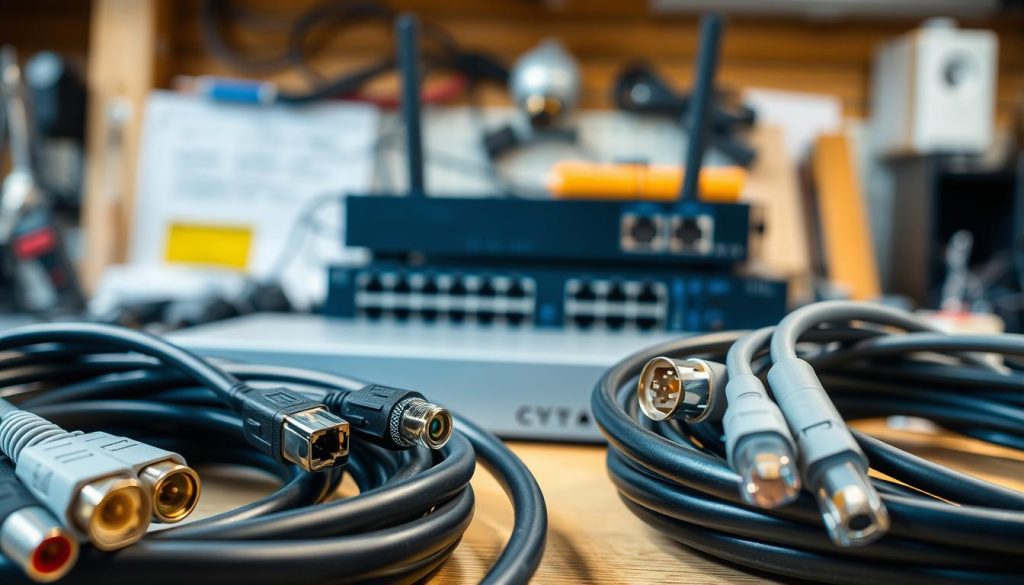
Choosing the Right Cable: RG59 Siamese and Ethernet Options
Commercial-grade camera cable connects recording devices to capture units effectively. RG59 Siamese coaxial remains popular for traditional surveillance installations.
This cable type combines video and power transmission in a single run. EMI shielding protects against electrical interference for cleaner signals.
Ethernet cables support modern IP camera systems with advanced capabilities. Cat5e and Cat6 cables handle data transmission and PoE functionality.
Cable quality directly impacts video integrity over long distances. Cut-to-length options allow custom sizing for each installation scenario.
Proper connectors ensure secure connections between all system devices. Professional installations maintain organized cable management throughout.
Selecting a Router for Wireless CCTV System Performance
Wireless systems require routers that handle multiple camera streams efficiently. Sufficient bandwidth prevents lag and maintains video quality.
Router selection should match your property size and camera distribution needs. Modern Wi-Fi standards like Wi-Fi 6 offer better speed and coverage.
Budget considerations meet almost every price point with essential features. Most routers work with any internet service provider in Singapore.
Network security features protect against unauthorized access attempts. Multiple routers or extenders expand coverage across large properties.
Redundant network paths ensure continuous operation during connectivity issues. Future expansion capabilities should guide initial router selection.
“The right connectivity solutions transform individual components into a cohesive security network. Reliable connections ensure your system performs when it matters most.”
Power requirements should align with your chosen connectivity approach. Different camera types have specific power needs that affect cable selection.
Always test network performance before finalizing your installation. Singapore’s urban environment may require signal boosters for optimal coverage.
Video Storage Solutions: Ensuring Your Data is Secure and Accessible
Reliable storage hardware forms the backbone of any effective surveillance operation. Without proper data retention, even the best cameras become useless for evidence collection.
Choosing the right storage solution impacts your entire security system’s effectiveness. Singapore’s security demands require robust and dependable data protection.
Consumer-grade hard drives fail under continuous surveillance workloads. They lack the durability needed for 24/7 recording operations.
Specialized storage devices handle multiple video streams simultaneously. These enterprise-grade solutions maintain performance under constant stress.
Why Surveillance-Grade Hard Drives Are Non-Negotiable
Surveillance-specific drives differ fundamentally from regular computer hard drives. They’re engineered for non-stop writing operations common in security systems.
These specialized devices handle enormous quantities of video data efficiently. Their construction withstands the physical demands of continuous operation.
Standard consumer drives cannot manage constant write cycles effectively. They frequently fail when used in CCTV applications.
Enterprise-grade options offer superior error recovery capabilities. This ensures your footage remains accessible when needed most.
Features of High-Performance CCTV Storage Devices
Several critical features distinguish professional surveillance storage solutions. Capacity requirements depend on camera count and resolution settings.
Higher resolution footage demands more storage space naturally. Retention periods also influence your capacity needs significantly.
Read/write speed capabilities affect playback performance dramatically. Faster drives ensure smooth recording and retrieval operations.
RAID configurations provide valuable data redundancy protection. This safeguards against potential drive failure scenarios.
“Investing in proper storage isn’t an expense—it’s insurance for your entire security investment. The right drives ensure your evidence remains intact when it matters most.”
Modern storage solutions offer valuable data protection features. Error correction and bad sector management maintain data integrity.
Cloud integration provides off-site backup for disaster recovery. This adds an extra layer of security for critical footage.
Scalability allows future expansion as surveillance needs grow. Singapore properties often require this flexibility.
Data encryption protects sensitive footage from unauthorized access. This is particularly important for compliance requirements.
Mean time between failures (MTBF) ratings indicate drive reliability. Higher numbers suggest better long-term performance.
Always choose drives specifically rated for surveillance applications. This ensures compatibility with your recording system’s demands.
Proper storage selection completes your security ecosystem effectively. It transforms captured footage into actionable intelligence.
Power Supply: The Lifeline of Your CCTV System
Electrical infrastructure determines whether your security system functions when needed most. Reliable energy distribution ensures continuous monitoring without interruption.
Singapore’s tropical climate demands robust power solutions that withstand humidity and storms. Proper planning prevents system failures during critical moments.
Power-over-Ethernet for Simplified Installation
PoE technology revolutionizes how we energize modern surveillance networks. This approach combines data transmission and electrical power in one cable.
Network switches with PoE capabilities manage multiple cameras efficiently. They provide centralized control over energy distribution and connectivity.
Installation becomes significantly simpler with reduced cabling requirements. Maintenance teams appreciate the streamlined troubleshooting process.
Organized Power Solutions: Supply Boxes vs. Individual Transformers
Commercial installations benefit greatly from organized power management systems. Supply boxes keep wiring neat while providing individual circuit protection.
These units offer surge protection for each connected camera independently. This prevents cascading failures during electrical disturbances.
Individual transformers work adequately for small residential systems. However, they become messy and difficult to manage in larger installations.
Professional security systems typically choose centralized power boxes for cleaner installations. This approach simplifies future expansion and maintenance.
AC vs. DC Power Considerations for Large Facilities
Voltage selection impacts performance across different facility sizes. Most commercial installations utilize 12VDC systems for their cameras.
Larger properties often benefit from 24VAC power distribution systems. AC current travels farther with less voltage drop over long distances.
Power consumption calculations must account for all connected devices. This ensures your electrical system meets energy demands properly.
Backup systems provide crucial protection during main power failures. Uninterruptible power supply units maintain operation during outages.
“The right power solution transforms individual components into a reliable security ecosystem. Proper energy management ensures your system performs consistently when it matters most.”
Surge protection devices safeguard expensive equipment from electrical spikes. These protective features extend equipment lifespan significantly.
Redundant power paths ensure continuous operation during primary system failures. This is particularly important for high-security applications.
Always consult with professional installers about your specific power needs. Singapore’s electrical standards may influence your final system design.
Video Management Software (VMS): The Unified Control Center
Intelligent software transforms individual security elements into a cohesive protection network. This digital brain coordinates every aspect of modern surveillance operations.
Video management software serves as the central nervous system for your security setup. It processes information from multiple sources into actionable intelligence.
Singaporean properties benefit from streamlined security management through these solutions. They simplify complex monitoring tasks while maintaining comprehensive oversight.
How a VMS Integrates Feeds into a Single Pane of Glass
Modern security systems generate enormous amounts of visual information daily. A quality VMS consolidates all this data into one intuitive interface.
Operators monitor multiple camera feeds simultaneously without switching between screens. This unified view enhances situational awareness significantly.
The software manages live streaming and recorded footage from a central platform. Users access everything through a consistent, user-friendly dashboard.
This integration eliminates the need for multiple monitoring applications. Everything works together seamlessly within one environment.
Key Features for Compliance, Retrieval, and Analytics
Advanced VMS solutions offer powerful tools for modern security needs. These features transform raw footage into valuable security intelligence.
- Automated compliance tracking ensures adherence to Singaporean regulations
- Advanced search functions locate specific events within recorded footage quickly
- Motion detection and facial recognition provide proactive threat identification
- Custom alert systems notify operators of predefined security events
- User permission controls maintain data security across organization levels
- System health monitoring tracks performance and identifies potential issues
- Mobile integration enables remote monitoring from smartphones and tablets
Video analytics capabilities represent a major advancement in security technology. They automatically identify patterns and potential threats before human operators might notice them.
“The right VMS doesn’t just show you what happened—it helps you understand what’s happening. This proactive approach transforms security from reaction to prevention.”
Ensuring VMS Compatibility with Your Chosen System
Compatibility considerations are crucial when selecting management software. The VMS must work seamlessly with your existing hardware components.
Testing integration before final purchase prevents costly compatibility issues. Ensure the software supports your specific camera models and recording systems.
Future expansion capabilities should influence your software selection. Choose solutions that can grow with your security needs over time.
Singapore’s unique security environment demands reliable software performance. Select VMS solutions proven in similar urban settings.
Regular updates and vendor support ensure long-term system reliability. These factors contribute significantly to overall security effectiveness.
Integrating Your Components for a Cohesive CCTV Solution
Successful security depends on how well all parts work together. Each piece must connect smoothly to form a reliable surveillance system.
Professional installation ensures optimal camera placement and proper setup. Compatibility testing prevents issues between cameras, recorders, and software.
Regular maintenance keeps your solution performing at its best. Scalability planning allows for future growth as your security needs change.
User training helps maximize benefits from your system’s capabilities. Good documentation supports troubleshooting and future upgrades.
Investing in quality components and professional management ensures long-term reliability. A well-integrated CCTV system deters crime and provides valuable evidence when needed.
FAQ
What is the difference between a DVR and an NVR?
A DVR works with analog cameras, processing video at the recorder. An NVR works with IP cameras, which process video themselves and send it digitally over a network. NVRs offer higher resolution and more flexible installation.
Can I use regular hard drives for my CCTV storage?
No. Surveillance-grade hard drives are built for 24/7 operation, constant writing, and handling multiple video streams. Using a regular desktop drive will lead to premature failure and potential data loss.
What is Power-over-Ethernet (PoE)?
PoE allows both power and data to be delivered to compatible IP cameras over a single Ethernet cable. This simplifies installation by eliminating the need for a separate power source near each camera.
Do I need special software to view my security cameras?
Yes. Video Management Software (VMS) provides the interface to view live feeds, search recorded footage, manage users, and configure system settings. Many NVRs include built-in VMS, or you can use third-party software.
What type of camera is best for outdoor use?
Outdoor cameras need a robust housing rated for weatherproofing (look for an IP66 or higher rating). Bullet and dome cameras are popular outdoor choices, often featuring infrared LEDs for night vision.
How important is the router for a wireless CCTV system?
It is critical. A high-performance, dual-band router ensures stable connectivity for your wireless cameras, preventing video lag, dropouts, and ensuring reliable remote access to your surveillance feeds.


