
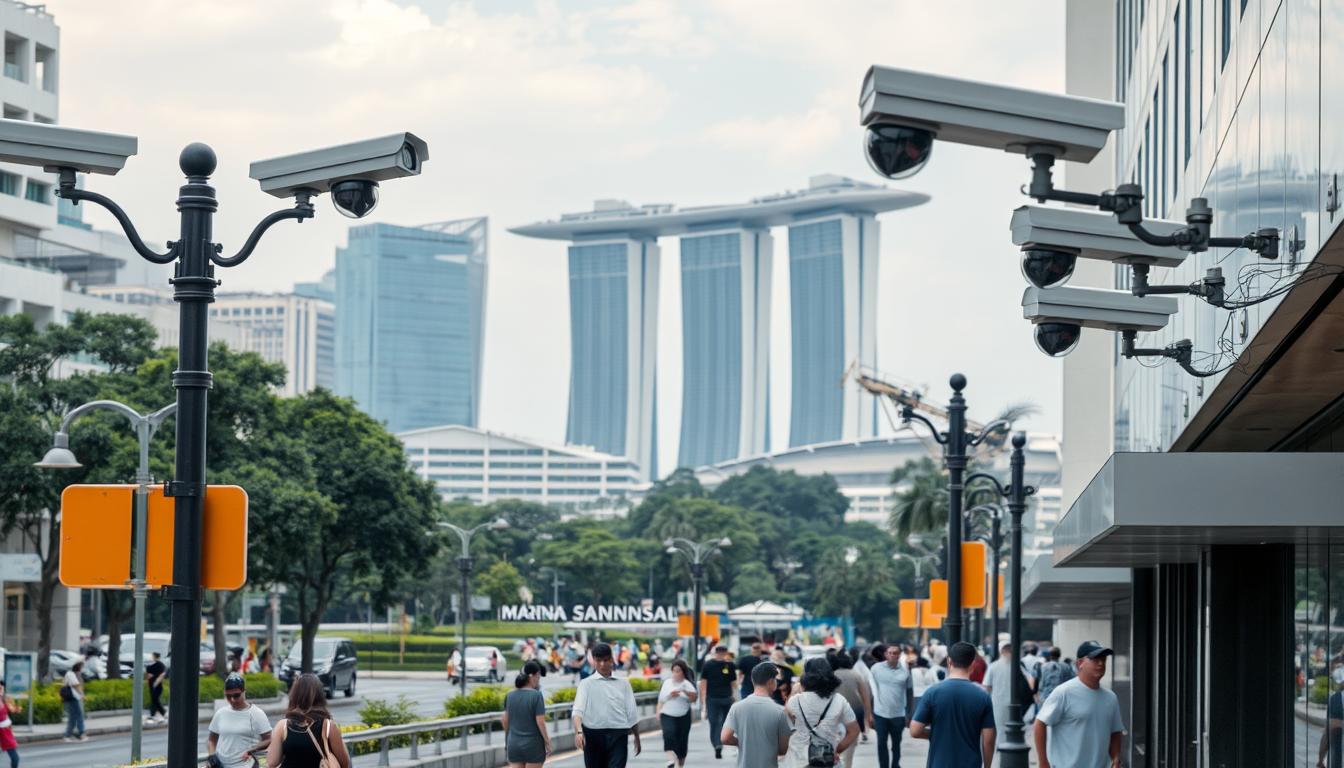
Should CCTV cameras be placed in public places? Analysis
Singapore stands as a global leader in adopting surveillance systems. With 93% of retailers using monitoring tools, the city-state showcases a strong commitment to security. But this approach sparks debates worldwide.
On one side, surveillance enhances safety in crowded areas and reduces crime rates. On the other, privacy advocates raise concerns about personal freedoms. A recent global study reveals 58% of people prioritize security, while 42% favor privacy protections.
This article examines Singapore’s unique position. The nation balances advanced monitoring with strict regulations. We’ll explore how this system works and its impact on daily life.
Key Takeaways
- Singapore leads in public surveillance adoption
- 93% of local retailers use monitoring systems
- Global debate: 58% favor security vs 42% privacy
- Unique regulations govern Singapore’s approach
- Balancing safety and privacy remains challenging
The Rise of Public Surveillance in Singapore
Singapore’s streets and buildings are now among the most monitored globally. The government’s Smart Nation initiative accelerated this trend, integrating technology into daily life. Since the 2010s, installations have grown exponentially, with over 500,000 surveillance cameras deployed by major providers like First Solution Group.
How Prevalent Are Monitoring Systems?
Retail leads the charge—93% of local stores use these systems, according to the National Retail Federation. Schools follow closely, with 80% of public institutions employing monitoring tools. Even public housing estates feature extensive coverage, ensuring safety in residential areas.
Key Sectors Using Surveillance
Transportation hubs are critical zones, with cameras tracking crowds and traffic. Businesses, especially retail chains, adapt models like Walmart’s to deter theft. Authorities prioritize high-risk areas, balancing visibility with privacy concerns.
- Retail: Highest adoption rate (93%) for loss prevention.
- Education: 80% of schools use surveillance for student safety.
- Public Housing: Widespread coverage to deter vandalism.
Should CCTV Cameras Be Placed in Public Places? The Core Debate
The debate over monitoring in shared spaces continues to divide opinions worldwide. A 2023 global study revealed 58% prioritize safety, while 42% value privacy protections more. Singapore reflects this split, with 67% accepting such systems but expressing reservations.
Security vs. Privacy: A Cultural Clash
Singapore’s security-conscious culture often clashes with growing privacy awareness. High-profile cases, like the 2018 school incident, show how these systems can prevent tragedies. Yet, controversies over HDB corridor surveillance highlight tensions.
“Nothing to hide” arguments face scrutiny. Critics argue even law-abiding individuals deserve data protection. A National University of Singapore study found 1 in 3 citizens worry about misuse.
“67% approve of surveillance but demand clearer boundaries.”
Ethical Concerns and Practical Realities
Proponents cite reduced crime in hotspots. Opponents counter that security cameras create a false sense of safety. The balance remains delicate as technology advances.
- Security benefits: Deterrence and evidence collection.
- Privacy risks: Potential for data leaks or voyeurism.
- Public sentiment: Demands transparency in usage policies.
Advantages of Public CCTV Surveillance
Modern urban safety strategies increasingly rely on advanced monitoring solutions. In Singapore, these systems contribute to safer neighborhoods, efficient traffic flow, and faster emergency responses. Data shows tangible benefits across multiple sectors.
Crime Deterrence and Reduced Rates in Hotspots
Public safety improves significantly in monitored areas. Orchard Road, a bustling shopping district, saw thefts drop by 27% after installing surveillance in 2019. The visible presence of cameras acts as a psychological barrier to potential offenders.
Vandalism in parks managed by NParks decreased by 34% over five years. High-risk zones like MRT stations also benefit, with fewer reported incidents during peak hours.
Aiding Law Enforcement with Evidence Collection
CCTV footage plays a pivotal role in solving crimes. During the 2013 Little India riot, recordings helped identify 90% of offenders. Investigators reconstructed events minute-by-minute using timestamped videos.
Globally, 62.2% of robbery cases use surveillance evidence for convictions. Singapore’s police leverage this tool to streamline investigations and reduce court backlogs.
Enhancing Traffic Management and Public Safety
The Land Transport Authority (LTA) integrates cameras with ERP 2.0 for real-time monitoring. Sensors detect accidents instantly, reducing response times by 40%. This system also optimizes traffic light cycles during peak congestion.
Schools adopted similar tech after a 2018 security breach. Panic buttons linked to surveillance feeds now alert authorities within seconds. For more on regulations for surveillance systems, visit our detailed guide.
“Surveillance tools cut emergency response times by half in pilot zones.”
Disadvantages of Public CCTV Systems
The expansion of monitoring networks comes with unintended consequences. While enhancing security, these systems spark legitimate concerns about personal freedoms and practical limitations. Singapore’s experience reveals both the promise and pitfalls of widespread surveillance adoption.
Privacy Invasion and Ethical Concerns
The 2021 Bishan HDB dispute highlighted tensions when residents objected to corridor cameras facing their units. A National University of Singapore study found 34% of citizens experience “surveillance fatigue” from constant monitoring.
Personal data protection remains contentious. Retailers faced six PDPA violation cases in 2022 for improper footage handling. The 2019 Toa Payoh incident, where a man manipulated public cameras for voyeurism, intensified privacy debates.
Potential for Misuse and Voyeurism
Systems designed for security sometimes enable opposite outcomes. Beyond the Toa Payoh case, researchers identified vulnerabilities in 28% of public cameras tested. Unauthorized access risks exposing sensitive footage.
Transparency remains limited. Only 41% of monitored locations display proper signage about recording, according to PDPC audits. This fuels concerns about accountability and consent.
High Costs and Questionable Effectiveness
Maintaining police cameras costs S$2.8M annually, with AI upgrades adding 30% to budgets. Yet crime stats show mixed results – monitored estates report 22% fewer thefts but similar assault rates to unmonitored areas.
“We must evaluate whether the benefits justify the expenditure,” notes SMU Professor Tan Wei Ming. Installation represents just 40% of total costs, with maintenance and data storage consuming most resources.
“Surveillance systems reduce certain crimes but don’t address root causes of social issues.”
Singapore’s Legal Framework for Public Surveillance
Singapore’s approach to monitoring public spaces operates within strict legal boundaries. The government balances security needs with individual rights through comprehensive laws and oversight mechanisms. This system has evolved to address technological advances while maintaining public trust.
PDPA Regulations on Data Collection
The Personal Data Protection Act (PDPA) sets clear rules for footage handling. Organizations must delete recordings within 30 days unless needed for investigations. The 2019 guidelines specify proper storage methods and access controls for public space monitoring.
Violations carry serious consequences. In 2022, StarHub faced penalties after a data breach exposed surveillance footage. This incident reinforced the importance of robust data protection measures under the PDPA framework.
Contrasting Residential and Commercial Rules
Residential installations face stricter controls than commercial ones. HDB flat owners risk S$5,000 fines for improper camera placement affecting neighbors’ privacy. The Urban Redevelopment Authority (URA) has different permit requirements for business districts.
Mandatory signage plays a key role. The “Under Surveillance” notices must be visible in all monitored areas. This transparency measure helps address privacy concerns while maintaining security benefits.
“Our legal framework ensures surveillance serves public safety without compromising fundamental rights.”
Exceptions exist for national security cases. The Internal Security Act allows extended footage retention for terrorism prevention. These special provisions demonstrate Singapore’s balanced approach to laws governing public monitoring.
Case Studies: CCTV Effectiveness in Singapore
From retail security to residential disputes, case studies highlight complex realities of surveillance systems. Documented incidents reveal how monitoring tools perform in real-world scenarios, beyond theoretical debates about their value.
Retail Security Breakthroughs
Singapore’s businesses showcase surveillance successes. The 2020 Mustafa Centre case demonstrated this when footage helped dismantle a S$280,000 theft ring. Police identified all six suspects within 72 hours using timestamped recordings.
Marina Bay Sands’ 2018 fraud prevention system reduced counterfeit credit card usage by 43%. Their AI-powered cameras now detect suspicious transactions in real-time. Jewel Changi Airport reported similar success, recovering S$150,000 in stolen goods within three months.
- Tampines Mall assault (2022): Clear recordings provided crucial evidence, leading to conviction in 11 days
- Orchard Road shops: 62% reduction in shoplifting after installing 360-degree cameras
Public Backlash and Legal Challenges
Not all case studies show positive outcomes. The 2023 Jurong coffee shop lawsuit highlighted privacy concerns when a customer sued over unauthorized footage collection. The court ruled the owner violated PDPA guidelines.
Residential areas face unique tensions. Ang Mo Kio HDB residents protested corridor cameras facing their units in 2021. The Punggol childcare center controversy erupted when parents discovered staff monitoring bathroom entrances.
“Surveillance effectiveness depends on proper implementation, not just installation.”
These incidents demonstrate how monitoring systems impact different sectors. While businesses often benefit from reduced crime, residential applications require more careful consideration of privacy rights.
Technological Advances in Public CCTV
Singapore’s surveillance infrastructure is undergoing a radical transformation through cutting-edge innovations. The city-state now integrates AI and facial recognition into existing networks, creating smarter security solutions. These technology upgrades aim to enhance urban safety while addressing privacy concerns.
AI and Facial Recognition Integration
POLCAM’s 2025 rollout will deploy facial recognition across major transport hubs. Early GovTech trials achieved 87% accuracy in identifying persons of interest. The system cross-references databases while maintaining strict PDPA compliance.
Traffic Police now use Automatic Number Plate Recognition (ANPR) systems at 38 expressway points. These video analytics tools detect stolen vehicles in real-time. Since implementation, recovery rates improved by 19% in Q1 2023.
Smart City Initiatives and Surveillance
NEA’s littering detection algorithms analyze patterns across 12,000 cameras. The system identifies hotspots with 92% precision, directing enforcement officers efficiently. This smart city approach reduced manpower needs by 30%.
Punggol’s Smart HDB Town pilot links surveillance with environmental sensors. Cameras monitor foot traffic while measuring air quality and noise levels. Residents access real-time data through the Municipal Services Office app.
During COVID-19, contact tracing integrated with transport CCTV networks. This helped authorities map infection chains 60% faster. However, cybersecurity experts warn IoT cameras need stronger encryption protocols.
“Next-gen surveillance must balance capability with ethical constraints to maintain public trust.”
These advancements demonstrate Singapore’s leadership in urban monitoring technology. As systems grow more sophisticated, ongoing reviews ensure they serve public interests responsibly.
Public Perception and Community Trust
Community attitudes toward urban monitoring systems reveal complex social dynamics. The 2022 REACH survey found 74% approval when proper safeguards exist, showing cautious optimism among residents. This acceptance comes with clear expectations about responsible usage and oversight.
Building Confidence Through Engagement
GRC town hall meetings consistently show community trust grows when residents participate in placement decisions. Ang Mo Kio’s pilot program reduced objections by 40% after incorporating neighborhood feedback. Corporate transparency reports from major mall operators now detail camera usage statistics quarterly.
Standard Chartered Bank’s 2023 disclosure revealed 92% compliance with PDPA rules for their ATM monitoring. Such openness addresses public perception concerns while demonstrating accountability. The “Surveillance with Consent” campaign further educates citizens about their rights in monitored spaces.
Clear Communication Through Signage
PDPC-compliant signage plays a vital role in maintaining awareness. Regulations specify font sizes, placement heights, and multilingual warnings. Jurong West’s community policing initiative added QR codes to signs, linking to usage policies that received 15,000 scans in six months.
Generational differences emerge in acceptance levels. While 68% of seniors support extensive monitoring, only 49% of those under 30 agree. Education programs in schools and community centers aim to bridge this gap through interactive demonstrations of security benefits.
“Effective monitoring requires continuous dialogue between authorities and the people they protect.”
These efforts show Singapore’s evolving approach to balancing security needs with democratic values. As technology advances, maintaining community trust remains as crucial as the systems themselves.
Weighing the Future of Public Surveillance
Urban landscapes globally are evolving with advanced monitoring technologies. Singapore’s 2025 roadmap predicts a 40% rise in surveillance density, focusing on transport hubs and smart housing estates. A proposed biometrics regulation bill aims to standardize facial recognition use, addressing privacy concerns.
Hybrid AI-human systems are gaining traction. These combine real-time analytics with human oversight to reduce false alarms. Trials show a 30% improvement in incident response times while maintaining balance between efficiency and ethics.
Privacy-by-design initiatives are reshaping development. New systems embed data protection features upfront, like automatic blurring of non-relevant details. Such measures build security without compromising individual rights.
Ongoing public dialogue remains critical. Town halls and digital platforms let citizens shape policies. This collaborative approach ensures surveillance serves collective needs while respecting boundaries.
FAQ
How common are surveillance cameras in Singapore?
Public video monitoring is widespread, especially in high-traffic areas like malls, transport hubs, and government buildings. Authorities and businesses rely on these devices to enhance security.
What are the main benefits of public safety cameras?
These systems help deter crime, assist police investigations with recorded evidence, and improve traffic monitoring. They also contribute to faster emergency responses.
Do surveillance systems violate personal privacy?
While they enhance security, concerns exist about excessive monitoring. Singapore’s PDPA regulates data collection to balance safety with individual rights.
Can businesses install security cameras without restrictions?
Commercial properties must follow PDPA guidelines, including proper signage. Residential use has different rules to prevent neighbor disputes.
Has facial recognition technology been implemented?
Yes, advanced systems with AI capabilities are being tested in smart city projects. These tools help authorities identify suspects but raise additional privacy questions.
Who monitors the surveillance footage?
Authorized personnel in law enforcement and private security teams handle recordings. Strict protocols prevent unauthorized access to protect sensitive information.
Are there documented cases where cameras prevented crimes?
Retailers and transport operators report success in deterring theft and vandalism. Police also use video evidence to solve serious offenses across the city.
What happens if someone misuses surveillance systems?
Violators face legal penalties under Singapore’s laws. Companies must store footage securely and delete it after a mandated period unless needed for investigations.


