
Can I put CCTV outside my house Singapore? A Guide
Singapore has updated its regulations regarding residential security systems, making it easier for homeowners to enhance safety. Recent policy changes now allow CCTV cameras to be installed without prior approval in certain areas. This shift reflects growing concerns about security while balancing privacy considerations.
Since May 2023, HDB residents no longer need permission for corridor-facing surveillance devices. Smart doorbells with recording features are also permitted when mounted internally. These updates simplify the process of securing properties while respecting legal boundaries.
This guide explores the latest rules for different housing types. It clarifies where and how surveillance equipment can be used effectively. Understanding these guidelines helps maintain both safety and neighborly relations.
Key Takeaways
- HDB corridor-facing cameras no longer require approval as of 2023
- Smart doorbells are allowed when installed internally
- Privacy laws still apply to all recording devices
- Proper placement ensures compliance with regulations
- Alternatives like smart doorbells offer flexible security options
Understanding CCTV Rules for Singapore Homes
The legal landscape for residential security cameras in Singapore has evolved significantly in 2023. Homeowners must navigate two key frameworks when considering surveillance systems. These regulations balance individual security needs with community privacy rights.
Legal Framework for Residential CCTV Use
Singapore’s data protection laws primarily focus on organizational use of personal information. The Personal Data Protection Act (PDPA) generally doesn’t apply to individuals installing cameras at their HDB flat or private residence. This means homeowners typically don’t need special consent for personal security systems.
However, the Community Disputes Resolution Act (CDRA) addresses neighbor concerns. It prohibits surveillance devices from intruding on others’ privacy. Pointing cameras at adjacent windows or doors could lead to disputes under this law.
Recent Changes to HDB Approval Requirements
Major policy updates in May 2023 simplified approval processes for public housing residents. Corridor-facing cameras no longer require prior permission from housing authorities. This change reflects growing recognition of home security needs in shared spaces.
Despite relaxed rules, certain restrictions remain for HDB flat installations. Unauthorized setups in common areas still risk $5,000 fines. The updated guidelines specifically prohibit capturing neighbors’ private spaces or shared facilities without cause.
Proper installation remains crucial for compliance. Homeowners should position devices to monitor only their immediate property. When in doubt, consulting town council regulations helps avoid potential violations.
Can I Install CCTV Outside My HDB Flat?
HDB dwellers seeking enhanced security must follow specific protocols for outdoor cameras. While corridor-facing devices no longer need pre-approval, other external installations require official consent. Understanding these distinctions prevents violations of housing regulations.
When Approval Is (and Isn’t) Required
Most HDB flat owners can install CCTV devices facing their front doors without permission. The 2023 policy changes exempt these setups from the approval process. However, cameras monitoring common corridors or lift lobbies still need town council authorization.
Special circumstances demand additional steps. Cases involving harassment or vandalism require a police report before installation. Temporary setups in shared spaces get limited to six months under current guidelines.
Steps to Obtain Town Council Permission
Securing authorization involves a straightforward but thorough process:
- File a police report if documenting criminal incidents
- Prepare property diagrams showing camera placement
- Submit the request via the town council’s official portal
- Await review (typically 7-10 working days)
- Install devices only after receiving written consent
Key requirements for successful applications include:
- Clear justification for monitoring shared spaces
- Evidence of prior security incidents when applicable
- Commitment to remove equipment after approval expires
- Assurance that recordings won’t invade neighbors’ privacy
Approved installations must follow all specified conditions. Residents should maintain documentation throughout the approval period. Non-compliance may result in fines or mandatory removal orders from the Town Council.
Installing CCTV in Condominiums and Landed Properties
Residential surveillance regulations differ significantly between condominiums and landed properties in Singapore. Each housing type follows distinct guidelines that affect security system installations. Understanding these differences ensures proper compliance with local laws.
Condominium MCST Rules
Condominium residents must follow MCST rules set by their management committees. These bylaws often restrict cameras in shared spaces like lobbies or swimming pools. Some developments prohibit external devices entirely.
Common restrictions include:
- No recording in recreational facilities
- Angle limitations for balcony-facing devices
- Mandatory approval for corridor monitoring
Residents should review their development’s specific bylaws before installation. Professional installers familiar with condo regulations can help navigate these requirements.
Freedom for Landed Homeowners
Owners of landed properties enjoy greater flexibility with their security setups. They can install cameras anywhere within their property boundaries without external approval. This includes perimeter walls and driveway monitoring systems.
Key considerations for landed homes:
- Boundary alignment to avoid pointing at neighbors
- Higher quality systems for larger properties
- Professional wiring for complex installations
Gated communities may have additional guidelines about device visibility. Homeowners should still respect privacy laws when positioning their surveillance equipment.
Smart Doorbells and Peephole Cameras: What’s Allowed?
Modern security solutions now offer homeowners discreet alternatives to traditional surveillance systems. These devices provide monitoring capabilities while maintaining residential aesthetics and respecting neighbor privacy concerns.
HDB Guidelines for Compact Security Devices
The Housing Board classifies smart doorbells and peephole cameras as low-impact security options. Internal installations require no special approvals when devices face only the homeowner’s property. This policy recognizes their minimal effect on shared spaces.
Common area installations follow different HDB guidelines. Ang Mo Kio Town Council requires formal requests for devices monitoring corridors or lift lobbies. Approved setups must avoid capturing neighbors’ private spaces.
Maintaining Privacy With Smart Technology
Positioning remains crucial for compliance with neighbor privacy standards. Devices should focus on entry points rather than adjacent units. Motion zones can be adjusted to exclude public walkways.
A Jurong West resident documented rare hornbill visits using their smart doorbell. The footage helped conservation efforts while complying with all HDB guidelines. This demonstrates how technology can serve multiple purposes responsibly.
Key installation considerations include:
- Internal mounting for peephole cameras
- Audio recording disclaimers for doorbells
- Angle adjustments to avoid common areas
- Regular maintenance checks
How to Legally Install CCTV Outside Your House in Singapore
Three critical steps ensure lawful installation of residential monitoring devices in Singapore. Following this structured approach prevents regulatory violations while enhancing property security. Each phase addresses specific compliance requirements for different housing types.
Step 1: Assess Your Property Type
Singapore’s housing regulations vary significantly between HDB flats, condominiums, and landed properties. Public housing residents enjoy relaxed rules for corridor-facing devices since 2023. Condo dwellers must consult their MCST bylaws before any installation.
Key differences include:
- HDB: No approval needed for door-facing cameras
- Condo: Management committee permission required
- Landed: Full flexibility within property boundaries
Step 2: Gather Required Documentation
Proper documentation streamlines the approval process with relevant authorities. Essential paperwork includes identification copies, site plans, and police reports for incident-related installations. Digital copies should be prepared for online submissions.
Prepare these items:
- NRIC front/back scans
- Property floor plans with camera markings
- Incident reports (if applicable)
- Installer license certifications
Step 3: Submit Requests to Authorities
Most install CCTV applications now process digitally through town council portals. The average review period takes 7-10 working days after submission. Approved installations require final verification by housing officers in some cases.
“Always confirm receipt of your application and note the reference number,” advises a Jurong Town Council representative.
Post-approval considerations:
- Display approval notices visibly
- Schedule installation during office hours
- Maintain records for the entire approval period
Following these steps guarantees compliance when you install CCTV systems in Singapore. Proper planning prevents costly violations while maximizing security benefits.
Navigating Singapore’s Personal Data Protection Act (PDPA)
Singapore’s data protection framework creates distinct rules for residential and commercial surveillance systems. The PDPA governs how organizations handle personal data, while offering exemptions for individual homeowners. This distinction proves crucial when evaluating compliance requirements for security setups.
Residential Exemptions Under PDPA
Homeowners enjoy broad freedoms under current PDPA regulations. The law explicitly excludes personal or household activities from compliance obligations. This means residents can record their property without obtaining consent from passersby or neighbors.
Key residential allowances include:
- No mandatory signage requirements for private dwellings
- Freedom to store footage without special encryption
- No obligation to provide access to recorded individuals
Business Surveillance Requirements
Commercial entities face stricter PDPA compliance standards. Retailers and service providers must display clear notification signs when using surveillance systems. These notices should specify the purpose of data collection and contact details for inquiries.
“Businesses capturing personal data through CCTV must comply with all PDPA provisions, including data protection and retention policies,” states the Personal Data Protection Commission.
Essential business obligations involve:
- Posting visible signage at all recording locations
- Implementing secure storage for recorded footage
- Responding to access requests within 30 days
- Redacting third-party faces in shared footage
Audio recording triggers additional consent requirements under the PDPA. Both businesses and residents must disclose when capturing conversations. This rule applies even to smart doorbells with two-way audio features.
Properly configuring motion zones helps minimize unnecessary personal data collection. Many modern systems offer privacy masking tools to automatically blur sensitive areas. These features demonstrate good practice for all users, regardless of legal requirements.
Balancing Security and Neighbor Privacy
Effective home security requires careful consideration of both protection needs and community privacy. Proper camera placement and conflict resolution strategies help maintain safety without straining neighborly relations. The Community Disputes Resolution Tribunal (CDRT) handles cases where surveillance systems potentially infringe on others’ rights.
Optimizing Device Positioning
The 45-degree angle rule helps HDB residents comply with privacy regulations. Pointing corridor-facing devices downward minimizes unintended recording of neighbors’ activities. Motion sensor zoning further refines coverage to essential areas only.
Key positioning strategies include:
- Mounting devices at least 2.5 meters high for optimal coverage
- Avoiding direct views into adjacent windows or balconies
- Using privacy masks on digital interfaces
Resolving Monitoring Disputes
When complaints arise, the CDRT offers mediation before legal action. Ms. Lee’s successful resolution of a pot theft case demonstrated proper evidence preservation. Her timestamped footage helped identify the culprit while respecting privacy boundaries.
Effective dispute resolution involves:
- Documenting incidents with date-stamped recordings
- Attempting informal discussion with concerned parties
- Filing with CDRT if mediation fails
- Presenting properly preserved evidence
“Clear communication about surveillance purposes often prevents escalation,” notes a CDRT case officer. “Most disputes stem from misunderstandings rather than malicious intent.”
Recent rulings emphasize proportional response in privacy cases. Judges typically require adjustments to camera placement rather than complete removal. Maintaining open dialogue with neighbors remains the best prevention against complaints regarding security measures.
Temporary vs. Permanent CCTV Installations
Singapore’s housing authorities have implemented specific timeframes for security device installations in shared spaces. Different rules apply depending on whether residents need short-term monitoring or ongoing protection. Understanding these distinctions helps maintain compliance while addressing security concerns.
HDB’s 6-Month Rule for Common Areas
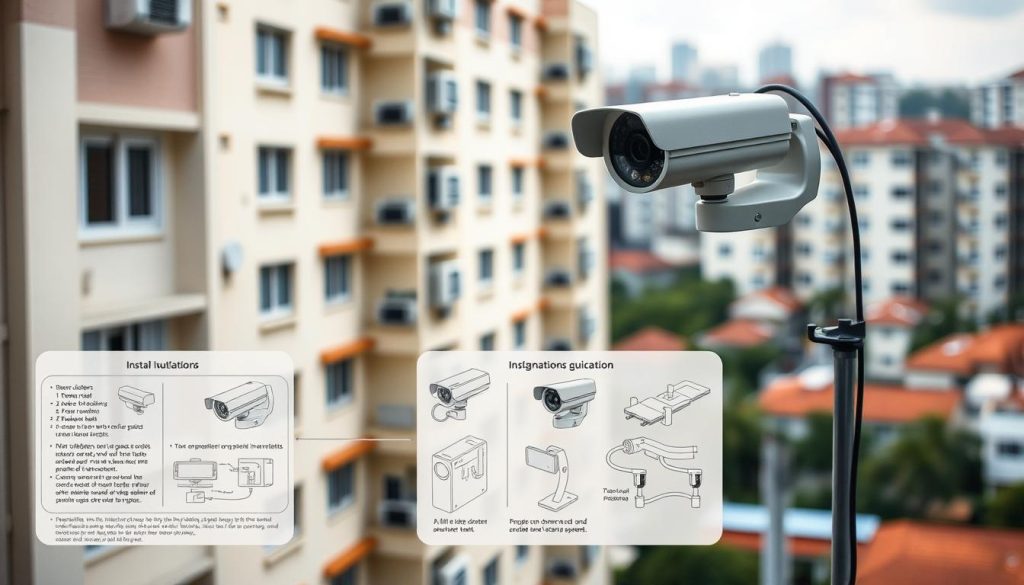
The 6-month rule governs temporary surveillance in shared HDB spaces like corridors and lift lobbies. Approved installations automatically expire after this period, requiring either removal or renewal. Town councils typically schedule inspections during the final month to verify compliance.
Early renewal applications offer significant advantages:
- Avoids coverage gaps between approval periods
- Allows time for necessary adjustments
- Prevents automatic deactivation of devices
Renewal and Removal Procedures
Residents must initiate renewal requests at least 30 days before expiration. The process mirrors initial applications but requires proof of prior approval. Those opting for removal must submit deinstallation certificates within seven working days.
“Proper documentation ensures smooth transitions between security solutions,” notes a Ang Mo Kio Town Council representative.
Storage regulations mandate that removed equipment cannot remain in common areas. Residents transitioning to permanent solutions should:
- Consult housing guidelines for approved alternatives
- Schedule professional assessments if rewiring is needed
- Update all relevant authorities about system changes
Proper timeline management prevents violations while maintaining continuous property protection. Following these procedures demonstrates responsible use of surveillance technology in community spaces.
Penalties for Non-Compliance
Security system violations in Singapore carry serious financial and legal repercussions. Authorities actively enforce regulations through fines and corrective orders. Recent cases demonstrate how improper installations can lead to costly consequences.
Fines and Legal Consequences
HDB residents face strict penalties for unauthorized surveillance. The most common violation involves capturing neighbors’ private spaces, which can result in $5,000 fines under town council bylaws. Condominium management committees may impose additional charges for unapproved devices.
Serious offenses trigger PDPA investigations. The Personal Data Protection Commission handles cases involving:
- Unauthorized sharing of recorded footage
- Covert monitoring in private areas
- Failure to secure stored video data
Businesses face steeper penalties under the PDPA. A security company recently paid $20,000 for improperly handling client footage. Criminal charges apply for extreme violations like bathroom surveillance.
Case Studies of PDPA Violations
The MCST case study involving unauthorized corridor footage sharing resulted in corrective orders. Offenders had to remove devices and attend compliance training. This demonstrates how responsibility for security cameras extends beyond installation.
Another notable case study involved the AVS guidance program. A retailer failed to notify customers about recording in changing areas. The PDPC mandated visible signage and staff training as corrective measures.
“Reputational damage often outweighs financial penalties in surveillance violation cases,” notes a PDPC spokesperson. “Businesses should prioritize compliance from the initial planning stage.”
First-time offenders may receive warnings for minor breaches. However, repeat violations typically result in escalating fines and potential equipment confiscation. Proper documentation helps demonstrate compliance efforts if disputes arise.
Choosing the Right CCTV System for Your Home
Modern home protection systems offer diverse options tailored to different property requirements. From compact doorbell cameras to multi-channel surveillance setups, selecting the optimal solution depends on several technical and practical factors. This guide examines critical specifications and installation approaches for Singaporean residences.
Essential Technical Specifications
High-resolution sensors enable clear facial recognition, with 4MP cameras now becoming the standard for residential use. Night vision capabilities vary significantly between models—look for 30m+ infrared range with minimal image distortion during darkness.
Storage options present another key decision point. Cloud-based systems offer remote access but require monthly subscriptions, while local NVR setups provide complete data control. Hikvision’s 8-channel NVR demonstrates how professional-grade equipment handles multiple camera feeds efficiently.
Installation Service Considerations
Licensed security providers in Singapore must hold valid Security Service Provider licenses from the Police Licensing Office. These professionals ensure proper wiring and compliance with housing regulations, particularly for complex multi-camera installations.
DIY setups work well for basic configurations but lack warranty coverage on electrical work. Maintenance contracts from authorized dealers typically include firmware updates and lens cleaning—critical for long-term system reliability.
“Always verify installer credentials through the SPF’s online portal before commissioning work,” advises a security industry consultant. “This prevents liability issues with improperly configured systems.”
Budget-conscious homeowners can start with single-camera solutions and expand gradually. Many modern systems support modular upgrades without replacing core components, making them adaptable to evolving security needs.
Real-Life Benefits of Outdoor CCTV in Singapore
Documented cases across Singapore demonstrate how security cameras solve diverse neighborhood challenges. These systems provide tangible advantages beyond basic monitoring, from resolving disputes to supporting community initiatives. Residents report increased peace of mind when proper surveillance measures are implemented.
Crime Deterrence and Evidence Collection
The Teck Whye shoe theft case highlights how visible cameras create effective crime deterrence. After multiple incidents, residents installed devices that reduced thefts by 72% within six months. Recorded footage later helped identify a repeat offender targeting footwear displays.
Insurance companies increasingly accept timestamped videos as valid evidence for claims. A Boon Lay resident successfully proved cat abuse using night vision recordings. The high-resolution footage showed clear identification of the perpetrator.
Community Safety Success Stories
Neighborhood Watch programs now integrate surveillance feeds for faster response times. One Jurong East precinct credits cameras with preventing 15 vandalism cases last year. The systems automatically alert volunteers about suspicious activities.
Package theft prevention has improved significantly with doorbell cameras. A Woodlands cluster reported 90% fewer missing deliveries after installation. Some residents now share access with trusted neighbors during vacations.
Unexpected benefits include wildlife monitoring in suburban areas. Pasir Ris homeowners documented rare bird species nesting near their properties. These success stories showcase the versatile applications of residential security technology.
Staying Compliant While Enhancing Home Security
Future-proofing security systems involves both technical upgrades and awareness of changing compliance standards. Annual policy reviews help property owners adapt to HDB’s evolving regulations. Professional security audits identify potential issues before they become violations.
Technology considerations include weather-resistant cameras and cloud storage options. Many providers now offer systems that automatically blur sensitive areas for privacy protection. These features demonstrate good practice for maintaining home security while respecting boundaries.
Open communication with neighbors prevents most disputes about surveillance devices. Simple courtesy notices about camera placements often resolve concerns before they escalate. This approach balances protection needs with community harmony.
Emerging trends like AI-powered motion detection reduce false alerts. Licensed installers can recommend systems that meet current and anticipated standards. Regular maintenance ensures continued compliance as regulations evolve.
FAQ
Do HDB flat owners need approval for CCTV installation?
Yes, HDB residents must obtain approval from the Town Council before installing cameras in common areas or facing neighbors’ doors.
What are the PDPA rules for home CCTV footage?
Under Singapore’s Personal Data Protection Act, homeowners must notify individuals if recording captures their personal data and limit footage use to security purposes.
Can condo residents install CCTV without restrictions?
No, condominium owners must follow MCST guidelines, which often require approval for external cameras to avoid infringing on neighbors’ privacy.
Are smart doorbells allowed in HDB flats?
Yes, but they must comply with HDB’s guidelines—avoid pointing at neighbors’ units and minimize audio recording to prevent privacy violations.
What happens if CCTV violates PDPA rules?
Non-compliance may result in fines or legal action, especially if footage is misused or shared without consent.
How long can temporary CCTV systems stay installed?
HDB permits temporary setups for up to six months in common areas, after which homeowners must remove or seek renewal approval.
Do landed properties have fewer CCTV restrictions?
Yes, landed homeowners have more flexibility but must still ensure cameras don’t intrude on public spaces or neighboring properties.
What’s the penalty for illegal CCTV installation?
Offenders may face fines up to SGD 5,000 for HDB violations or PDPA breaches, with stricter penalties for repeated offenses.
How should disputes over CCTV placement be resolved?
Mediation through the Town Council or Community Disputes Resolution Tribunal is recommended before escalating to legal action.
Can CCTV footage be used as evidence in police reports?
Yes, legally installed recordings are admissible, provided they comply with PDPA guidelines and don’t infringe on privacy rights.


