

What is CCTV Installer Called? Expert Installation Solutions
Singapore’s security sector is rapidly growing, increasing demand for skilled professionals in surveillance systems. Whether referred to as CCTV technicians, installation specialists, or surveillance engineers, these experts play a vital role in keeping homes and businesses safe.
Eversafe Academy offers a premier Certificate in CCTV Installation (CCISS), a 16-hour course designed for hands-on training. Participants learn camera setup, network configuration, and troubleshooting—essential skills for career advancement.
With SkillsFuture funding, the course fee drops to just S$97.50, making certification accessible. NTUC members can also benefit from 75% UTAP funding, reducing costs further. Completing this program opens doors to high-demand jobs in Singapore’s security industry.
Key Takeaways
- Surveillance professionals go by various titles, including CCTV technicians and installation specialists.
- Eversafe Academy’s CCISS program provides practical training in security systems.
- SkillsFuture subsidies lower course fees to S$97.50 for eligible participants.
- NTUC members qualify for additional funding through UTAP.
- Certification enhances job opportunities in Singapore’s growing security sector.
What Is a CCTV Installer Called? Understanding the Job Title
Security experts handling surveillance setups go by multiple professional titles in Singapore. These roles reflect their specialized skills in designing, installing, and maintaining modern security solutions.
Common Titles for CCTV Professionals
Beyond “technicians,” these specialists are often referred to as:
- Security Systems Technician: Focuses on camera mounting and component replacement.
- Surveillance Engineer: Handles complex system integration and network configurations.
- IP Camera Specialist: Combines IT networking knowledge with electrical expertise.
Roles Beyond Installation: Maintenance and Troubleshooting
Nearly 43% of positions require ongoing system care. Key responsibilities include:
- Maintenance: Regular lens cleaning, storage optimization, and *firmware updates*.
- Troubleshooting: Resolving night vision failures or motion detection errors.
In Singapore, professionals must comply with IMDA standards, especially when integrating surveillance with access control or fire alarms. Commercial projects often demand stricter protocols than residential setups.
Key Duties of a CCTV Installation Technician
Modern security systems demand skilled technicians for seamless operation and integration. Professionals in Singapore handle everything from initial setup to troubleshooting, ensuring surveillance networks function flawlessly.
Installation and Setup of Surveillance Systems
Every project begins with a detailed site assessment to determine camera placement and design needs. Technicians follow a structured process:
- Mounting heights: Positioning cameras to avoid blind spots while complying with local regulations.
- Cable concealment: Ensuring wires are hidden for aesthetics and tamper resistance.
- DVR/NVR configuration: Setting video retention periods based on client requirements.
Eversafe’s CCISS program trains learners in PTZ camera calibration and network configurations, critical for commercial installations.
System Maintenance and Upgrades
Regular maintenance prevents failures. Quarterly diagnostics include storage checks and lens cleaning. Upgrades like 4K camera retrofits or analog-to-IP transitions require careful planning to avoid service disruptions.
Integrating CCTV with Other Security Systems
68% of projects involve merging surveillance with access control or alarms. Challenges arise with biometric integrations, where synchronization is key. A Singapore HDB corridor project showcased seamless integrating CCTV with existing infrastructure, enhancing neighborhood safety.
Cybersecurity measures, such as encrypted data transmission, are prioritized for networked systems to prevent breaches.
Essential Skills for CCTV Installers
Technical expertise alone isn’t enough—successful security specialists combine hands-on skills with sharp problem-solving. Employers in Singapore seek professionals certified in both hardware setups and software configurations, as 92% prioritize practical experience.
Technical Skills: Cameras, DVRs, and NVRs
Mastering technical skills ensures flawless system performance. The CCISS course covers:
- Camera selection: Varifocal lenses for adjustable zoom vs. fixed lenses for consistent coverage.
- IR illumination: Calculating range for low-light environments.
- DVR/NVR setup: Configuring storage retention and motion-triggered recording.
Tools like multimeters and packet sniffers diagnose issues, from power surges to IP conflicts.
Networking and Electrical Knowledge
Networking expertise is critical for multi-camera systems. Technicians must:
- Calculate bandwidth needs to prevent lag.
- Terminate coaxial cables or configure PoE switches.
Electrical knowledge ensures compliance with Singapore’s PSB standards, preventing hazards during installations.
Soft Skills: Communication and Problem-Solving
Translating technical jargon into layman’s terms builds client trust. For example, resolving WiFi interference requires:
- Analyzing frequency overlaps.
- Recommending shielded cables or channel adjustments.
Software proficiency in platforms like Milestone XProtect streamlines system management for commercial clients.
How to Become a Certified CCTV Installer
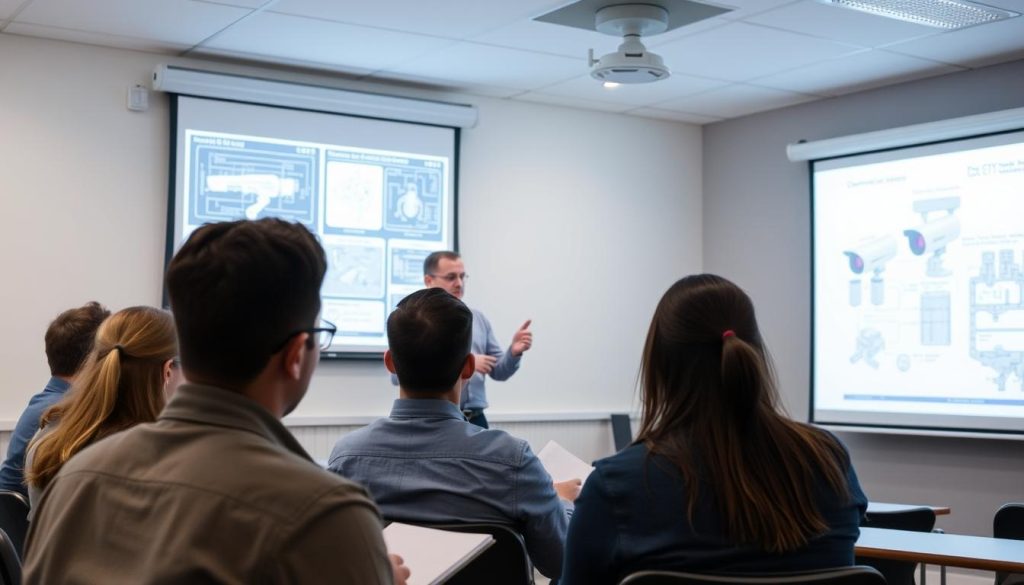
Professionals aiming to enter Singapore’s security industry need proper certification to stand out. Eversafe Academy’s Certificate in CCTV Installation (CCISS) equips learners with practical knowledge through a 16-hour course, blending classroom instruction and hands-on assessments.
Training Programs and Course Content
The CCISS curriculum covers essential modules for modern surveillance work:
- Camera types: Comparing dome, bullet, and PTZ models for different environments.
- Cybersecurity basics: Protecting networked systems from breaches.
- Wiring standards: Proper cable management for optimal performance.
Participants train at approved centers in Little India and Pioneer Junction, using real-world equipment.
Hands-On Learning and Certification Requirements
Completion requires passing a 50-question written exam (minimum 50/100) and a practical assessment. Trainees configure DVRs, troubleshoot connectivity issues, and demonstrate proper mounting techniques.
Eversafe reports an 89% pass rate, with many graduates securing jobs within three months.
Funding and Support Options in Singapore
SkillsFuture subsidies reduce fees to S$97.50 for eligible learners. NTUC members access additional UTAP funding, covering 75% of remaining costs.
- Career conversion programs: Mid-career switchers receive mentorship and placement support.
- WSQ comparison: CCISS focuses solely on surveillance, while WSQ includes broader security integrations.
Self-sponsored applicants can claim SkillsFuture credits online in under 10 minutes.
Career Opportunities for CCTV Technicians
Certified surveillance professionals enjoy diverse career paths in Singapore’s expanding security market. With a projected 6.8% annual growth through 2026, the industry offers stable advancement for skilled technicians.
Job Roles and Advancement Paths
Entry-level roles like Assistant Installation Technician (S$2,400/month) provide hands-on experience. Senior positions, such as Lead Systems Integrator, command salaries exceeding S$4,800 with responsibilities like project management.
Specializations boost earning potential:
- Marine surveillance: Installing systems for port facilities.
- Government projects: Traffic monitoring for LTA or HDB estates.
- Retail security: Loss prevention solutions for malls.
Industry Demand in Singapore
Private sector demand spans condominiums, warehouses, and retail chains. Entrepreneurs leverage certifications to launch maintenance firms, servicing 300+ cameras monthly.
Continuing education, like CSA-approved courses, ensures compliance with PDPM standards. As Mordor Intelligence notes, Singapore’s security sector needs 1,200+ technicians annually—making this a future-proof career choice.
Start Your Journey as a CCTV Installer Today
Take the first step toward a thriving career in security systems today. Singapore’s Smart Nation initiative drives demand for skilled technicians, with Eversafe Academy graduates enjoying a 97% employment rate within three months.
Former retail workers now manage condo surveillance networks—proof that certification transforms careers. The CCISS program offers mobile-friendly training and corporate packages, with graduates eligible for SCDF-approved installer lists.
Secure your future in Singapore’s booming security sector. Enroll now to access SkillsFuture-funded batches at Jalan Besar or Pioneer centers.
FAQ
What job titles are used for CCTV professionals?
Common titles include surveillance technician, security systems installer, and CCTV specialist. These roles focus on setting up, maintaining, and troubleshooting security equipment.
What tasks do CCTV installation technicians handle?
They install cameras, configure DVRs/NVRs, test systems, and integrate access control or alarms. Technicians also perform maintenance and software updates.
What skills are needed for CCTV installation work?
Key skills include wiring, network setup, camera placement, and troubleshooting. Soft skills like communication and problem-solving are also essential.
How can someone become a certified CCTV installer?
Enroll in training programs covering camera types, system design, and hands-on practice. Certification exams validate expertise in surveillance systems.
Are there career growth opportunities in this field?
Yes! Technicians can advance to project management, system design, or specialized roles in video analytics and smart security solutions.
Is there demand for CCTV installers in Singapore?
High demand exists due to increased security needs in homes, businesses, and public spaces. Skilled professionals enjoy steady job opportunities.


