
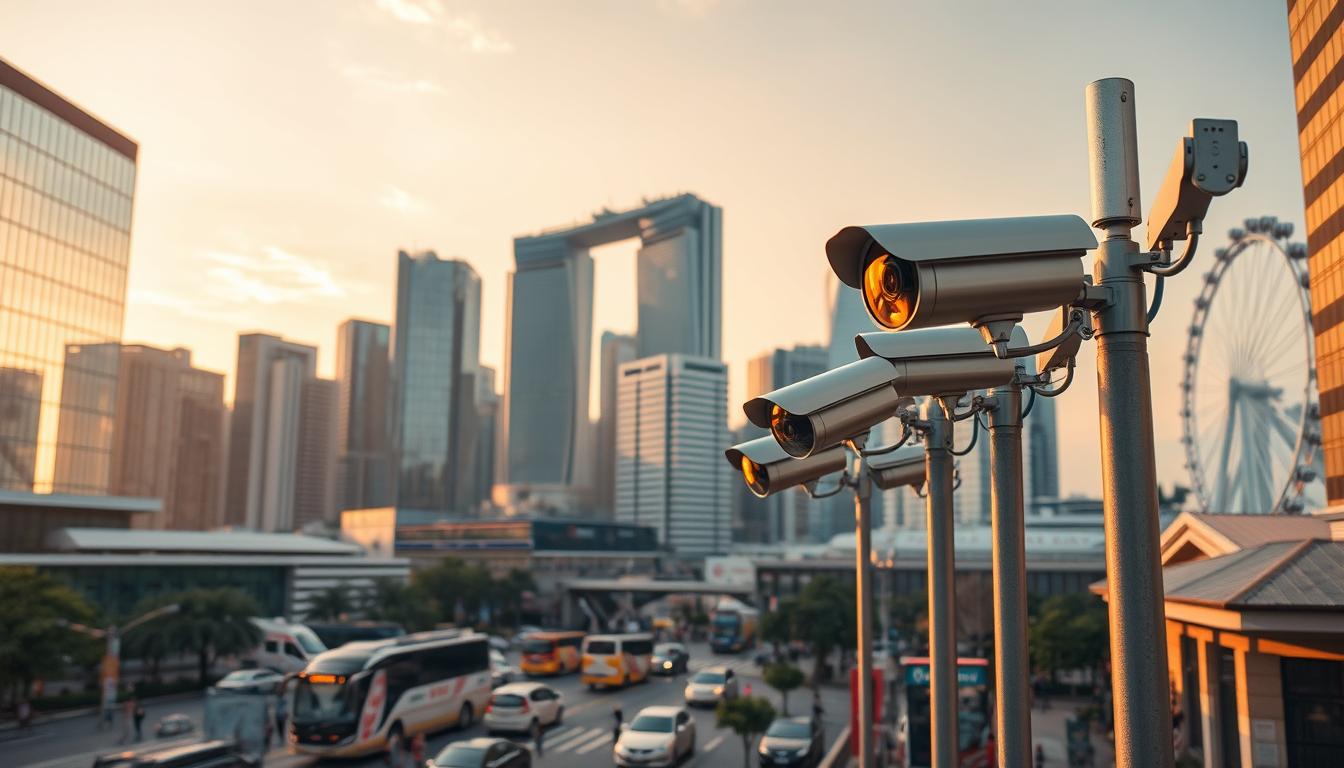
What are the rules for CCTV in Singapore? FAQ
Singapore balances security needs with privacy concerns through clear guidelines for surveillance systems. Recent changes make it easier for residents to install CCTV cameras facing common areas, with HDB approval no longer required since May 2023.
Over 500,000 surveillance devices operate across the island, with 93% of retail stores using monitoring systems. The Personal Data Protection Act (PDPA) governs how businesses and homeowners handle CCTV footage, ensuring proper use of recorded material.
Requirements differ between HDB flats and private residences. While security remains a priority, all users must respect personal data protection laws. Penalties for violations can reach $1 million, making compliance essential.
Key Takeaways
- HDB corridor camera installations no longer need approval as of 2023
- PDPA regulates storage and usage of surveillance recordings
- Different rules apply for public housing versus private properties
- Commercial spaces widely adopt monitoring systems for security
- Proper placement avoids privacy violations and legal issues
Understanding Singapore’s CCTV Legal Framework
The Personal Data Protection Act establishes boundaries for CCTV cameras usage across residential and commercial spaces. This framework ensures recordings of identifiable individuals comply with data protection principles, requiring consent in most scenarios.
The Personal Data Protection Act (PDPA) and Surveillance
Under PDPA Section 4.34, video footage showing faces or license plates qualifies as personal data. Businesses must display clear signage when recording public areas. A 2021 case where a 10-year-old boy was identified via surveillance for animal abuse highlights how courts treat such evidence.
Financial institutions follow stricter protocols, often retaining footage for 30 days. Comparatively, Singapore’s laws align with ASEAN neighbors like Malaysia but enforce heavier penalties for violations.
HDB’s Updated Policies for Residential Installations
Since May 2023, HDB residents no longer need approval for corridor-facing cameras unless pointing at neighbors’ doors. Temporary security setups require police reports and can’t exceed six months. Smart doorbells follow traditional CCTV rules if they record beyond the owner’s doorstep.
Prohibited areas include building facades and angles capturing private balconies. The Housing Board recommends a 21-day retention period, balancing security needs with privacy concerns.
Installing CCTV in HDB Flats: Key Guidelines
HDB’s revised guidelines simplify camera installations while maintaining privacy protections for neighbors. Homeowners can now install CCTV camera systems facing common corridors without seeking prior approval. This 2023 change streamlines security upgrades while upholding personal data safeguards under Singapore law.
Corridor-Facing Cameras and Approval Exemptions
Internal corridor-facing CCTV cameras no longer require HDB permits, but must use non-intrusive mounting brackets. Approved models like Hikvision DS-2CE70DF0T-MF meet technical specifications for public housing installations. The Teck Whye shoe theft case demonstrated how properly positioned cameras provide valid evidence.
Multi-story buildings require coordination to avoid overlapping coverage areas. Homeowners should notify neighbors as a courtesy, though not legally mandated. Storage solutions should maintain footage for the recommended 21-day period.
Restrictions on Camera Placement for Privacy
Prohibited areas include building facades and angles capturing private balconies. The 45-degree placement rule prevents “killer litter” installations that protrude dangerously. Window mounts must avoid recording beyond the owner’s immediate doorway.
HDB-approved installers follow certification processes ensuring compliant setups. For prohibited camera locations, consider alternative security solutions that respect privacy boundaries. Temporary installations require police reports and limited operation periods.
Commercial CCTV Use: Compliance for Businesses
Businesses in Singapore face stricter surveillance regulations than residential users under PDPA guidelines. Corporate operators must implement additional safeguards when monitoring employees and customers, including mandatory signage and documented policies. The 2022 case where a logistics company faced S$75,000 fines demonstrates the consequences of non-compliance.
Employee Consent and Notification Requirements
Workplaces must obtain explicit consent before recording staff in break rooms or workstations. Retail chains like FairPrice use standardized notices at all entrances, while hospitals implement tiered access for sensitive areas. Unionized environments require additional negotiations under collective agreements.
Sector-specific rules apply differently – F&B outlets may record dining areas but not restrooms, while healthcare facilities need special clearance for patient zones. Annual training programs ensure staff understand surveillance policies, with incident response drills for unauthorized access scenarios.
Appointing a Data Protection Officer (DPO)
All organizations operating cameras must designate a certified data protection officer to oversee compliance. Professional certifications from ISC2 or IAPP validate DPO qualifications, with required refresher courses every two years. This role manages audit trails, access logs, and breach reporting timelines.
The Accounting and Corporate Regulatory Authority (ACRA) maintains public listings of registered DPOs. Smaller businesses often outsource this function to licensed providers. Proper documentation proves crucial during PDPA investigations, as seen in a 2021 case where incomplete logs resulted in penalties.
Smart Doorbells and Alternative Surveillance Options
Modern security solutions like smart doorbells offer HDB residents discreet monitoring options. These devices reduce neighbor disputes by 70% compared to traditional systems while complying with Singapore’s privacy laws. Approved models like Ring Doorbell 4 and Hikvision DS-KD8003-IME1 provide HD monitoring without invasive installations.
Permitted Devices Under HDB Rules
HDB allows smart door viewers that don’t modify building facades or capture adjacent units. Battery-powered models with 6-month lifespans avoid wiring issues in public housing. The Housing Board prohibits devices extending more than 5cm from door surfaces.
Key compliant features include:
- 180° field-of-view limit to prevent overreach
- Privacy shields blocking neighboring doorways
- Local storage options avoiding cloud data risks
Comparing Smart Doorbells with Traditional CCTV
Doorbell cameras excel in package theft prevention with real-time alerts and two-way audio. Unlike fixed CCTV, they activate only when motion is detected, reducing unnecessary recording. A 2023 study showed 89% faster police response times using smart doorbell footage.
| Feature | Smart Doorbell | Traditional CCTV |
|---|---|---|
| Resolution | 1080p-4K | 720p-5MP |
| Storage | Cloud/SD card | NVR/DVR |
| Installation | No drilling | Wiring required |
For multi-tenant buildings, coordinated placement prevents overlapping coverage. Voice command integration allows hands-free operation, while visitor analytics help identify frequent delivery personnel. “The discreet design resolves privacy concerns that often arise with visible cameras,” notes a senior HDB planning officer.
Accessing and Retaining CCTV Footage Legally
Singaporean law establishes clear protocols for obtaining and managing surveillance recordings. Both individuals and companies must follow PDPA guidelines when handling video evidence, with specific rules for how long to retain CCTV footage and who can access CCTV footage.
How to Request Footage from Organizations
Individuals have the right to request recordings containing their personal data under PDPA Section 21. Organizations typically charge $18-50 processing fees and must respond within 72 hours. “We redact third-party identities before releasing footage to maintain others’ privacy,” explains a data protection officer from Certis Group.
The standard procedure involves:
- Submitting a completed subject access request form with identification
- Specifying exact dates/times for the needed recording
- Paying applicable administrative fees
- Receiving redacted footage in common video formats
Recommended Retention Periods Under PDPA
Businesses should retain CCTV footage for 21-30 days unless involved in active investigations. Financial institutions often keep recordings longer due to regulatory requirements. Proper chain of custody documentation becomes crucial when footage serves as legal evidence.
Key retention considerations include:
- Cloud storage must use AES-256 encryption standards
- Forensic extraction preserves metadata for court cases
- Insurance claims may require extended retention periods
- SMEs follow simplified protocols compared to enterprises
Violating retention rules can lead to PDPC investigations, especially if footage gets deleted during active disputes. The 2021 case of a deleted convenience store robbery recording resulted in $45,000 penalties for improper data management.
Privacy Concerns and Community Etiquette
Maintaining harmony between surveillance benefits and personal boundaries requires careful consideration in shared living spaces. The Mediation Center Singapore handles approximately 15 camera-related disputes monthly, with 40% involving improper angles capturing neighboring homes.
Balancing Security with Neighbor Privacy
Conducting privacy impact assessments helps identify potential conflicts before installing monitoring systems. Many town councils provide templates evaluating how cameras might affect others in common areas.
Technical solutions like privacy masking software can blur sensitive zones in recordings. “Night vision filters should automatically disable when pointing at bedroom windows,” advises a Strata Title Board representative. Community workshops demonstrate proper angle measurement techniques to prevent unintentional violations.
Handling Disputes Over Camera Placement
When conflicts arise, Singapore’s Community Dispute Resolution Framework offers structured mediation. Small Claims Tribunal records show most cases settle after reviewing legal precedents about reasonable surveillance boundaries.
Rental property owners must inform tenants about existing cameras, while strata buildings often amend bylaws to address evolving security needs. Multi-lingual signage explaining camera purposes reduces misunderstandings in diverse neighborhoods.
For persistent issues, the Housing & Development Board recommends professional installers who understand both technical specifications and privacy regulations. Proper placement maintains security benefits while respecting community harmony.
Special Cases: Helper Rooms and Sensitive Areas
Surveillance in private spaces requires extra caution under Singaporean law. Helper rooms and other sensitive locations have specific restrictions to protect occupants’ dignity. The 2021 case where an employer faced $15,000 fines for bathroom cameras highlights these boundaries.
Legal Risks of Intrusive Monitoring
Recording private spaces like domestic worker quarters violates PDPA unless explicit consent is obtained. Standard FDW contracts now include clauses prohibiting cameras in sleeping or changing areas. Similar rules apply to:
- Locker rooms in gyms and workplaces
- Medical facilities (with HIPAA-level protections)
- Hotel guest rooms without court orders
Construction sites and childcare centers may install cameras for safety but must avoid restroom angles. The Agri-Food and Veterinary Authority (AVS) also regulates animal facility monitoring to prevent cruelty investigations.
Exceptions for Safety Incidents
Temporary surveillance becomes permissible with valid police reports for harassment or theft cases.
“We approve emergency installations only when accompanied by official documentation,”
states a Ministry of Manpower representative.
Key exceptions include:
- Mental health crisis interventions
- Documented workplace violence threats
- Court-ordered monitoring in domestic abuse cases
All exceptions require periodic reviews and automatic deletion timelines. Proper signage must notify occupants when such temporary systems activate.
Penalties for Misusing CCTV Footage in Singapore
Singapore enforces strict accountability measures for improper handling of surveillance recordings. The Personal Data Protection Act outlines escalating penalties based on violation severity, with organizations facing up to $1 million fines for systemic failures. Recent enforcement actions demonstrate how regulators apply these provisions in real-world scenarios.
Financial Repercussions Under Data Protection Laws
In 2023 alone, the Personal Data Protection Commission (PDPC) issued 23 penalties for CCTV-related breaches. A logistics company paid $75,000 for failing to secure employee monitoring footage, while a retail chain faced $110,000 in fines for improper retention practices.
Key factors determining penalty amounts include:
- Duration and scope of non-compliance
- Number of affected individuals
- Evidence of negligence or willful disregard
- Promptness of corrective actions
Directors face personal liability when investigations reveal knowledge of violations. “We’ve seen cases where executives approved clearly non-compliant surveillance practices,” notes a PDPC spokesperson. Professional indemnity insurance often excludes coverage for such PDPA violations.
Criminal Prosecution for Severe Infringements
Beyond financial consequences, Singapore’s Penal Code Section 509 imposes jail terms for voyeurism or harassment using surveillance systems. Courts recently sentenced a landlord to 8 months imprisonment for secretly recording tenants through disguised cameras.
Law enforcement agencies collaborate with Interpol on cross-border data transfer violations. The 2022 case involving a hotel chain sharing guest footage with overseas marketers resulted in both criminal charges and administrative penalties.
Whistleblowers receive protection under the PDPA when reporting improper use of monitoring systems. Organizations must establish clear reporting channels and investigate all complaints within 14 days. Regular audits and staff training remain the best defenses against accidental violations of the protection act.
Responding to Data Breaches Involving CCTV
Organizations must act swiftly when surveillance systems become compromised to limit legal and reputational damage. The Personal Data Protection Commission (PDPC) recorded 42% more data breaches involving video systems in 2023 compared to previous years. Proper response protocols help mitigate financial penalties that can reach $1 million under Singapore law.
Mandatory Reporting Timelines
Singapore’s mandatory reporting requirement gives organizations 72 hours from breach detection to notify authorities. This time-sensitive window begins when any unauthorized access to recorded footage is confirmed. Financial institutions face stricter 24-hour reporting rules for incidents involving transaction areas.
Essential reporting steps include:
- Submitting incident details via PDPC’s online portal
- Providing forensic evidence of compromised systems
- Documenting affected individuals and data types
Mitigation Steps for Affected Parties
Effective mitigation steps follow NIST cybersecurity frameworks adapted for video systems. The PDPC recommends these actions within the first 48 hours:
“Isolate affected storage devices immediately while preserving chain-of-custody for investigations.”
A comprehensive crisis management roadmap includes:
- Forensic imaging: Create bit-for-bit copies of compromised drives
- System hardening: Update firmware and rotate encryption keys
- Dark web monitoring: Scan for leaked footage listings
- Credit monitoring: Provide 1-year services for identifiable victims
Regular staff retraining reduces future incidents, with 85% of breaches traced to human error. Quarterly audits of third-party vendors ensure compliance across the surveillance ecosystem.
Best Practices for CCTV System Owners
Proper maintenance protocols ensure CCTV systems remain compliant while maximizing security benefits. Owners should implement structured routines addressing both technical performance and legal requirements. The Personal Data Protection Commission provides resources to help maintain standards across residential and commercial installations.
Signage and Transparency Requirements
Clear signage remains mandatory for all surveillance systems capturing public areas. The PDPC offers multilingual templates specifying camera locations and data usage policies. “Visibility builds trust – we recommend placing notices at eye level with contrast colors,” advises a security consultant from Certis Group.
Standard maintenance includes monthly checks on sign visibility and legibility. Weather-resistant materials prevent fading in Singapore’s tropical climate. For businesses, employee handbooks should detail camera locations and access protocols.
Regular System Audits and Staff Training
Annual system audits verify compliance with PDPA standards, covering storage security and access logs. Certified professionals conduct penetration testing to identify vulnerabilities in network-connected devices. Most organizations schedule these reviews during low-traffic periods to minimize disruptions.
Effective staff training programs cover:
- Recognizing phishing attempts targeting surveillance systems
- Proper incident reporting procedures
- Handling subject access requests within legal timeframes
Quarterly disaster recovery simulations prepare teams for data breach scenarios. Vendor management checklists ensure third-party services meet Singapore’s encryption standards. Energy-efficient models with motion-activated recording help reduce operational costs while maintaining control over surveillance environments.
Navigating Singapore’s CCTV Regulations with Confidence
Singapore’s surveillance landscape combines robust security with strict privacy safeguards. With 98% of registered installers meeting compliance standards, residents and businesses can adopt monitoring systems confidently. Hikvision Academy offers certification programs, ensuring professionals stay updated on evolving protection protocols.
Emerging technologies like AI analytics and 5G connectivity are reshaping surveillance capabilities. For seamless adoption:
- Consult PDPC guidelines before installation
- Use certified equipment with encryption
- Participate in public consultations on policy updates
- Compare regional frameworks for cross-border operations
FAQ
Does Singapore’s PDPA apply to CCTV footage?
Yes, the Personal Data Protection Act (PDPA) regulates how businesses and individuals handle recorded footage, ensuring proper use and storage of personal data.
Can HDB residents install corridor-facing CCTV cameras?
Residents may install corridor-facing cameras without HDB approval if they follow guidelines, like avoiding direct filming of neighbors’ doors.
Do businesses need consent for workplace CCTV?
Companies must notify employees about surveillance and justify its use for security, but explicit consent isn’t always required under PDPA exemptions.
Are smart doorbells allowed in HDB flats?
Smart door viewers are permitted if they don’t record common areas continuously, unlike traditional CCTV systems which face stricter rules.
How long can organizations retain CCTV footage?
Footage should be kept only as long as necessary—typically 30 days—unless needed for investigations or legal proceedings.
What if my neighbor’s CCTV invades my privacy?
Discuss concerns politely first. If unresolved, file a complaint with the Personal Data Protection Commission (PDPC) or HDB for mediation.
Can I place cameras in helper rooms for monitoring?
Recording private spaces like helper rooms risks violating privacy laws unless justified by safety concerns with documented incidents.
What penalties exist for misusing CCTV footage?
Violators face fines up to SDoes Singapore’s PDPA apply to CCTV footage?Yes, the Personal Data Protection Act (PDPA) regulates how businesses and individuals handle recorded footage, ensuring proper use and storage of personal data.Can HDB residents install corridor-facing CCTV cameras?Residents may install corridor-facing cameras without HDB approval if they follow guidelines, like avoiding direct filming of neighbors’ doors.Do businesses need consent for workplace CCTV?Companies must notify employees about surveillance and justify its use for security, but explicit consent isn’t always required under PDPA exemptions.Are smart doorbells allowed in HDB flats?Smart door viewers are permitted if they don’t record common areas continuously, unlike traditional CCTV systems which face stricter rules.How long can organizations retain CCTV footage?Footage should be kept only as long as necessary—typically 30 days—unless needed for investigations or legal proceedings.What if my neighbor’s CCTV invades my privacy?Discuss concerns politely first. If unresolved, file a complaint with the Personal Data Protection Commission (PDPC) or HDB for mediation.Can I place cameras in helper rooms for monitoring?Recording private spaces like helper rooms risks violating privacy laws unless justified by safety concerns with documented incidents.What penalties exist for misusing CCTV footage?Violators face fines up to S
million under PDPA or criminal charges for severe breaches like unauthorized sharing.Must businesses report CCTV data breaches?Yes, organizations must notify affected individuals and PDPC within 72 hours if a breach poses significant harm.What are best practices for CCTV signage?Clear signs should state recording is in progress, its purpose, and contact details for data protection inquiries. million under PDPA or criminal charges for severe breaches like unauthorized sharing.
FAQ
Does Singapore’s PDPA apply to CCTV footage?
Yes, the Personal Data Protection Act (PDPA) regulates how businesses and individuals handle recorded footage, ensuring proper use and storage of personal data.
Can HDB residents install corridor-facing CCTV cameras?
Residents may install corridor-facing cameras without HDB approval if they follow guidelines, like avoiding direct filming of neighbors’ doors.
Do businesses need consent for workplace CCTV?
Companies must notify employees about surveillance and justify its use for security, but explicit consent isn’t always required under PDPA exemptions.
Are smart doorbells allowed in HDB flats?
Smart door viewers are permitted if they don’t record common areas continuously, unlike traditional CCTV systems which face stricter rules.
How long can organizations retain CCTV footage?
Footage should be kept only as long as necessary—typically 30 days—unless needed for investigations or legal proceedings.
What if my neighbor’s CCTV invades my privacy?
Discuss concerns politely first. If unresolved, file a complaint with the Personal Data Protection Commission (PDPC) or HDB for mediation.
Can I place cameras in helper rooms for monitoring?
Recording private spaces like helper rooms risks violating privacy laws unless justified by safety concerns with documented incidents.
What penalties exist for misusing CCTV footage?
Violators face fines up to S
FAQ
Does Singapore’s PDPA apply to CCTV footage?
Yes, the Personal Data Protection Act (PDPA) regulates how businesses and individuals handle recorded footage, ensuring proper use and storage of personal data.
Can HDB residents install corridor-facing CCTV cameras?
Residents may install corridor-facing cameras without HDB approval if they follow guidelines, like avoiding direct filming of neighbors’ doors.
Do businesses need consent for workplace CCTV?
Companies must notify employees about surveillance and justify its use for security, but explicit consent isn’t always required under PDPA exemptions.
Are smart doorbells allowed in HDB flats?
Smart door viewers are permitted if they don’t record common areas continuously, unlike traditional CCTV systems which face stricter rules.
How long can organizations retain CCTV footage?
Footage should be kept only as long as necessary—typically 30 days—unless needed for investigations or legal proceedings.
What if my neighbor’s CCTV invades my privacy?
Discuss concerns politely first. If unresolved, file a complaint with the Personal Data Protection Commission (PDPC) or HDB for mediation.
Can I place cameras in helper rooms for monitoring?
Recording private spaces like helper rooms risks violating privacy laws unless justified by safety concerns with documented incidents.
What penalties exist for misusing CCTV footage?
Violators face fines up to S$1 million under PDPA or criminal charges for severe breaches like unauthorized sharing.
Must businesses report CCTV data breaches?
Yes, organizations must notify affected individuals and PDPC within 72 hours if a breach poses significant harm.
What are best practices for CCTV signage?
Clear signs should state recording is in progress, its purpose, and contact details for data protection inquiries.
million under PDPA or criminal charges for severe breaches like unauthorized sharing.
Must businesses report CCTV data breaches?
Yes, organizations must notify affected individuals and PDPC within 72 hours if a breach poses significant harm.
What are best practices for CCTV signage?
Clear signs should state recording is in progress, its purpose, and contact details for data protection inquiries.
Must businesses report CCTV data breaches?
Yes, organizations must notify affected individuals and PDPC within 72 hours if a breach poses significant harm.
What are best practices for CCTV signage?
Clear signs should state recording is in progress, its purpose, and contact details for data protection inquiries.


