

Efficient Construction Video Surveillance in Singapore
The construction scene in Singapore is changing fast. This makes video surveillance key for project success. With new rules starting June 1, 2024, for projects over SGD 5 million, the need for better monitoring is clear.
These systems are not just about safety. They also help meet legal standards. Companies like Wen Hong Engineering provide top-notch CCTV systems. These systems help cut down theft and make sites safer for workers.
Key Takeaways
- The implementation of video surveillance systems can reduce safety breaches by 90% on construction sites.
- Surveillance cameras have led to an 80% decrease in theft and vandalism costs.
- AI-enabled surveillance enhances site safety by detecting unsafe practices in real-time.
- High-quality footage from these systems provides critical legal support in case of disputes.
- Real-time monitoring improves operational efficiency and response times during incidents.
- Government grants are available to assist with the implementation of VSS systems.
Introduction to Video Surveillance in the Construction Industry
Video surveillance is key to keeping construction sites safe. In Singapore, it’s a must for all construction projects. It lets managers watch over the site all the time.
This real-time watching helps follow safety rules and spot risks early. It stops accidents and theft before they happen.
Importance of Video Surveillance for Safety
Keeping construction sites safe is a big deal. It stops accidents and makes a safe place to work. Surveillance systems watch over the site, making sure everyone follows the rules.
They use cool tech like night vision and motion detection. This helps catch unsafe actions and keeps workers safe.
Technological Advancements in Surveillance Systems
New tech in VSS has changed how we watch over construction sites. Now, we have high-def cameras that work in any light and record clear video. This is super helpful when we need to figure out what happened.
With projects over $5 million needing VSS, using the latest tech is more important than ever. It helps us keep an eye on things and make sure everyone is following the rules.
The Importance of Construction Site Security
Construction site security is key to protecting valuable assets and keeping workers safe. It also ensures sites follow the law. Good security measures not only guard property but also make the work environment better.
Preventing Theft and Vandalism
Construction sites are more likely to be burgled than other places. This shows how important strong security is. Using CCTV can cut theft and vandalism by half.
Surveillance deters criminals and helps solve crimes when they happen. High-definition CCTV has led to a 70% drop in theft and a 65% crime rate decrease.
Ensuring Worker Safety and Compliance
Keeping workers safe is a top priority on construction sites. Surveillance systems help by watching activities and making sure rules are followed. Sites with CCTV have seen an 80% drop in safety rule breaks.
This shows how effective these systems are in promoting responsibility. Companies can avoid big fines, up to SGD 50,000, for not following surveillance rules.
Regulatory Requirements for Construction Video Surveillance in Singapore
The construction scene in Singapore is changing a lot, focusing on safety and following rules. Starting June 1, 2024, all construction projects worth SGD 5 million or more must have video surveillance systems (VSS). This rule is to make sites safer, mainly for high-risk areas.
Knowing these rules helps keep everyone safe and in line with the law.
Mandatory VSS Installation for High-Value Projects
The Ministry of Manpower says VSS are a must for big projects. This is because of past accidents in projects worth a lot. Companies have to pay for these systems. They help stop dangerous actions and find health risks early.
Key Compliance Areas that Require Surveillance
Some areas need video surveillance under Singapore’s rules. These include:
- Work at heights over 2 meters
- Excavation zones
- Areas with heavy machinery
The VSS must meet VSS standards Singapore. Cameras need to record in high-definition, at least 1080p, and 12 frames per second. The system must keep recordings for 30 days. For serious incidents, it can keep them for 180 days.
Not following these rules can lead to big fines. Fines can be up to $40,000, and daily fines for not fixing the issue.
Benefits of Implementing a Construction Video Surveillance System
Using a construction video surveillance system (VSS) brings big benefits to construction sites. It makes the workplace safer and holds workers accountable. Surveillance cameras protect assets and encourage following safety rules.
Enhancing Worker Safety and Accountability
The benefits of VSS are huge for worker safety. Watching the site all the time stops bad habits. Workers follow safety rules better when they know they’re being watched.
This helps lower accident rates and builds a safety-first culture. A survey shows 21% of construction sites face theft weekly. This highlights the need for strong crime prevention.
Facilitating Incident Investigations
Video footage is key in investigating incidents. It helps find out what went wrong and how to fix it. Good video quality is important for legal cases.
It also protects against lawsuits when safety rules are questioned. AI in surveillance systems spots dangers and alerts workers in real-time. This boosts construction safety benefits.
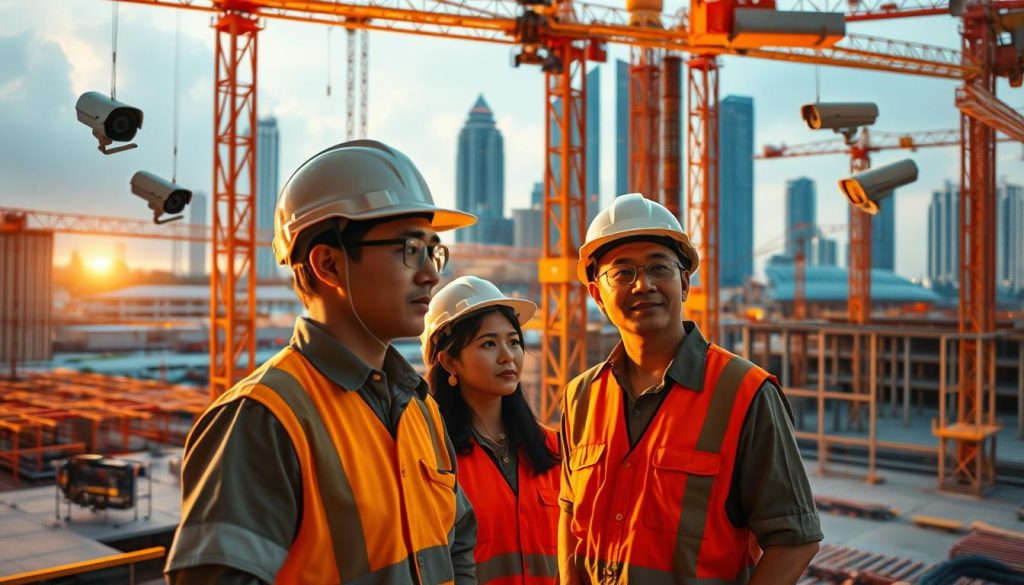
Strong video surveillance systems save money and keep projects running smoothly. They offer 24/7 protection, reducing downtime. This also means workers are more accountable and insurance costs can go down.
Understanding the Components of a Robust Video Surveillance System
A good video surveillance system (VSS) for construction sites needs certain parts to work well. Knowing these parts helps project managers pick the right tech. This tech must meet safety and rules while keeping the site safe.
Features like clear video and weatherproof gear are key. They affect how well the system works.
Essential Features of Surveillance Cameras
Surveillance cameras are key to a VSS’s success. Important features include:
- High-definition video quality: At least 1080p to see people and actions clearly.
- Date and time stamps: Important for keeping records and solving problems.
- Night vision capability: Needed for seeing in the dark.
- Weather resistance: Cameras must handle bad weather, which is common outside.
- Motion detection: Sends alerts and catches odd behavior.
The Role of High-Definition Video Quality
High-definition video is key for big construction projects. Projects over 5 million SGD need cameras that record well. This makes the video clear and useful.
Clear video helps keep everyone safe and helps solve problems. Keeping video for at least 30 days is important. This is even more so for safety and health issues.
Cameras must be placed in risky spots like high places and near machines. Regular checks keep the system working well. This ensures clear video all the time.
By linking with access control and alarms, the system gets even better. This makes the site safer overall.
Best Practices for Installing Video Surveillance Systems on Construction Sites
Setting up video surveillance on construction sites needs careful planning. It’s important for worker safety and protecting equipment. Strategic camera placement is key for good site monitoring. The right setup considers risk areas, visibility, and tech capabilities.
Strategic Camera Placement for Optimal Coverage
Good strategic camera placement means full site monitoring. Here are tips for the best coverage:
- Put cameras at entry and exit points to watch all activities and control access.
- Install cameras in risky areas like where big machines are used, to watch important operations.
- Mount cameras where they have a clear view, avoiding blocks for better sight.
- Use both fixed and PTZ cameras to adjust to site changes and improve flexibility.
- Choose cameras with night vision for round-the-clock watching, keeping sites safe at all times.
- Do regular checks to keep cameras working well and covering the right areas.
- Think about adding advanced features like motion detection and alerts for better safety.
- Make sure to follow the law on data storage, keeping footage for 30 days or up to 180 days for incidents.
Integrating Video Surveillance with Existing Safety Systems
To make construction sites safer, it’s key to link different safety systems together. By combining video surveillance with access and alarm systems, sites can get better at managing security. This way, they can respond faster to any suspicious activity thanks to real-time alerts.
Linking Access Control and Alarm Systems
When access control and video surveillance work together, sites can watch over things more closely. They can use special dashboards to keep an eye on security. AI cameras can spot safety problems, like people where they shouldn’t be.
Geofencing technology also helps. It makes sure workers stay in safe areas. If they don’t, it sends out alerts.
Real-Time Alerts for Enhanced Security Management
Real-time alerts are a big help in keeping sites safe. They let security teams act fast to stop problems. With AI and fast NVRs, they can see what’s happening right away.
Predictive analytics can even guess when accidents might happen. This lets teams take steps to prevent them before they start.
| Feature | Description | Benefits |
|---|---|---|
| Enhanced Mapping | Seamless transitions between GIS maps and indoor layouts | Faster responses to security incidents |
| Advanced Video Management | Improved management of video clips and audit logs | Facilitates forensic searches and reporting |
| Facial Recognition | Tracks worker attendance and access | Ensures compliance with safety protocols |
| Cloud Storage | Real-time monitoring and easy access to footage | Enhances data management and security oversight |
This new way of linking systems makes sites run better and safer. By using these tools, construction sites can keep their workers safe and secure.
Remote Monitoring Capabilities for Construction Sites
Remote monitoring has changed how we manage construction sites. Advanced CCTV cameras like dome, bullet, PTZ, and IP types cover everything. This setup helps manage sites well and lets leaders watch activities live.
Mobile Access and Benefits of Real-Time Monitoring
Mobile access to live video feeds is key for today’s construction. Managers can check on operations from their phones or tablets. This makes them quicker to respond to security issues.
AI technologies help spot intruders, vehicles, and people who shouldn’t be there. They also catch loiterers and stop unauthorized access. Alerts for odd activities help respond fast, cutting down theft and boosting security.
High-resolution cameras with night vision mean sites are watched 24/7. This can lower insurance costs by 20%, helping contractors financially.
For projects over SGD 5 million in Singapore, strong remote monitoring is needed. These systems meet legal standards and offer peace of mind. They can cut theft risks by up to 80%. For better site security, check out mobile surveillance technologies.
Conclusion
Effective construction video surveillance solutions are key for site safety and project management in Singapore. Strict rules for video surveillance systems (VSS) mean understanding their benefits is vital. This is true for companies aiming to stay ahead in the industry.
By using the latest technology, companies can boost site security and follow the rules. This leads to a safer place for everyone to work.
Real-time monitoring helps sites run better by quickly addressing problems. This makes sites safer. It also stops theft and helps solve disputes.
Using AI to track resources and workflow can make things more efficient. This can also cut down on costs.
Using these advanced systems can also lower insurance costs. It shows a company’s dedication to safety and security.
For custom solutions for construction sites, look at what professional providers offer. For more on improving your site’s security, visit this link. It has the latest in construction video surveillance solutions.
FAQ
What are Video Surveillance Systems (VSS), and why are they essential for construction sites?
Video Surveillance Systems (VSS) use cameras and recording gear to watch over construction sites. They keep workers safe, stop theft, and follow the law. This is key for sites worth over SGD 5 million in Singapore.
When do the new regulations for VSS in Singapore take effect?
Starting June 1, 2024, all construction projects worth SGD 5 million or more must have VSS. This rule aims to make high-value sites safer.
How do VSS help improve worker safety on construction sites?
VSS keep an eye on the site all the time. They make sure everyone follows safety rules. This leads to fewer accidents and a safer place to work.
What features should I look for in a construction video surveillance system?
Look for systems with clear video (at least 1080p), time stamps, and good night vision. They should also be weatherproof. This ensures they work well outside.
How can integrating VSS with existing safety systems enhance security?
Connecting VSS with other systems sends alerts for odd behavior. This makes the site safer. It also helps manage safety better by responding quickly to threats.
What benefits do remote monitoring capabilities offer for construction site management?
Managers can watch the site live from anywhere. This lets them act fast on security issues. It keeps the site safe without overloading site staff.
How does video footage aid in incident investigations on construction sites?
Footage is key for looking into accidents. It shows exactly what happened. This helps fix problems and protects against fines.
Post Tags : CCTV for construction projects Construction project monitoring Construction security in Singapore Enhanced security solutions Real-time construction video surveillance Remote construction site monitoring Singapore Construction Industry Surveillance technology for construction sites Video monitoring systems


