
Protect Your CCTV: Can Water Destroy Cameras?
Ever thought a big rain could mess up your CCTV system? The truth might shock you. Water damage to security cameras is a big worry, more so in places like Singapore where it rains a lot. Can water really ruin CCTV cameras? Once water gets in, fixing it is hard, often causing blurry images and poor visibility.
This makes us think about how important it is to protect our CCTV cameras from moisture. Knowing how water can harm your system is key to keeping your security up and your mind at ease. With the right waterproof CCTV cameras and steps to prevent damage, you can keep your security safe from water harm. Want to know how to protect your cameras? Keep reading to find out.
Key Takeaways
- Water exposure can lead to malfunction or complete failure of CCTV systems.
- Once water ingress occurs, repairs can be difficult and costly.
- Installing cameras in sheltered areas significantly reduces the risk of water damage.
- Multiple camera installations provide enhanced protection against rain damage.
- Investing in professional installation can minimize water damage risks.
- Cameras at lower price points often lack adequate post-sale support and protections.
- Regular checks of your CCTV systems are recommended to catch signs of moisture ingress early.
Looking to keep your area safe with the latest CCTV tech? Contact Wen Hong today at +65 60135960 for info on top security systems and deals.
Understanding Water Damage to Security Cameras
Water damage can seriously harm security cameras, affecting their performance and lifespan. This damage can take many forms, leading to expensive fixes or replacements. Knowing the types of water damage and their causes helps protect surveillance systems better.
Types of Water Damage
There are several types of water damage that can affect security cameras. Each type has its own impact:
- Immersion Damage: Happens when a camera is fully underwater, usually during floods.
- Condensation Damage: Occurs when water gets inside the camera, causing corrosion and foggy lenses.
- Surface Damage: Caused by rain or splashes that can damage seals and slowly wear down the camera.
Knowing these types helps tackle specific risks for each camera setup.
Common Causes of Water Damage
It’s important to know what causes water damage to prevent it. Main factors include:
- Heavy Rainfall: Too much rain can break a camera’s waterproofing.
- Improper Installation: Cameras not sealed or placed right are open to moisture.
- Environmental Factors: High humidity and blocked drains can lead to water pooling.
For custom CCTV solutions and to avoid water damage issues, contact Wen Hong at +65 60135960. Learn about the latest technologies and offerings available.
Can Water Destroy CCTV Cameras?
It’s important to know how water affects CCTV cameras. Water can damage these devices, causing them to fail. Learning about the risks helps us take steps to prevent problems.
How Water Intrusion Impacts Functionality
Water can harm a CCTV camera’s work. It can cause short circuits, leading to failure. Cameras that aren’t water-resistant might get condensation, which is bad.
Outdoor cameras need to be water-resistant. They should have a high IP rating, like IP66. This helps protect them from moisture.
Long-term Effects of Water Damage
Water damage can get worse over time. It starts small but can cause big problems. Issues like blurry images and power loss can happen.
It’s key to check cameras often for water damage. This way, we can fix problems early. Using silica gel or waterproof boxes helps prevent damage.
Need help with CCTV solutions? Contact Wen Hong today at +65 60135960.
How Water Affects Surveillance Cameras
Water can really mess with surveillance cameras, causing problems that make them less effective. Knowing how water affects them helps keep them working well and lasting longer.
Lens Fogging and Image Quality Deterioration
Moisture can make lenses fog up, which is bad for clear images. This fogging happens when warm air meets cold camera parts. It makes pictures blurry.
In late summer and autumn, fogging gets worse because of big temperature changes. This makes it harder to see and can lead to false alarms. To fix this, you can clean lenses with a soft cloth or use special sprays. Also, making sure cameras are sealed well helps fight moisture damage.
Corrosion Risks and Component Failure
Water can also cause corrosion in cameras, which is bad for their parts. This is more common in places with salt or bad weather. Parts like screws and brackets can rust and fail.
To avoid this, use special screws, clean cameras in salty areas, and do regular checks. Choosing the right place for your camera is also key to keeping it working.
Keeping your surveillance system safe from water is important. For help and the latest in CCTV, contact Wen Hong today at +65.
Waterproof CCTV Camera Options
Choosing the right waterproof CCTV camera is key for good surveillance in bad weather. Knowing what waterproof cameras offer and the best brands can make your security system better.
Features of Waterproof Cameras
Waterproof CCTV cameras have special features to handle the weather. They include:
- High IP Ratings: Cameras with an IP66 rating are very resistant to dust and water.
- Robust Construction: These cameras use strong materials and sealed gaskets to keep out water.
- Advanced Image Processing: They have features like thermal imaging and high-definition video to stay clear in bad weather.
- Condensation Prevention: Some models have anti-fog tech or silica gel to stop moisture buildup.
Recommended Brands and Models
Many brands are known for their waterproof CCTV cameras. Here are some top picks:
| Brand | Model | Key Features |
|---|---|---|
| Hikvision | DS-2CD2385FWD-I | High resolution, robust design, excellent low-light performance. |
| Reolink | Argus Series | Wireless capabilities, easy installation, weatherproof housing. |
| i-PRO | WV-S1550L | High-definition imaging, strong environmental resistance. |
| Ring | Spotlight Cam | Built-in spotlight, motion detection, two-way talk. |
| Blink | Blink Outdoor | Wireless, weather-resistant design, long battery life. |
If you need a waterproof CCTV camera, call Wen Hong today at +65 60135960. They have the latest security tech and offers.
Fixing Water-Damaged CCTV Camera
Spotting the first signs of water damage is key to fixing a CCTV camera. Look out for corrosion, foggy lenses, and power issues. Regular checks help catch problems early, preventing bigger issues.
Quick action is vital to keep your surveillance system working well.
Signs of Water Damage
- Visible corrosion on metal parts
- Fogging on camera lenses
- Inconsistent power supply or performance
Steps for Cleaning and Repair
Act fast when you find a water-damaged CCTV camera. Here are the steps for cleaning and repair:
- Turn off the power to avoid electrical risks.
- Take out any wet parts with care.
- Use a soft cloth to clean the outside.
- Put silica gel packets inside to dry out the area.
For expert help in fixing water-damaged CCTV cameras, reach out to a pro. They can do a detailed check and fix.
Thinking about new CCTV tech or worried about water damage? Call Wen Hong at +65 60135960. They can help with all your options.
Prevention of Water Damage to Security Cameras
Proper installation and maintenance are key to avoiding water damage on security cameras. By focusing on these areas, you can make your surveillance systems last longer and work better.
Installation Best Practices
Starting with the right installation is vital to keep your security cameras safe from water. Here are some important tips:
- Place cameras where they won’t get hit by rain or strong winds.
- Mount cameras securely to stop water from gathering.
- Use IP-rated cables and connectors to block water.
- Choose cameras with an IP rating of at least IP67 for heavy rain and immersion protection.
Maintaining Proper Housing and Covers
Keeping your security cameras in good shape is critical for their protection. Here are some maintenance tips:
- Check seals and gaskets for damage and replace them when needed to avoid leaks.
- Keep camera housings clean to prevent moisture buildup.
- Use extra rain covers or enclosures in bad weather.
- Put silica gel packets inside camera housing to stop fogging or condensation.
By following these steps, you can improve your surveillance’s performance and reduce water damage risks.
For more information on CCTV solutions and offers, contact Wen Hong at +65 60135960.
Moisture Protection for CCTV Cameras
Keeping CCTV cameras dry is key to their working life. Sealing them well stops water from getting in. It’s important to seal them right when you install them to fight off bad weather.
Sealing Techniques to Prevent Moisture Intrusion
There are ways to keep CCTV cameras dry. Putting them in spots like under soffits or eaves helps. Using IP66-rated cameras also helps a lot, as they can handle moisture well.
Adding anti-fog spray on the camera covers helps too. For really wet places, adding heaters or blowers can help. But, you need a pro for this.
Recommended Accessories for Moisture Protection
Using the right accessories can help keep cameras dry. Here are some good ones:
- Rain covers that shield cameras from direct rainfall.
- Weather-rated enclosures to secure the equipment against extreme elements.
- Anti-corrosive screws to prevent damage from prolonged exposure to moisture.
- Silica gel or desiccants within camera housings to absorb excess humidity.
Choosing good cameras from brands like Reolink, Ring, and Blink helps too. These brands have teams ready to fix moisture problems. Regular checks before bad weather make them more reliable.
For more info on CCTV solutions and deals, call Wen Hong at +65 60135960.
Impact of Water on Surveillance Cameras
Water damage is a big problem for surveillance cameras. Knowing how it affects them helps us make better choices. Many case studies show how moisture harms their work and life span.
Case Studies: Real-life Examples of Water Damage
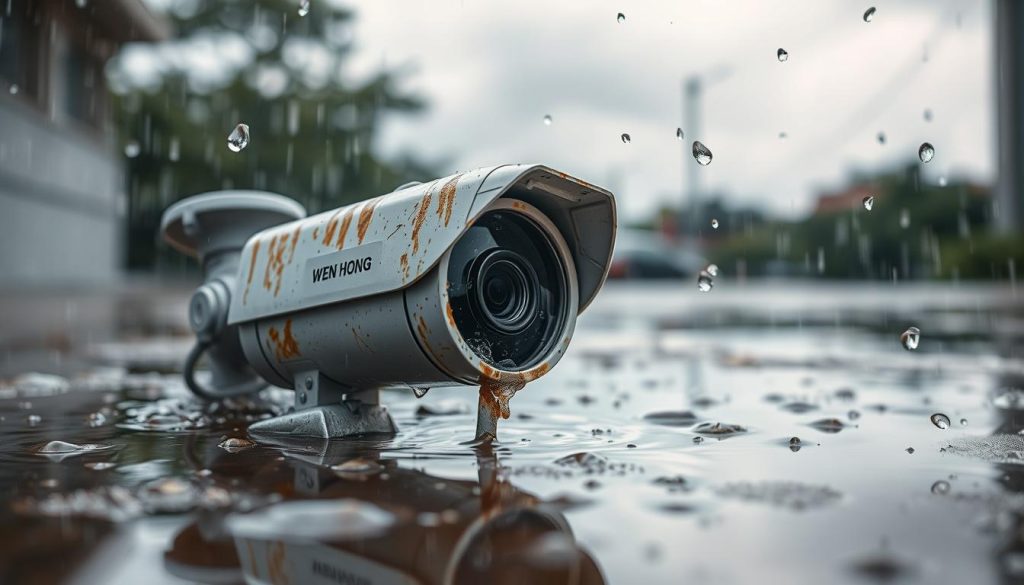
Many examples show how water damages surveillance cameras. In coastal areas, salty air and moisture cause corrosion. In another case, condensation inside cameras ruined their image quality.
These stories teach us that poor installation can lead to moisture damage. This can shorten a camera’s life.
Lessons Learned and Best Practices
From these stories, we learn the importance of quality equipment. Cameras with high IP ratings resist moisture better. Regular checks and cleanings are key to keeping them working well.
Using anti-fog sprays and silica gel desiccants helps fight condensation. Following these tips makes surveillance systems more reliable, no matter the weather.
For more on CCTV solutions and offers, call Wen Hong at +65 60135960.
Conclusion
It’s key to know how water damage affects your security cameras. This is more important in places like Singapore, where the weather can be tough. Look for waterproof CCTV cameras with a high Ingress Protection (IP) rating, like IP66 or IP67.
These cameras can handle heavy rain and humidity well. This is important for keeping them working right.
Keeping your cameras in good shape and installing them correctly helps a lot. It stops problems like condensation and fogging that can mess up the pictures. It’s smart to get advice from experts like Barry Bros Security to fit your needs.
If you want to protect your surveillance system, call Wen Hong at +65 60135960. They offer the latest CCTV solutions and deals. Making sure your cameras can handle water damage is a big step towards keeping your place safe and secure.
FAQ
Can water destroy CCTV cameras?
Yes, water can harm CCTV cameras. It can cause corrosion, short circuits, and physical damage. This is more common in areas with heavy rain.
What are the common causes of water damage to security cameras?
Water damage often comes from heavy rain, bad installation, and high humidity. Blocked drainage can also cause water to pool.
What are the types of water damage that can affect surveillance cameras?
There are two main types. Immersion damage happens when the camera is fully submerged. Condensation damage occurs when moisture gets inside the camera.
How can I tell if my CCTV camera has water damage?
Look for signs like corrosion, fogged lenses, and power issues. Regular checks can spot these problems early.
How does water intrusion impact the functionality of CCTV cameras?
Water can cause short circuits, corrosion, and blurry images. It can even make the camera stop working. This affects its reliability and performance.
What features should I look for in a waterproof CCTV camera?
Look for high IP ratings, strong casings, and sealed gaskets. These features help keep moisture out and ensure the camera lasts longer.
Can I fix a water-damaged CCTV camera?
Yes, you can try to fix it. First, disconnect power and remove wet parts. Use silica gel and clean surfaces to reduce damage.
What preventive measures can I take to avoid water damage to my security cameras?
To avoid damage, install cameras away from rain and use IP-rated cables. Regular checks and sealing techniques also help.
What accessories can help protect my CCTV camera from moisture?
Use rain covers, weatherproof enclosures, and anti-corrosive screws. These accessories add extra protection against moisture.
What lessons can be learned from case studies of water damage to surveillance cameras?
Case studies show the value of choosing cameras with high IP ratings. Regular maintenance is also key to keeping them working well.
Source Links
- https://www.ids-securityltd.co.uk/news/post/does-rain-affect-cctv-cameras
- https://ipcamtalk.com/threads/camera-water-issue.75096/
- https://www.dhs.gov/sites/default/files/publications/CCTV-Tech-HBK_0713-508.pdf
- https://mammothsecurity.com/blog/how-to-protect-outdoor-security-cameras-from-weather
- https://reolink.com/blog/security-camera-condensation-causes-solutions/?srsltid=AfmBOoqfFcw7sP4tIG7aY2hLnrAcaL4tDGRo-QIweVbKOtfZzP0Emfy_
- https://pro-vigil.com/blog/weatherproof-security-camera/
- https://faceter.cam/en/blog/7-ways-to-get-rid-of-condensation-on-a-cctv-camera/
- https://reolink.com/blog/security-camera-condensation-causes-solutions/?srsltid=AfmBOoomglx3bNHXwo1O-rMVdyqh7Aua9yNxOKP-N0lR3SCDLxP7ntP4
- https://i-pro.com/products_and_solutions/en/surveillance/learning-and-support/knowledge-base/product-tips/salt-damage-resistance
- https://reolink.com/blog/security-camera-condensation-causes-solutions/?srsltid=AfmBOopmJ-AFyP9PJRqjPPjxOQrwJNHapOHDx4rPlwJgvTMFbZ5bLHbl
- https://www.revlightsecurity.com/blog/top-10-best-underwater-cctv-cameras/
- https://cctvimporters.com.au/blogs/news/how-to-waterproof-a-dahua-cctv-ip-camera?srsltid=AfmBOoofFa570yKHAq4UvkReqKjEykW1V3QuIl2HvR3vukGsO_-JLt7g
- https://www.micronicsindia.com/most-reasons-for-cctv-or-dvr-footage-data-loss/
- https://reolink.com/blog/security-camera-condensation-causes-solutions/?srsltid=AfmBOopWBQuDOulSdY6gPoYh4IjbtzoVBzReFTIVdYoMMuoroXwpZ2bV
- https://reolink.com/blog/how-to-protect-outdoor-security-cameras-like-a-pro/?srsltid=AfmBOopgRS1YU1g1RLgzWjxIlT9im-nUmK8sXLRF8jqP6upQTIjRBJDL
- https://reolink.com/blog/security-camera-condensation-causes-solutions/?srsltid=AfmBOorZ5SUjuhpmUKhq81ROakcaBnL26vPTYRlsZGzSrMHG8MJ5taV8
- https://marlowefireandsecurity.com/solutions/compliance/how-to-keep-security-cameras-working-in-the-winter/
- https://twentyfirstsecurity.com.au/blog/do-i-need-a-water-and-dust-resistant-security-camera/
- https://blog.zositech.com/security-camera-condensation-causes-solutions/
- https://noticed.uk/article/disadvantages-of-cctv-surveillance
- https://www.barrybros.com/2022/11/weatherproof-security-cameras-important-considerations/
- https://www.asadria.com/en/3-critical-factors-for-an-outdoor-video-surveillance-system/


