

Can CCTV Identify a Person? Insights from Singapore
Ever thought about how much CCTV tech can really help spot people today? Singapore is using top-notch surveillance systems, making us question their power and what they mean for us. We’re looking into how these new techs work, the latest in face recognition, and the big ethical issues they bring up.
This tech has two sides: it can make us safer, but it also raises big privacy worries. Senior Minister Teo Chee Hean says we need to find a balance between safety and trust. This means we must think about what the future holds for us.
Want to know more about CCTV and its latest tech? Contact Wen Hong today at +65 60135960.
Key Takeaways
- Facial recognition tech is being added to CCTV systems to improve how well they can identify people.
- Biometric data, like faces and fingerprints, is key for today’s surveillance.
- Singapore aims to grow its camera network to over 200,000 by 2030 to help police more.
- It’s important to install and keep these systems in good shape for them to work well and last long.
- Following the Personal Data Protection Act (PDPA) is a must for companies using CCTV in Singapore.
- Despite some doubts, CCTV has helped solve many crimes and made workplaces more accountable.
The Role of CCTV in Modern Security Systems
CCTV technology is key in modern security systems in Singapore. The country has one camera for every 13 people, with 109,072 cameras in total. These cameras watch over public and private areas.
Visible CCTV cameras help prevent crimes, making places safer. They protect valuable items like electronics and cars from theft. This makes both residents and visitors feel secure.
Using CCTV can also get you insurance discounts. In cases of crime, these systems help police by giving them clear evidence. This evidence can be used in court.
Advanced facial mapping technology makes CCTV systems better. It helps identify people and use forensic techniques like gait analysis. Regular checks keep these systems working well, solving crimes effectively.
There are many types of CCTV cameras, like high-definition and thermal image ones. They meet different security needs. Facial recognition technology is also being used in CCTV systems, in law enforcement and health diagnostics.
If you want to improve your security, contact Wen Hong today at +65 60135960. Learn about the latest CCTV solutions and special offers.
Can CCTV Identify a Person?
CCTV systems have changed how we identify people. They use facial recognition technology to spot individuals on camera. This helps make places like malls and public areas safer. Knowing how this tech works is key to seeing its strengths and weaknesses.
Understanding Facial Recognition Technology
Facial recognition turns faces into digital codes. It looks at things like eye distance and face shape. By matching these codes with big databases, CCTV can find people. Cameras from Hikvision and Dahua can store and find up to 60,000 faces, making them useful for watching over areas.
How CCTV Works to Identify Individuals
How well CCTV finds people depends on a few things. High-resolution images help a lot. Also, where the camera is placed matters a lot. Experts say cameras should be set to capture faces within a certain angle.
There are different ways to identify people. Some cameras look for faces before someone gets close. Others capture faces as they walk in. The camera’s angle and how it’s set up affect how well it works.
Knowing how people act can help set up cameras better. This way, cameras can catch faces even when they’re not looking straight at them. CCTV systems work in many places, from busy stores to homes. Each place needs its own camera setup for the best results.
To learn more about CCTV solutions, call Wen Hong at +65 60135960.
Advancements in Biometric Identification
Recent years have brought big changes to biometric identification tech. These changes have made these systems much more reliable. The use of biometric data, like facial images and fingerprints, is key to making surveillance systems more accurate.
Introduction to Biometric Data
Biometric data is at the heart of modern security solutions. Thanks to machine learning and artificial intelligence, biometric systems can now do complex tasks. For example, in 2018, only 0.2% of searches in a database with 26.6 million photos failed to find the right image. This is a big improvement from a 4% failure rate in 2014.
Such progress shows the power of biometric tech in fields like finance and law enforcement.
How Facial Detection Software Operates
Facial detection software uses advanced algorithms to scan footage and find unique facial features. It then compares these features to known databases. For instance, the top facial identification algorithm tested by NIST in 2020 had an error rate of just 0.08%. This means it made fewer than one mistake for every 1,000 images.
This high accuracy has made facial recognition tech very popular. It’s expected to make $7 billion in revenue by 2024. These improvements help make identification faster, which is critical for security.
As biometric tech keeps getting better, more companies are seeing its value. Using facial detection software boosts security and makes operations more efficient. If you’re interested in the latest CCTV solutions and biometric data, contact Wen Hong today at +65 60135960. He can tell you more about what’s available.
Surveillance Systems in Singapore
Singapore is at the forefront of using advanced surveillance systems. The CCTV network shows the government’s strong focus on safety and crime prevention. With over 90,000 cameras already in use, plans are to add more than 200,000 by 2030. This growth highlights the role of technology in keeping communities safe.
Overview of the Current CCTV Landscape
The CCTV network is key in Singapore’s security efforts, improving monitoring across the city. Video analytics has cut manpower costs by 80–90%. AI-powered cameras now spot unsafe actions in real time, like workers not following safety rules.
Video analytics also helps with tasks like license plate recognition and fire detection. It offers insights for businesses, like counting foot traffic and analyzing forensic data.
Major Projects and Future Plans
PolCam 2.0 is a major project with about 10,500 cameras in public areas. It boosts public safety and helps catch criminals, with 15 suspects caught recently. The goal is to expand to 200,000 cameras, showing the vision behind these projects.
Local companies with 25 years of experience have completed projects worth over $100 million. They have a 4.9/5 rating on Google reviews. The future of surveillance systems looks bright, aiming for a safer, smarter city.
To learn more about CCTV solutions, contact Wen Hong at +65 60135960 today.
Security Camera Analytics: Enhancing Identification Capabilities
Advanced technologies have changed security camera analytics. They now offer better identification. These updates include AI in CCTV systems, making real-time monitoring easier for businesses and communities.
Integrating AI with CCTV for Better Identification
Adding AI to surveillance systems makes them more powerful. AI in security cameras can tell real threats from harmless actions. This cuts down on false alarms.
This accuracy means less unnecessary alerts. It helps focus on real security problems.
- Advanced algorithms classify and track objects, humans, and vehicles in real time.
- AI systems can match faces against existing databases, improving identification.
- Specific functionalities like line-crossing detection set virtual boundaries, alerting security personnel when these boundaries are breached.
- Behavioral analysis identifies suspicious movements and actions, further improving security.
Real-time Monitoring and Alerts in Singapore’s Polcam Network
Singapore’s Polcam network shows the value of real-time monitoring. It uses AI analytics for quick responses to threats. It classifies sounds like breaking glass or unusual noises, making surveillance better.
It can track objects, spotting intruders easily and quickly.
| Feature | Description | Benefit |
|---|---|---|
| Facial Recognition | Matching detected faces against databases | Enhances identification accuracy |
| Occupancy Counting | Tracks people entering and leaving areas | Triggers alerts if limits are breached |
| Sound Detection | Identifies sounds like breaking glass or baby cries | Improves situational awareness |
| Vehicle Detection | Recognizes license plates and vehicle types | Identifies known or unauthorized vehicles swiftly |
Security camera analytics boost physical security and prevent threats. They keep the environment safe. For better surveillance, contact Wen Hong at +65 60135960 for the latest CCTV solutions and offers.
Government Regulations Surrounding CCTV Use
In Singapore, CCTV use is tightly controlled by the government. This is mainly due to the Personal Data Protection Act (PDPA). The PDPA protects privacy while allowing the use of biometric data for security. It’s key for companies to follow this act when using surveillance systems.
Overview of the Personal Data Protection Act (PDPA)
The Personal Data Protection Act (PDPA) is a key law for handling personal data, like CCTV footage. Over 900,000 CCTV cameras in Singapore fall under this rule. It makes sure people’s data privacy is kept safe, making it hard for companies to handle biometric data.
Guidelines for Responsible Use of Biometric Data
There are clear rules for using biometric data in CCTV systems. For example, places like toilets and changing rooms can’t be watched. Also, you need permission to put cameras outside private homes. This helps keep things secure and fair.
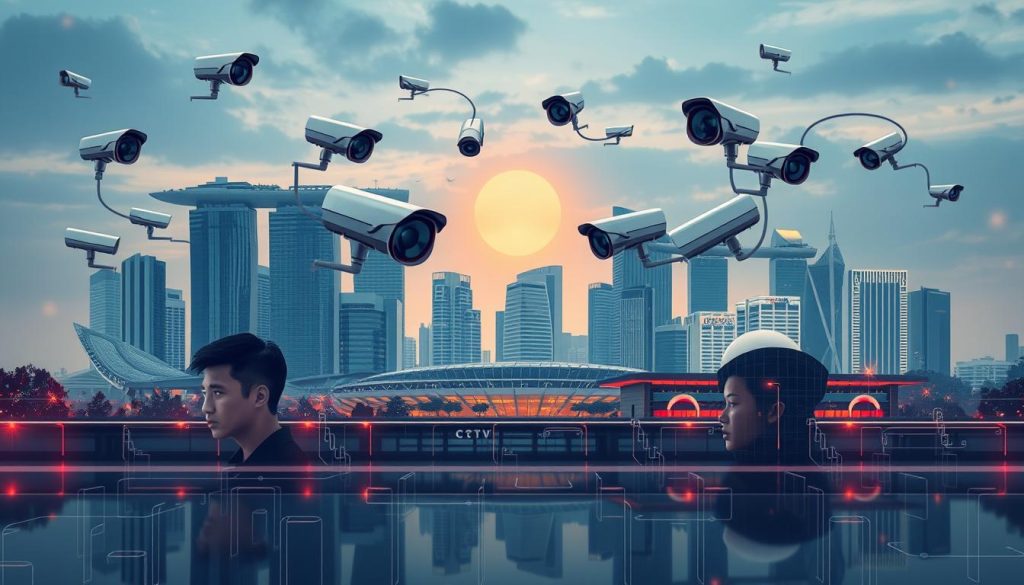
Need help with CCTV installation? Contact our professional CCTV installation services today. Homeowners can install CCTV without HDB approval for some setups. People are seeing how CCTV helps keep communities safe.
Want to know more about CCTV solutions and deals? Call Wen Hong at +65 60135960.
Privacy Concerns Associated with CCTV Technology
Surveillance systems are getting more common, raising privacy worries. Facial recognition and machine learning make it easier to spot people. This has led to important talks about the ethics of surveillance technology.
Balancing Safety and Privacy
CCTV systems improve safety but raise privacy issues. It’s hard to find a balance between protection and privacy. Companies need to talk openly with the public about surveillance.
They must explain how they collect, store, and use data. This helps build trust.
Public Perception of Surveillance Systems
How people see surveillance depends on their past experiences and what they see in the media. Many feel uneasy about being watched, seeing it as a right violation. It’s important to explain how these systems work and how they protect data.
For those looking to use CCTV safely, talking to a knowledgeable provider can help. Learn more about the latest CCTV solutions.
| Aspect | Security Benefits | Privacy Concerns |
|---|---|---|
| Facial Recognition | Enhances identification accuracy in security applications | Increased risk of surveillance without consent |
| Real-Time Monitoring | Quick response to safety issues | Concerns about widespread data collection |
| Data Security | Keeps sensitive information safe | Worries about data breaches and privacy breaches |
| Public Safety | Better crowd and traffic management | Public distrust of monitoring |
It’s vital for tech providers, policymakers, and the public to keep talking. Clear rules are needed to address privacy worries while using advanced surveillance tech. For more info on CCTV, contact Wen Hong at +65 60135960 to learn about new solutions and deals.
Impact of Facial Recognition Technology on Law Enforcement
Facial recognition technology has changed law enforcement a lot. It has made systems better and faster. But, its impact on society is complex, like in Singapore. About 60% of people there think it’s okay for police to use it.
Success Stories from Singapore’s Police Department
Facial recognition has helped solve crimes quickly. It’s been key in fighting terrorism by finding leads fast. For example, it has cut down the time it takes to solve cases, making everyone safer.
Ethical Implications of Facial Recognition
But, there are big ethical questions about facial recognition. There’s a worry about racial bias, with darker skin tones being misidentified more. It’s important to be open about how this data is used to avoid misuse.
It’s also key to have humans check the technology. This way, we can keep our rights safe while making law enforcement better.
To learn more about the latest CCTV solutions and offers, contact Wen Hong today at +65 60135960.
Challenges and Limitations of Current Systems
CCTV technology has changed how we keep public spaces safe. But, there are big challenges in CCTV systems. One major issue is misidentification, which can cause big problems.
The quality of footage is key for facial recognition to work right. If the images are blurry, it can lead to wrong identifications. This can make people doubt the trustworthiness of surveillance.
Issues with Misidentification and Bias
Misidentification is a big problem in CCTV systems. Research shows that some groups are watched more than others, leading to unfair outcomes. This affects how the police work and how safe people feel.
These issues can cause false accusations. This can make things worse in society.
Dependence on High-Quality Footage
The quality of the footage is very important for accurate identifications. Bad lighting, blurry images, and wrong camera angles can all mess up the footage. To avoid these problems, surveillance systems need to focus on getting high-quality images.

It’s important for everyone involved to invest in better technology and practices. Companies should work on getting the best footage possible. They also need to think about the ethics of using surveillance.
If you want to improve your CCTV system and tackle these issues, contact Wen Hong today at +65 60135960. Learn more about the latest technology and support available.
Future Trends in CCTV Technology
The world of CCTV technology is changing fast. New developments focus on better human recognition software. This is because we need more effective security against new threats. As we look to the future, several important areas need our attention.
Emerging Technologies in Human Recognition Software
New advancements in human recognition software are set to change video surveillance. They will make it quicker and more accurate to identify people. Key technologies include:
- Deep Learning Algorithms: These help systems get better at identifying people by learning from lots of data.
- Cloud Computing: This technology makes CCTV systems more flexible and scalable, helping businesses meet changing needs.
- 5G Connectivity: With 5G, IP CCTV cameras will have better video quality, less delay, and faster data transfer.
- Integration with IoT: Connecting IoT sensors will give us more data, helping us make smarter security choices.
Potential Growth of Video Surveillance Identification
The future of video surveillance looks bright. Companies are investing in AI-powered video analytics to turn footage into useful insights. Other trends include:
| Trend | Description |
|---|---|
| Cloud-Native Solutions | Switching from old systems to fully digital ones, using cloud tech for better features. |
| As a Service (AaS) | More companies are using AaS for better management and growth in security camera systems. |
| Data Protection Emphasis | Putting more focus on keeping data safe with encryption and secure logins to fight cyber threats. |
| Event and Incident Analysis | Automatically spotting and analyzing complex threats to improve how we respond. |
As these new technologies emerge, it’s key for businesses in Singapore to keep up. Companies looking to use the latest tools should talk to experts. For advice and to see the newest CCTV solutions, contact Wen Hong at +65 60135960.
International Cooperation and Standards for CCTV Usage
Creating strong CCTV standards needs global teamwork. Sharing CCTV best practices helps make security systems better against cyber threats. When countries work together, they set up common rules for CCTV systems. This makes them work better all over the world.
Best Practices from Around the World
Countries are using many guidelines for CCTV. They focus on being clear and precise. Some key practices include:
- Using IEC 62676 quality standards to improve image quality and accuracy.
- Talking to data protection authorities before using facial recognition, to follow privacy rules.
- Only using biometric data when needed, to avoid covering too many people.
- Encouraging the use of anonymous video to protect privacy.
Global Efforts to Combat Cybercrime
Groups like Interpol are leading efforts to fight cybercrime worldwide. They share information and resources to tackle digital threats. Having the same standards helps countries fight cybercrime better, with CCTV best practices at the core.
For more info on CCTV solutions and offers, contact Wen Hong today at +65 60135960.
Conclusion
CCTV systems play a big role in keeping us safe by stopping crimes and helping solve cases. The success of CCTV depends on more than just the tech. It also needs careful use and respect for privacy.
As we look to the future, it’s key to find a balance between security and privacy. This balance is important for building trust in our surveillance systems.
In the UK, over 4 million CCTV cameras watch over us. The same is true in many other places. New tech like facial recognition is changing how we use surveillance.
It’s vital to keep CCTV footage clear and follow the right rules for storing it. This makes sure the data can be used in court.
If you want to improve your security, reach out to Wen Hong at +65 60135960. They offer the latest in CCTV tech and can help you find what you need. Keeping up with new tech and practices helps keep us safe while respecting our privacy.
FAQ
Can CCTV identify a person?
Yes, CCTV systems can identify a person using facial recognition technology. This involves converting facial features captured on video into digital biometric templates. These templates are then compared against databases for matches.
What is facial recognition technology?
Facial recognition technology is a type of biometric identification. It analyzes the unique characteristics of a person’s face. This is done using algorithms and AI to perform person identification tasks based on video feeds from security cameras.
How does CCTV work to identify individuals?
CCTV identifies individuals by capturing video of their faces. It uses facial detection software to analyze and compare these images against existing databases. This enables accurate identification within surveillance systems.
What advancements are being made in biometric identification?
Advancements in biometric identification, such as machine learning and AI, are improving facial recognition systems. These technologies enhance accuracy and speed in identifying individuals in real-time.
What is the current state of surveillance systems in Singapore?
Singapore has an extensive CCTV network with over 90,000 cameras. It plans to increase that number to more than 200,000 by 2030. This is part of the Polcam initiative aimed at improving public safety.
How do AI and CCTV integrate for better identification?
AI integration with CCTV allows for advanced security camera analytics. This enables automatic identification of individuals and possible threats. It streamlines monitoring and enhances response times.
What regulations govern the use of CCTV in Singapore?
The Personal Data Protection Act (PDPA) regulates CCTV usage in Singapore. It ensures that biometric data is used responsibly. It protects individual privacy rights through specific guidelines and policies.
What privacy concerns arise from CCTV technology?
Privacy concerns include the possibility of invasive monitoring. It’s important to balance public safety with privacy rights. This is to address public sentiment towards pervasive surveillance systems.
How has facial recognition technology impacted law enforcement in Singapore?
Facial recognition technology in law enforcement has been successful, solving thousands of cases. But, there are ethical implications. These include racial bias and data misuse.
What challenges do current CCTV systems face?
Current challenges include issues with misidentification, often due to poor-quality footage. It’s essential to address these issues. This will improve the reliability of surveillance technologies.
What future trends are expected in CCTV technology?
Future trends include advancements in human recognition software. There’s also a possibility of expanding video surveillance identification capabilities across various sectors.
How does international cooperation benefit CCTV usage?
International cooperation allows for sharing best practices. It enhances standards for CCTV and biometric identification systems. This can combat cybercrime and improve overall security measures globally.
Source Links
- https://www.pdpc.gov.sg/-/media/files/pdpc/pdf-files/other-guides/guide-to-biometric_17may2022.pdf
- https://www.channelnewsasia.com/singapore/surveillance-cameras-safe-raise-privacy-concerns-teo-chee-hean-htx-techx-summit-2608041
- https://www.d-ron.com/articles/cctv-cameras-in-singapore-for-offices/
- https://www.dacon.com.sg/blogs/blog-posts/role-of-cctv-security-cameras
- https://www.caughtoncamera.net/news/how-cctv-is-used-in-crime-investigations/
- https://www.datasciencecentral.com/cctv-and-facial-recognition-where-do-the-two-technologies-overlap/
- https://www.jvsg.com/case-3-identification-task/
- https://cctvcamera.com.sg/explanation-face-recognition-cctv-cameras-application/
- https://www.thalesgroup.com/en/markets/digital-identity-and-security/government/biometrics/facial-recognition
- https://ovic.vic.gov.au/privacy/resources-for-organisations/biometrics-and-privacy-issues-and-challenges/
- https://www.keydence.com/services/video-analytics
- https://www.straitstimes.com/singapore/community/police-surveillance-system-using-video-analytics-to-detect-targets-wins-home
- https://www.spiraltech.com.sg/facial-recognition/
- https://www.tapo.com/en/news/611/
- https://www.pelco.com/blog/ai-security-cameras
- https://web.securitysystem.com.sg/cctv-law-singapore/
- https://sgcctv.com.sg/cctv-camera-laws-in-singapore/?srsltid=AfmBOoqDUB4bihu2OrLN5qGLANd31AruYPi2DrLQPS-C6_BuZF1zS7vh
- https://visionplatform.ai/computer-vision-in-cctv/
- https://www.channelnewsasia.com/commentary/surveillance-cctv-camera-movements-internet-personal-data-3154691
- https://innovatrics.com/trustreport/is-facial-recognition-helping-or-hurting-law-enforcement/
- https://www.brookings.edu/articles/police-surveillance-and-facial-recognition-why-data-privacy-is-an-imperative-for-communities-of-color/
- https://itrexgroup.com/blog/facial-recognition-benefits-applications-challenges/
- https://www.caughtoncamera.net/news/common-cctv-problems-fix/
- https://www.aclu.org/documents/whats-wrong-public-video-surveillance
- https://www.pelco.com/blog/cctv-and-video-security-camera-trends
- https://www.fyma.ai/blog/10-cctv-trends-for-2024
- https://www.tsi-mag.com/cctv-in-focus-2/
- https://www.edpb.europa.eu/system/files/2022-05/edpb-guidelines_202205_frtlawenforcement_en_1.pdf
- https://lodgeservice.com/the-top-9-benefits-of-cctv-security-protecting-people-and-property/
- https://theconversation.com/not-big-brother-but-close-a-surveillance-expert-explains-some-of-the-ways-were-all-being-watched-all-the-time-194917
- https://asp-eurasipjournals.springeropen.com/articles/10.1186/1687-6180-2013-176


