

Risks to CCTV Cameras – What Can Damage Them?
Have you thought about the dangers that could harm your CCTV cameras? Things like weather, vandalism, and cyber threats can all cause problems. It’s important to know about these risks to keep your security systems working well.
In this article, we’ll look at what can damage CCTV cameras. We’ll also talk about how to protect them. This way, you can keep your investment safe from harm.
Key Takeaways
- CCTV cameras face numerous risks including environmental damage and vandalism.
- Understanding vulnerabilities helps in implementing stronger surveillance strategies.
- Regular maintenance can prolong the life of CCTV systems.
- Cybersecurity measures are critical for protecting CCTV footage from unauthorized access.
- Physical barriers and weatherproofing can significantly reduce damage risks.
- Contact Wen Hong today at +65 60135960 to find out more about the latest CCTV solutions and offers.
Introduction to the Risks Faced by CCTV Cameras
CCTV cameras play a key role in boosting security. But, they face many risks faced by CCTV cameras that can weaken their power. Rain and extreme temperatures can cause serious damage. Vandalism is another big worry, hitting outdoor cameras hard.
Also, CCTV systems are at risk of hacking and unauthorized access. This is due to their tech vulnerabilities.
To keep CCTV cameras working well, users need to know these risks. By taking the right steps, we can protect them from harm. This ensures they work when we need them most.
Understanding these risks helps us make smart choices in security tech. It leads to better investments in keeping our spaces safe.
For top-notch solutions, reach out to Wen Hong today at +65 60135960. Learn about the latest in CCTV technology and how it can help you.
Common Causes of CCTV Camera Damage
It’s key to know why CCTV cameras get damaged. Many things can harm these devices. Knowing which parts are most at risk helps in choosing the right spot and protection.
Understanding Vulnerable Areas
CCTV cameras face many dangers, more so outdoors. Outdoor cameras deal with harsher weather and more dust than indoor ones. The most vulnerable spots include:
- High-traffic zones
- Locations with a history of vandalism
- Areas with fluctuating power supply
- Exposure to extreme weather conditions
Knowing this helps make better choices to make cameras last longer and work better.
Impact of Surveillance Locations on Longevity
Where you put CCTV cameras matters a lot. Cameras in risky spots are more likely to get damaged. For example, places often hit by vandals can lead to camera failures.
Understanding these risks helps place cameras better. This improves their performance and cuts down on problems. Regular upkeep and quick fixes in these high-risk areas also help cameras last longer.
For a custom CCTV solution, reach out to Wen Hong at +65 60135960. Learn more about the latest CCTV options and deals.
What Can Damage a CCTV Camera?
Knowing what can harm a CCTV camera is key to keeping it working well. Things like rain, humidity, and extreme temperatures can damage it. Moisture can cause corrosion or short circuits, which hurt its performance.
Hot and cold weather can also cause problems. This can lead to malfunctions or even complete failure.
Environmental Factors Affecting CCTV Cameras
Weather conditions play a big role in how CCTV cameras work. Rain can cause moisture issues, and humidity can lead to corrosion. In places with a lot of rain, lightning is a big risk. It can cause short circuits and fires.
It’s important to make surveillance technology strong against these problems.
Common Physical Damage Sources
Physical damage comes from more than just bad weather. Outdoor cameras are more likely to be vandalized than indoor ones. Things flying through the air can knock cameras off or break their lenses.
It’s important to place cameras carefully and do regular maintenance to avoid these problems.
Knowing about these dangers helps you choose the right equipment and take protective steps. Make sure your installations can handle these risks. For more info on CCTV solutions and deals, call Wen Hong at +65 60135960.
Weather Damage to CCTV Cameras
CCTV cameras are key for watching over many places. But, bad weather can really hurt their work and life span. Rain and moisture can get inside if cameras aren’t sealed well, causing problems and short circuits. It’s important to know how weather affects these cameras, mainly in places with lots of rain.
Effects of Rain and Moisture
Heavy rain can get into cameras that aren’t sealed right, messing up their inside parts. To fight this, it’s best to pick CCTV cameras with an IP66 rating or higher. This means they can handle tough weather like rain and snow. Also, checking the seals of the camera’s housing often is key to keeping it safe.
Using fiber optic cables is a good idea too. They don’t get hurt by weather and keep cameras safe from lightning strikes.
Challenges Posed by Extreme Temperatures
Very hot or cold weather can also harm CCTV cameras. Heat can make them too hot, and cold can make them break. This can damage the cables and connectors if they’re not made to handle the weather.
It’s important to keep cameras at the right temperature and use good materials. Getting help from experts when setting up cameras can also help. They can help adjust camera angles and storage to keep them working well.
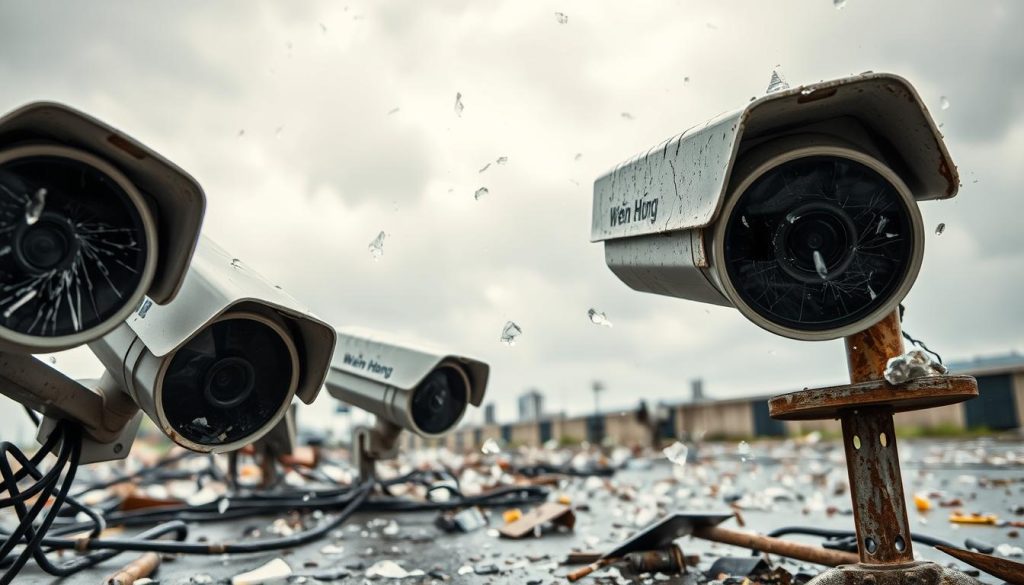
It’s very important to know and deal with weather risks for good surveillance. Regular checks can help avoid damage. For special solutions, call Wen Hong today at +65 60135960. They offer the latest CCTV solutions and services made just for you.
Vandalism and CCTV Camera Damage
Vandalism is a big problem for outdoor CCTV systems. It’s important to know what types of vandalism can harm CCTV cameras. This knowledge helps in finding ways to protect these systems.
Types of Vandalism Impacting CCTV
Some common vandalism acts include:
- Smashing cameras or breaking lenses.
- Changing or blocking the camera view with bright lights or laser pointers.
- Destroying recorded footage by tampering with storage devices.
- Interfering with the camera’s power or network cables.
- Cyber-attacks that let intruders change camera settings or delete footage.
To fight these threats, it’s key to design CCTV systems that are both physically and data-secure.
Preventative Measures for Outdoor Cameras
Here are some ways to make CCTV systems more secure:
- Put cameras in places that are hard to reach to stop vandalism.
- Use IK10-rated cameras that can handle big impacts.
- Secure equipment with tamper-resistant screws like Torx screws.
- Add smart tamper detection that alerts when someone tries to tamper.
- Have backup storage for footage, both on the camera and in the cloud.
Designing systems with full coverage can help prevent blind spots. This makes it harder for vandals to hide. For the best protection and to learn about new CCTV solutions, call Wen Hong at +65 60135960 today.
Power Surge and CCTV Camera Damage
Power surges can harm CCTV camera systems a lot. They often come from things like lightning, power outages, or bad wiring. These can damage the camera’s parts, leading to failure and expensive fixes.
Consequences of Voltage Fluctuations
Surges can suddenly stop Network Video Recorders (NVR) and other key devices. This can cause serious problems. Common reasons include:
- Lightning hitting tall buildings and damaging cameras.
- Electrical system issues causing unexpected surges.
- Bad wiring making systems more likely to get hit by voltage spikes.
Places like Florida, hit by storms often, face big risks. Lightning can damage security cameras. Surge protectors help by taking the extra voltage, keeping systems running.
Solutions to Prevent Power-related Damage
To fight power surge risks, try these steps:
- Put in whole-house surge protection at the main electrical panel.
- Use surge protectors at key spots for extra safety.
- Get Uninterruptible Power Supplies (UPS) to keep systems running during power cuts.
- Use grounding systems with copper straps to fight lightning damage.
- Make sure PoE switches have surge protection for better reliability.
These steps are cheap compared to fixing damage from power surges. Keeping your surveillance safe is key to feeling secure.
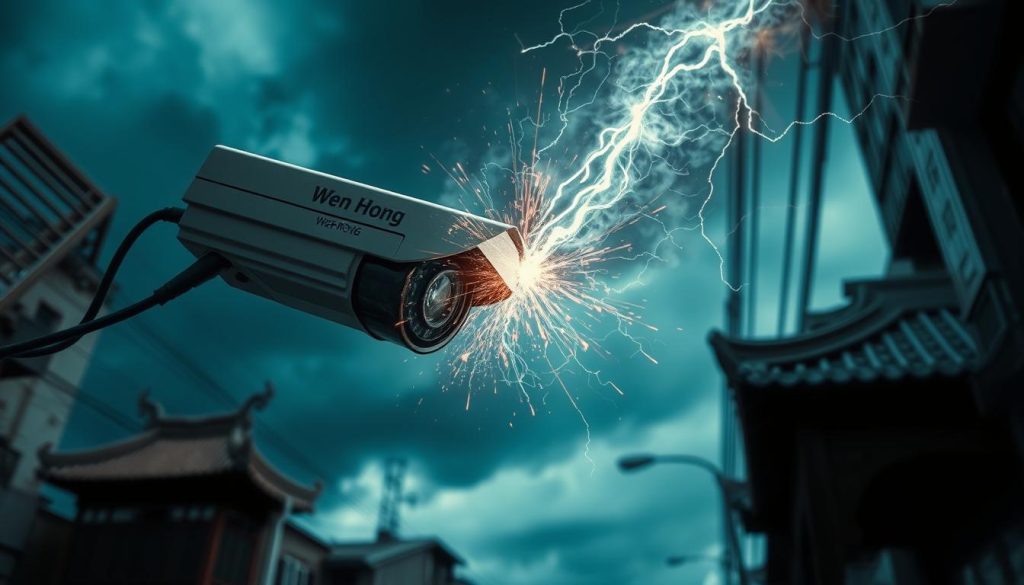
For the latest on CCTV solutions and deals, call Wen Hong at +65 60135960 today.
Maintaining CCTV Cameras to Reduce Risks
Regular maintenance is key to keeping CCTV cameras working well. Using maintenance tips for CCTV cameras helps avoid problems. Cleaning them regularly keeps the images clear and protects against damage from the environment.
Regular Cleaning and Care
Not cleaning CCTV cameras can cause blurry images and mess up surveillance. Outdoor cameras need a check-up every month, after bad weather. This keeps them free from dirt and debris. Indoor cameras should be cleaned every six months to keep the images sharp.
Teaching staff about camera care can make surveillance systems work better. It shows the importance of being proactive with maintenance.
Importance of Firmware Updates
Keeping firmware up to date is vital for good performance and safety. Regular updates help protect CCTV systems from cyber threats. It’s smart to check them monthly, quarterly, or every six months.
This includes both physical checks and software updates. It helps keep the security system strong. Fixing damaged parts quickly is important to lower risks and make the system more reliable.
To learn more about keeping your surveillance systems in top shape, visit CCTV Maintenance Services. For custom help and the newest CCTV tech, reach out to Wen Hong at +65 60135960.
How to Protect CCTV Cameras from Damage
Protecting CCTV cameras means fighting off physical threats and weather challenges. Knowing how to keep them safe can make them last longer. This is key for your security system’s health.
Physical Barriers Against Vandalism
Keeping your cameras safe is a must. Use metal or strong plastic cages to shield them from harm. These cages come in different IK ratings, showing how well they can handle impacts.
Putting cameras high up, like nine feet off the ground, also helps. It makes them less likely to be stolen or vandalized.
- Install motion-activated security lights to deter vandalism.
- Implement tamper alarms in advanced camera systems for instant alerts.
- Use signs indicating surveillance presence to discourage vandals.
- Consider utilizing dummy cameras alongside real ones to confuse vandals.
- Employing metal housings or covers can safeguard equipment against theft.
Weatherproofing Solutions and Techniques
Bad weather can hurt your CCTV cameras. It’s important to keep them safe from extreme temperatures and storms. Use awnings or waterproof casings for outdoor cameras.
Look at the IP rating when choosing outdoor cameras. A higher rating means better protection against dust and water. This is key for outdoor use.
In areas hit by lightning, use UPS and surge protectors. They help keep your system running during power outages. Also, clean your cameras regularly to avoid insect blockages. Keeping your CCTV systems safe from both vandalism and weather is vital for reliable security.
To learn more about CCTV solutions and offers, call Wen Hong today at +65 60135960.
The Role of Cybersecurity in CCTV Systems
Connected devices are becoming more common, making cybersecurity for CCTV systems more critical. By 2021, there were 46 billion connected devices. By 2030, this number is expected to hit 125 billion. This growth brings risks of CCTV hacking that users need to understand.
Risks of Hacking and Unauthorized Access
Hacking incidents have shown that CCTV systems are vulnerable. In 2017, many Hikvision cameras were hacked because of default passwords. This problem affects even top models.
An example is the breach of over 150,000 Verkada cameras. This affected homes and big companies like Tesla. It shows the need for strong security. Users should watch out for physical attacks and unauthorized access.
Strengthening Network Security for CCTV
Strong cybersecurity policies are key to fighting hacking. Changing default passwords and using two-factor authentication (2FA) help a lot. Regularly updating firmware also boosts security.
Doing network vulnerability scans every few months helps find and fix weaknesses. Using end-to-end encryption protects data and keeps communication safe. Companies can also use whitelisting IP addresses and real-time alerts to fight threats.
As cybersecurity changes, it’s important to stay up to date. Businesses need to take action to protect CCTV systems. For custom cybersecurity solutions, contact Wen Hong at +65 60135960. Learn about the latest CCTV solutions and offers.
Conclusion
It’s key to know the risks to CCTV cameras to keep them working well. Things like weather damage, vandalism, power issues, and cyber threats can harm them. By acting early, like using protective gear and keeping systems up to date, we can lessen these problems.
Regular checks and cleanings can make images clearer and cut down on system failures. Adding backup power and strong cybersecurity also helps protect against dangers. In Singapore, understanding and tackling these risks makes sure CCTV systems work their best and boosts security.
If you want to learn more about CCTV solutions and deals, reach out to Wen Hong at +65 60135960. They can help you strengthen your security setup and give you peace of mind.
FAQ
What are the common causes of CCTV camera damage?
CCTV cameras can get damaged by weather like rain and extreme temperatures. Physical damage from impacts and vandalism also plays a big role. Knowing these causes helps protect your cameras better.
How can I protect my CCTV cameras from weather damage?
Use weatherproof casings and install cameras under awnings to shield them from weather. Make sure they are sealed well to keep moisture out. Choosing outdoor-ready models can also help.
What preventative measures can I take to reduce vandalism risks?
To lower vandalism risks, place cameras in hard-to-reach spots. Use protective casings and motion detectors that alert you. Watching the area regularly can also scare off vandals.
How do power surges affect CCTV cameras?
Power surges can short circuit CCTV cameras, damaging them. Use surge protectors and voltage stabilizers to protect against these issues.
What maintenance tips can help ensure the longevity of my CCTV cameras?
Clean your cameras regularly to remove dirt. Update their firmware to fix bugs. Also, have them checked by professionals to catch problems early.
How can cybersecurity threats impact CCTV systems?
Cyber threats can let unauthorized people access your CCTV system. This can expose your footage and risk your security. Use strong passwords, encrypted connections, and check your network security often.
How does environmental exposure affect CCTV cameras?
Environmental factors like moisture and extreme temperatures can harm CCTV cameras. High winds or debris can also cause damage. Choose cameras rated for your environment.
What types of vandalism are most harmful to CCTV cameras?
Graffiti, physical damage, and blocking the camera’s view are harmful. These can disable your surveillance system. It’s important to protect your cameras well.
Are there specific models of CCTV cameras that are more resistant to damage?
Yes, some CCTV cameras are made for outdoor use. They have weatherproof casings, are impact-resistant, and have advanced sensors. These features help protect against environmental and vandalism damage.
What are the signs that a CCTV camera is damaged?
Look for a lost video feed, blurry images, corrosion, or physical damage. Regular checks can spot these problems early.
Source Links
- https://jasminesmarthomes.com/blog/6-Threats-to-CCTV-cameras
- https://v3smarttech.com/blog/6-ways-to-reduce-risk-with-video-surveillance/
- https://www.lsvisionsolar.com/common-threats-to-the-security-system-you-should-know/
- https://www.dhs.gov/sites/default/files/publications/CCTV-Tech-HBK_0713-508.pdf
- https://www.slideshare.net/jasminesmarthome/6-threats-to-cctv-cameras
- https://entrycare.com/cctv-camera-guide/
- https://network-data-cabling.co.uk/blog/12-cctv-problems-and-fixes/
- https://www.westerndigital.com/en-in/solutions/cctv/blog/3-reasons-your-cctv-camera-is-broken–and-how-to-fix-it
- https://web.securitysystem.com.sg/cctv-problems-and-fix/
- https://www.urbancompany.com/blog/6-threats-to-cctv-cameras-and-how-to-deal-with-them
- https://www.versitron.com/blogs/post/bad-weather-and-lightning-can-affect-your-ip-and-cctv-camera-surveillance-applications?srsltid=AfmBOor7dtdGwz4QphEWUnbKqxCtCgnSCZIvoCOdfvpH2M7rLt8NrYZT
- https://www.barrybros.com/2022/11/weatherproof-security-cameras-important-considerations/
- https://info.verkada.com/security/camera-hardware/
- https://info.verkada.com/protecting-security-cameras-from-vandalism/
- https://www.backstreet-surveillance.com/security-blog-cctv-news/surge-protection-for-security-cameras.html?srsltid=AfmBOoreZYllDD3sFkq_G-hc6dDhLQ0Ozj2YXFLdWGhUqzTdtVbcSTJi
- https://www.getscw.com/knowledge-base/cctv-surge-protectors
- https://lsp.global/surge-protector-for-cctv-camera/
- https://mammothsecurity.com/blog/security-maintenance-tips
- https://oosto.com/video-surveillance-to-mitigate-risk/
- https://mammothsecurity.com/blog/how-to-protect-security-cameras-from-theft
- https://reolink.com/blog/how-to-protect-outdoor-security-cameras-like-a-pro/?srsltid=AfmBOorZzOQxLH1OdDBCWmun0WqqGlTJ_GveTREt9ZGiV8Umg4JErH2g
- https://mammothsecurity.com/blog/vandal-proof-cctv
- https://www.chrislewis.co.uk/blog/cyber-security-and-cctv
- https://netcelero.com/cyber-security-for-cctv-protect-your-cameras/
- https://newsroom.axis.com/blog/what-are-the-cybersecurity-issues-in-video-surveillance
- https://ipvm.com/discussions/strange-issue-keeps-damaging-cameras-help-needed
- https://www.surveillancezone.com.sg/cctv-maintenance-and-best-practices-for-security-systems/?srsltid=AfmBOooXo5ykwxBAsI_4xnebSbG7UfAskjyldf3A1fl0JRgQZPUD1XKQ


